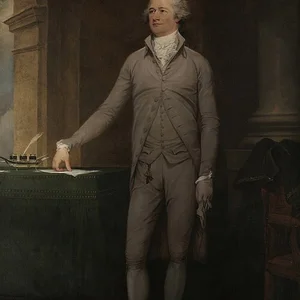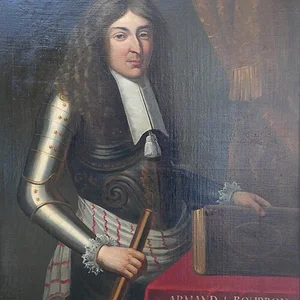

A loyal companion of Henry IV, Sully served as superintendent of finances from 1598 to 1610. He restored royal finances, reduced the debt, and promoted agriculture and infrastructure. A committed Huguenot, he embodied the kingdom's reconstruction following the Wars of Religion.
Maximilien de Béthune duc de Sully
Maximilien de Béthune, duc de Sully
8 min read
Frequently asked questions
Famous Quotes
« Tillage and pasturage are the two breasts of France.»
Key Facts
- 1560: Born at Rosny-sur-Seine; companion of Henry of Navarre from adolescence
- 1598: Appointed superintendent of finances; repaid a large portion of the royal debt
- 1604: Introduction of the paulette, an annual tax allowing the hereditary transmission of offices
- 1599–1610: Grand Master of Artillery; development of roads, bridges, and canals
- 1610: Resigned following the assassination of Henry IV; retired to his estates
Works & Achievements
Over twelve years, Sully cleaned up the kingdom's finances by rooting out fraud, cutting unnecessary pensions, and streamlining tax collection. He managed to repay a large share of the debt and build up a reserve of several million livres stored at the Bastille.
As Grand Voyer de France, Sully oversaw the construction and maintenance of royal roads connecting the kingdom's major cities, boosting trade and enabling the movement of troops across the entire territory.
The first summit-level canal built in France, designed to link the Loire to the Seine and ease the transport of goods. Work launched by Sully in 1604 would not be completed until 1642.
Dictated to several secretaries and spanning multiple volumes, these memoirs recount his management of royal finances and his political vision. They stand as a major historical source on the reign of Henry IV.
A plan for European peace attributed to Henry IV and Sully, aimed at establishing a confederation of fifteen Christian states to prevent wars. This project, recorded in the *Économies royales*, captivated political thinkers for centuries to come.
Sully pushed through edicts banning the seizure of peasants' livestock and tools for debt, and restricted the conversion of arable land to other uses. His motto "tillage and pasture" sums up this interventionist policy, which later inspired the Physiocrats.
Anecdotes
During the St. Bartholomew's Day Massacre in August 1572, the young Maximilien de Béthune, aged thirteen, was in Paris for his studies. According to his own Memoirs, he owed his survival to Catholic schoolboys from the Collège de Bourgogne who hid and protected him for several days amid the killings.
Sully is the author of the famous saying: “Tillage and pasture are the two breasts of France.” With this striking expression, he asserted that the kingdom’s wealth rested on farming and livestock far more than on trade or manufacturing, and he passed edicts forbidding the seizure of peasants’ livestock and tools for debt.
A committed Huguenot in a kingdom that had returned to Catholicism, Sully was one of the rare Protestant figures to hold such a high office under Henri IV. The king, who had himself renounced Protestantism in 1593, maintained his full trust in him — proof of a friendship forged on the battlefields of the Wars of Religion that religious politics could not undermine.
When Henri IV was assassinated on 14 May 1610 by Ravaillac, Sully arrived too late at the Louvre to see the king in his final moments. According to his Memoirs, he collapsed in tears, face to the ground, in full view of the courtiers. Devastated, he almost immediately submitted his resignation to the regent Marie de’ Medici and permanently withdrew from political life.
To restore the royal finances, Sully personally hunted down embezzlement with near-obsessive rigor: he monitored every entry and exit from the Treasury, cut the excessive pensions granted to nobles, and pursued dishonest tax farmers. Over twelve years, he paid off a large portion of the crown’s debts and accumulated several million livres in reserve in the towers of the Bastille.
Primary Sources
"Tillage and pasturage are the two breasts from which France is nourished, and the true mines and treasures of Peru." In this work, Sully recounts his management of public finances, his fiscal reforms, and his vision of the prosperous kingdom he intended to build alongside Henry IV.
Henry IV writes to Sully: "My friend, I beg you to send me the state of my finances, so that I may see what condition they are in and what I can do for the good of my subjects."
"We have, by this perpetual and irrevocable edict, suppressed and extinguished the troubles, divisions and civil wars […] and permit those of the said Religion Called Reformed to live and dwell in all the cities and places of our kingdom." Sully took an active part in drafting it.
The ordinances drawn up under Sully's authority specify the methods of tax collection, prohibit the seizure of peasants' livestock for debt, and establish oversight of tax collectors to combat fiscal fraud.
Key Places
Sully's favorite residence, where he had a château built and extensive gardens laid out. It was here that he retired after the death of Henri IV and worked on writing his *Mémoires*.
A magnificent private mansion in the Marais district (rue Saint-Antoine), acquired by Sully in 1634 and still bearing his name today. It reflects the wealth and prestige of the minister in the final years of his life.
Sully set up his offices here as Grand Master of Artillery, turning the establishment into a nerve center for the kingdom's defense — overseeing cannon production and the management of gunpowder supplies.
It was thanks to this medieval Loire château that Sully was granted the title of duke in 1606. It symbolizes the extraordinary social rise of Maximilien de Béthune — a simple Protestant gentleman who became a duke and peer of France.
It was in his château at Villebon that Sully spent the final years of his life in forced retirement, far from court, and where he died in 1641 at the age of 81.
Typical Objects

Sully personally kept thick ledgers recording every item of income and expenditure in the royal finances. This rigorous oversight instrument allowed him to uncover fraud and embezzlement among the provincial tax collectors.

A symbol of Sully's agricultural policy, the plow embodies his conviction that France's prosperity rested on its cultivated lands. He pushed through concrete measures to protect peasants from the wrongful seizure of their livestock and tools.

Before becoming a minister, Sully was a battle-hardened soldier at Henri IV's side during the Wars of Religion. His armor and arquebus serve as reminders that he took part in numerous battles and was wounded several times in combat.

Sully had the kingdom's gold reserves stored in the towers of the Bastille, a fortress considered impregnable. The keys to this royal treasury symbolized his power over the kingdom's finances and Henri IV's complete trust in him.

A great champion of infrastructure, Sully oversaw the construction of roads, bridges, and canals as Grand Voyer of France. The surveyor's compass represents this public works policy that opened up the provinces and connected previously isolated regions.

A fervent Protestant, Sully read the Bible daily in the Reformed translation and practiced his faith throughout his life. His lifelong, unashamed loyalty to Protestantism made him a symbol for the French Huguenot community.
School Curriculum
Vocabulary & Tags
Key Vocabulary
Daily Life
Morning
Sully rose early, accustomed to the military discipline forged on the battlefield. He began each day with prayer according to the Reformed rite, then received his clerks at dawn with reports on tax revenues and the previous day's expenditures, reviewed the accounts, and dictated instructions to provincial tax collectors.
Afternoon
Afternoons were devoted to audiences, meetings with the king's councillors, and inspection visits to the Arsenal or public works sites. Sully regularly rode to the Louvre on horseback through the streets of Paris to report to Henri IV on the state of the finances.
Evening
In the evenings, Sully received in his apartments the intendants and revenue collectors from the provinces who came to present their accounts. He would often work well into the night drafting ordinances or verifying ledgers, and was known for his uncompromising stance toward any irregularities.
Food
At Sully's table, the food was hearty and free of unnecessary excess — much like the man himself. Bread, roast meat, vegetables from the kitchen gardens of his estates, and wine from his own lands made up the staple of his meals, a far cry from the splendor of court banquets.
Clothing
Sully dressed as a gentleman of the court but without excessive ostentation: dark doublet, breeches, a well-starched white ruff, and a woolen cloak. Like many Huguenots, he cultivated a sober appearance in deliberate contrast to the showy luxury favored by certain great Catholic lords.
Housing
Sully resided primarily in his official apartments at the Arsenal in Paris, but owned several châteaux, chief among them Rosny-sur-Seine, his favorite retreat. These residences were furnished with care and richness, yet without the overwrought baroque style favored by some great lords close to the court.
Historical Timeline
Period Vocabulary
Liens externes & ressources
Références
Œuvres
Réforme des finances royales
1598-1610
Développement du réseau routier
1599-1610
Canal de Briare (lancement des travaux)
1604
Économies royales (Mémoires)
1611-1617
Le Grand Dessein
vers 1608
Protection de l'agriculture française
1599-1610