 Flip the card
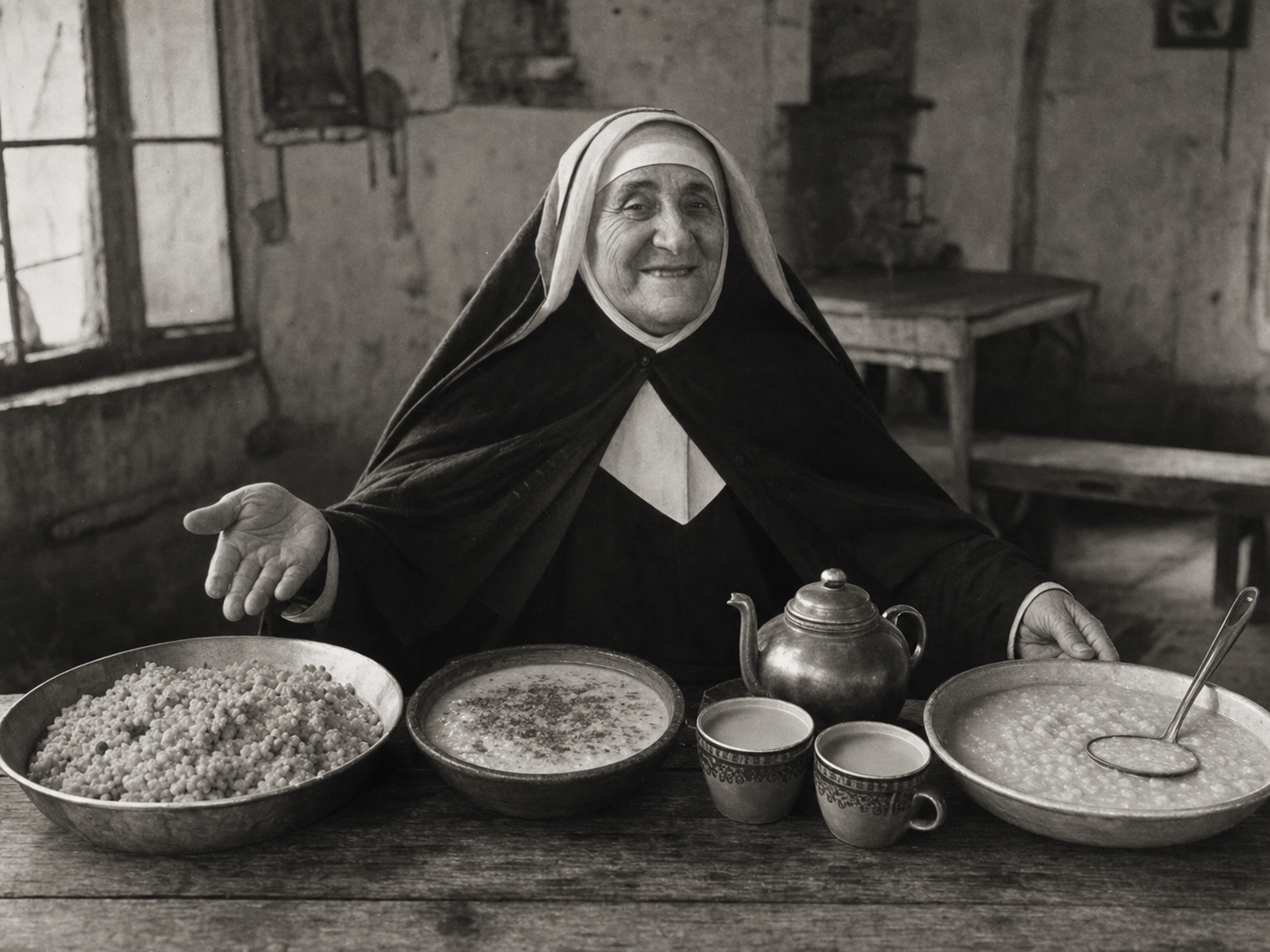
Mother Teresa at the table
1910 — 1997
On the menu
The Refectory of the Missionaries of Charity (Around Rice)
At Mother Teresa's sisters in Calcutta, the meal is anything but a three-course menu. You sit on the floor or on a bench, sharing the same staple dish of rice and lentils served in a metal bowl, eaten with the right hand. Everything revolves around rice: it fills you up, it welcomes a few vegetables, it's drunk as porridge when you're sick. The meal is deliberately frugal, identical for everyone, sisters and the poor they welcome alike. In counterpoint, the Balkan flavors of her Skopje childhood emerge (sweet rice pudding on feast days) and the hot chai that punctuates Indian days.
Signature : Rice and Lentils — The Food of the Poor
The pairing of rice and lentil dal, perfumed with a simple pinch of turmeric and ginger, is the backbone of the entire table: nourishing, cheap, shared without distinction. The yellow turmeric is the gustatory and symbolic red thread.
click to flip back
Mother Teresa at the table
1910 — 1997
4 period recipes
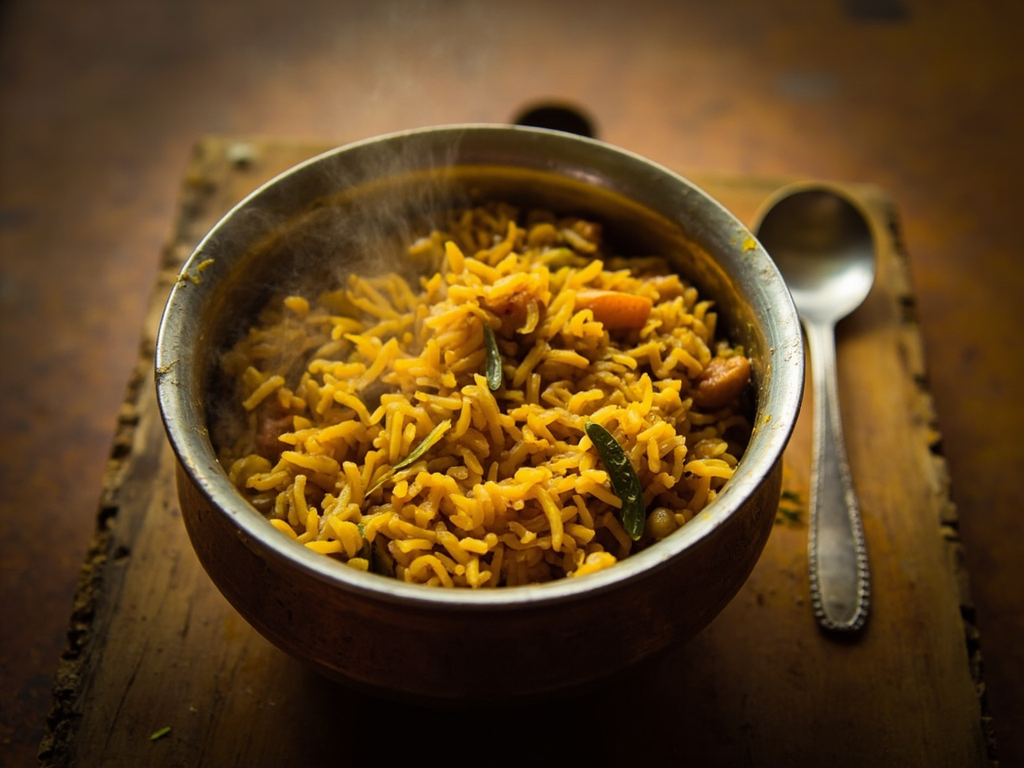 Everyday
Refectory Khichuri (Turmeric Rice and Lentils)
Bhat — The Rice Staple Dish of the Bengali Meal
🧂 🍄· 40 min
View the recipe
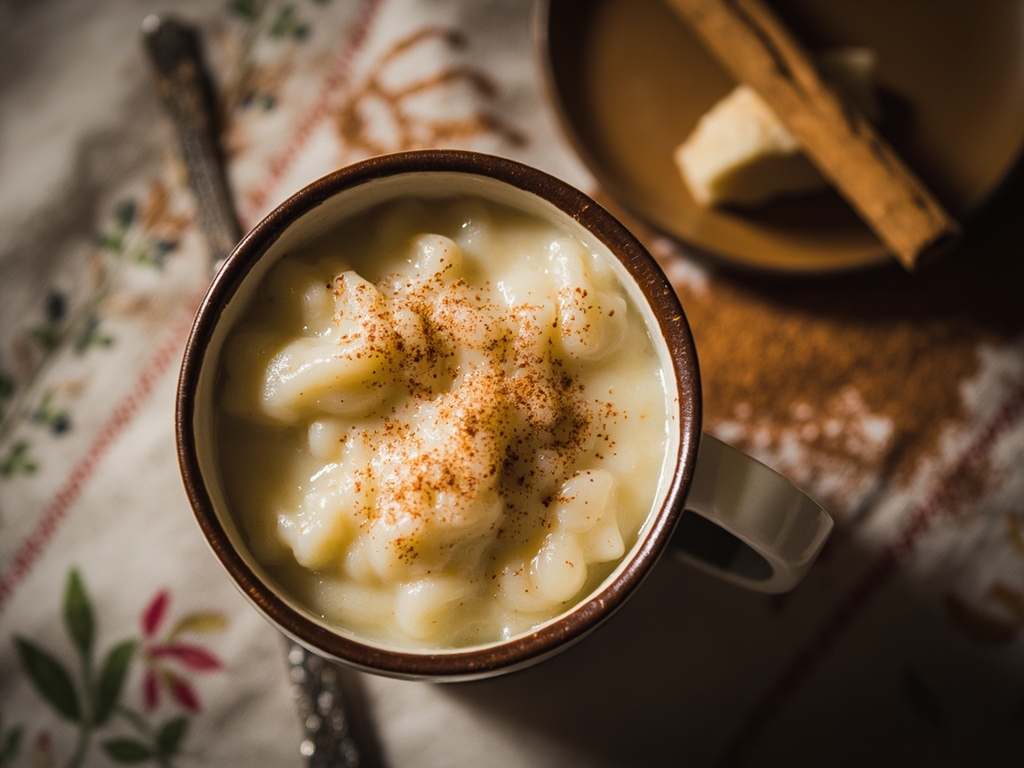 Festive
Sutlijaš from Skopje (Cinnamon Rice Pudding)
Sladko — The Sweet Dessert for Feast Days in the Balkans
🍯· 50 min
View the recipe
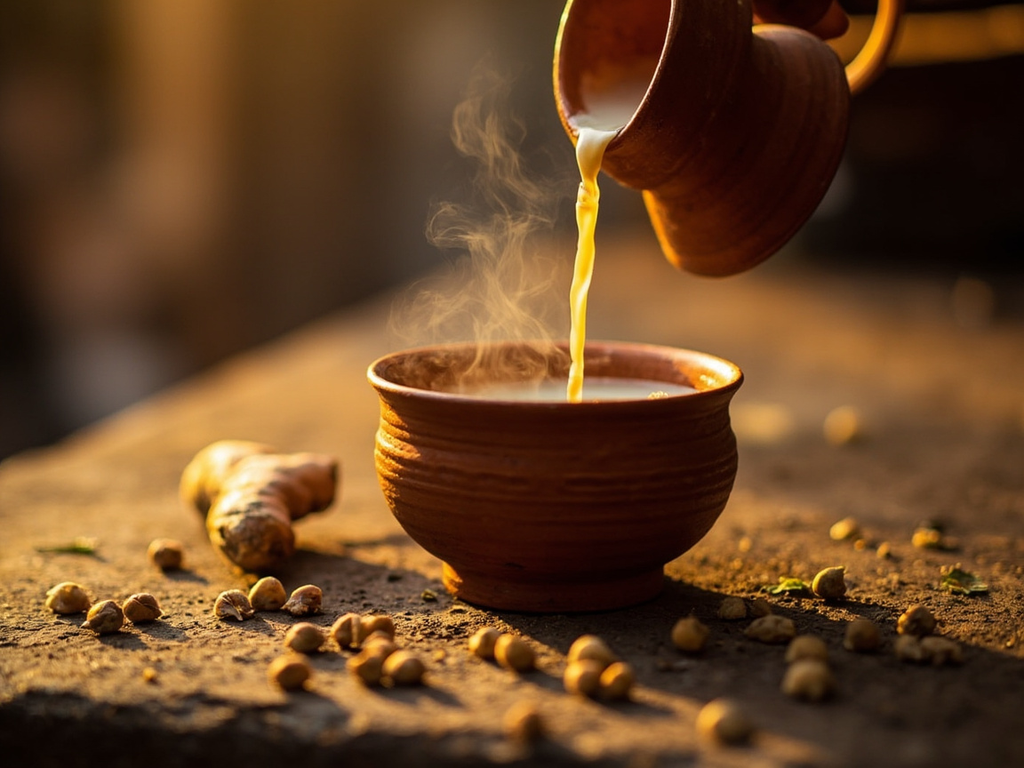 Drink
DrinkSisters' Chai (Spiced Milk Tea from Calcutta)
Chai — The Hot Drink that Rhythms the Bengali Day
🍯 🌶️· 15 min
View the recipe
 Remedy
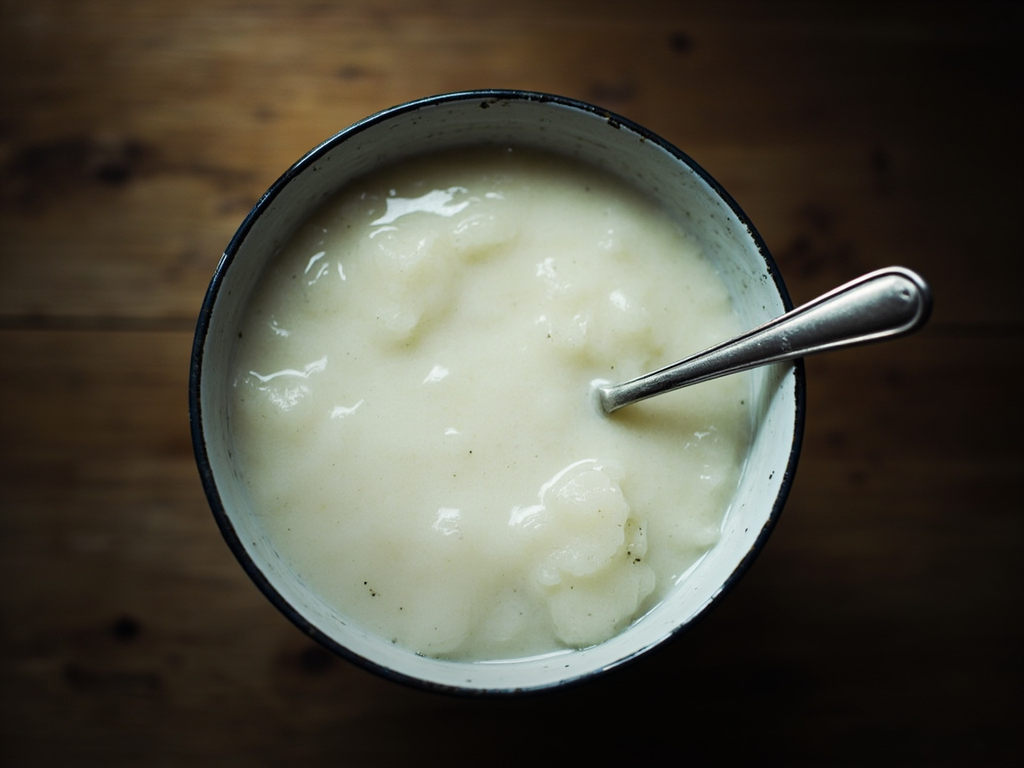
Rice Porridge for the Dying (Tender Rice from Nirmal Hriday)
Bhater jhol — The Overcooked Rice Given to the Sick
🧂· 50 min
View the recipe