Character Catalog

Historical Library

CollectionGalaxy
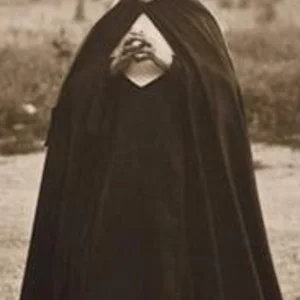
Portrait de Mother Teresa

Mother Teresa

Mother Teresa

1910 — 1997

Empire ottoman, Inde

SpiritualityReligieux/se20th Century

Émotions disponibles (6)

N

Neutre

par défaut

I

Inspirée

P

Pensive

S

Surprise

T

Triste

F

Fière

Key Facts

    Works & Achievements

    Foundation of the Missionaries of Charity (1950)

    Catholic religious congregation dedicated to serving 'the poorest of the poor', recognized by Rome on October 7, 1950. Present in more than 130 countries at her death, it now counts over 5,000 sisters.

    Nirmal Hriday — Home for the Dying (1952)

    First free shelter for abandoned dying people in Calcutta, allowing thousands of people to end their lives in dignity, cared for and spiritually accompanied.

    Shishu Bhavan — Children's Home (1955)

    Orphanage and reception center for abandoned, malnourished and disabled children founded in Calcutta. This model would be replicated in dozens of countries.

    Come Be My Light (posthumous spiritual letters) (2007)

    Collection of intimate letters by Mother Teresa published after her death, revealing her profound doubts and her 'dark night of the soul'. An exceptional document for understanding the spiritual life and inner fragility of a figure considered a saint.

    Nobel Peace Prize (1979)

    International recognition crowning thirty years of work among the destitute of Calcutta. In her speech, she advocates for the dignity of all human life, from conception to natural death.

    No Greater Love (collection of thoughts and speeches) (1997)

    Compilation of texts, speeches and meditations by Mother Teresa on love, poverty and vocation. A reference work for understanding her spirituality and her vision of humanitarian commitment.

    Anecdotes

    In 1946, while traveling by train to Darjeeling for a spiritual retreat, Mother Teresa recounted receiving what she called 'the call within the call': an inner voice asking her to leave her convent and live among the poorest of the poor. She described this experience as a divine command she could not resist.

    In 1952, Mother Teresa found a dying woman being devoured by rats and ants on a Calcutta sidewalk. Turned away by several hospitals, she carried the woman herself until one institution agreed to admit her. This event convinced her to establish Nirmal Hriday, a home for the dying, which opened that same year.

    At the Nobel Peace Prize ceremony in 1979, Mother Teresa declined the traditional banquet held in her honor and asked that the 192,000 Norwegian kroner set aside for the dinner be redirected to the poor of Calcutta. She also donated the entirety of the prize money to fund her charitable works.

    Mother Teresa had a reputation as a formidable negotiator. In 1982, during the siege of Beirut, she secured a temporary ceasefire between the Israeli army and Palestinian forces to evacuate 37 mentally disabled children trapped in a hospital in a combat zone. Soldiers on both sides stopped firing while she completed her mission.

    Her personal letters, published posthumously in the book 'Come Be My Light' (2007), revealed that she had endured nearly 50 years of 'dark night of the soul', feeling inwardly abandoned by God while continuing her work. This revelation profoundly shook the image the world had of her and sparked an immense theological debate.

    Primary Sources

    Letter from Mother Teresa to Archbishop Périer of Calcutta (1947)
    I want to be free for God alone. I want to love Him with all that I am. Allow me to go into the streets to serve the poorest of the poor.
    Nobel Peace Prize acceptance speech (December 10, 1979)
    I feel that the greatest destroyer of peace today is abortion, because it is a direct war, a direct killing by the mother herself. And we read in the Scriptures... if a mother can kill her own child, what is left for us to kill each other?
    Come Be My Light — Letters to her spiritual directors (1959)
    In my soul, I feel just this terrible pain of absence — God does not want me — God is not God — God does not exist.
    Speech at the World Conference on Women, Beijing (1995)
    Woman is the strength of the family. If we destroy woman, we destroy the family. And if we destroy the family, we destroy the world.
    Constitution of the Missionaries of Charity (1950)
    Our aim is to quench the infinite thirst of Jesus Christ on the cross for souls, by working for the salvation and sanctification of the poorest of the poor.

    Key Places

    Skopje, North Macedonia

    Birthplace of Anjezë Bojaxhiu, where she grew up in a deeply devout Albanian Catholic family. It was here that her vocation was born during youth outings in the poor outskirts of the city.

    Nirmal Hriday, Calcutta (Kolkata), India

    The first home for the dying founded by Mother Teresa in 1952, established in a former dharamsala adjoining the Kali temple. Thousands of people would die there with dignity, cared for and accompanied.

    Motherhouse of the Missionaries of Charity, Calcutta

    Global headquarters of the congregation founded in 1950, on A.J.C. Bose Road. It is here that Mother Teresa lived, prayed, and led her work, and where her body rests today, drawing pilgrims from around the world.

    Oslo, Norway — City Hall

    Venue for the Nobel Peace Prize ceremony in December 1979. Mother Teresa delivered a memorable speech there and refused the honorary banquet, demanding that the funds be redistributed to the poor of Calcutta.

    Beirut, Lebanon

    In 1982, during the civil war, Mother Teresa negotiated a temporary ceasefire to evacuate disabled children trapped between the front lines. This episode illustrates her boldness and her international political influence.

    Typical Objects

    White sari bordered with blue

    Adopted in 1948 as the habit of her congregation, the white sari with three blue stripes became the global emblem of the Missionaries of Charity. The colors were inspired by the traditional sari worn by poor women in Bengal whom Mother Teresa worked alongside.

    Rosary

    Mother Teresa permanently wore a rosary in her hand or on her wrist and recited it daily. She considered prayer, particularly the Marian rosary, to be the primary weapon of her apostolate among the most destitute.

    Metal bowl

    The Missionaries of Charity use a simple enameled metal bowl to distribute food to the dying and the destitute at Nirmal Hriday. This object embodies the total detachment that Mother Teresa demanded of her sisters.

    Simple leather sandals

    Mother Teresa wore rudimentary leather sandals similar to those of poor Indian women, a symbol of her vow of poverty and her desire to share the daily life of the most destitute.

    Medal of the Virgin Mary

    She always wore a small medal of the Virgin pinned to her sari, to which she had been deeply attached since her Albanian childhood. This Marian devotion directly influenced the choice of blue for her congregation's habit.

    Water jug and bandages

    Basic care instruments — cloths, bandages, clean water — were the daily tools of Mother Teresa and her sisters as they tended to the dying, lepers, and sick abandoned on the streets of Calcutta.

    School Curriculum

    Cycle 4 (5e-3e)Histoire
    Cycle 4 (5e-3e)EMC
    LycéeHistoire
    LycéeEMC

    Vocabulary & Tags

    Key Vocabulary

    Tags

    Mère TeresaspiritualitereligieuxFigure religieusedroits-de-l-hommeDroits de l'Homme, droits civiquesdecolonisationDécolonisation

    Daily Life

    Morning

    Mother Teresa and her sisters rose at 4:40 AM for morning prayer and the 5:30 AM Mass. After the service, they had a frugal meal — rice, dal, and vegetables — before heading into the streets of Calcutta from 8 AM onward to seek out the sick and abandoned dying.

    Afternoon

    The afternoon was devoted to care at Nirmal Hriday or Shishu Bhavan: washing the sick, changing lepers' dressings, feeding children, and accompanying the dying. Mother Teresa supervised the work, trained novices, and received visitors.

    Evening

    The evening brought the community together for rosary prayer and vespers. Mother Teresa also devoted time to her extensive correspondence with benefactors, bishops, and government officials, before lights out at 10 PM.

    Food

    The Missionaries of Charity's diet was deliberately poor: rice, lentils, simple vegetables, bread. Mother Teresa ate the same food as her sisters and refused any preferential treatment. She fasted on Fridays in solidarity with the poor who often lacked food.

    Clothing

    Mother Teresa permanently wore the white sari with three blue stripes she had adopted in 1948, paired with simple leather sandals. She owned exactly two saris — one to wear, one to wash — in keeping with her congregation's strict vow of poverty.

    Housing

    She lived in the Missionaries of Charity motherhouse in Calcutta, in a spartan cell: a wooden bed, a small cross on the wall, a crucifix. The congregation owns no air conditioning or heating, living in the same conditions as the poor it serves.

    Historical Timeline

    1910Naissance d'Anjezë Gonxhe Bojaxhiu à Skopje (Empire ottoman, actuelle Macédoine du Nord) dans une famille albanaise catholique.
    1928Elle rejoint les Sœurs de Notre-Dame de Lorette à Dublin puis part pour l'Inde, où elle enseigne dans un lycée de Calcutta pendant 17 ans.
    1943Grande famine du Bengale : entre 2 et 3 millions de personnes meurent de faim Ă  Calcutta et dans les campagnes alentour, sous les yeux de la jeune religieuse.
    1946Dans le train vers Darjeeling, elle reçoit ce qu'elle appelle 'l'appel dans l'appel' : une inspiration à quitter le couvent pour vivre parmi les plus pauvres.
    1947Partition des Indes : violences intercommunautaires entre hindous, musulmans et sikhs à Calcutta, que Mère Teresa traverse en apportant des secours.
    1950Fondation officielle des Missionnaires de la Charité à Calcutta, congrégation religieuse catholique reconnue par Rome.
    1952Ouverture du Nirmal Hriday ('Cœur pur'), première maison d'accueil pour mourants abandonnés, dans un temple hindou mis à disposition par la ville de Calcutta.
    1955Ouverture du Shishu Bhavan, orphelinat et maison pour enfants abandonnés et handicapés à Calcutta.
    1965Les Missionnaires de la Charité s'ouvrent à l'international : première maison hors d'Inde créée au Venezuela.
    1971Prix Pope John XXIII Peace Prize décerné par le Vatican ; Mère Teresa œuvre lors de la guerre de libération du Bangladesh et de ses millions de réfugiés.
    1979Prix Nobel de la Paix remis à Oslo ; Mère Teresa en reverse l'intégralité à ses œuvres et refuse le banquet traditionnel.
    1985Création des premières maisons d'accueil pour malades du sida à New York, malgré les controverses sur la position de l'Église concernant les homosexuels.
    1997Mère Teresa décède le 5 septembre à Calcutta, neuf jours après la mort de la Princesse Diana qui avait massivement occupé les médias mondiaux.
    2003Béatification par le pape Jean-Paul II, seulement six ans après sa mort — délai exceptionnellement court dans l'Église catholique.
    2016Canonisation par le pape François : Mère Teresa est officiellement déclarée sainte de l'Église catholique, place Saint-Pierre à Rome.

    Period Vocabulary

    Missionary — A religious person sent to a country to spread the Christian faith and carry out charitable works. The Missionaries of Charity founded by Mother Teresa combine evangelization with aid to the most destitute.
    Vow of poverty — A religious commitment by which a monk or nun renounces all personal property and the accumulation of possessions. Mother Teresa applied it in a radical way, owning only two saris.
    Apostolate — The action by which a Christian bears witness to their faith and works to spread the Gospel, particularly through service to others. For Mother Teresa, caring for the dying was her primary apostolate.
    Decolonization — The historical process by which countries colonized by European powers gained their independence in the 20th century. India, where Mother Teresa worked, became independent from the United Kingdom in 1947.
    Partition of India — The division of the Indian subcontinent in 1947 into two independent states: India (with a Hindu majority) and Pakistan (with a Muslim majority). This event triggered one of the greatest mass migrations in history and massacres that Mother Teresa witnessed in Calcutta.
    Dharamsala — In the Indian tradition, a place offering free accommodation for pilgrims and poor travelers, often adjacent to a temple. Mother Teresa's Nirmal Hriday was established in a former dharamsala made available by the municipality of Calcutta.
    Beatification / Canonization — Stages of the Catholic process leading to sainthood: beatification recognizes a 'Blessed' after the verification of a miracle, while canonization officially declares someone a 'Saint' after a second miracle. Mother Teresa was beatified in 2003 and canonized in 2016.
    Cold War — A period of political and ideological tension (1947–1991) between the United States and the USSR, without direct armed conflict. Mother Teresa's humanitarian work allowed her to cross ideological boundaries: she opened houses in communist Albania as well as in the capitalist United States.
    Leprosy — A bacterial infectious disease causing lesions of the skin and nerves, historically highly stigmatized. Mother Teresa established specialized centers, known as 'leprosy clinics', to care for leprosy patients rejected by Indian society.
    Dark night of the soul — A Christian mystical expression referring to a period of intense spiritual dryness and a feeling of abandonment by God, described notably by Saint John of the Cross in the 16th century. Mother Teresa experienced this inner crisis for nearly 50 years, as revealed by her posthumous letters.

    Gallery

    Teresa Mutter Oelbild Zaba Hamburg-2010

    Teresa Mutter Oelbild Zaba Hamburg-2010

    Le Pape et Mère Teresa

    Le Pape et Mère Teresa

    Kolkata 15, Mother Teresa House (24793683346)

    Kolkata 15, Mother Teresa House (24793683346)

    MOTHER TERESA - OIL PAINTING BY RAJASEKHARAN

    MOTHER TERESA - OIL PAINTING BY RAJASEKHARAN

    Statue Mutter Teresa - PAF - 2022-08-11 - 779b

    Statue Mutter Teresa - PAF - 2022-08-11 - 779b

    Nënë Tereza - panoramio

    Nënë Tereza - panoramio

    Nënë Tereza - panoramio (1)

    Nënë Tereza - panoramio (1)

    Nënë Tereza - panoramio (3)

    Nënë Tereza - panoramio (3)

    Statue Mutter Teresa - PAF - 2022-08-11 - 782b

    Statue Mutter Teresa - PAF - 2022-08-11 - 782b

    Statue Mutter Teresa - PAF - Inschrift - 2022-08-11 - 780b

    Statue Mutter Teresa - PAF - Inschrift - 2022-08-11 - 780b

    Visual Style

    Esthétique photographique documentaire en noir et blanc contrasté, inspirée de Calcutta des années 1950-70 : sari blanc bordé de bleu, rues étroites des bidonvilles, lumière crue et portraits humanistes de la grande tradition photographique.

    #F5F0E8
    #1A3A5C
    #8B7355
    #D4C5A9
    #2C2C2C
    AI Prompt
    Documentary-style visual aesthetic inspired by 1950s-1970s Calcutta. High-contrast black and white photography with strong shadows and bright light. Narrow streets of the slums, open sewers, dust and monsoon mud. Close-up details: weathered brown hands, a white sari with blue borders, a tin bowl, a rosary. Occasional warm sepia tones for interior scenes in a small Catholic chapel. The visual language of humanist photography — Henri Cartier-Bresson era — dignified portraits of the destitute and their caretakers. Architectural elements: colonial British buildings in decay, Hindu temples, corrugated iron rooftops. Deep blue sky contrasting with the ochre and grey of Calcutta's streets.

    Sound Ambience

    Ambiance sonore mêlant les bruits de rue de Calcutta et l'atmosphère recueillie d'une maison de soins catholique : prières en communauté, gestes d'infirmerie et rumeur de la ville pauvre des années 1950.

    AI Prompt
    Ambient soundscape of a charitable mission in 1950s Calcutta, India. Distant street noise of a crowded South Asian city, rickshaws, vendors calling, monsoon rain on a tin roof. Inside: soft murmuring of Catholic prayers in a small chapel, gentle chanting of the rosary in a women's community. The quiet shuffling of sandals on stone floors, the sound of water poured from a metal jug into a basin, soft moaning of sick people being tended to, nuns speaking in hushed tones. Occasional church bell in the distance. The city sounds blend with the intimate, solemn atmosphere of a place of care and prayer.

    Portrait Source

    Wikimedia Commons — domaine public — Anonymous, no author disclosure — 1944