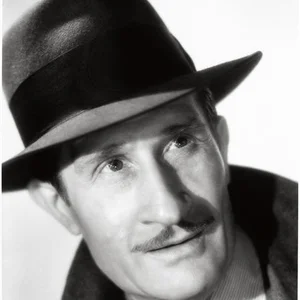

French actor born in 1892 and died in 1973, Noël Roquevert is best known for his roles as grumpy gendarmes, military figures, and authoritarian characters in film. He appeared in over 200 movies, leaving his mark on French cinema from the 1930s through the 1970s.
Noël Roquevert(1892 — 1973)
Noël Roquevert
France
8 min read
Frequently asked questions
Key Facts
- Born on November 16, 1892 in Paris
- Started out in theater before transitioning to cinema in the 1930s
- Appeared in over 200 films throughout his career
- Known for his roles as authoritarian and comic characters, particularly gendarmes
- Died on May 14, 1973 in Paris
Works & Achievements
A film by Marcel Pagnol starring Fernandel, in which Roquevert plays one of his first memorable screen roles. This popular comedy opened the door to a long collaboration with the great French comedians.
An adventure film by Christian-Jaque starring Gérard Philipe, a major hit with both audiences and critics. Roquevert plays a military officer with the authority and discipline that defined his reputation.
An adaptation of Victor Hugo's novel by Jean-Paul Le Chanois, starring Jean Gabin. Roquevert takes part in this ambitious production, which cemented his place among the essential figures of French cinema.
A comedy by Henri Verneuil starring Fernandel, one of the biggest box-office successes in French cinema history with 8.8 million tickets sold. Roquevert plays a German officer in this cult film set during the Occupation.
A comedy by Robert Dhéry starring Louis de Funès. One of Roquevert's last major roles, proving at 76 that his talent for playing uptight characters opposite anarchic comedy legends was completely intact.
Before turning to film, Roquevert enjoyed a long career on the Parisian boulevard theatre circuit, acquiring the technical mastery that would underpin his entire career in cinema.
Anecdotes
Noël Roquevert was so convincing in his roles as gendarmes and authoritarian military officers that producers would routinely seek him out for these parts. It is said that he sometimes complained backstage about being "condemned to the uniform," as he had hoped to diversify his career.
During the filming of The Cow and I (1959), Roquevert was cast as a German officer opposite Fernandel. The two actors, who had known each other for years, kept struggling to keep a straight face on set, forcing director Henri Verneuil to shoot take after take.
Roquevert got his start on the boulevard theatre stage before turning to cinema in the 1930s. This theatrical training gave him a remarkable diction and stage presence that made him instantly recognizable even in supporting roles.
With more than 200 films to his name over a forty-year career, Noël Roquevert sometimes appeared in four or five productions a year. This relentless pace, typical of character actors of the era, earned him a reputation as a consummate professional — always ready to work and word-perfect every time.
In The Little Bather (1968) alongside Louis de Funès, Roquevert brilliantly plays a rigid, strait-laced character opposite the leading comedian's manic energy. The film is a perfect illustration of how he could step back to let the star comic shine while still leaving a lasting impression.
Primary Sources
Roquevert embodies better than anyone the grumpy Frenchman, the mustachioed sergeant barking orders. But behind this character mask lies an affable and cultured man with a passion for literature.
Supporting actors like Roquevert are the true backbone of popular French cinema. Their presence reassures the audience and grounds films in an immediately recognizable social reality.
Noël Roquevert passed away on March 14, 1973, leaving behind a considerable body of work spanning more than two hundred films. A character actor without peer, he brought surgical precision to every embodiment of order and authority.
On set, Roquevert rehearsed his scenes tirelessly with a discipline instilled by his years in theatre. Gérard Philipe, clearly impressed, acknowledged him as a partner of absolute reliability.
Key Places
Noël Roquevert spent much of his Parisian life in this arrondissement, close to the theaters and studios of the era. It was in this working-class and bourgeois Paris that he developed his deep understanding of the social types he would go on to portray.
Nicknamed the 'French Hollywood' during the 1930s–1950s, these studios on the outskirts of Paris were Roquevert's main stomping ground. He shot dozens of films there on sets recreating barracks, police stations, and offices.
France's second major filmmaking hub, La Victorine hosted many postwar productions in which Roquevert appeared. The Mediterranean climate drew film crews for outdoor shoots.
A landmark venue for boulevard theater and light comedy, the Palais-Royal was one of the Parisian stages where Roquevert honed his craft before transitioning to film. This stage training shaped his talent for character acting.
The film La Vache et le Prisonnier (1959), one of Roquevert's greatest box-office successes, was partly shot in Normandy, a region deeply symbolic of the Second World War. Roquevert plays a German officer opposite Fernandel.
Typical Objects

The iconic cap of the French gendarmerie, the kepi is the accessory most associated with Roquevert on movie posters. He wore it with a natural authority that lent authenticity to his characters.

The thick, imposing mustache was a recurring element of Roquevert's character costumes, reinforcing the authoritative and slightly ridiculous quality of his grumpy senior officer roles.

Whether French, German, or fictional, the military uniform was Roquevert's everyday working attire on set. He had a perfect command of how to wear it and the codes it conveyed.

A meticulous professional, Roquevert would carefully annotate his scripts, noting acting intentions and directorial cues. This theater-trained discipline meant he was ready to perform the moment he stepped on set.

A symbolic object of filmmaking from the 1930s to the 1970s, the clapperboard marked the rhythm of Roquevert's daily life as he took part in dozens of productions each decade at Parisian studios.

Radio was the dominant medium of Roquevert's era. Popular film actors like him regularly appeared on radio broadcasts to promote their films.
School Curriculum
Vocabulary & Tags
Key Vocabulary
Daily Life
Morning
During his most active years (1940–1968), Roquevert rose early to head to the studios at Joinville or Boulogne-Billancourt. Shooting days began at 8 a.m. with costume fittings and makeup — including the application of his trademark false mustache. He would run through his lines in his dressing room before stepping onto the set.
Afternoon
Afternoons were devoted to principal photography, often on studio sets dressed as barracks, offices, or police stations. Between takes, Roquevert chatted with crew members and fellow cast, nurturing the professional relationships that kept his career steadily booked. It was not unusual for him to be working on two different productions in the same week.
Evening
After a day's shoot, Roquevert returned to his Paris apartment. When not deep in a busy production schedule, he frequented the brasseries and cafés of the Montparnasse neighborhood, a hub for people in the entertainment world. He read widely — novels and stage plays — and kept a close eye on new productions in search of his next role.
Food
Like most Frenchmen of his generation, Roquevert had a taste for traditional bourgeois cooking: pot-au-feu, boeuf bourguignon, well-aged cheeses. The lunch break at the studio restaurant was an important social occasion, where actors, directors, and crew shared a meal together. A glass of house red wine was a constant at the table.
Clothing
Away from the uniforms he wore on screen, Roquevert dressed in the classic style of the well-turned-out man of the 1940s and 1950s: a dark wool three-piece suit, a felt hat, and a tie. This attention to appearance was typical of actors from his era, who were accustomed to maintaining a polished public image at all times.
Housing
Roquevert lived in Paris in a Haussmann-style bourgeois apartment, typical of the neighborhoods where the artists of his day settled. Herringbone parquet floors, high molded ceilings, shelves lined with books: a comfortable interior that spoke to the quiet, unpretentious stability of a well-established character actor.
Historical Timeline
Period Vocabulary
Visual Style
Esthétique du cinéma français classique en noir et blanc des années 1940-1960, avec les costumes militaires, l'éclairage de studio expressif et les décors de la France populaire d'après-guerre.
Sound Ambience
Atmosphère des studios de cinéma parisiens des années 1940-1960, mêlée aux sons de la vie militaire et de la France des Trente Glorieuses qui forment le décor quotidien de Roquevert.
Liens externes & ressources
Références
Œuvres
Le Petit Baigneur
1968