 Flip the card
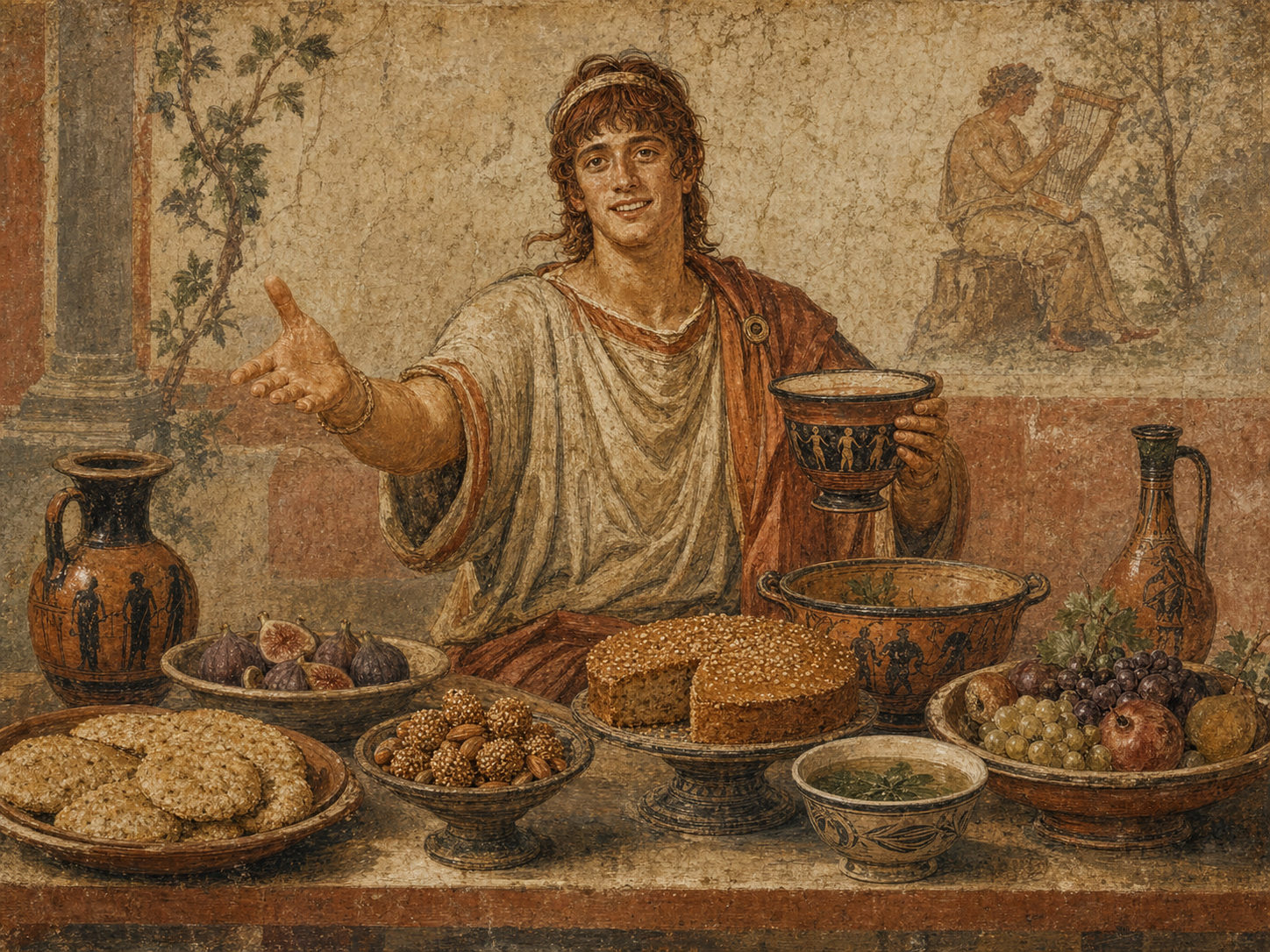
Orpheus at the table
On the menu
Sitos & opson, then the symposion
In the ancient Greek meal, the table is arranged around sitos (the grain staple: barley or wheat, as flatbread or porridge) accompanied by opson (the "what-goes-with-it": oil, cheese, olives, fruit, sometimes fish). The deipnon, the evening meal, extends into the symposion, the time of wine mixed with water, songs, and tragemata (sweetmeats). But Orpheus brings a singularity: the Orphic tradition advocates abstinence from blood and animal flesh (and even beans) — so his cuisine leans toward grains, honey, fruits, and milk, an ascetic and mysterious table.
Signature : Toasted barley (alphita) and Hymettus honey
Barley — ground into toasted flour (alphita) or cracked into groats — is the heart of Greek diet and the pillar of Orphic rites. Married to golden honey, it becomes offering, initiation drink, and banquet sweet. This is the thread linking all these recipes: a bloodless cuisine, faithful to the precept of the Thracian bard.
click to flip back
Orpheus at the table
4 period recipes
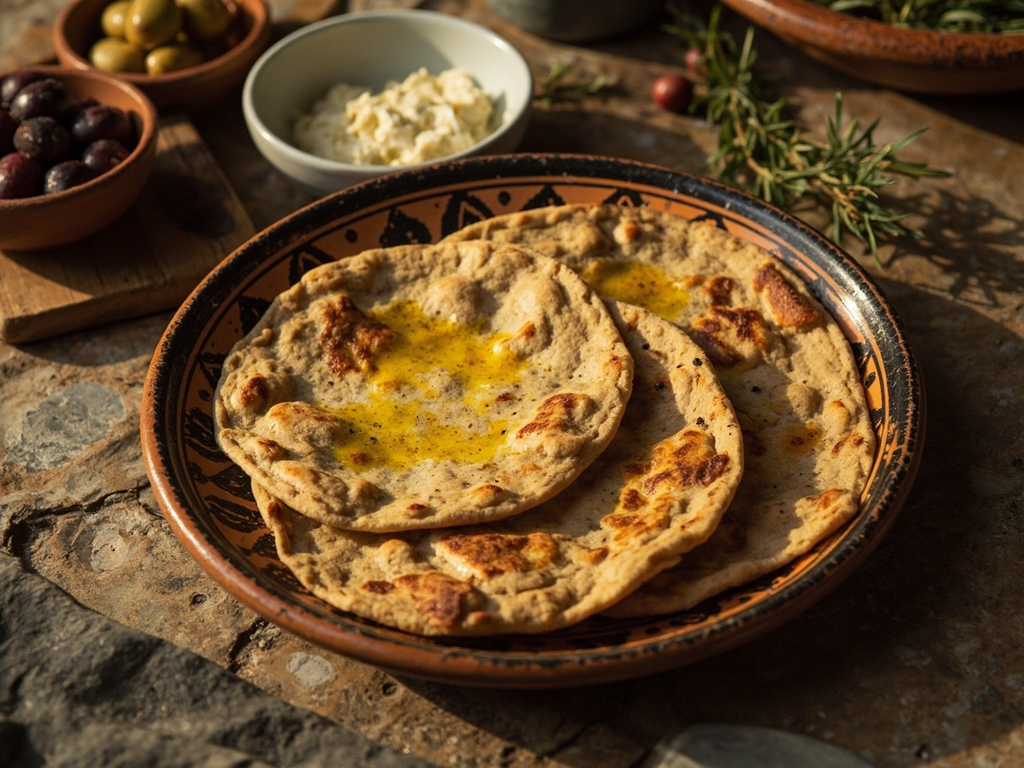 Everyday
Maza, the poet's barley flatbread
Sitos — the grain staple of the daily meal
🧂 ☕· 25 min
View the recipe
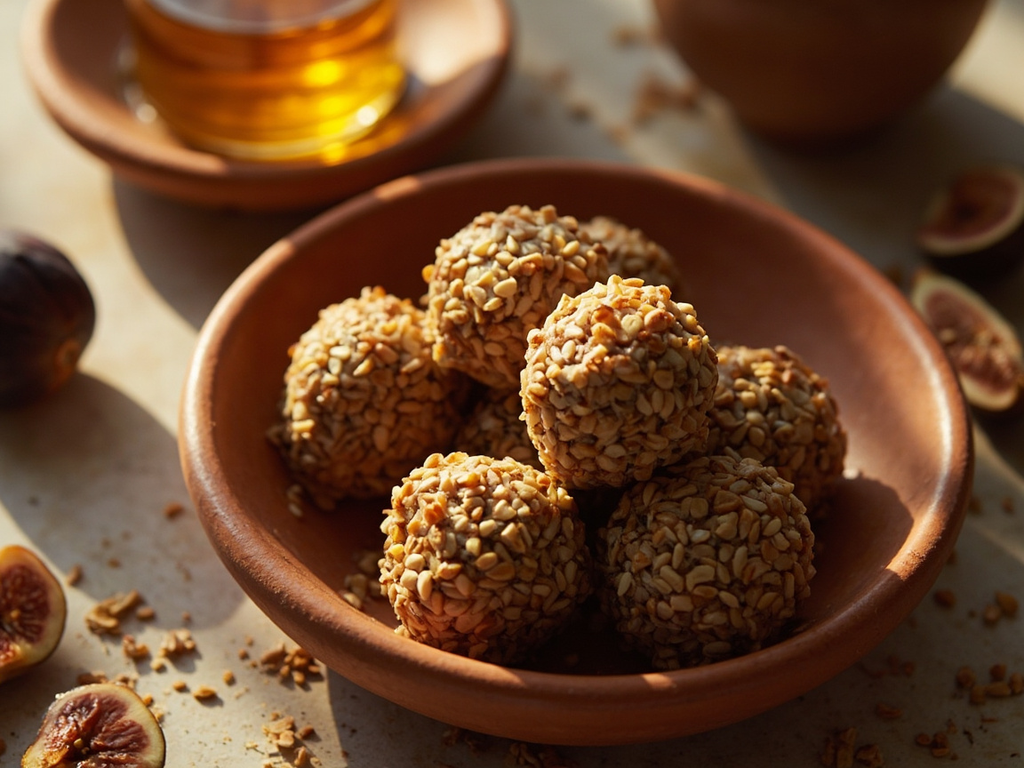 Festive
Tragemata of the symposion: figs, almonds, and sesame with honey
Tragemata — the sweets of the "second table" of the banquet
🍯· 30 min
View the recipe
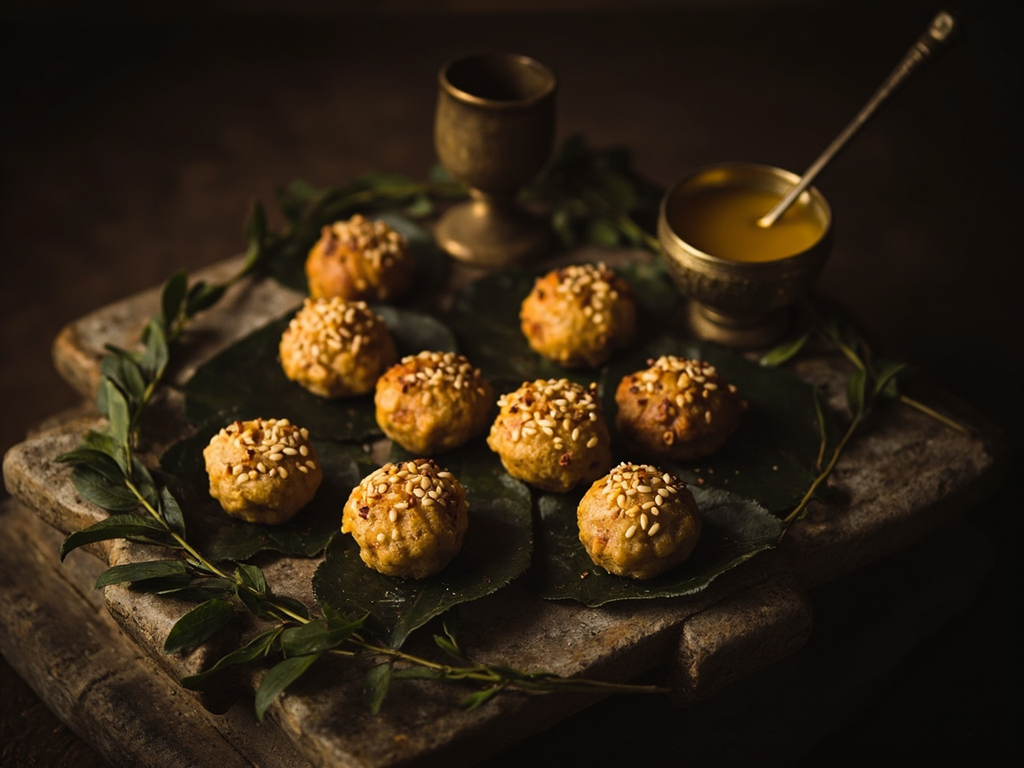 Offering
Melitouta, the honey cake offered to the shades
Pelanos — the grain offering to the dead and chthonic gods
🍯· 40 min
View the recipe
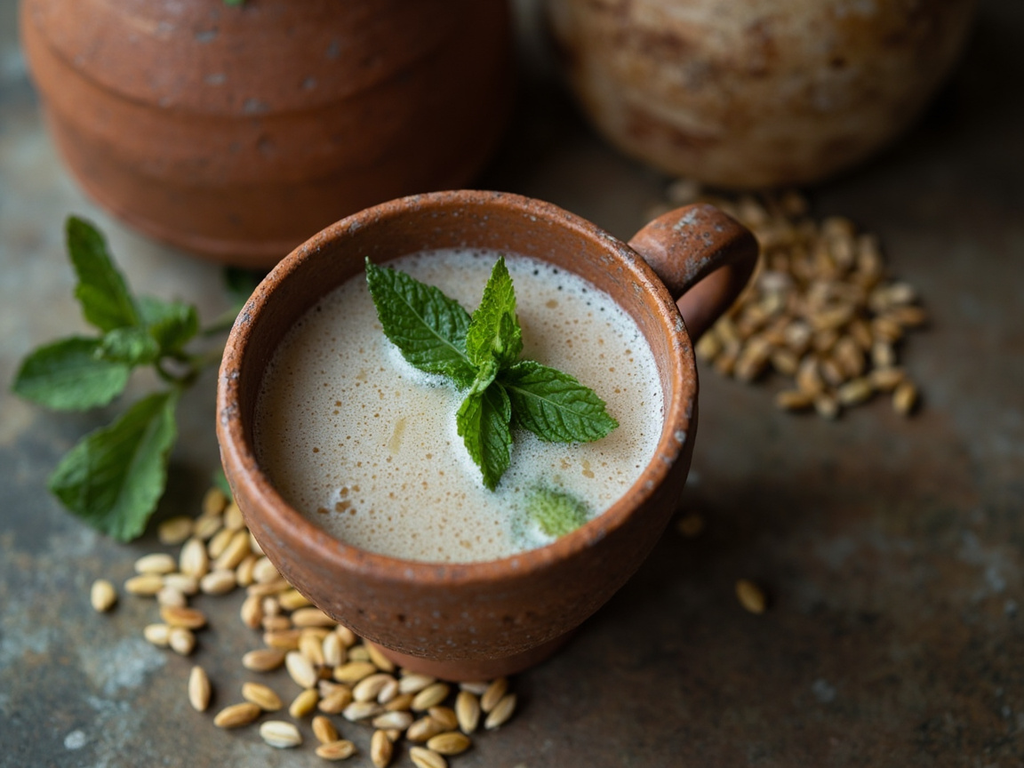 Drink
DrinkKykeon of the mysteries, barley drink with pennyroyal mint
Potos — the ritual initiation drink, outside of wine
☕ 🍋· 20 min
View the recipe