 flip
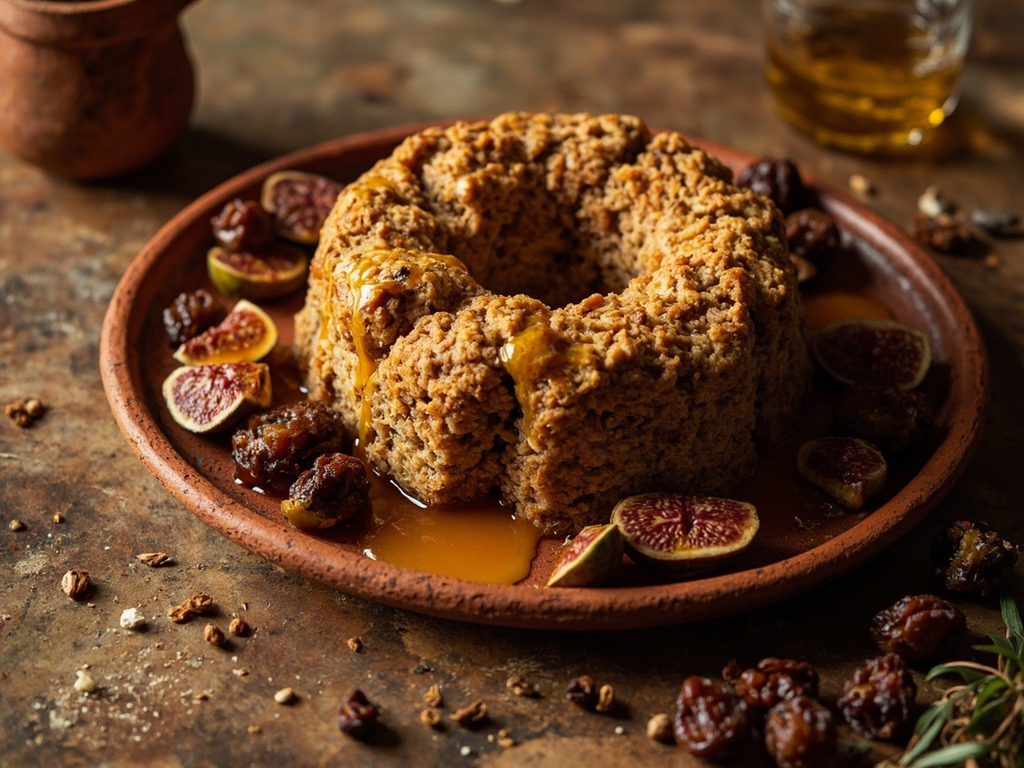
flipMelitouta, the honey cake offered to the shades
Melitouta, the honey cake offered to the shades
Why this dish? No one knows the realm of the dead better than Orpheus, who descended to the Underworld to reclaim Eurydice. Honey cakes were deposited as soothing offerings to the subterranean powers and the muzzle of Cerberus — a gesture that resonates with his legendary katabasis.
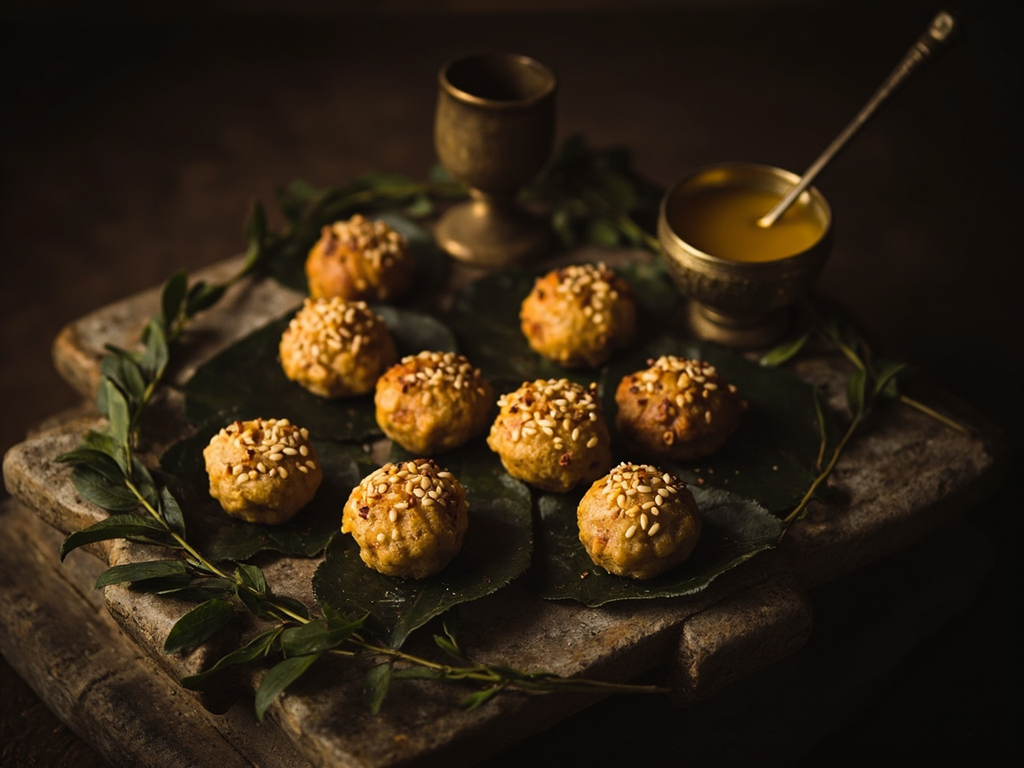
A small cake of barley and honey, perfumed with sesame, shaped as an offering. Tender, deeply honeyed, it is the sweetness entrusted to the dead and the gods below — symbolic before being gourmet.
Listen to me, you who fear the gates below: I have crossed them, and I know what the shades love. Knead the barley with honey, shape this cake with your hands, and place it without shedding blood — for flesh does not appease the departed, but sweetness does. When I went down to seek my Eurydice, it was not by arms that I charmed the guardians, but by song and by offerings. Do likewise: let this melitouta be your silent prayer to the loved ones you have lost.
- •Barley (or wheat) flour — two handfuls (base)
- •Honey — generously (sweetness and binder)
- •Olive oil — a drizzle (softness)
- •Sesame — a pinch (ritual perfume)
Melitouta, the honey cake offered to the shades
A small cake of barley and honey, perfumed with sesame, shaped as an offering. Tender, deeply honeyed, it is the sweetness entrusted to the dead and the gods below — symbolic before being gourmet.
Why this dish? No one knows the realm of the dead better than Orpheus, who descended to the Underworld to reclaim Eurydice. Honey cakes were deposited as soothing offerings to the subterranean powers and the muzzle of Cerberus — a gesture that resonates with his legendary katabasis.
Listen to me, you who fear the gates below: I have crossed them, and I know what the shades love. Knead the barley with honey, shape this cake with your hands, and place it without shedding blood — for flesh does not appease the departed, but sweetness does. When I went down to seek my Eurydice, it was not by arms that I charmed the guardians, but by song and by offerings. Do likewise: let this melitouta be your silent prayer to the loved ones you have lost.
Ingredients (period version)
- Barley (or wheat) flour — two handfuls (base)
- Honey — generously (sweetness and binder)
- Olive oil — a drizzle (softness)
- Sesame — a pinch (ritual perfume)
Ingredients
- Barley flour (or half barley/half wheat) — 200 g (base)
- Honey — 120 g (sweetness and binder)
- Extra virgin olive oil — 3 tbsp (softness)
- Milk — 60 ml (binder)
- Sesame seeds — 2 tbsp (ritual perfume)
Method
- Preheat the oven to 170°C (340°F).
- Mix the flour and sesame seeds, then incorporate honey, oil, and milk until a soft, sticky dough forms.
- Shape small round flat cakes on an oiled baking sheet.
- Sprinkle a few sesame seeds on top.
- Bake for 20–25 minutes until golden and firm to the touch; they firm up as they cool.
How it was made : The Greeks offered honey cakes (pelanos, melitouta) to divinities, the dead, and chthonic powers during libations and funeral rites. Myth holds that Cerberus, guardian of the Underworld, is appeased with a honey cake — an image later taken up by Virgil in the Aeneid.
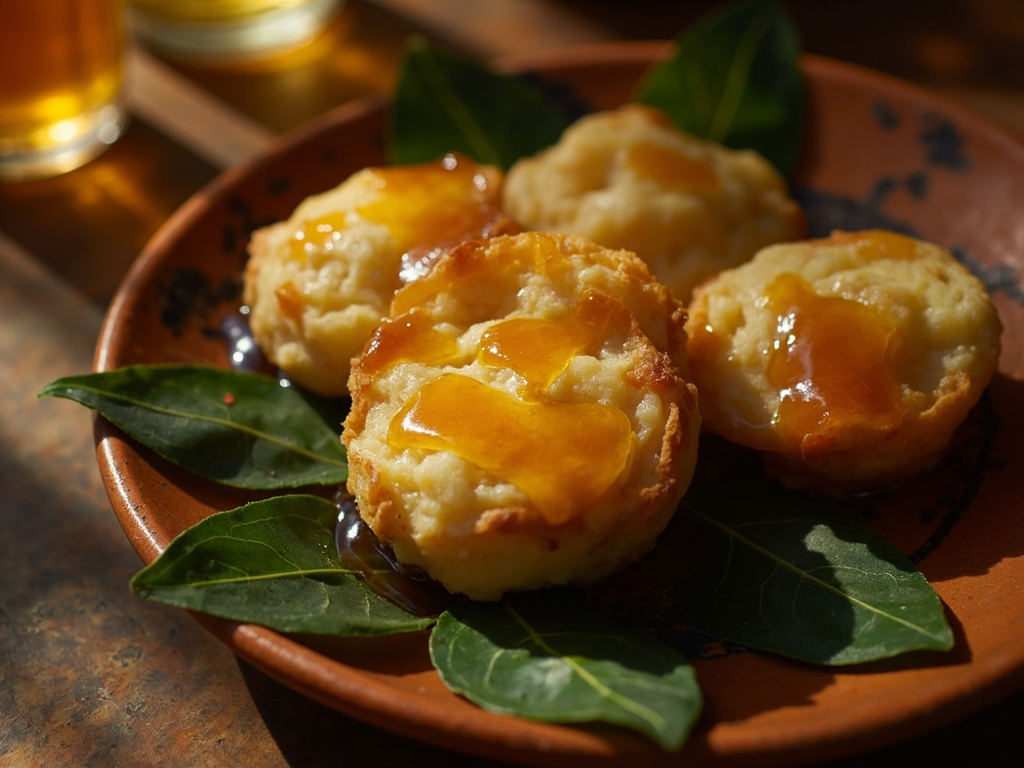
The contemporary twist : Present them on a bed of laurel leaves (the tree of Apollo, Orpheus's father) with a drizzle of warm honey poured before the diner — an "offering" to share rather than to bury.
Sources : Walter Burkert, Greek Religion (1985), on grain offerings and the pelanos · Virgil, Aeneid VI (the honey cake offered to Cerberus)
Orpheus · Charactorium