 flip
flipMaza, the poet's barley flatbread
Maza, the poet's barley flatbread
Why this dish? Maza is the daily bread of the ordinary Greek, and even more so of the Orphic who shuns meat feasts. Before taking up the lyre, Orpheus fed on this simple flatbread, rubbed with oil, like any son of Pieria nourished on barley and song.
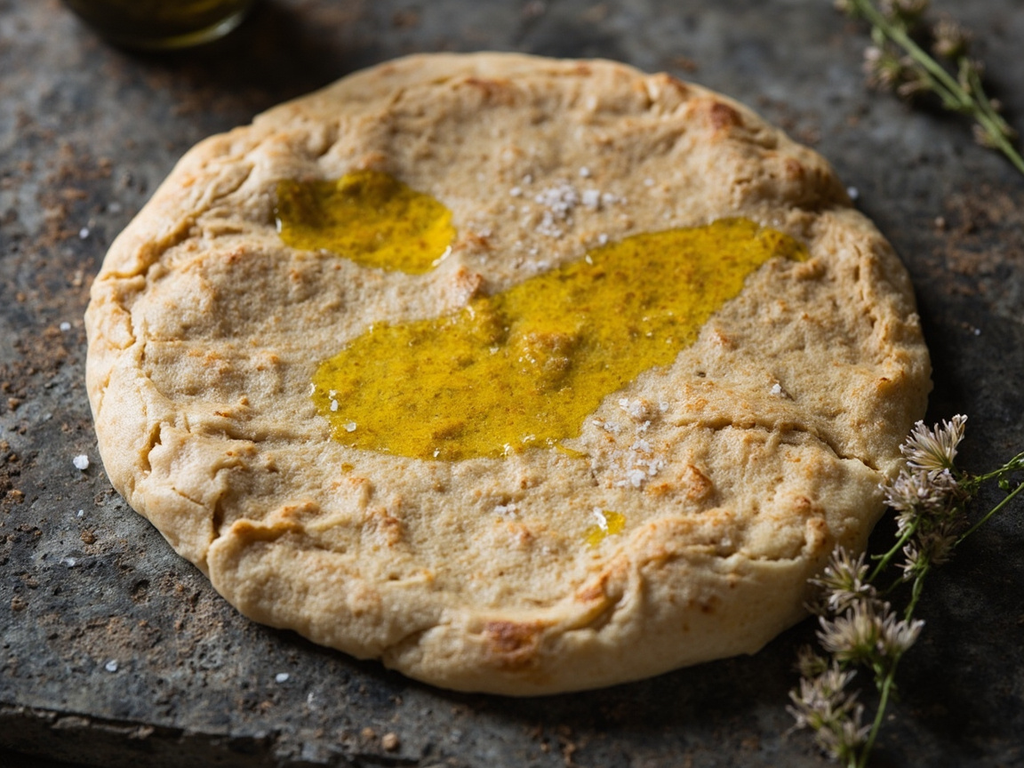
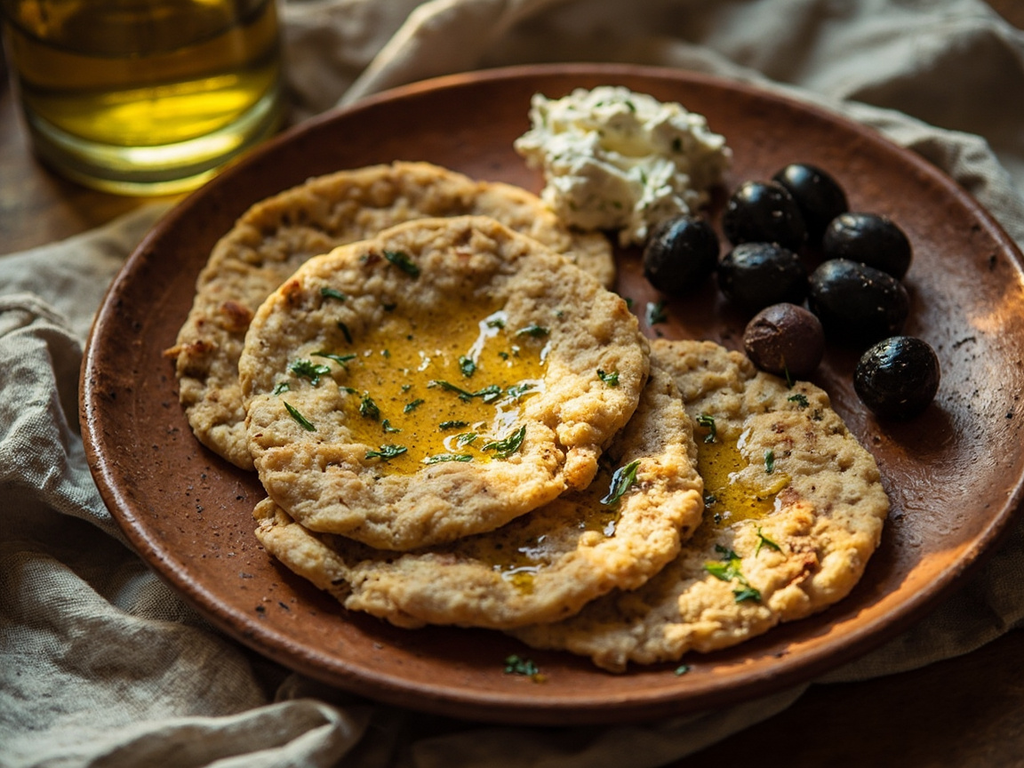
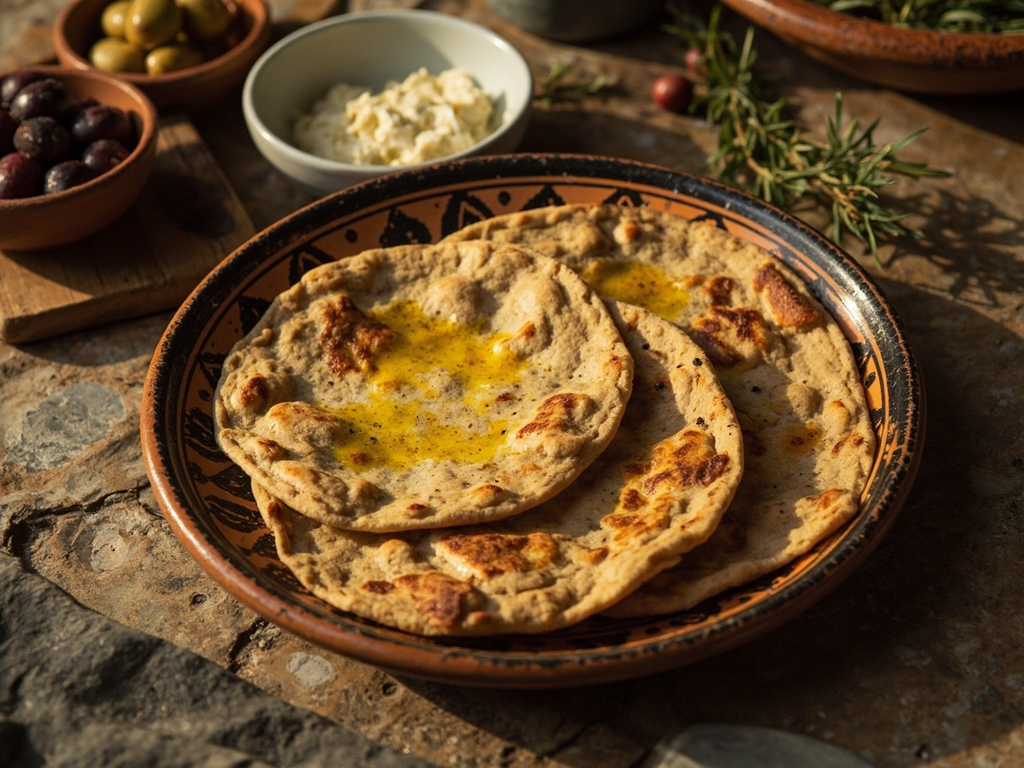
A dense flatbread of toasted barley kneaded with water and oil, barely cooked on a hot stone. Rustic, slightly bitter from the barley husk, lifted with a pinch of salt: everyday food, that which sticks to the body of the shepherd as of the wandering musician.
Come, traveler, and do not despise this humble flatbread. I, son of Calliope, have not always dined at kings' tables: on the paths of Thrace, it was toasted barley that I kneaded with spring water and a stream of oil, without shedding the blood of any beast, for such is the way I teach. Warm it on the burning stone, rub it with oil as one anoints the lyre, and break it thinking that the Muses themselves were fed on barley. Eat, and you will know why my song never weighed heavy in my chest.
- •Toasted barley flour (alphita) — two generous handfuls (grain base)
- •Warm spring water — enough to bind (binder)
- •Olive oil — a drizzle (binder and flavor)
- •Sea salt — a pinch (seasoning)
Maza, the poet's barley flatbread
A dense flatbread of toasted barley kneaded with water and oil, barely cooked on a hot stone. Rustic, slightly bitter from the barley husk, lifted with a pinch of salt: everyday food, that which sticks to the body of the shepherd as of the wandering musician.
Why this dish? Maza is the daily bread of the ordinary Greek, and even more so of the Orphic who shuns meat feasts. Before taking up the lyre, Orpheus fed on this simple flatbread, rubbed with oil, like any son of Pieria nourished on barley and song.
Come, traveler, and do not despise this humble flatbread. I, son of Calliope, have not always dined at kings' tables: on the paths of Thrace, it was toasted barley that I kneaded with spring water and a stream of oil, without shedding the blood of any beast, for such is the way I teach. Warm it on the burning stone, rub it with oil as one anoints the lyre, and break it thinking that the Muses themselves were fed on barley. Eat, and you will know why my song never weighed heavy in my chest.
Ingredients (period version)
- Toasted barley flour (alphita) — two generous handfuls (grain base)
- Warm spring water — enough to bind (binder)
- Olive oil — a drizzle (binder and flavor)
- Sea salt — a pinch (seasoning)
Ingredients
- Barley flour (preferably dry-toasted in a pan) — 200 g (grain base)
- Warm water — 100 to 120 ml (binder)
- Extra virgin olive oil — 2 tbsp (binder and flavor)
- Salt — 1/2 tsp (seasoning)
Method
- Dry-toast the barley flour in a pan over medium heat for 3–4 minutes, stirring, until it smells nutty (this imitates ancient alphita).
- Mix the toasted flour with salt, then gradually add oil and warm water until a firm, pliable dough forms.
- Shape into two thick flatbreads about 1 cm thick.
- Cook on a hot stone, plancha, or dry very hot pan for 3–4 minutes per side, until golden spots appear.
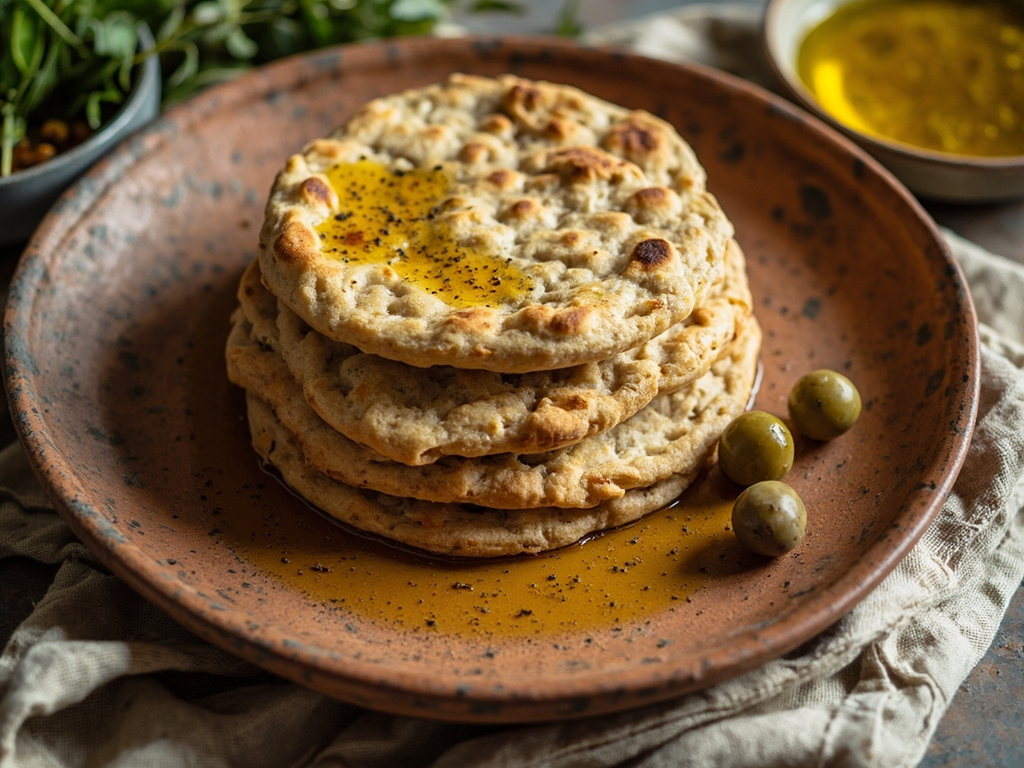
- Rub the hot flatbread with a little olive oil and serve immediately with olives and fresh cheese.
How it was made : Maza, made from barley rather than wheat, was the staple food of the common Greek, cheaper than wheat bread (artos). It was sometimes eaten raw, simply kneaded, or barely seared. The texts of Aristophanes and the Hippocratic doctors constantly mention it as ordinary food.
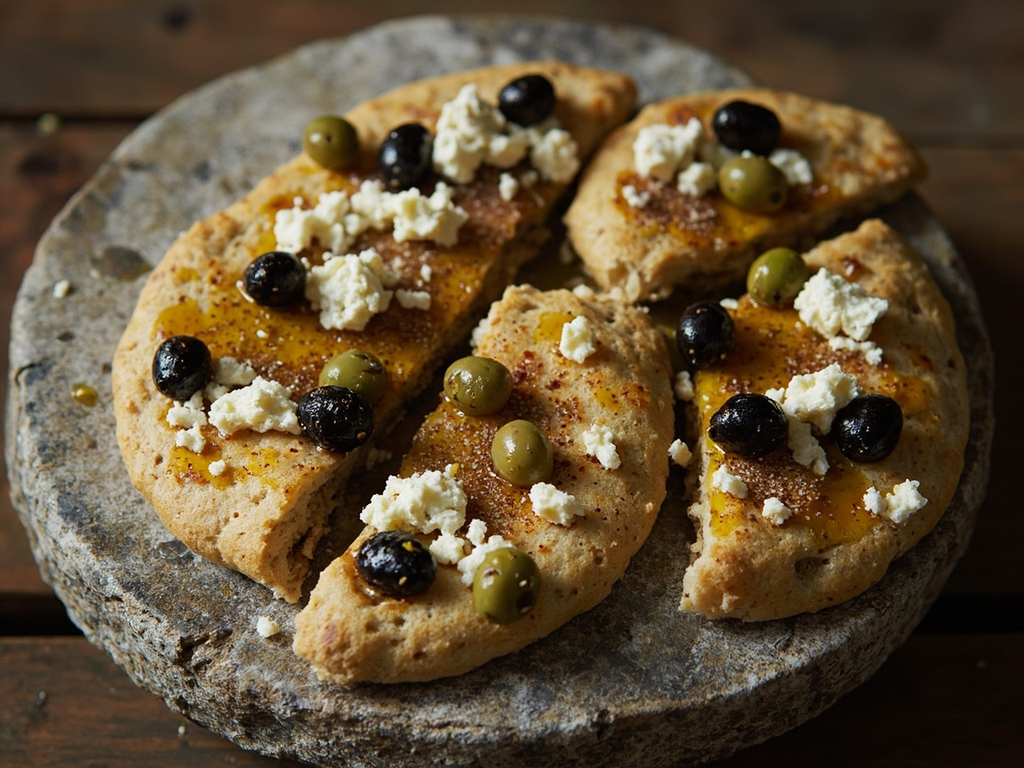
The contemporary twist : Serve it on a "table of Orpheus" board: warm flatbreads, black olives, fresh ewe's cheese and a drizzle of honey — an unapologetically vegetarian plate, a nod to the Orphic precept.
Sources : Andrew Dalby, Siren Feasts: A History of Food and Gastronomy in Greece (1996) · Corpus hippocratique, traités du régime
Orpheus · Charactorium