 flip
flipHoney-glazed roast goose with figs and coriander
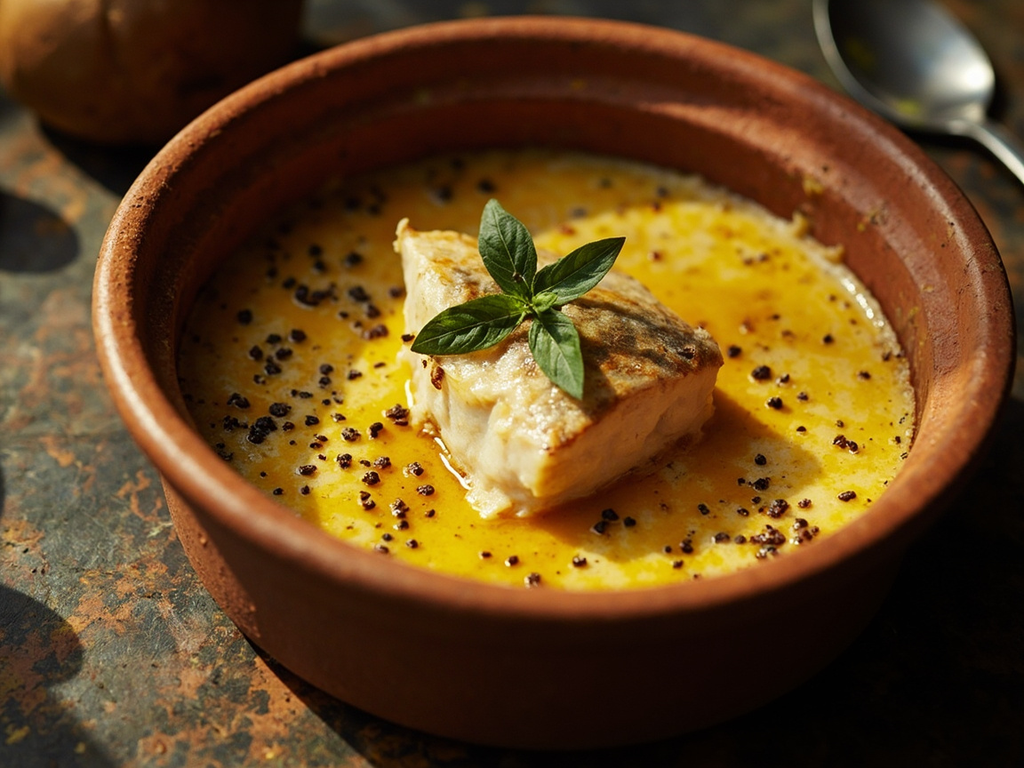
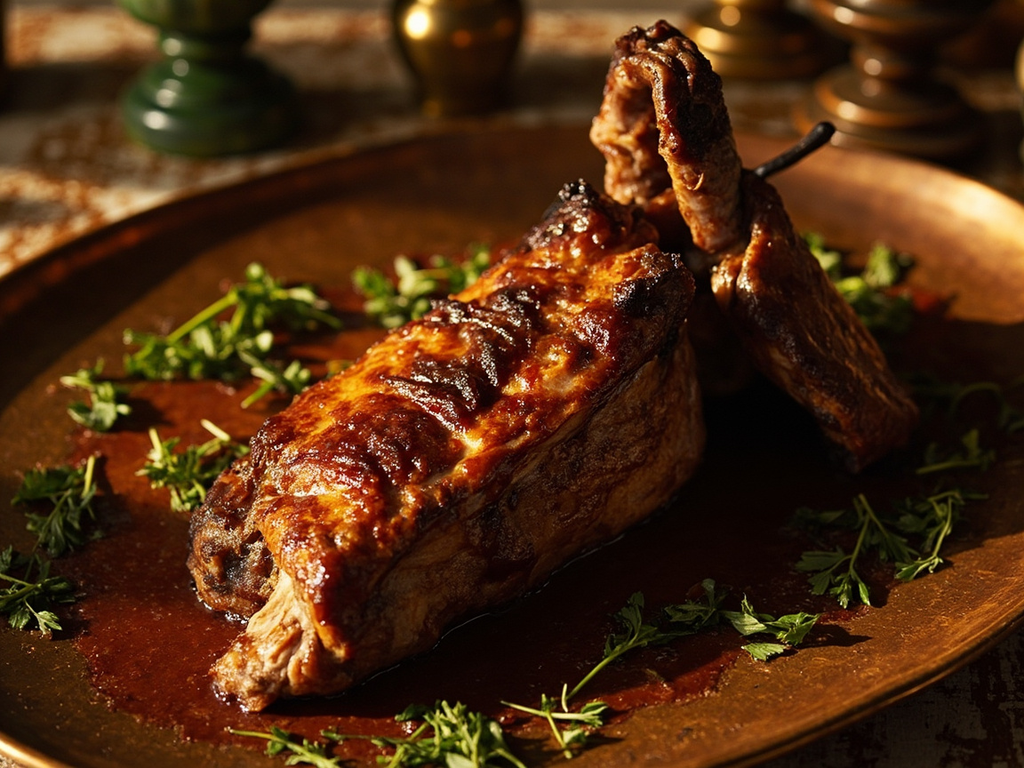
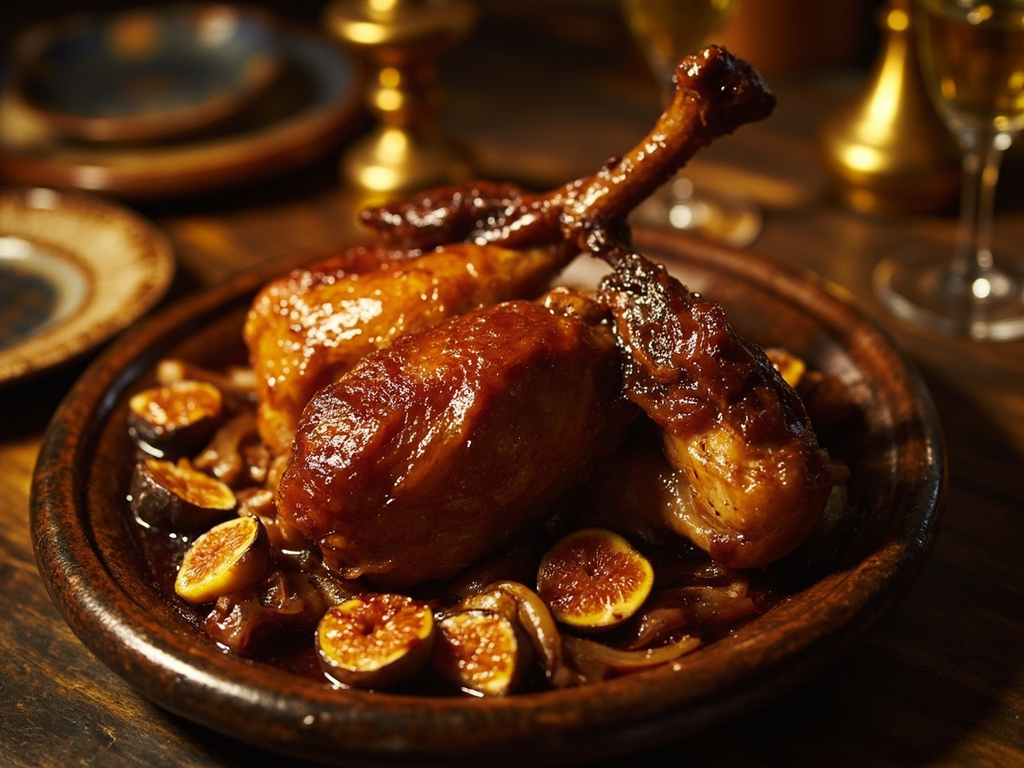
Honey-glazed roast goose with figs and coriander
Why this dish? During the great festivals of Osiris at Abydos and funerary banquets, fat marsh birds — geese and ducks fattened on the Nile banks — were offered. Roasted poultry glazed with honey is the noble dish that honors the god-king of the dead.
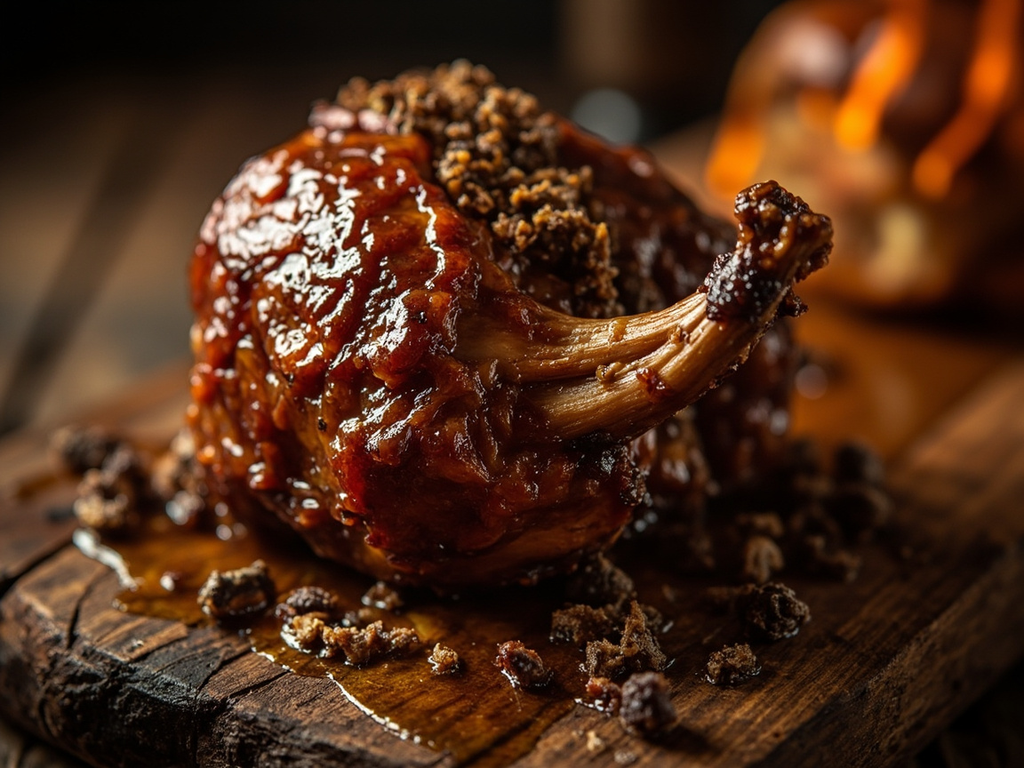
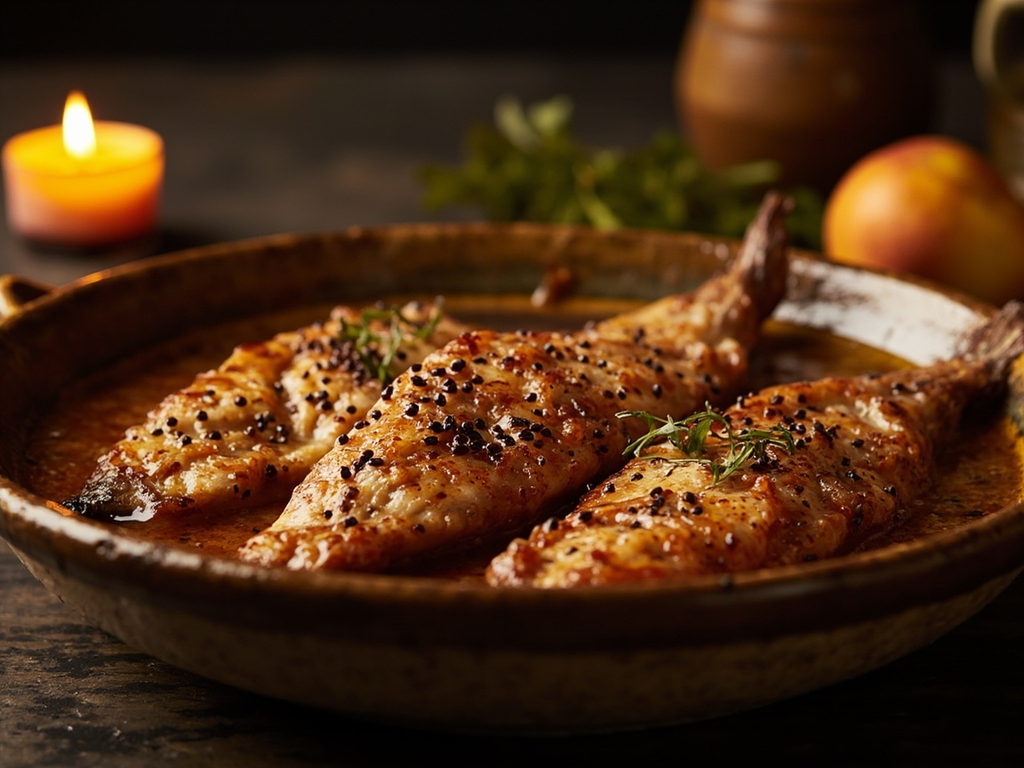
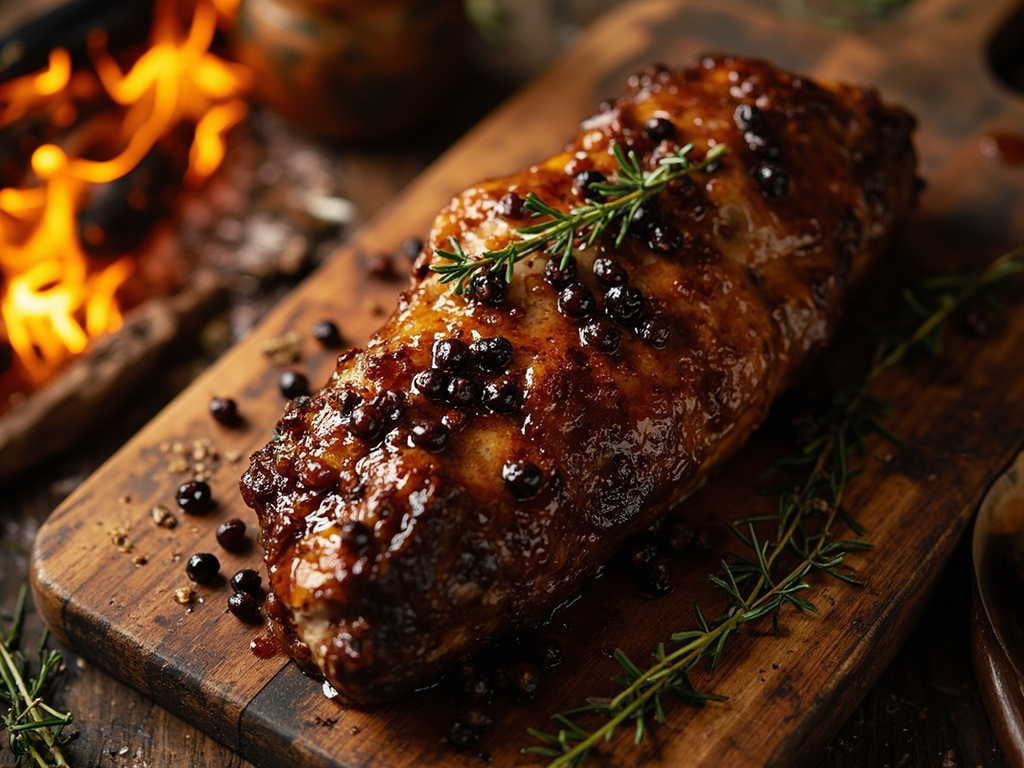
A golden goose, rubbed with desert spices, lacquered with honey, and served with melting figs. A feast-day dish where the richness of the marsh meets the sweetness of the orchards.
Let the harpists play, for here is the table of great days. My servants fattened the goose by the reeds, then rubbed it with coriander and cumin before browning it over the embers. I love it coated with the honey of Lower Egypt's bees, which turns the flesh to gold, and surrounded by figs that the sycamore offers me. Eat at my feast, mortal, as people once ate when the Nile overflowed with promises.
- •Fat Nile goose — one whole bird (centerpiece)
- •Honey — generously (glaze)
- •Fresh or dried figs — a cluster (garnish)
- •Ground coriander and cumin — a spoonful (spices)
- •Salt, onion — to taste (seasoning)
Honey-glazed roast goose with figs and coriander
A golden goose, rubbed with desert spices, lacquered with honey, and served with melting figs. A feast-day dish where the richness of the marsh meets the sweetness of the orchards.
Why this dish? During the great festivals of Osiris at Abydos and funerary banquets, fat marsh birds — geese and ducks fattened on the Nile banks — were offered. Roasted poultry glazed with honey is the noble dish that honors the god-king of the dead.
Let the harpists play, for here is the table of great days. My servants fattened the goose by the reeds, then rubbed it with coriander and cumin before browning it over the embers. I love it coated with the honey of Lower Egypt's bees, which turns the flesh to gold, and surrounded by figs that the sycamore offers me. Eat at my feast, mortal, as people once ate when the Nile overflowed with promises.
Ingredients (period version)
- Fat Nile goose — one whole bird (centerpiece)
- Honey — generously (glaze)
- Fresh or dried figs — a cluster (garnish)
- Ground coriander and cumin — a spoonful (spices)
- Salt, onion — to taste (seasoning)
Ingredients
- Goose legs or half goose (or duck) — 1.2 kg (centerpiece)
- Liquid honey — 4 tbsp (glaze)
- Fresh or soft dried figs — 8 (garnish)
- Coriander and cumin seeds — 2 tsp total (spices)
- Onion, salt, oil — 1 onion, 1 tsp salt (seasoning)
Method
- Crush coriander and cumin; mix with salt and a little oil; rub onto the poultry.
- Place sliced onion in a baking dish, set the goose on top, and roast at 180°C.
- Cook about 25 min per 500 g; halfway through, baste with honey every 15 minutes.
- Add halved figs to the dish 20 minutes before the end.
- Let rest 10 minutes; serve the glazed poultry surrounded by melting figs and juices.
How it was made : Tombs depict force-feeding of geese, attested as early as the Old Kingdom. Meat was rare and costly, reserved for feasts and elite offerings; it was roasted on a spit or stewed.
The contemporary twist : Deglaze the pan with fig vinegar and serve on a dark slate: a 'Golden Osiris' worthy of a festive table.
Sources : Banquet scenes from the tomb of Nakht, Thebes · Pierre Tallet, La cuisine de l'Égypte ancienne
Osiris · Charactorium