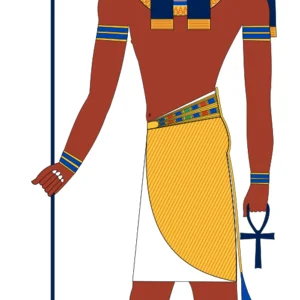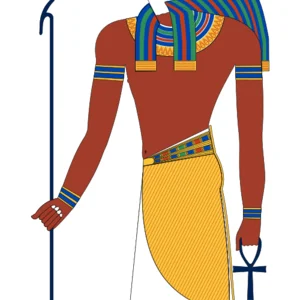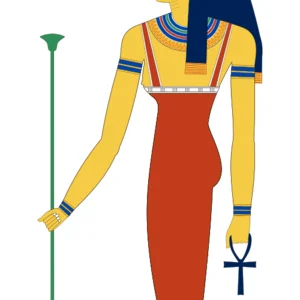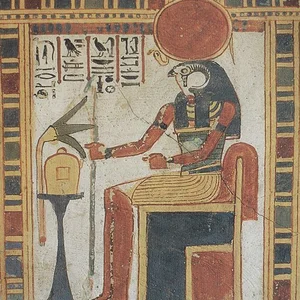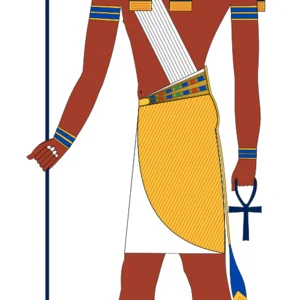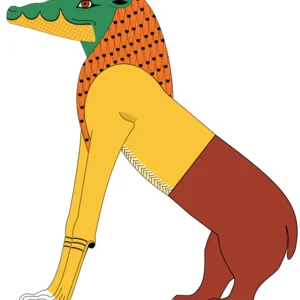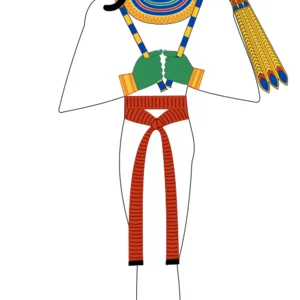

Osiris is a major deity of ancient Egyptian mythology, associated with fertility, agriculture, and above all the afterlife and resurrection. According to Egyptian legend, he was killed by his brother Set and then resurrected by his wife Isis, becoming the king of the underworld and the symbol of eternal life.
Osiris
Osiris
8 min read
Frequently asked questions
Key Facts
- Osiris is the god of the Nile and of fertility in Egyptian mythology, associated with the annual floods that were vital for agriculture
- According to myth, Osiris is killed and dismembered by his brother Set, then resurrected by his wife Isis, who reassembles his body
- Osiris becomes king of the Duat (the Egyptian underworld) and judges the souls of the dead based on their deeds during life
- His cult spanned more than 3,000 years in ancient Egypt and profoundly influenced beliefs about life after death
- Egyptian pharaohs identified themselves with Osiris and hoped to experience a similar resurrection after death and mummification
Works & Achievements
A foundational story of Egyptian mythology in which Osiris is murdered by his brother Set and then resurrected by Isis. This myth explains the cycles of death and rebirth, central to the Egyptian understanding of the afterlife and fertility.
Osiris became the central figure of Egyptian funerary religion, presiding over the judgment of souls and guaranteeing eternal life. This spiritual role transformed the Egyptian conception of what awaited after death.
Osiris embodied the life-giving floods of the Nile and the annual renewal of the earth. This association made him an essential god for agricultural prosperity and the Egyptian economy.
A founding mythological union that produced Horus, the legitimate heir. This marriage symbolizes the continuity of royal power and established the model for pharaonic dynastic unions.
Abydos became the main center of Osiris worship, with annual celebrations and pilgrimages. This cult shaped funerary and religious practices throughout ancient Egypt.
The myth of the resurrected Osiris justified and inspired the practices of mummification and bodily preservation. These rituals aimed to ensure the resurrection of the deceased following the Osirian model.
Anecdotes
Osiris was revered as the god of the Nile flood and the fertility of Egyptian lands. The ancient Egyptians associated his cycle of death and resurrection with the river's natural rhythm: each year, the Nile flood brought the nutrients needed for agriculture, symbolizing the rebirth of the god. This belief was so central that it explains why Osiris became the most widely worshipped deity in all of ancient Egypt.
According to the myth recorded in the Pyramid Texts, Osiris was dismembered into fourteen pieces by his brother Set after his death. His wife Isis miraculously recovered and reassembled all the parts of Osiris's body, enabling a magical resurrection. This legend, carved into temples and tombs, profoundly shaped the embalming and mummification rituals performed for Egyptian pharaohs.
Osiris was depicted holding the royal insignia of power: the heqa scepter, the nekhakha flail, and the ankh cross (symbol of eternal life). This distinctive iconography made him instantly recognizable in ancient Egyptian art and reinforced his role as king of the afterlife. Pharaohs who presented themselves as living incarnations of this god carried the same symbols to assert their divine legitimacy.
The temple of Osiris at Abydos was one of the most important pilgrimage sites in ancient Egypt, where worshippers gathered each year to celebrate the mysteries and resurrection of the god. Thousands of Egyptians took part in dramatic rituals re-enacting the death and rebirth of Osiris, making it a major religious event comparable to the great religious festivals of today.
Primary Sources
Osiris N., arise! You are not dead. You are alive, you grow old in life. May Re grant you eternal life in the beyond.
I am Osiris, king of the gods, I reign over the kingdom of the dead. The souls of the departed appear before me to be judged according to their earthly deeds.
Osiris has risen from his golden throne. Isis and Nephthys weep for him. Set committed an abominable act by killing his brother, but Osiris is reborn through the magic of Isis.
Osiris, the great god, he who reigns in the Duat, receives the offerings of the living and blesses those who honor his name and eternal memory.
Key Places
The main center of Osiris worship in ancient Egypt. Abydos was the most important pilgrimage site, where Egyptians came to honor the god and take part in festivals commemorating his death and resurrection.
The ancient capital of the 16th nome of Lower Egypt, considered the original seat of Osiris's rule and worship. According to myth, this is where the god reigned before his death.
A major religious complex where Osiris was venerated alongside other deities. The temple at Dendera contains important depictions of Osiris and accounts of his mythology.
A great religious center where Osiris was worshipped within the framework of late Egyptian theology. Many temples and royal tombs here celebrate the Osirian cult and the promise of eternal life.
A sacred island in Nubia where the cult of Osiris was celebrated alongside that of Isis. The Temple of Isis at Philae was a key site in Osirian mythology.
The underworld of Egyptian mythology, over which Osiris reigns as king of the dead. Though spiritual rather than geographical, the Duat is inseparable from Osiris's identity as god of resurrection.
Typical Objects

A royal emblem shaped like a curved staff, symbolizing divine authority and magical power. Osiris, as both god and king, is often depicted holding this scepter, which represents his dominion over the worlds of the living and the dead.

Osiris's distinctive crown, combining the white crown of Upper Egypt with two ostrich feathers. It identifies him as king of the underworld and symbolizes his divine dignity and resurrection.

A pair of Egyptian royal emblems: the crook (symbol of the shepherd and of authority) and the flail (an agricultural tool). Together, they represent Osiris's royal power and his connection to farming and the fertility of the land.

An elaborate funerary chest holding the mummified body of Osiris, according to Egyptian belief. This object symbolizes his death and transformation, and is central to the mythology of his resurrection and his kingship in the afterlife.

Symbols of the fertility and agriculture over which Osiris presides as a protective deity. Wheat, linked to his death and seasonal resurrection, represents the natural cycle of life, death, and renewal.

A pillar-shaped amulet symbolizing the backbone and stability. It is directly associated with Osiris as a symbol of his resurrection and the permanence of eternal life in Egyptian religion.

White linen bandages used to wrap mummified bodies according to Egyptian funerary rites. Osiris is regularly depicted as a mummy, embodying the transformation and preservation required for life after death.

A symbolic representation allowing the soul of the deceased to reach the heavens and the afterlife. In the Pyramid Texts, Osiris helps souls climb toward the gods, illustrating his role as a guide of the dead.
School Curriculum
Vocabulary & Tags
Key Vocabulary
Tags
Mythologie
Daily Life
Morning
As a major deity of the Egyptian pantheon, Osiris has no daily life in the human sense. However, in mythology, he is portrayed as a divine king who, before his murder, ruled over ancient Egypt. His divine mornings would have been devoted to his duties as king and god of vegetation, watching over the fertility of the land.
Afternoon
After his resurrection and transformation into god of the afterlife, Osiris presides over the tribunal of the dead in the Duat (the Egyptian underworld). His divine afternoons would be spent judging souls and administering the kingdom of the dead — a central function of his mythological role.
Evening
Osiris sits upon his throne in the afterlife, adorned with his emblems of power. His evenings are defined by his role as guarantor of eternal life and resurrection, upholding cosmic order (Ma'at) and ensuring the proper observance of funerary rites practiced by the living Egyptians.
Food
As a god, Osiris does not eat as humans do. However, Egyptian funerary offerings were made in his honor: bread, beer, sacrificial meat, and agricultural produce — reflecting his domain over fertility and the agriculture of the Nile.
Clothing
Osiris is traditionally depicted wearing Egyptian royal regalia: a pleated kilt (shenti), the White Crown of Upper Egypt (Hedjet), or a composite crown. He carries the royal insignia — the heqa scepter and the nekhakha flail, symbols of both regal and divine authority.
Housing
Osiris dwells in the Duat, the Egyptian underworld and realm of the dead, where he sits upon his judgment throne. Before his mythological death, he is said to have inhabited the royal palaces of Egypt, befitting his status as earthly king in the legendary narratives.
Historical Timeline
Period Vocabulary
Visual Style
Un style fusionnant l'art égyptien antique classique avec des influences Art Déco, mettant l'accent sur les dorures sacrées, les bleus profonds et les verts de renaissance. L'atmosphère mystique et lumineuse évoque à la fois la majesté divine et le mystère de l'au-delà égyptien.
Sound Ambience
Une ambiance sonore mystique et sacrée mêlant chants rituels égyptiens, tambours cérémonieux et flûtes anciennes, évoquant les temples funéraires et le voyage vers l'au-delà, avec des éléments surnaturels suggérant la résurrection et l'immortalité d'Osiris.
Liens externes & ressources
Références
Œuvres
Le mythe d'Osiris et Set
environ 2400-2300 av. J.-C.
Roi de l'au-delà et des morts
à partir de la IVe dynastie (environ 2600 av. J.-C.)
Symbole de l'inondation du Nil
période pharaonique (3000-30 av. J.-C.)
Mariage sacré avec Isis
période dynastique
Institution du culte à Abydos
à partir du Moyen Empire (2000 av. J.-C.)
Influence sur la momification
à partir de l'Ancien Empire (2700 av. J.-C.)