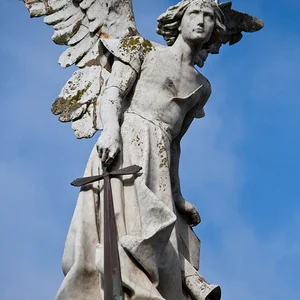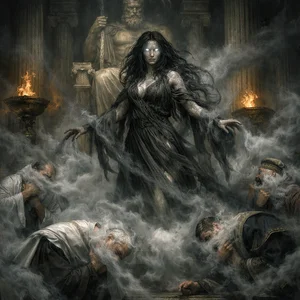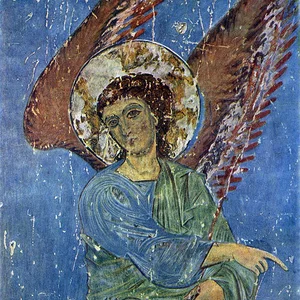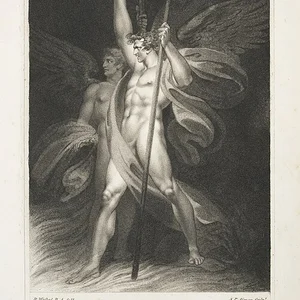

Titaness of brilliance and prophecy in Greek mythology, Phoebe is the daughter of Gaia and Ouranos, wife of the Titan Coeus. Mother of Leto, she is the grandmother of Apollo and Artemis, and is said to have held the oracle of Delphi before passing it on to her grandson.
Phoebe(50 — 100)
Phoebe of Cenchreae
8 min read
Frequently asked questions
Key Facts
- Daughter of Gaia and Ouranos, belonging to the first generation of Titans according to Hesiod's Theogony
- Wife of Coeus, the Titan associated with intellect and the starry sky
- Mother of Leto and Asteria
- Guardian of the oracle of Delphi before Themis and then Apollo, according to Aeschylus (Eumenides, c. 458 BCE)
- Her name means 'the Bright One' — passed on to Apollo, who bore the epithet Phoebus ('Bright') in her honor
Works & Achievements
The founding act of Delphic mythology: Phoebe gives Apollo, at his birth, guardianship of the prophetic sanctuary. This gift makes Apollo the great oracular god of the Greek world and earns him his epithet Phoebus.
Third guardian of Delphi after Gaia and Themis, Phoebe delivered oracles there to gods and mortals alike. Her role as intermediary between the primordial ages and the Olympian era makes her an essential figure in the Greek prophetic tradition.
Through her union with the Titan Coeus, Phoebe gave birth to Leto, who would become the mother of Apollo and Artemis. She is thus the origin of two of the most venerated Olympian deities in the Greek world.
The second daughter of Phoebe and Coeus, Asteria is the goddess of nocturnal oracles and shooting stars. Her birth extends Phoebe's legacy of nocturnal divination across two generations.
Anecdotes
Phoebe is one of the few Titanesses to have held the oracle of Delphi before the Olympian gods. According to Aeschylus in the *Eumenides*, she received the gift of prophecy from Themis, herself an heir of Gaia, and passed it on to her grandson Apollo as a birth gift. It is from her name — Phoibe, “the Bright One” — that Apollo derived his famous epithet Phoebus.
Her name Phoebe comes from the Greek *phoibos*, meaning “bright, pure, radiant.” This same root evoked lunar clarity, linking Phoebe to the light of night long before the Olympians divided the cosmos into distinct domains. Her granddaughter Artemis later inherited this association with the moon.
Phoebe married her fellow Titan Coeus, whose name is sometimes interpreted as linked to celestial intelligence and reason. Together they had two daughters: Leto, future mother of Apollo and Artemis, and Asteria, goddess of nocturnal oracles. Phoebe is thus the ancestor of a prophetic lineage spanning three generations of deities.
During the Titanomachy, the ten-year war between the Titans and the Olympians, Phoebe was imprisoned in Tartarus along with the defeated Titans. Hesiod describes this abyss as being as deep beneath the earth as the sky is high above it. Her Olympian descendants — Apollo and Artemis — nonetheless continued to carry her luminous legacy.
The transmission of the oracle of Delphi illustrates how the Greeks conceived of the passage of mythic time: Gaia gives to Themis, Themis to Phoebe, Phoebe to Apollo. This chain of transmission guaranteed the legitimacy of the Delphic cult by rooting it in the most ancient origins of the cosmos.
Primary Sources
"Coeus and Phoebe joined in love's embrace; and she, conceiving, bore Leto of the dark robe, always gentle and kind, gracious to men and to the immortal gods."
"First, in this prayer, I give the place of honor to the first prophet, Earth; and after her to Themis, for she was the second to take this oracular seat of her mother; and third in succession, with Themis' consent and by no force, another Titaness, child of Earth, Phoebe, settled here. She gave it as a birthday gift to Phoebus, who takes his name from Phoebe."
"The male children of Ouranos and Gaia were: Oceanus, Coeus, Hyperion, Crius, Iapetus, and Cronus; and among the females: Tethys, Rhea, Themis, Mnemosyne, Phoebe, Dione, and Theia."
"Leto, daughter of Coeus, went with the far-shooting god to the island of Delos to give birth to the greatest of the gods, Apollo of the golden bow."
Key Places
Sacred site on Mount Parnassus where Phoebe is said to have held prophetic power before Apollo. Regarded as the omphalos — the navel of the world — this sanctuary lies at the heart of Phoebe's legacy.
Sacred island in the Aegean Sea where Leto, daughter of Phoebe, gave birth to Apollo and Artemis. It was here that Apollo received the oracle of Delphi as a gift from his grandmother, perpetuating her prophetic lineage.
A primordial abyss beneath the Underworld, as deep below the earth as the sky is high above it, according to Hesiod. After the Titanomachy, Phoebe and the defeated Titans were imprisoned there by Zeus for eternity.
Home of the Olympian gods who supplanted the Titans. It is from Olympus that Apollo, heir to Phoebe's prophetic legacy, exercises his radiant divinity under the name Phoebus.
Typical Objects

Sacred seat installed at Delphi above a fissure from which prophetic vapors escaped. Phoebe is said to have sat upon it before passing it to Apollo, making the tripod the symbol of the continuity of prophecy.

Symbolic attribute of Phoebe, whose name means “bright.” This golden crown evokes the lunar and solar radiance she embodies, before these domains were distributed between Artemis and Apollo.

Sacred plant of Delphi associated with Apollonian prophecy, of which Phoebe is the symbolic foremother. The priestesses chewed its leaves to enter an oracular state, perpetuating Phoebe’s legacy.

Attribute of the Titanesses linked to illumination. Phoebe’s torch represents the transmission of prophetic knowledge from one divine generation to the next, from Gaia to Apollo.

Phoebe is associated with nocturnal light before Artemis, her granddaughter, became its appointed goddess. In Latin poetry, the name Phoebe is indeed used as an epithet for the moon itself.

The *Theogony* describes Leto, daughter of Phoebe, clothed in a dark garment. This inherited vestment symbolically links Phoebe to the gentle, mysterious darkness of night — a counterpoint to her own radiance.
School Curriculum
Vocabulary & Tags
Key Vocabulary
Daily Life
Morning
Before the Olympian sun regulated time, Phoebe emerged from the primordial light alongside the other Titans. Her mornings were devoted to perceiving celestial signs — the movements of the stars, the trembling of light — which formed the substance of Titanic prophecy.
Afternoon
Phoebe sat on the Delphic tripod, above the sacred vapors rising from the depths of Gaia. She received the prophetic breaths and interpreted them, conveying to mortals and gods alike the decrees of fate within the sanctuary entrusted to her by Themis.
Evening
At dusk, Phoebe radiated a soft, silvery light like that of the moon. She watched over her daughter Leto and the lineage that would spring from her, sensing that her grandchildren Apollo and Artemis would carry on her luminous and prophetic legacy under new Olympian names.
Food
In Greek mythological tradition, the Titans fed on ambrosia and drank divine nectar — the foods that confer immortality. Phoebe's existence was sustained by primordial light and the prophetic emanations of the Earth Mother, with no need for mortal nourishment.
Clothing
Phoebe is depicted draped in veils of silver and luminous white, the colors of lunar clarity and oracular purity. A crown of light adorns her head as a sign of her radiant nature, and the priestesses of Delphi drew inspiration from her appearance in their ritual attire.
Housing
Before the Titanomachy, Phoebe dwelled in the primordial spaces between sky and earth, where the cosmos was still taking shape. She shared the sanctuary of Delphi with the sacred presence of Gaia, in a prophetic cave above which the great temple of Apollo would later rise.
Historical Timeline
Period Vocabulary
Liens externes & ressources
Références
Œuvres
Transmission de l'oracle de Delphes à Apollon
Temps mythiques
Exercice de la prophétie sur le trépied delphique
Temps mythiques
Union avec Coïos et naissance de Léto
Temps mythiques
Naissance d'Astéria
Temps mythiques