
German dancer and choreographer
Pina Bausch(1940 — 2009)
Pina Bausch
Allemagne
8 min read
Frequently asked questions
Key Facts
Works & Achievements
A radical reinterpretation of Stravinsky's ballet performed on a stage covered in earth, where the ritual sacrifice becomes a universal metaphor for domination and violence. Considered one of the greatest choreographic works of the 20th century.
An autobiographical piece in which Pina Bausch dances herself, eyes closed, through a space cluttered with chairs. Inspired by the café of her childhood, this poetic work explores loneliness, memory, and the search for tenderness.
An exploration of relationships between men and women set in a dance hall, alternating between seduction, rejection, and everyday violence. The piece was revived in 2000 with non-dancers over 65, then again in 2008 with teenagers, demonstrating its universal resonance.
A stage entirely covered with 8,000 pink carnations, through which dancers move dressed in everyday clothing. A masterpiece of theatrical poetry that blends tenderness, melancholy, and absurdity.
The first of the 'city pieces' inspired by Palermo and Sicilian culture, opening with the collapse of a concrete block wall on stage — a likely echo of the imminent fall of the Berlin Wall. This work launched a cycle of collaborations with cities around the world.
A piece inspired by a stay in Lisbon and Cape Verde, infused with the rhythms of fado and Cape Verdean music. One of the most luminous and sensory works in the Tanztheater Wuppertal repertoire.
Anecdotes
Pina Bausch was discovered at the age of 14 by Kurt Jooss, director of the Folkwangschule in Essen, who immediately recognized her exceptional talent. She went on to receive a scholarship to study at the Juilliard School in New York, where she trained alongside the greatest names in American contemporary dance.
During the premiere of 'Café Müller' in 1978, Pina Bausch chose to dance the lead role herself, eyes closed, moving through chairs and tables in an almost dreamlike space. The piece, inspired by the café her parents ran in Solingen during her childhood, became one of the most iconic works of the 20th century.
Her creative process was radically new: she would ask her dancers existential questions — 'What are you afraid of?' or 'Describe someone you love' — and build her pieces from their spontaneous responses. This collaborative approach blurred the boundary between the private self and the stage.
Pedro Almodóvar and Wim Wenders were unconditional admirers of her work. Wenders dedicated the documentary 'Pina' (2011) to her, filmed in 3D after her sudden death from lung cancer, diagnosed just five days before she died in June 2009, at the age of 68.
Pina Bausch led the Tanztheater Wuppertal for more than 35 years, transforming this industrial city in North Rhine-Westphalia into a world capital of contemporary dance. She received the Kyoto Prize in 2007, one of the most prestigious international honors in the arts and culture.
Primary Sources
I'm not interested in how people move, but in what moves them. What matters is what lies behind the gestures.
Pina Bausch's Tanztheater does not seek to tell a story in the traditional sense. It explores human relationships in their most primal and most vulnerable dimensions.
Dance is for me a way of seeing the world, not just of showing it. Each piece is a question I ask of the dancers and the audience.
Our sets must breathe. Earth, water, flowers — these natural elements bring the body back to its essence. We have been working together since the early days in Wuppertal.
Key Places
Home of the Tanztheater Wuppertal since 1973, this opera house in the Rhenish industrial city became, under Bausch's direction, a world-renowned center for contemporary dance. Most of her major works were created here.
Pina Bausch's hometown, where her parents ran a café-restaurant whose customers she observed as a child, absorbing the human behaviors that would feed her entire body of work. The atmosphere of that café resurfaces directly in 'Café Müller' (1978).
An arts school founded on Bauhaus principles where Pina Bausch trained from 1955 under the direction of Kurt Jooss. This institution shaped her vision of a total art form blending dance, music, and the visual arts.
The prestigious performing arts school in Manhattan where Bausch honed her technique from 1960 to 1962 on a Ford Foundation scholarship. Her encounter with American modern dance — through Limón and Tudor — greatly broadened her artistic range.
The Parisian venue that accompanied Pina Bausch's international career, regularly programming the Tanztheater Wuppertal from the 1970s onward. Paris was one of the earliest centers of international recognition for her work.
Typical Objects

Tanztheater dancers frequently wore evening gowns and high heels to highlight the fragility and resilience of the female body. These iconic shoes symbolize the tension between socially imposed elegance and the freedom of movement.

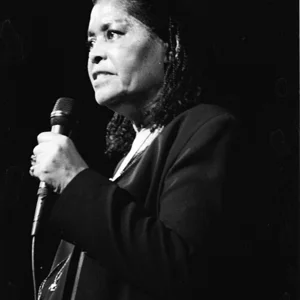
Pina Bausch regularly incorporated spoken word into her pieces, using microphones to amplify the voices of dancers as they sang, recited, or answered questions. This device blurred the boundary between dance, theater, and confession.

For 'Frühlingsopfer' (1975) and other pieces, the stage was covered in earth or sand, transforming it into a raw natural space. The dancers' bodies plunged into it, dragged themselves across it, embodying a visceral connection to nature.

In 'Nelken' (1982), 8,000 pink carnations covered the entire stage, creating a poetic and melancholic landscape. The flower recurs throughout her work as a symbol of fleeting beauty and human fragility.

Pina Bausch recorded in her notebooks the questions she posed to her dancers and their responses, gathering the raw material for her pieces. This method of guided improvisation was at the heart of her unique creative process.

An iconic costume of Tanztheater, the evening gown worn by female performers in situations of distress or intense physical exertion creates a striking visual contrast. It questions the social codes imposed on women.

In 'Arien' (1979), the stage was flooded with water through which the dancers moved, creating hypnotic visual and sound effects. In Bausch's work, water becomes a choreographic element in its own right — a symbol of fluidity and danger.
School Curriculum
Daily Life
Morning
Pina Bausch started her days late, often after 10 a.m., a habit shaped by the rhythms of theater life. She would drink strong coffee while reading the newspapers before turning to correspondence and creative notes. Her mornings in Wuppertal were often solitary — a time for reflection before the intensity of rehearsals.
Afternoon
Afternoons were devoted to rehearsals at the Tanztheater Wuppertal, which could stretch on for six to eight hours. Bausch would observe her dancers, ask questions, take notes, and piece together fragments of responses into choreographic sequences. She smoked cigarettes and drank coffee throughout the sessions, attentive to every detail.
Evening
Evenings were often taken up with performances, discussions with dancers and artistic collaborators, or dramaturgical work. Pina Bausch enjoyed going to restaurants after shows with her team to talk freely. She kept late hours and slept little — a creative insomnia that fed her work.
Food
Pina Bausch had a simple relationship with food, preferring communal meals to refined dining. She was fond of traditional German cuisine and Italian restaurants. Cigarettes were a constant presence in her daily life, a habit she kept until the very end and one that ultimately led to her lung cancer.
Clothing
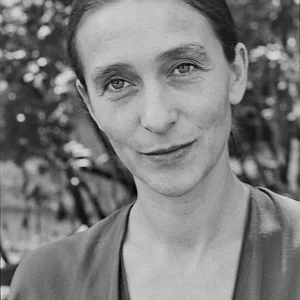
Off stage, Pina Bausch dressed simply, favoring black or dark clothing — often loose trousers and sweaters. Her rehearsal wardrobe was functional and understated, a contrast to the sophistication of the stage costumes she designed with her collaborators. Her dark hair, worn pulled back or loose, was her visual signature.
Housing
Pina Bausch spent most of her adult life in Wuppertal, in a modest apartment close to the theater. She considered the Tanztheater her true home and spent the bulk of her time in the studios and rehearsal rooms. During international tours, her temporary accommodation was chosen for its proximity to the performance venues.
Historical Timeline
Period Vocabulary
Visual Style
Esthétique théâtrale sombre et poétique : clair-obscur dramatique, robes longues, sols nus ou fleuris, corps expressifs dans des éclairages au grain cinématographique.
Sound Ambience
Ambiance d'une répétition au Tanztheater Wuppertal : plancher de scène, piano, voix mêlées et silences habités propres au processus de création de Bausch.
Liens externes & ressources
Références
Œuvres
Frühlingsopfer (Le Sacre du Printemps)
1975
Café Müller
1978
Kontakthof
1978
Nelken (Les Œillets)
1982
Palermo Palermo
1989
Masurca Fogo
1998