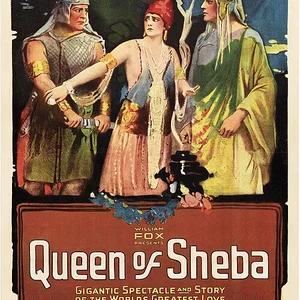

Legendary ruler mentioned in the Bible, the Quran, and Ethiopian tradition. She is said to have visited King Solomon in Jerusalem, drawn by his wisdom. An iconic figure of exchange between ancient Arabia, Africa, and the Near East.
Queen of Sheba
The Queen of Sheba
10 min read
Frequently asked questions
Key Facts
- Mentioned in the Hebrew Bible (1 Kings 10) as a queen who came to test Solomon's wisdom, around 950 BC
- Referenced in the Quran (Surah An-Naml) under the name Bilqīs
- Ethiopian tradition identifies her as Makeda, ancestor of Ethiopia's Solomonic dynasty
- Her kingdom is located either in Yemen (Kingdom of Saba/Sheba) or in East Africa
- A symbol of the meeting of civilizations and the pursuit of knowledge in three major monotheistic traditions
Works & Achievements
A hydraulic masterpiece of the Kingdom of Sheba, this dam irrigated thousands of hectares in the Marib region (present-day Yemen). Its collapse in the 6th century CE, mentioned in the Quran (Surah Saba), is presented as divine punishment and marks the end of the kingdom's prosperity.
A large oval temple dedicated to the moon god Almaqah, the patron deity of the Kingdom of Sheba. Its ruins are among the most impressive of Sabaean civilization and have earned the site its popular nickname linked to the Queen of Sheba.
Ethiopia's national epic recounting the story of Makeda, Queen of Sheba, and her son Menelik I, the legendary ancestor of Ethiopian emperors. This sacred text establishes the Solomonic dynastic legitimacy and remains a central spiritual document for the Ethiopian Orthodox Church.
The Queen of Sheba is one of the few women implicitly named in the Quran, under the name Bilqis. Her story of conversion and submission to God became a model in medieval Islamic literature and inspired countless theological commentaries and poetic works.
A corpus of inscriptions in ancient South Arabian script, carved on stelae and monuments in present-day Yemen, attesting to the real existence of the Kingdom of Sheba, its rulers (mukarribs), and its institutions. These archaeological sources provide a partial historical foundation for the legend.
A four-act opera premiered in Vienna, depicting the Queen of Sheba's romantic fascination with one of Solomon's favorites. This work illustrates the enduring power of the figure in 19th-century European imagination and her place in the grand Romantic operatic repertoire.
Anecdotes
According to the First Book of Kings (chapter 10), the Queen of Sheba undertook an extraordinary journey from her distant kingdom to Jerusalem to test the wisdom of King Solomon with riddles. She arrived with a caravan laden with spices, gold, and precious stones — riches so magnificent that the Bible notes the like had never been seen before in Israel. Impressed by Solomon's answers, she publicly acknowledged the greatness of his wisdom.
In the Quran (Surah An-Naml, verse 44), Solomon had a palace built with a floor of transparent glass laid over a pool of water. When Queen Bilqis — the Arabic name for the Queen of Sheba — crossed this hall, she lifted her robe thinking she was walking on water. The scene symbolizes both Solomon's mastery of construction and her own openness to recognizing what she does not yet understand, just before her conversion to monotheism.
The Ethiopian epic Kebra Nagast (14th century) tells that the queen, known as Makeda, had a son by Solomon: Menelik I. As an adult, Menelik traveled to Jerusalem to meet his father, then brought back to Ethiopia the Ark of the Covenant — the sacred chest containing the Tablets of the Law. This tradition forms the basis of the dynastic legitimacy claimed by Ethiopian emperors, who traced their lineage to the Solomonic line well into the 20th century.
In certain medieval Jewish traditions (Midrash Mishle and the Alphabet of Ben Sira), the Queen of Sheba is linked to Lilith, a demonic figure with bird-like feet. Solomon is said to have discovered her supernatural nature through the glass floor, which revealed her inhuman limbs. This blending of the biblical queen with figures from folklore reflects the enduring fascination surrounding a character who sits at the boundary between myth and history.
Islamic tradition portrays Bilqis as a queen who worshipped the sun before her encounter with Solomon. In the Quran, it is a hoopoe — Solomon's messenger bird — that brings the king news of a kingdom ruled by a powerful woman. Bilqis ultimately submits to God after witnessing a series of wonders, becoming a model of enlightened conversion in classical Islamic literature.
Primary Sources
The queen of Sheba, having heard of the fame of Solomon, came to test him with hard questions. She came to Jerusalem with a very great retinue, with camels bearing spices, and very much gold, and precious stones.
She has a magnificent throne. I found her and her people prostrating to the sun instead of prostrating to Allah. She said: My Lord, I have wronged myself, and I submit with Solomon to Allah, Lord of the worlds.
And Makeda, queen of Ethiopia, heard tell of the wisdom and glory of Solomon, king of Israel. She set out with a great retinue and journeyed to him. She put questions to him, and he answered them all.
A woman who was queen of Egypt and Ethiopia had a passionate love of wisdom and virtue. She came to visit Solomon, bringing gifts of gold and spices, to test for herself the reputation of his wisdom.
The queen of Sheba posed seven riddles to Solomon. She said to him: If you solve them, I will believe you to be wise; if not, you are like everyone else. And Solomon answered all her questions; there was not one he could not answer.
Key Places
The ancient capital of the Kingdom of Sheba, Marib was home to the famous Great Dam and the Temple of Awwam (known as the 'Throne of Bilqis'). This archaeological site is the leading candidate for the location of the kingdom from which the Queen of Sheba is said to have come.
It is in Jerusalem, in the palace and Temple of Solomon, that the legendary encounter is said to have taken place according to the Bible and the Quran. The city is the symbolic heart of the story — a place of wisdom and revelation for a queen who traveled from afar.
According to the Kebra Nagast, the Queen of Sheba (Makeda) ruled from Aksum, and it is there that her son Menelik I is said to have brought back the Ark of the Covenant. The Cathedral of Saint Mary of Zion in Aksum is believed to house the Ark according to Ethiopian tradition.
This great lunar temple dedicated to the deity Almaqah, located near Marib, is traditionally called the 'Throne of Bilqis' by local populations. It is one of the most significant surviving monuments of Sabaean civilization.
In religious narratives, Sheba refers to a kingdom at the crossroads of the Arab, African, and Mediterranean worlds — a place of wealth, wisdom, and mystery. Its exact location is disputed between Yemen and Ethiopia, reflecting the legendary dimension of the figure herself.
Typical Objects

In the Quran, Solomon miraculously has Bilqis's throne transported from her distant palace to Jerusalem in order to test her. This object symbolizes the queen's royal power and becomes a test of her wisdom: will she recognize her own throne, now transformed?

The Queen of Sheba brought Solomon spices in a quantity that had "never been equaled" according to the Bible. The kingdom of Sheba controlled the trade routes for incense and myrrh between southern Arabia and the Mediterranean, making these substances both its wealth and its emblem.

One hundred and twenty talents of gold were offered to Solomon, according to the biblical account. The gold represents the fabulous wealth of the kingdom of Sheba and the diplomatic generosity of its queen, establishing an exchange protocol between two sovereigns that sealed their intellectual and commercial alliance.

The transparent glass floor that Solomon had built over a pool is the central trial in the Quranic narrative. This object confronts the queen with the difference between illusion and reality, symbolizing the passage from ignorance to divine knowledge.

In the Quran, it is a hoopoe sent by Solomon that discovers Bilqis's kingdom and brings back the news. This bird becomes the intermediary between two worlds and the catalyst for the encounter between the two sovereigns.

The Quran describes the letter sent by Solomon to Bilqis, beginning with "Bismillah" (in the name of God). This letter is presented as a sacred object that opens a diplomatic negotiation and initiates the queen's spiritual conversion.

Among the gifts offered to Solomon were precious stones of exceptional quality. These gems bear witness to the trade routes connecting East Africa, Arabia, and the Near East, over which the Queen of Sheba was one of the principal rulers.
School Curriculum
Vocabulary & Tags
Key Vocabulary
Tags
Daily Life
Morning
The queen begins her day with purification rites and offerings to the lunar god Almaqah or the sun god, depending on tradition: libations of water and burning incense on stone altars. She then receives reports from her scribes on the state of the caravans and the commercial flow of spices and incense, the lifeblood of her kingdom.
Afternoon
She presides over diplomatic audiences in her palace, receiving merchants, ambassadors, and tribal chiefs from across Arabia and Africa. Her advisors — priests and administrators — bring before her decisions on water management related to the upkeep of the irrigation network and the great dam of Marib.
Evening
The evening is devoted to court festivities: banquets with music played on lyres and percussion instruments, recitations of epic poems and sacred genealogies. In the Quranic account, the queen holds council with her nobles before any major decision, demonstrating a collegial exercise of power.
Food
The diet of the Sabaean court centers on dates, pomegranates, spelt bread, and honey, accompanied by roasted meats (lamb, gazelle) and dried fish from the Red Sea. The kingdom's own spices — cinnamon, cardamom, frankincense — perfume both the food and the ceremonial drinks.
Clothing
The queen wears robes of fine linen dyed in saffron and purple, cinched at the waist by belts encrusted with precious stones. Her elaborate headdress features a gold solar or lunar disc, a symbol of her closeness to the divine; her arms and ankles are adorned with heavy bracelets of gold and lapis lazuli.
Housing
The royal palace of Sheba — likely located at Marib or Aksum depending on the tradition — is built from blocks of limestone and alabaster, organized around a large inner courtyard with a pool. The ceilings are decorated with reliefs of ibexes, stars, and suns; the polished stone floors reflect the light of torches and oil lamps.
Historical Timeline
Period Vocabulary
Visual Style
Esthétique royale et mystique mêlant iconographies sabéenne, proche-orientale et éthiopienne : dorures, lapis-lazuli, encens, symboles solaires et architecture de pierre sculptée.
Sound Ambience
Atmosphère du Proche-Orient et de l'Arabie antiques : temples solaires, routes des épices, cérémonies royales entre désert, encens et rituels sacrés.
Liens externes & ressources
Références
Œuvres
Grand Barrage de Marib (Sadd Marib)
Vers le VIIIe siècle av. J.-C.
Temple d'Awwam (dit Trône de Bilqis), Marib
Vers le IXe-VIIIe siècle av. J.-C.
Kebra Nagast (Gloire des Rois)
XIVe siècle apr. J.-C.
Récit coranique de Bilqis (Sourate An-Naml)
VIIe siècle apr. J.-C.
Inscriptions sudarabiques du royaume de Saba
Du IXe au IIIe siècle av. J.-C.