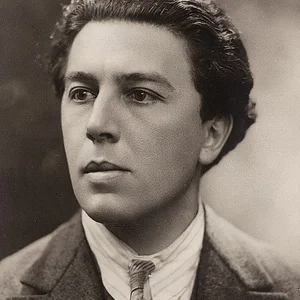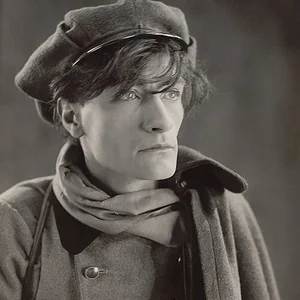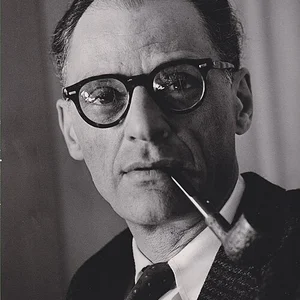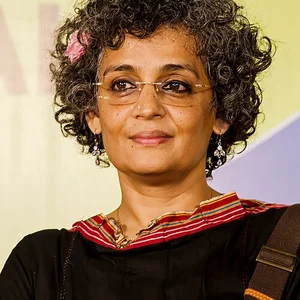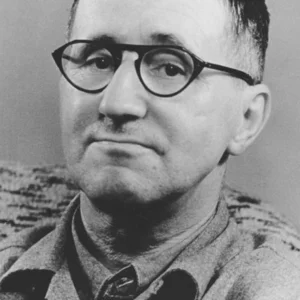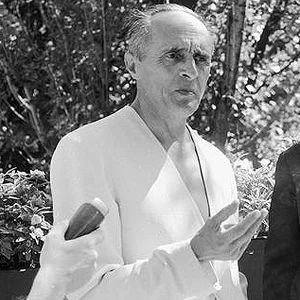

René Clair (1898–1981) was one of the pioneers of French sound cinema. A director, screenwriter, and writer, he created poetic and satirical works such as "Under the Roofs of Paris" and "À nous la liberté". He was the first filmmaker elected to the Académie française, in 1960.
René Clair(1898 — 1981)
René Clair
France
9 min read
Frequently asked questions
Famous Quotes
« Cinema is an art that needs an industry — which is at once its greatness and its misery.»
« I never wanted to make realistic cinema. Realism is the domain of photography.»
Key Facts
- 1898: born in Paris under the name René-Lucien Chomette
- 1924: directed Entr'acte, an avant-garde film with Francis Picabia and Erik Satie
- 1930: Under the Roofs of Paris, one of the first great French sound films
- 1931: À nous la liberté, a satire of industrial society that would influence Charlie Chaplin
- 1960: first filmmaker elected to the Académie française
Works & Achievements
A surrealist short film made for a Dadaist ballet with music by Erik Satie. This avant-garde work reveals René Clair's experimental and poetic gifts, firmly placing him within the international artistic avant-garde.
An adaptation of Labiche's comedy, this silent film showcases René Clair's comic genius and his masterful command of cinematic rhythm. It is widely regarded as one of the masterpieces of French silent cinema.
René Clair's first major sound film, it demonstrates that sound can be a poetic element rather than a mere recording of dialogue. Its enormous international success established French sound cinema on the world stage.
A light and inventive musical comedy built around a winning lottery ticket, this film illustrates René Clair's ability to transform everyday reality into airy, poetic fantasy.
A musical satire on assembly-line work and industrial society, this film anticipates the themes of Chaplin's *Modern Times* and remains a landmark of twentieth-century cinematic humanism.
A color film starring Gérard Philipe and Michèle Morgan, this bittersweet comedy about a charming officer is one of the greatest successes of the latter half of René Clair's career.
A literary essay in which René Clair reflects on the history and future of cinema. This work helped cement his reputation as an intellectual and paved the way for his election to the Académie française.
Anecdotes
In 1936, Charlie Chaplin released *Modern Times*, a film that borrowed several ideas from René Clair's *À nous la liberté* (1931): the satire of the industrial assembly line, escape from the system, and even certain musical sequences. The production company Tobis pressured René Clair to sue Chaplin. He flatly refused, declaring publicly that it was an honor to have inspired the greatest filmmaker in the world, and that art has no place in a courtroom.
In 1924, René Clair directed *Entr'acte*, a surrealist short film commissioned by composer Erik Satie to be screened during the intermission of the Dadaist ballet *Relâche*. The film shows a runaway coffin careening through the streets of Paris, chess players on a rooftop, and an absurd chase scene. This avant-garde film, shot with the Parisian artistic elite, revealed a young filmmaker capable of upending every visual convention.
In 1960, René Clair became the first filmmaker in history to be elected to the Académie française. This institution, founded in 1635 as the guardian of the French language and culture, had until then admitted only writers, philosophers, and scholars. His election among the "immortals" officially consecrated cinema as a noble and legitimate art form, and his reception speech in 1962 remains a foundational text on the place of cinema in French culture.
In 1940, faced with the German invasion, René Clair left France. He went into exile first in England, then made his way to Hollywood, where he directed several American films including *I Married a Witch* (1942) with Veronica Lake. Despite his success across the Atlantic, he struggled with being away and remained deeply Parisian at heart: he returned as soon as 1945 at the Liberation, eager to rediscover the rooftops and streets of the city that had nourished his entire body of work.
René Clair, whose real name was René-Lucien Chomette, was born on November 11, 1898 into a family of merchants in the Les Halles neighborhood of Paris. He began his career as an actor in silent films before moving behind the camera. Initially skeptical of talking pictures — which he feared would be overrun by dialogue at the expense of imagery — he paradoxically became one of their masters, proving with *Under the Roofs of Paris* that sound could be an instrument of poetry rather than a mere recorder of words.
Primary Sources
The talking picture? I remember my initial resistance. Then I understood that sound could be an instrument of poetry, provided one never lets it smother the image. The danger is not sound: it is chatter.
Silent cinema had taught us that the image could say everything. The talkies gave us the temptation to explain everything. That is its greatest danger, and perhaps its greatest opportunity, if one knows how to resist it.
I am the first of my profession to enter beneath this Dome. It would be unseemly to cross this threshold without looking back toward those who preceded me in the art of cinema, and without acknowledging what we all owe them.
I could not join in any action against the genius of our time. If my work gave him an idea, I can only be honored by it. Cinema is an art that feeds on itself.
Key Places
René Clair was born on November 11, 1898 in this working-class neighborhood at the heart of Paris. The atmosphere of the city — its streets, rooftops, and cafés — left a deep imprint on all of his cinematic work.
The rooftops and narrow lanes of Montmartre serve as the backdrop for *Under the Roofs of Paris* (1930), one of René Clair's masterpieces. This bohemian, working-class neighborhood embodies the urban poetry that defines his cinema.
Exiled during World War II, René Clair directed several films in Hollywood from 1940 to 1945, including *I Married a Witch*. Despite his American success, he remained deeply attached to France and returned as soon as the country was liberated.
In 1960, René Clair was elected to the Académie française, which he officially joined in 1962. This institution marks the recognition of cinema as a major art form within French culture — for the first time in the institution's history.
René Clair settled in this suburb just outside Paris during the final decades of his life. It was here that he passed away on March 15, 1981, leaving behind a major body of work in world cinema.
Typical Objects

In the 1920s, film cameras were operated by hand-cranking, turned by a camera operator. René Clair mastered these cumbersome devices to create his poetic images on the streets of Paris.

Silver nitrate film, the physical medium of a movie, was cut and assembled by hand by the editor. René Clair attached great importance to editing as a way of giving rhythm and poetry to his works.

René Clair was above all a writer: he penned his own screenplays and dialogue on a typewriter. This command of the written word set him apart from many directors of his era.

The clapperboard, used on set to synchronize image and sound, became indispensable with the arrival of talking pictures. René Clair incorporated it into his meticulous working method from his very first sound films.

The introduction of sound in cinema brought large, unwieldy microphones onto sets. René Clair, initially reluctant about talking pictures, ultimately turned sound into a poetic tool rather than a mere recorder of dialogue.

Presented at the induction ceremony into the Académie française, the academician's sword is a symbol of cultural consecration. René Clair's sword, gifted by his peers from the worlds of cinema and culture, evoked the seventh art and its place within the French tradition.
School Curriculum
Vocabulary & Tags
Key Vocabulary
Daily Life
Morning
René Clair began his day early, reading the press and working on his screenplays from his Parisian apartment. A voracious reader steeped in literature and theater, he drew his ideas from observing everyday life as much as from classic texts.
Afternoon
Filming afternoons were spent on studio lots, often at Joinville-le-Pont or Épinay-sur-Seine on the outskirts of Paris. René Clair directed his actors with precision and exacting standards, always attentive to the rhythm of each scene and the visual and musical coherence of the whole.
Evening
Evenings alternated between screening the day's rushes, working sessions with his collaborators, and outings to Parisian cafés and restaurants. René Clair was a regular presence in the artistic and literary circles of the interwar period, where cinema, painting, and literature constantly intersected.
Food
Like many cultivated Parisians of his era, René Clair appreciated traditional French cuisine — slow-cooked dishes, a good table wine, meals at the local bistro. Dinners with friends and colleagues held an important place in his social and creative life.
Clothing
René Clair dressed in the style of the Parisian intellectual bourgeoisie of the 1920s–1960s: a well-cut dark suit, white shirt, and understated tie. On set, he wore relaxed but always neat attire, with a hat or scarf depending on the season.
Housing
René Clair spent most of his life in comfortable Parisian apartments, reflecting his artistic success and his standing in French cultural society. After his American exile, he settled permanently in the Paris region, surrounded by his books, his archives, and a collection of art objects.