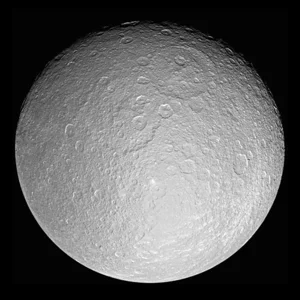

Titaness of Greek mythology, daughter of Uranus and Gaia, wife of Cronus. Mother of the six great Olympian gods, she saved Zeus by substituting a swaddled stone for the infant to deceive Cronus. Identified with Cybele, she is venerated as the Great Mother of all the gods.
Rhea
Rhea
7 min read
Frequently asked questions
Key Facts
- Daughter of Uranus (the Sky) and Gaia (the Earth), Rhea is one of the twelve Titans of the first divine generation
- Wife of Cronus, she bore him six children: Hestia, Demeter, Hera, Hades, Poseidon, and Zeus
- To protect Zeus from Cronus, who devoured his own children, she handed him a swaddled stone and hid the newborn in Crete
- When Zeus came of age, he overthrew Cronus and freed his brothers and sisters during the Titanomachy
- Identified with Cybele in Greco-Phrygian syncretism, her cult spread throughout the ancient Mediterranean world
Works & Achievements
Cosmogonic poem constituting the primary source on Rhea, detailing her Titanic genealogy, her marriage to Cronus, and the pivotal trick of the swaddled stone.
Short liturgical hymn dedicated to Rhea venerated as the universal cosmic mother, describing her ecstatic cult accompanied by tambourines, flutes, and lions.
Hymn from the Orphic tradition celebrating Rhea as the universal source of all life, used in the initiatory ceremonies of the late Greek mystery cults.
The first great Roman temple dedicated to Cybele-Rhea, consecrated on the Palatine Hill. It marked the official integration of the Great Mother's cult into Roman state religion.
Greek mythological compendium that synthesizes all traditions relating to Rhea, her Olympian children, and the events of the Titanomachy.
Anecdotes
Rhea was the daughter of the sky (Uranus) and the earth (Gaia). Her husband Cronus, having learned from a prophecy that one of his children would overthrow him, swallowed each of them at birth. Rhea watched her first five children — Hestia, Demeter, Hera, Hades, and Poseidon — disappear into the belly of their own father.
When Zeus was about to be born, Rhea refused to lose a sixth child. She secretly fled to Crete and gave birth in a cave on Mount Ida. Upon her return, she presented Cronus with a stone wrapped in swaddling clothes in place of the newborn: the god swallowed the deception without noticing.
To protect the infant Zeus, Rhea entrusted him to Cretan warriors known as the Curetes. These guardians clashed their spears loudly against their shields to drown out the baby's cries and prevent Cronus from hearing him. This deliberate uproar allowed Zeus to grow up safely, beyond any risk of discovery.
The Greeks identified Rhea with Cybele, the Great Phrygian Mother worshipped in Anatolia. Her cult spread as far as Rome under the name Magna Mater in 204 BC. Rhea-Cybele was depicted enthroned on a chariot drawn by lions, crowned with a mural crown — a symbol of her sovereign power over nature and cities.
Primary Sources
Rhea lay with Cronus and bore him glorious children: Hestia, Demeter, and gold-sandaled Hera, mighty Hades, Poseidon the earth-shaker, and wise Zeus, father of gods and men.
Sing to me of the mother of all gods and all men, who delights in the clash of the timbrel and drum, who loves the cry of flutes and the howling of wolves and keen-eyed lions.
Rhea, angered by the fate of her children, traveled to Crete when she was pregnant with Zeus. She gave birth to him in the cave of Dicte and entrusted him to be raised by the Curetes and the nymphs Adrasteia and Ida.
Venerable Rhea, mother of the blessed immortals, source of all things, mistress of the sacred drums, bearer of the scepter, goddess who fills the caves with your cries.
The Cretans told how Rhea had hidden Zeus on the island, and that the Curetes, at the goddess's command, clashed their shields with their spears to prevent the infant's cries from reaching Cronus.
Key Places
The mythical site where Rhea is said to have given birth to Zeus and where the divine child grew up hidden from Cronus. This Cretan site was a place of pilgrimage throughout antiquity.
A second Cretan site associated with the birth of Zeus according to other traditions. The Psychro Cave in this mountain range contained votive offerings as early as the 2nd millennium BCE.
A city in Anatolia (present-day Turkey) that was the great center of the cult of Cybele, assimilated with Rhea. It was from here that the sacred stone of Cybele was brought to Rome in 204 BCE.
The home of the Olympian gods — all children of Rhea — following their victory over the Titans. The goddess is honored there as the mother and ancestor of the entire Greek pantheon.
The Roman hill where the temple of the Magna Mater was erected after 204 BCE. This sanctuary became the heart of the official cult of Rhea-Cybele throughout the Roman Empire.
Typical Objects

Sacred tambourine whose sound accompanied rituals in honor of Rhea-Cybele. Her priests shook it in a state of trance during ceremonies to honor the Great Mother.

A rock wrapped in swaddling clothes that Rhea substituted for the infant Zeus to deceive Cronus. This stone was later venerated at Delphi as the omphalos, the navel of the world.

A headdress shaped like city battlements worn by Rhea-Cybele in Greek and Roman iconography, symbolizing her dominion over cities and her protective power over civilization.

Sacred animals of Rhea-Cybele that pull her chariot or flank her lying at her sides. They represent the wild power of nature entirely subject to the will of the goddess.

The tool that Rhea gave to Cronus to castrate Uranus, allowing the Titans to seize power. This object symbolizes the breaking of the old cosmic order.

Percussion instruments clashed together during the ecstatic ceremonies of Rhea-Cybele. Their metallic clash recalled the din made by the Curetes to drown out the cries of the infant Zeus.
School Curriculum
Vocabulary & Tags
Key Vocabulary
Tags
Daily Life
Morning
In mythological tradition, Rhea presides over the awakening of the earth and all living beings. The priestesses of her cult rose at dawn to the sound of tambourines, purifying the altars before the first offerings of incense and honey.
Afternoon
The rites of Rhea-Cybele unfolded in broad daylight in an atmosphere of ecstatic fervor: processions of the Galli priests, frenzied dancing to the clash of cymbals, and offerings of fruit and grain. The goddess's statue was carried in procession on a chariot drawn by lions.
Evening
Sacred nighttime vigils were held in the caves and sanctuaries of the Great Mother. Initiates recited Orphic hymns by torchlight and celebrated the mysteries surrounding the secret birth of Zeus and the cyclical return of life.
Food
Rhea is associated with plant-based offerings, honey, and fruit. The priests of her cult abstained from eating pork. The pomegranate, the pine, and grain — evoking her daughter Demeter — were consecrated to her as fundamental symbols of fertility.
Clothing
Rhea is depicted wearing a long, Eastern-style robe (chiton or peplos) with borders embroidered with geometric meander patterns. She wears the polos crown shaped like city battlements, and her shoulders are draped in a himation richly adorned with gold thread.
Housing
Rhea dwells in wild, elevated places: mountain caves, rocky peaks, and forests of pine and cedar. Her preeminent mythological home is Crete, the island where she hid the infant Zeus. Her sanctuaries took the form of caves or open-air enclosures on hilltops, bridging the sky and the earth.
Historical Timeline
Period Vocabulary
Visual Style
Style sculpural gréco-phrygien solennel mêlant l'archaïsme grec et les influences anatoliennes, dans une palette de terres cuites, d'or et de bleu nuit évoquant la puissance tutélaire de la Grande Mère des dieux.
Sound Ambience
Une atmosphère de caverne sacrée crétoise mêlant le fracas rituel des Courètes, le roulement obsédant des tambourins de la Grande Mère et les sons de la nature sauvage des hautes montagnes méditerranéennes.
Liens externes & ressources
Références
Œuvres
Théogonie (Hésiode)
VIIIe–VIIe siècle av. J.-C.
Hymne homérique à la Mère des dieux
VIIe–VIe siècle av. J.-C.
Hymne orphique XIV à Rhéa
IIIe–IVe siècle apr. J.-C.
Temple de la Magna Mater (Palatin, Rome)
191 av. J.-C.
Bibliothèque mythologique (Apollodore)
IIe siècle apr. J.-C.