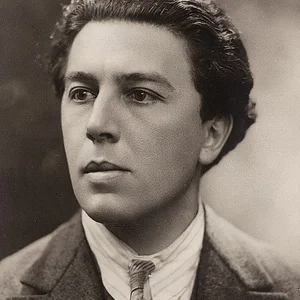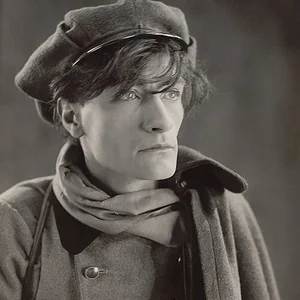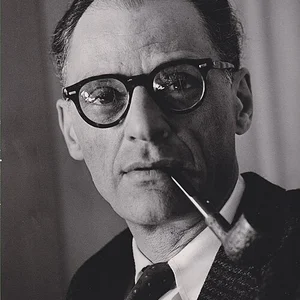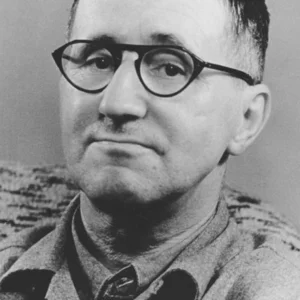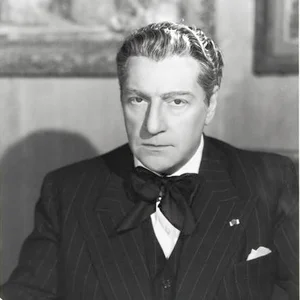

French playwright, actor, director, and filmmaker (1885–1957), Sacha Guitry is one of the leading figures of boulevard theatre and French cinema. He wrote more than 130 plays and directed around thirty films, leaving a deep mark on French culture in the first half of the 20th century.
Sacha Guitry(1885 — 1957)
Sacha Guitry
France
9 min read
Frequently asked questions
Famous Quotes
« Remorse is money you didn't steal.»
« It is better to remain silent and be thought a fool than to speak and leave no room for doubt.»
« I am a man of letters who makes films.»
Key Facts
- Born on February 21, 1885, in Saint Petersburg, son of the actor Lucien Guitry
- Wrote his first play at age 17; author of more than 130 stage plays
- Directed *Le Roman d'un tricheur* (The Story of a Cheat) in 1936, a pioneering film for its voice-over narration
- A controversial figure after the Liberation due to alleged collaboration, he was imprisoned and then acquitted in 1945
- Died on July 24, 1957, in Paris, leaving a colossal body of work for the stage and screen
Works & Achievements
A short documentary film capturing the great French artists of the era — Rodin, Monet, Renoir, Degas, Saint-Saëns, Anatole France — in their studios. An irreplaceable historical document on the creative life of the Belle Époque.
A three-act comedy that would become one of his most frequently revived plays, wittily exploring father-son relationships and the world-weary wisdom of the French bourgeoisie. A perfect embodiment of boulevard theatre at its finest.
A biographical play devoted to the great scientist Louis Pasteur, remarkable for its documentary seriousness — unusual for Guitry. This historical drama earned him exceptional acclaim and was performed in many countries.
A cinematic masterpiece in which Guitry innovates by replacing dialogue with a continuous narrative voice-over, while the actors perform in silence. François Truffaut would cite it as one of the most inventive French films of the twentieth century.
A sweeping historical pageant tracing the history of the Palace of Versailles through scenes featuring nearly a hundred celebrated French actors. A phenomenal popular success with six million viewers, it remains one of the most-watched French films of the 1950s.
A Napoleonic epic bringing together stars such as Jean Gabin, Michel Simon, Orson Welles, and Michèle Morgan. A further demonstration of Guitry's unique ability to orchestrate vast, historically driven film productions.
A brilliant comedy about the relationships between masters and servants, one of Guitry's most finely crafted works. Successfully adapted for the screen, it showcases his mastery of witty repartee and comic misunderstanding.
Anecdotes
Sacha Guitry was born on February 21, 1885, in Saint Petersburg, because his father Lucien Guitry, a celebrated French actor, was on tour in Russia at the time. He enjoyed joking about this unusual birthplace, readily declaring that he had come into the world "wherever his father happened to be performing." This origin earned him a lifetime of teasing about his paradoxically Russian passport.
Guitry married five times, always to women from the world of entertainment. His second wife, the singer Yvonne Printemps, formed with him one of the most celebrated couples in 1920s Paris. Their divorce was as spectacular as their union, and Guitry — never short of a witty turn of phrase — commented on his successive marriages with a dry humor that disarmed even his harshest critics.
In August 1944, at the Liberation of Paris, Guitry was arrested and imprisoned for 60 days at Fresnes. Photographs showed him in the company of German officers and figures associated with the Vichy regime, which led to accusations of collaboration. He was ultimately released for lack of sufficient evidence, but in 1947 he published *Quatre ans d'occupations* to publicly defend his conduct.
His film *Le Roman d'un tricheur* (1936) stands as a remarkable cinematic innovation: Guitry tells the story through an omnipresent voice-over while the actors perform in silence, without any dialogue. This narrative technique, extraordinarily rare at the time, was celebrated decades later by filmmakers such as François Truffaut as a forerunner of modern auteur cinema.
Guitry wrote more than 130 stage plays over the course of his life, some dashed off in a matter of days in a fever of creative energy. He routinely combined the roles of playwright, director, and lead actor, giving himself total control over his works. This exceptional versatility remained unique in the French cultural landscape of the first half of the twentieth century.
Primary Sources
I have always preferred the company of people who know how to lie to that of people who do not. The former have imagination; the latter have only memory.
I have been accused of consorting with the enemy. But consorting is not collaborating. I sought to protect friends, to save works of art, to keep French culture alive under the worst of circumstances.
My entire life can be summed up in one sentence: I have done nothing but theater. I played theater in my life, theater in my loves, theater in my friendships — and sometimes, too, on an actual stage.
Here is Rodin in his studio, here is Monet before his Water Lilies, here is Renoir still painting despite his gnarled hands. These men are France. Look at them before it is too late.
Beware of people who are always right. It is often because they have given up being wrong — and to give up being wrong is to give up living.
Key Places
Birthplace of Sacha Guitry, born on February 21, 1885, while his father Lucien was on tour in Imperial Russia. This unusual birth on foreign soil always colored the artist's identity — something he liked to joke about.
The iconic Parisian stage where Guitry created and performed a great number of his plays from the 1920s onward. This theater in the 8th arrondissement became almost synonymous with his name — a place where he reigned supreme as playwright, director, and actor.
Guitry lived in several luxurious Parisian residences throughout his life; his apartment on the avenue Élisée-Reclus, at the foot of the Champ-de-Mars, embodied the lifestyle of an artist at the height of his fame and fortune.
Guitry was held here for 60 days between August and October 1944, following the Liberation of Paris, on charges of collaborating with the German occupier. He was released due to insufficient evidence, but the episode left a lasting mark on his career and reputation.
Guitry shot several of his films at studios in the Paris region, including those at Joinville, a hub of French cinema in the 1930s. It was in these spaces that he developed his technical innovations as a filmmaker.
Typical Objects

An emblematic sartorial accessory for Guitry, the silver-pommel cane was an integral part of his public persona as an elegant dandy. He used it both in daily life and on stage to punctuate his lines.

Guitry typed his many plays on a typewriter, an indispensable tool for a prolific author capable of producing a complete script in just a few days. His typed manuscripts, sometimes annotated in his own hand, are preserved in theatrical archives.

Guitry used Debrie cameras — the standard in French cinema from the 1930s to the 1950s — to make his films. His technical mastery allowed him to invent new narrative techniques, most notably in *The Story of a Cheat*.

Like many intellectuals and artists of his era, Guitry was a committed smoker whose cigarette held in a long holder contributed to his image as a literary dandy. This accessory appears frequently in his photographs and films.

Guitry had his costumes tailored by the finest Parisian couturiers, viewing sartorial elegance as a discipline in its own right within the dramatic arts. Both on stage and in life, his polished appearance embodied the witty bourgeois character he so often played.

Guitry's manuscripts and typescripts, often marked with annotations and corrections, bear witness to a dramatic output that was extraordinarily fast and prolific. Some plays were completed in three or four days, reflecting an almost improvisational creative energy.
School Curriculum
Vocabulary & Tags
Key Vocabulary
Daily Life
Morning
Guitry rose late, true to the nocturnal rhythm of theatre people. He spent his mornings reading the press — he devoured the Parisian newspapers — and answering his voluminous correspondence, often from his bed or in his silk dressing gown.
Afternoon
The afternoon was devoted to creative work: writing plays, rehearsals at the theatre, or shooting in the studio. He could dash off entire pages at top speed on his typewriter, then join his company at the theatre for a rehearsal session he conducted with authority and wit.
Evening
The evening was the heart of his existence: theatrical performances, premieres he was expected to attend, dinners about town with the cream of Parisian arts and letters. He frequented the grand restaurants and fashionable salons, honing the bons mots that would be circulating in newspaper columns by the following day.
Food
Guitry appreciated fine French cuisine and lavish dinner parties, a reflection of his unapologetically bourgeois lifestyle. He loved entertaining at his table and was renowned for his convivial spirit. Champagne held a place of honour in his habits, a symbol of the French art de vivre.
Clothing
An elegant dandy, Guitry had his suits cut by the finest Parisian tailors and was never without his cane and hat. On stage as in life, his appearance — meticulously attended to down to the pocket square, cufflinks, and patent-leather shoes — was part of his public persona.
Housing
Guitry lived in prestigious apartments and houses in Paris, reflecting his wealth and taste for luxury. His interiors, richly decorated with works of art and antique furniture, provided a setting befitting the image he cultivated: that of a man of letters and theatre who had succeeded in every respect.
Historical Timeline
Period Vocabulary
Liens externes & ressources
Références
Œuvres
Mon père avait raison (pièce)
1919
Pasteur (pièce)
1919