
painter (born 1989)
Frequently asked questions
Key Facts
Works & Achievements
A landmark performance in the title role of Racine's tragedy, which became one of her most celebrated roles and cemented her reputation as a great tragic actress.
An iconic performance as Marguerite Gautier in Alexandre Dumas fils's play, showcasing her talent for romantic roles.
Her portrayal of the title role in Victor Hugo's tragedy, demonstrating her ability to command the great works of the French dramatic repertoire.
Creation of the role of the Duke of Reichstadt in Edmond Rostand's play, showcasing her versatility by successfully taking on male roles.
Theater tours across Europe, the Americas, and beyond, establishing the modern template for the international star and bringing French theater to the world.
Participation in the early days of French cinema, pioneering the adaptation of her stage roles to the new art of film, including recordings of her plays.
Development of a new approach to tragic acting that emphasized authentic emotion and psychological depth, bringing a modern sensibility to classical theater.
Anecdotes
Sarah Bernhardt was known for sleeping in a satin-lined coffin, which she kept in her bedroom from her early years. She claimed the practice helped her meditate on her tragic roles and mentally prepare for the great death scenes she performed on stage. This eccentricity made headlines in newspapers around the world.
In 1915, at the age of seventy, Sarah Bernhardt had her right leg amputated following a long-standing injury. Against her doctors' advice, she refused to retire and continued performing on stage, carried by assistants or taking on roles adapted to her condition. She even embarked on a tour of the United States, greeted with standing ovations at every performance.
During her first American tour in 1880, Sarah Bernhardt sparked a genuine media frenzy. Thousands of spectators crowded each of her appearances, and American newspapers sent special correspondents to cover her every move. Mark Twain himself wrote that she was the only person he had ever seen capable of hypnotizing an entire audience without uttering a single word.
Sarah Bernhardt was one of the first global celebrities to leverage her fame for commercial purposes: her image appeared on posters created by Alphonse Mucha, as well as on soaps, perfumes, and even chocolates. Long before it became common practice, she understood the power of public image and managed her career with formidable business acumen, personally negotiating her contracts and her extraordinary fees.
An avid collector of exotic animals, Sarah Bernhardt kept a veritable menagerie in her Paris mansion: a caiman given to her by Victor Hugo, parrots, Persian cats, a lion named Justinien, and even a tamed wolf. Her visitors never quite knew which creature would greet them in the actress's drawing room.
Primary Sources
I wanted to be an actress, and I was right to want it. The theatre gave me everything that life had denied me: glory, love, immortality.
You have written me a role that allows me to express the full depth of the human soul. It is in moments like these that I understand why I was born to be an actress.
Mlle Bernhardt revealed herself yesterday as a tragedienne of extraordinary power. Her interpretation of Phèdre will mark an era in the history of French theatre.
The actor must be a creator, not a mere reciter. They must put their entire soul into every gesture, every word, in order to touch the heart of the audience.
Key Places
Sarah Bernhardt's birthplace in 1844. Paris was the heart of her theatrical career, where she established herself as the greatest tragic actress of the 19th century.
The theatre where Sarah Bernhardt launched her career and became a full member of the company in 1862. It was in this temple of classical theatre that she created her greatest tragic roles.
The venue where Bernhardt triumphed as both director and actress, notably in plays by Victor Hugo. It was a major center of her theatrical innovation.
The city where Sarah Bernhardt undertook prestigious tours and achieved major international success, bringing modern French theatre to audiences across Europe.
A museum dedicated to the history of Paris that preserves mementos, costumes, and documents relating to the life and career of Sarah Bernhardt.
Sarah Bernhardt's favorite holiday retreat, where she owned a private estate. The island served as a personal sanctuary for the celebrated actress.
Typical Objects

The elaborate theatrical costumes Sarah Bernhardt wore on stage, often embroidered and ornate, which became iconic for their spectacular designs. A symbol of her dramatic artistry and personal charisma.

A classic prop of the theater of her era, used in the ancient tragic roles she portrayed. Represents her specialization in tragedy and her connection to Greco-Roman theatrical traditions.

The lithographed posters of the late 19th century announcing her performances. They bear witness to her fame and the rise of modern theater as popular entertainment.

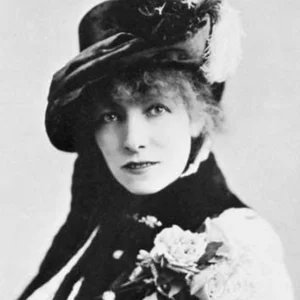
Photographs showing her in costume for her roles, widely distributed to the public. They reflect the growing importance of image and the star system in her era.

Collections of the plays she performed, particularly the tragedies of Racine and Corneille. Illustrates her role as a pioneer in the modern interpretation of the classic French dramatic repertoire.

The sumptuous jewelry she wore on stage and in public, symbols of her luxury and social standing. They reflect the culture of the Belle Époque and the prestige of the theater world.

The great Parisian performance halls such as the Comédie-Française where she left her mark on theater history. They represent the setting of her influence and her artistic innovations.
School Curriculum
Vocabulary & Tags
Key Vocabulary
Daily Life
Morning
Sarah Bernhardt rarely rose before ten in the morning, after nights that were often very short, devoted to rehearsals or receptions. She would begin her day with a perfumed hot bath, then receive her collaborators — directors, costume designers, secretaries — in her bedroom while still in her dressing gown, dictating her correspondence over a light breakfast.
Afternoon
Her afternoons were spent in stage rehearsals, sometimes five or six hours at a stretch, or sitting for painters and sculptors — Bernhardt posed for Rodin, Clairin, and many other artists. She sculpted marble herself in her studio on the boulevard de Clichy and painted watercolors, pursuits she practiced with genuine mastery.
Evening
On performance nights, Bernhardt arrived at the theater two hours before curtain for her dressing room ritual — a sacred ceremony of makeup and costuming. After the show, often past midnight, she would hold court in her dressing room for admirers and fellow artists, then sup at a grand Parisian restaurant or at home with her closest intimates.
Food
Bernhardt had a reputation for a small appetite, preferring roasted poultry, fine vegetables, and delicate desserts to hearty meals. She drank little alcohol, favoring herbal teas and Vichy water, and was scrupulous about keeping to a light diet on performance days to preserve her voice and breath.
Clothing
Offstage, Sarah Bernhardt wore evening gowns designed by the greatest couturiers — Worth, Laferrière — in silks, velvets, and lace of the finest quality. She favored light colors, ivory and white, and always wore a great deal of jewelry: pearl necklaces, gold brooches, and antique cameos that completed her outfits with a studied ostentation.
Housing
Her private mansion on the boulevard Pereire in Paris was a living cabinet of curiosities: walls lined with dark velvet, animal skins on the floors, sculptures and master paintings hung to the ceiling, exotic plants, and animals roaming freely. At Belle-Île, her Breton fort converted into a seaside retreat was furnished more simply, open to the Atlantic — a place to recharge far from Parisian splendor.
Historical Timeline
Period Vocabulary
Visual Style
Un style pictural romantique et dramatique inspiré du théâtre victorien du XIXe siècle, combinant l'esthétique Art Nouveau avec un éclairage théâtral en clair-obscur. Les illustrations privilégient l'opulence des costumes de scène, les teintes dorées et ambrées, et une atmosphère mélancolique et passionnelle évoquant la grandeur tragique.
Sound Ambience
Une ambiance immersive du théâtre parisien du XIXe siècle : sons d'un grand théâtre de prestige avec l'écho des voix dramatiques, la musique orchestrale romantique et les murmures du public élégant de l'époque.
Liens externes & ressources
Références
Œuvres
La Dame aux camélias
1880s
Ruy Blas
1872
L'Aiglon
1900
Tournées internationales
1880-1920
Innovation théâtrale
1870-1920