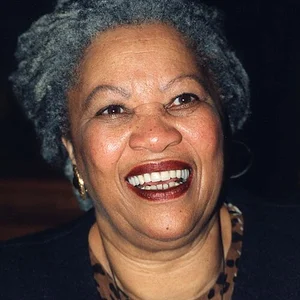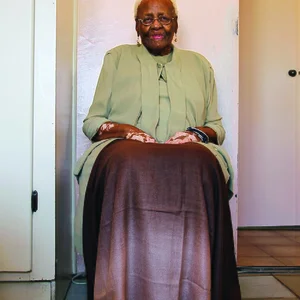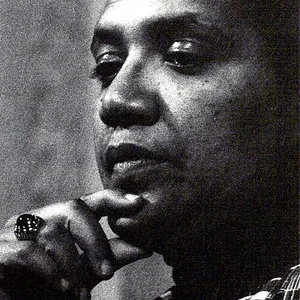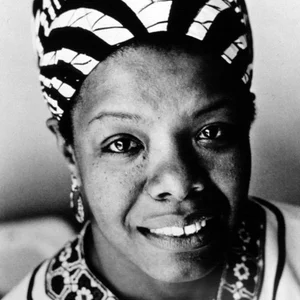

African-American poet, memoirist, and activist (1928–2014), Maya Angelou is best known for her autobiography I Know Why the Caged Bird Sings. A committed figure in the civil rights movement alongside Martin Luther King Jr., she became one of the most important voices in 20th-century American literature.
Maya Angelou(1928 — 2014)
Maya Angelou
États-Unis
8 min read
Frequently asked questions
Famous Quotes
« You may shoot me with your words, you may cut me with your eyes, you may kill me with your hatefulness, but still, like air, I'll rise.»
« I've learned that people will forget what you said, people will forget what you did, but people will never forget how you made them feel.»
Key Facts
- 1928: Born in St. Louis, Missouri, in a segregated America
- 1969: Publication of I Know Why the Caged Bird Sings, the first autobiography by a Black woman to appear on American bestseller lists
- 1993: Recited her poem 'On the Pulse of Morning' at Bill Clinton's presidential inauguration
- Activist alongside Martin Luther King Jr. and Malcolm X during the 1960s
- 2011: Recipient of the Presidential Medal of Freedom, the highest civilian honor in the United States
Works & Achievements
Maya Angelou's first autobiography, tracing her childhood in the segregated South and her adolescence in San Francisco. Celebrated as a masterpiece of American literature, it is among the most widely read works in American high schools.
An epic poem read at President Clinton's inauguration, calling on America to reconcile with its history and embrace its diversity. It earned Angelou a Grammy Award for Best Spoken Word Album.
The second volume of her autobiography, recounting the difficult years of Angelou's young adulthood after the birth of her son, addressing themes of poverty, survival, and resilience with unflinching honesty.
A poetry collection whose title poem has become an anthem of African American resistance and dignity, quoted in countless speeches and memorial ceremonies around the world.
The fourth volume of her autobiography, covering her activist years in New York and Africa, depicting her encounters with Malcolm X, Martin Luther King Jr., and the leading figures of the civil rights movement.
A collection of autobiographical essays addressed to the spiritual daughter Angelou never had, passing on wisdom, humor, and life lessons through moving personal stories.
Anecdotes
At age 8, Maya Angelou was the victim of a traumatic assault and stopped speaking for nearly five years. It was during this silence that she developed an extraordinary memory and a keen literary sensibility, devouring the works of Shakespeare, Dickens, and Paul Laurence Dunbar.
In 1961, Maya Angelou moved to Ghana with her son Guy after he was injured in a car accident. There she worked as a writer for the African Review newspaper and mingled with other expatriate African American intellectuals, including W.E.B. Du Bois. This African experience profoundly deepened her sense of identity.
In 1993, Maya Angelou was chosen by President Bill Clinton to read a poem at his inauguration. Her work 'On the Pulse of Morning' was broadcast live on television to millions of viewers — she was the first poet to recite at such a ceremony since Robert Frost in 1961.
Maya Angelou was multilingual: she spoke six languages fluently, including French, Spanish, Arabic, Italian, and Swahili. This command of languages allowed her to work as a coordinator for Martin Luther King Jr.'s Southern Christian Leadership Conference (SCLC).
During the 1950s, before becoming a writer, Maya Angelou became the first African American female streetcar conductor in San Francisco. She had convinced the recruiters by showing up every day for weeks until she got the job, defying the racial prejudices of the time.
Primary Sources
I knew then that I had not moved anywhere. I was still in the same small room, had the same views, had the same feelings, but something had shifted in the world. The woman had spoken to me. She had taken time out of her busy life to speak to me.
Lift up your eyes upon / This day breaking for you. / Give birth again / To the dream. / Women, children, men, / Take it into the palms of your hands.
I gave birth to one child, a son, but I have thousands of daughters. You are Black and White, Jewish and Muslim, Asian, Spanish-speaking, Native American and Aleut. You are fat and thin and pretty and plain, gay and straight, educated and unlettered.
I try to pull the language into such a sharpness that it jumps off the page. It must look easy, but it takes me forever to get it to look so easy. Of course, all art is supposed to look easy.
Key Places
A small town in the Deep South where Maya Angelou grew up with her grandmother Annie Henderson. A place of harsh segregation and community solidarity, it forms the backdrop of her landmark autobiography.
The iconic hub of African American culture where Angelou settled in the 1950s and 1960s, moving through Black intellectual and artistic circles and joining the civil rights movement.
The Ghanaian capital where Maya Angelou lived from 1961 to 1966, working as a journalist and immersing herself in African culture. This period profoundly reshaped her understanding of African American identity.
The city where Maya Angelou taught at Wake Forest University from 1982 onward and lived until her death in 2014. She held the Reynolds Professorship of American Studies there.
It was before the Capitol that Maya Angelou recited her poem at Bill Clinton's inauguration in 1993, becoming the face of an America reconciled with its cultural diversity.
Typical Objects

Maya Angelou always wrote by hand or on a typewriter, never on a computer. She would regularly rent hotel rooms to write, always bringing her typewriter and notebooks with her.

These two books were her daily working companions. Angelou drew on biblical rhetoric and lexical precision to forge her unique poetic style.

She used lined yellow legal pads to set down her first drafts. This ritual of writing by hand was, for her, inseparable from the creative process.

In the 1950s, Maya Angelou danced and sang in cabarets in San Francisco and New York, wearing colorful stage outfits that reflected her early life as a performing artist.

During her time in Ghana in the 1960s, Angelou immersed herself in African rhythms and instruments. The drum came to symbolize her reconnection with her ancestral roots.

Maya Angelou frequently wore turbans and brightly colored wraps, drawing on African and African American dress traditions to assert her cultural identity.
School Curriculum
Vocabulary & Tags
Key Vocabulary
Tags
Daily Life
Morning
Maya Angelou rose early, usually before dawn, and drove alone to a hotel room she rented by the hour to write — never at home, keeping her domestic space clearly separate from her creative space. She always began by rereading what she had written the day before, a glass of sherry within reach.
Afternoon
She worked until early afternoon, writing by hand in her yellow legal pads, regularly consulting the Bible and dictionary she kept beside her. Back home in the early afternoon, she would often cook for family and close friends — gastronomy being, for her, a form of artistic expression and communal sharing.
Evening
Her evenings were devoted to intellectual exchange and dinners with friends, artists, and activists. A gracious host, she frequently welcomed guests to her table and considered evening conversations essential to her creative life. She read extensively before sleep.
Food
Maya Angelou was a passionate cook, heir to the culinary traditions of the African American South: soul food, fried chicken, sweet potato pies, slow-simmered greens. She regarded cooking as a fully-fledged art form, bound up with cultural memory and hospitality.
Clothing
Angelou favored turbans, colorful scarves, and outfits with African influences — particularly wax prints and draped garments inspired by West African textiles. For formal or academic occasions, she wore long, flowing robes in deep, rich colors that accentuated her commanding presence.
Housing
After decades of itinerant life — from Stamps to San Francisco, from New York to Accra — Maya Angelou settled permanently in Winston-Salem, North Carolina, where she lived in a spacious, warm home that reflected her travels: African objects, an overflowing library, and a kitchen at the heart of the house.
Historical Timeline
Period Vocabulary
Visual Style
Une esthétique contrastée entre la photographie en noir et blanc des années Jim Crow et les couleurs vives des turbans et tissus africains portés par Angelou, symboles de sa dignité et de sa fierté culturelle.
Sound Ambience
Un paysage sonore mêlant le gospel du Sud ségrégationniste, le jazz et le blues de Harlem, les percussions africaines d'Accra et la voix grave et envoûtante de Maya Angelou en train de lire ses poèmes.
Liens externes & ressources
Références
Œuvres
Je sais pourquoi chante l'oiseau en cage (I Know Why the Caged Bird Sings)
1969
On the Pulse of Morning
1993
Gather Together in My Name
1974
And Still I Rise
1978
Le Cœur de la femme (The Heart of a Woman)
1981
Lettre à ma fille (Letter to My Daughter)
2008