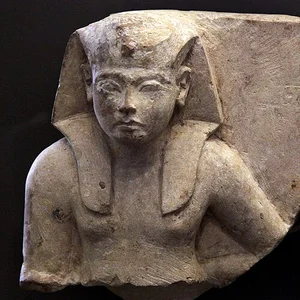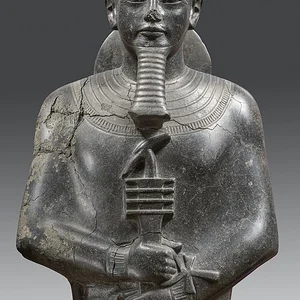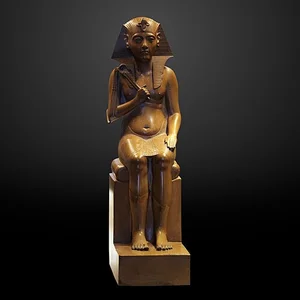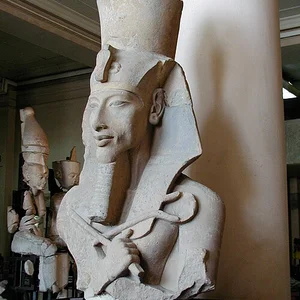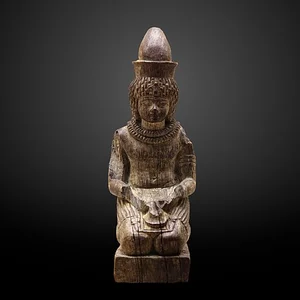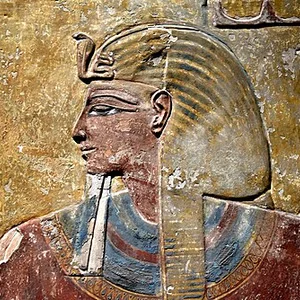

Seti I was the second pharaoh of the Nineteenth Dynasty of Egypt, reigning around 1294–1279 BC. Son of Ramesses I, he restored Egypt's military and religious power following the Amarna period. He is renowned for his campaigns in Canaan and Libya, as well as for his magnificent temple at Abydos.
Seti I(1322 av. J.-C. — 1278 av. J.-C.)
Seti I
Égypte antique
12 min read
Frequently asked questions
Key Facts
- c. 1294 BC: Seti I ascends the throne of Egypt following his father Ramesses I
- Military campaigns in Canaan, Syria, and against the Hittites to restore the Egyptian empire
- Construction of the mortuary temple at Abydos, a masterpiece of Egyptian art housing the famous Abydos King List
- Father of Ramesses II, one of the most celebrated pharaohs in Egyptian history
- c. 1279 BC: death of Seti I; he was buried in tomb KV17 in the Valley of the Kings
Works & Achievements
A masterpiece of Egyptian religious architecture featuring seven chapels dedicated to the major deities, some of the best-preserved polychrome bas-reliefs of the ancient world, and the invaluable Abydos King List. Completed by Ramesses II, it remains one of Egypt's most captivating monuments.
The longest and most richly decorated royal tomb in the Valley of the Kings, containing the complete texts of the Amduat, the Book of Gates, and the Book of the Heavenly Cow — a comprehensive encyclopedia of the royal funerary beliefs of the Nineteenth Dynasty.
Seti I oversaw the erection of 134 columns in this colossal structure, one of the largest columned halls ever built in the ancient world, covering 5,000 m². The decoration of the northern walls — the finest in quality — is attributed to him, while Ramesses II completed the southern walls.
These bas-reliefs provide a detailed record of Seti I's military campaigns in Canaan, Syria, and Libya, and stand as one of the richest historical sources on Egyptian warfare in the 13th century BCE, while also displaying royal iconography of remarkable sophistication.
A temple built for the funerary cult of Seti I after his death, completing a carefully planned religious program through which the king arranged for his own posthumous veneration simultaneously at Abydos and Thebes — the two sacred poles of Egypt.
A major legal and religious document carved into the rock in Nubia, establishing the divine and royal protections granted to the estates of the Abydos temple. This decree illustrates the economic and theological organization of divine worship under Seti I.
Anecdotes
The name Seti I literally means "he who belongs to Seth," the god of storms, the desert, and chaos. Far from being a disgrace, this name was a banner of power: Seth was also the protector of the sun god Ra during his nightly journey through the underworld, driving back each night the serpent Apophis, who threatened to devour the sun and plunge the world into eternal darkness.
The temple of Seti I at Abydos houses one of the most precious royal lists in all of ancient Egypt: it depicts the pharaoh and his young son — the future Ramesses II — paying homage to 76 predecessor kings. Curiously, Akhenaten, Nefertiti, and Tutankhamun are entirely absent, erased from official memory as if they had never existed, condemned to an eternal "second death."
The tomb of Seti I in the Valley of the Kings (KV17), discovered by the adventurer Giovanni Belzoni in 1817, is the longest and most decorated in the entire necropolis: over 137 meters of galleries covered in hieroglyphs and paintings depicting the soul's journey through the twelve hours of the divine night. It contains the complete texts of the Amduat, the Book of Gates, and the mysterious Book of the Heavenly Cow.
After Akhenaten's revolution, during which only the god Aten had been worshipped, Seti I undertook a sweeping religious restoration. He had the closed temples reopened, restored the cults of Amun, Osiris, Ptah, and Seth, and had the cartouches of the heretic pharaohs erased from monuments — condemning them to a damnatio memoriae that Egyptians feared more than physical death.
The mummy of Seti I, recovered from the Deir el-Bahari cache in 1881, is considered one of the best preserved from all of Antiquity. His serene face and noble features, frozen for over 3,300 years, have captivated generations of researchers. Modern physicians have been able to detect signs of severe arterial disease — an empire-builder worn to death by his military campaigns and colossal construction projects.
Primary Sources
The table of 76 royal cartouches carved in the Temple of Seti I at Abydos depicts the pharaoh and his son Ramesses paying homage to their legitimate predecessors, deliberately omitting the rulers of the Amarna period, who were deemed heretical and erased from official memory.
The bas-reliefs on the north face of the Hypostyle Hall at Karnak show Seti I triumphant in Canaan, Libya, and Syria, depicted according to pharaonic iconographic conventions: the king, shown in colossal scale, crushing his enemies, aided by the gods Amun and Ra-Horakhty, who present him with victory.
This royal decree, carved into the rock at Nauri, protects the property, lands, and workers of the Abydos temple under threat of severe punishment for anyone who dared seize them, invoking the wrath of the gods Osiris, Isis, and Horus against any offenders.
The walls of Seti I's tomb reproduce the Amduat and the Book of Gates in their entirety — texts guiding the royal soul through the twelve hours of the divine night, past the terrifying gatekeepers of the underworld, and through the trials of Osiris's judgment.
This stele commemorates Seti I's victories over the peoples of Canaan and Hamath during his first military campaign, proclaiming the restoration of Egyptian dominance over the Levant and the protection of trade routes into Syria-Palestine.
Key Places
An architectural masterpiece of the 19th Dynasty, this seven-chapel temple dedicated to the great Egyptian deities houses the King List and bas-reliefs still striking in their vivid colors. Abydos was considered the gateway to the underworld, the mythical burial place of Osiris, and was the most sacred center of Egyptian funerary religion.
With 137 meters of galleries entirely decorated with funerary texts and paintings of exceptional refinement, the tomb of Seti I is the most elaborate in the Valley of the Kings. Discovered in 1817 by Belzoni, it revolutionized our understanding of Egyptian beliefs about death and resurrection.
Seti I oversaw the construction of much of this monumental hall's 134 colossal columns, spanning 5,000 m². The outer walls bear reliefs of his military campaigns in Asia and Libya, testifying to Egypt's restored power following the crisis of the Amarna period.
Egypt's ancient administrative capital, Memphis was a major political center under Seti I, who resided there part of the year and restored the great temple of Ptah — the craftsmen's creator god, whose cult had been suppressed under Akhenaten.
A strategic city in Canaan where Seti I established a permanent Egyptian military garrison following his victories. Two commemorative stelae from his campaigns were erected there, attesting to Egyptian dominance over the Levant from the very first year of his reign.
The site where Seti I had his famous decree carved, protecting the assets of the Abydos temple and invoking divine wrath against any would-be usurpers. This legal and religious document illustrates the Egyptian concept of the pharaoh as guarantor of divine order, even in the most remote territories.
Typical Objects
A blue leather battle headdress adorned with golden discs and topped by the uraeus cobra, worn by Seti I during his military campaigns. It symbolized his identification with the sun god Ra in his warrior and triumphant form, capable of driving back the forces of chaos just as Seth drove back Apophis.
Royal regalia crossed over the chest of the mummified pharaoh, connecting Seti I to Osiris, god of resurrection and judge of the dead. These two scepters signified that the ruler reigned over both the living (the shepherd's crook) and the deceased (the purifying flail).
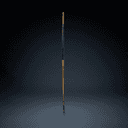
The composite bow — a revolutionary construction of wood, horn, and sinew — along with its finely worked golden quiver are depicted on the reliefs at Karnak, where Seti I stands upright on his chariot, loosing arrows at his enemies. These weapons also symbolized his power to pierce the darkness just as Ra pierces the shadows of night every morning.
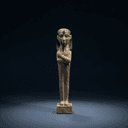
This sacred symbol, shaped like the backbone of Osiris, represented eternal stability and resurrection. It held a central place in the temple at Abydos built by Seti I, who personally presided over the "raising of the djed" ceremony during the great Osirian festivals.
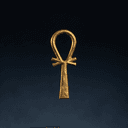
The elongated oval enclosing Seti I's throne name, "Men-Maat-Ra" ("Eternal is the Maat of Ra"), was carved throughout his monuments. This loop symbolized the cosmos that the pharaoh encircled and protected, upholding universal order against the forces of chaos.
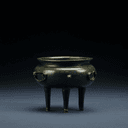
Incense imported from the distant land of Punt was burned daily in the temples Seti I had restored or founded. Scenes from his temple at Abydos show him personally swinging the censer before divine statues, asserting his role as supreme high priest of all Egypt's deities.
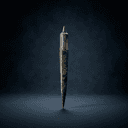
Knives of knapped flint — an ancient material charged with sacred power — were used in embalming rites and funerary ceremonies to which Seti I devoted near-obsessive attention. His temple at Abydos included an entire chapel dedicated to the mysteries of mummification and resurrection.
School Curriculum
Vocabulary & Tags
Key Vocabulary
Tags
Daily Life
Morning
Seti I rose before dawn to take part in the rituals of the divine awakening: as supreme high priest of all Egypt's gods, he was required to symbolically open the sanctuary each morning, bathe the divine statue, dress it, and offer incense and food. In practice, specialized priests performed these rites on his behalf in provincial temples, while the pharaoh officiated in person at his own residence.
Afternoon
Afternoons were devoted to affairs of state: receiving viziers reporting news from the provinces, reviewing military and diplomatic dispatches from the frontiers, and overseeing the major construction projects underway at Abydos and Karnak. On campaign, afternoons saw Seti I leading his chariots from the front line, surrounded by his personal guard of Sherden mercenaries, recognizable by their horned helmets.
Evening
In the evenings, the pharaoh presided over court banquets in the great hypostyle hall of his palace, surrounded by his wives, sons, and high-ranking dignitaries. Musicians played arched harps and double flutes, and dancers performed. Scribes recorded royal decrees while priests chanted the litanies of the setting sun, symbolically accompanying Ra on his descent into the underworld.
Food
The royal table was lavish: fine breads kneaded with honey, roasted meats (beef, goose, wild duck), dried or grilled Nile fish, fresh vegetables (onions, lettuce, broad beans, cucumbers), and fruits (figs, pomegranates, grapes). Seti I drank fine-quality barley beer and wine from Canaan or Nubia at official feasts.
Clothing
The pharaoh wore finely woven, nearly transparent white linen garments as symbols of ritual purity. For ceremonies, he donned the pleated kilt trimmed with gold bands and the bull's tail attached to his belt — a sign of animal power. His headdress varied with the occasion: the blue khepresh crown for war, the double pschent crown for state festivals, and the nemes headdress striped in gold and blue for official appearances.
Housing
Seti I resided in vast royal palaces at Thebes and Memphis, built of plastered mud brick and decorated with colorful frescoes, set within gardens featuring lotus pools and exotic trees imported from Punt and the Levant. The columned audience halls were adorned with turquoise-blue faience tiles and painted floor panels depicting defeated enemies, whom the pharaoh symbolically 'trampled' with every step he took.
Historical Timeline
Period Vocabulary
Visual Style
Style de la XIXe dynastie : bas-reliefs polychromes aux pigments cobalt, ocre et malachite, représentation hiératique du pharaon coiffé du khepresh bleu dans des temples aux colonnes colossales baignées de lumière dorée.
Sound Ambience
Ambiance des temples et palais de Séthi Ier : chants liturgiques des prêtres d'Osiris, sistres des cérémonies funéraires, bruits de ciseaux des sculpteurs dans le grès doré, souffle du vent sur le Nil à l'heure du lever de Rê.
Liens externes & ressources
Références
Œuvres
Temple de Séthi Ier à Abydos
vers 1290-1279 av. J.-C.
Tombeau KV17 (Vallée des Rois)
vers 1294-1279 av. J.-C.
Salle hypostyle de Karnak (partie nord)
vers 1294-1279 av. J.-C.
Reliefs des campagnes militaires (Karnak, façade nord)
vers 1290 av. J.-C.
Temple funéraire de Gournah (rive ouest de Thèbes)
vers 1290-1279 av. J.-C.
Stèle de Nauri (décret royal de protection)
an 4 du règne, vers 1290 av. J.-C.