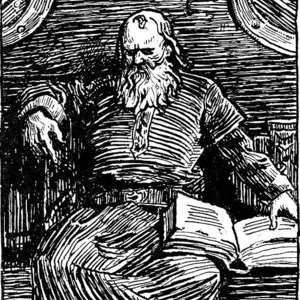

Icelandic writer, historian, and politician of the 13th century (1179–1241). He is the author of the Prose Edda, a major source on Norse mythology, and the Heimskringla, a chronicle of the kings of Norway.
Snorri Sturluson(1179 — 1241)
Snorri Sturluson
Islande
9 min read
Frequently asked questions
Key Facts
- Born in 1179 in Iceland, from the influential Sturlungar clan
- Composed the Prose Edda around 1220, the primary source on Norse mythology and skaldic poetry
- Wrote the Heimskringla around 1230, a collection of sagas about the kings of Norway
- Twice lawspeaker (president of the Icelandic assembly, the Althing) in 1215 and 1222
- Assassinated on September 23, 1241, on the orders of King Haakon IV of Norway
Works & Achievements
A three-part collection (Gylfaginning, Skáldskaparmál, Háttatal) that serves as the most comprehensive source of Norse mythology. Without this work, a great deal of the stories about Odin, Thor, Loki, the Aesir, and Ragnarök would have been lost forever.
A monumental chronicle of the kings of Norway from mythical times (Ynglinga saga) through 1177. It is one of the most important historical works in medieval Scandinavian literature, blending documentary rigor with epic breadth.
A long skaldic poem of 102 stanzas composed in honor of King Hákon IV and Jarl Skúli, illustrating every metrical form of Norse poetry. A technical as much as a poetic masterpiece, it forms the third part of the Prose Edda.
An epic biography of the Viking skald and warrior Egill Skallagrímsson, generally attributed to Snorri on account of his mastery of skaldic poetry and genealogical family ties. It is one of the most celebrated of the Icelandic sagas.
Anecdotes
Snorri Sturluson was fostered at the age of two by Jón Loptsson, the lord of Oddi and a descendant of a Norwegian king. This estate was one of Iceland's richest intellectual centers, where Snorri absorbed skaldic poetry, Icelandic law, and the traditions of the ancient Norse kings — an exceptional education that shaped the future author of the Prose Edda.
In 1218, Snorri traveled to the court of King Hákon IV of Norway, who hoped to persuade him to bring Iceland under the Norwegian crown. In exchange for his lavish stay, Snorri composed the Háttatal, a poem of 102 stanzas illustrating every metrical form in Norse poetry. He returned to Iceland without having fulfilled his political promise to the king.
At Reykholt, his large estate in western Iceland, Snorri had a circular stone pool built and fed by a natural geothermal spring. This bath, known as Snorralaug, likely served political gatherings as much as relaxation. It is one of the best-preserved medieval monuments in Iceland and can still be visited today.
On the night of September 23, 1241, armed men sent by his own son-in-law Gissur Þorvaldsson burst into Reykholt, reportedly on the orders of King Hákon IV. Snorri, found hiding in a cellar of his farm, is said to have spoken his last words: 'Eigi skal höggva!' — 'Do not strike!' His assassins killed him nonetheless, ending the life of the greatest writer of medieval Iceland.
Though famous as a writer, Snorri was also one of the most powerful men in Iceland, serving twice as Lögsögumaður — the law speaker who recited the entire legal code from memory before the Althing. He amassed considerable wealth through strategic marriages and shrewd political maneuvering in a kingless country governed by rival clans.
Primary Sources
Þá mælti Gangleri: Hvert er upphaf? eða hvernig hófst? eða hvat var áðr? Hárr svarar: Svá sem segir í Völuspá… ('Then said Gangleri: What is the beginning? How did it start? What was there before? Hárr answers: As it is told in the Völuspá…')
Hvernig skal kenna Óðin? Svá at kalla hann Alföður, Yggjar, Gautatýr, ok enn fleiri heiti. ('How should Odin be referred to? By calling him Allfather, Yggr, Gautatýr, and many other names.')
Í Ásíu norðr frá Svartahafi eru kallaðar Ásalandsbyggðir… Þar var höfuðborgin, er þeir kölluðu Ásgarð. ('North of the Black Sea, in Asia, lay the lands of the Æsir… There stood their capital city, which they called Ásgarðr.')
Skjöldunga niðr, þér hlýðir / þjóðar harðan þróa… ('Descendant of the Skjöldungar, you endure the harsh hardships of nations…')
Snorri var í kjallaranum. Þeir fundu hann þar. Hann mælti: 'Eigi skal höggva!' Þeir höggvu hann þó. ('Snorri was in the cellar. They found him there. He said: Do not strike! They struck him nonetheless.')
Key Places
Snorri's main estate from 1206 and the site of his assassination in 1241. It was here, surrounded by scribes, that he wrote the Prose Edda and the Heimskringla. The site today houses a museum and research center dedicated to his work.
The farm where Snorri was raised from the age of two, in the household of Jón Loptsson. This exceptional intellectual home, rich in manuscripts and scholars, was the cradle of his education: Icelandic law, skaldic poetry, and the traditions of the Norse kings.
Seat of the Althing, Iceland's legislative and judicial assembly founded in 930. As Lögsögumaður (Lawspeaker), Snorri recited the laws from memory before all assembled Icelanders — a monumental oral performance repeated every summer.
The royal port where Snorri stayed on two occasions (1218–1220 and 1237–1239) at the court of King Hákon IV. It was here that he composed the Háttatal in the king's honor and navigated his precarious political position between Iceland and Norway.
Snorri's birthplace in 1179, in the Dalir valley in western Iceland. His family, the Sturlungar, wielded considerable influence there — this powerful clan gave its name to an entire turbulent period of Icelandic history.
Liens externes & ressources
Références
Œuvres
Edda en prose (Prose Edda)
vers 1220
Heimskringla
vers 1230
Háttatal
vers 1222-1223
Egil's Saga (Egils saga Skalla-Grímssonar)
vers 1220-1240