 Flip the card
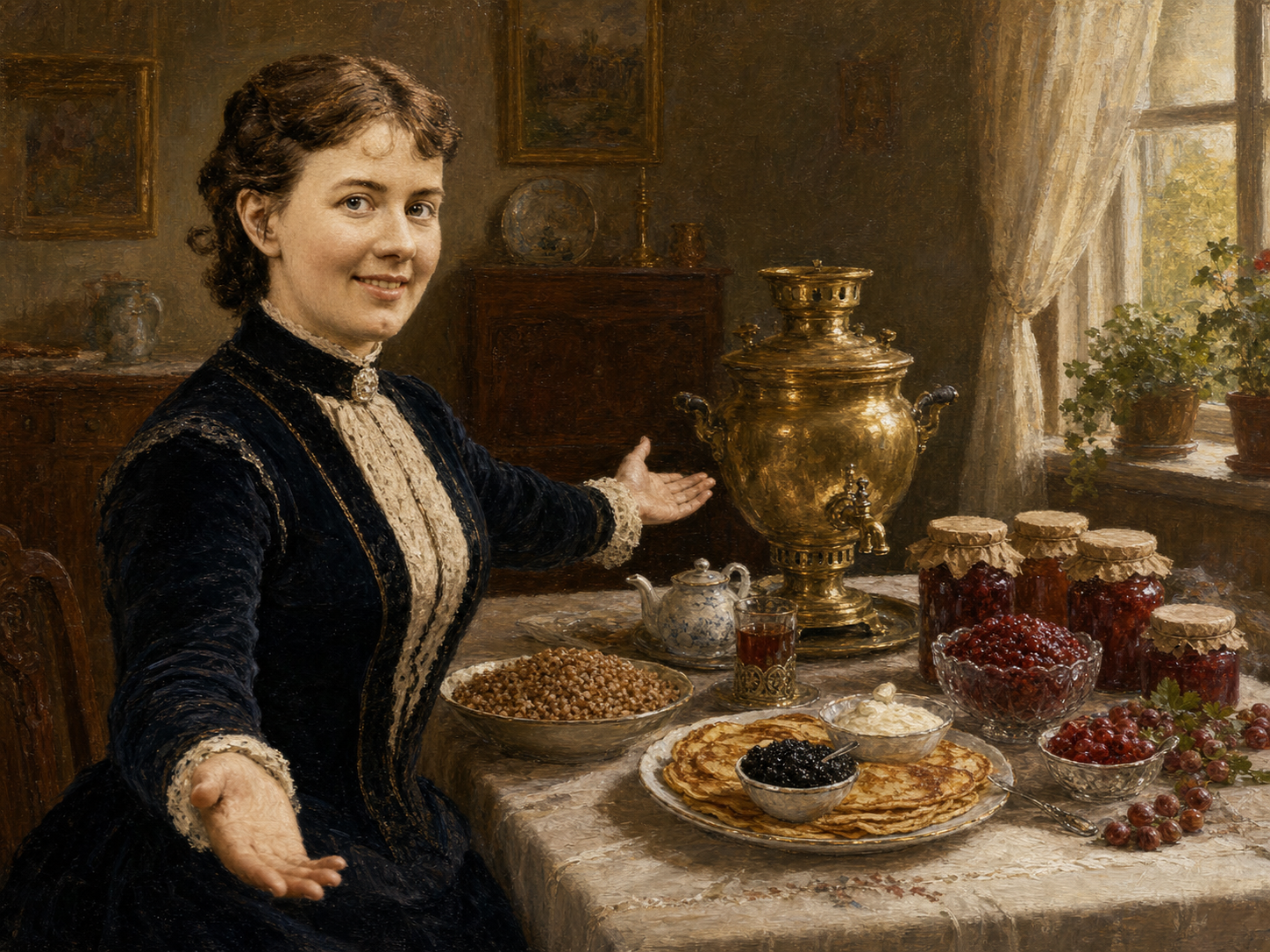
Sofia Kovalevskaya at the table
1850 — 1891
On the menu
Service à la russe: zakuski, soup and samovar tea
At the table of a wealthy Russian family in the 19th century, the meal opens with zakuski (small savory bites, pickles, smoked fish) eaten standing, before moving on to hot dishes — a base soup, a grain or pasta dish. The meal never ends without the samovar that heats continuously: tea, drunk strong and sweetened with varenye (jam), sets the rhythm for the whole day and the long working evenings.
Signature : Buckwheat (gretchka) and the samovar
Toasted buckwheat is the soul of everyday Russian cooking, even in educated families; and the copper samovar, never extinguished, is the social heart of the house — it is around it that Sofia kept vigil, calculated, and received guests.
click to flip back
Sofia Kovalevskaya at the table
1850 — 1891
5 period recipes
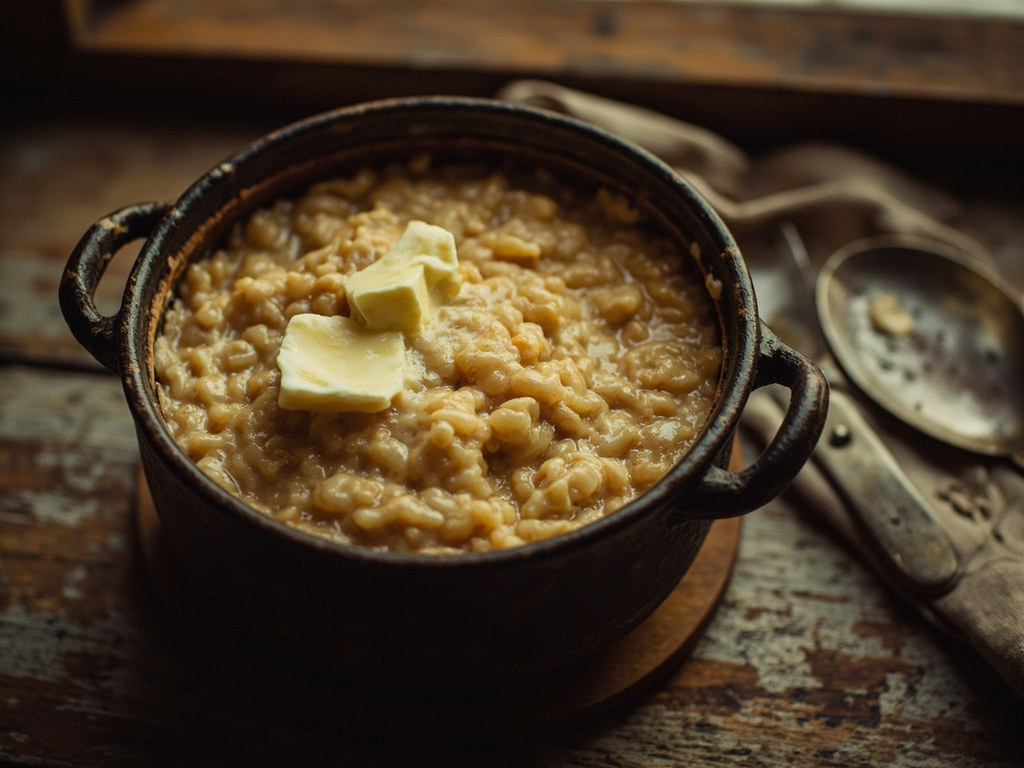 Everyday
Gretchnevaïa kasha — toasted buckwheat porridge
Kasha (everyday Russian grain staple)
🍄 ☕· 35 min
View the recipe
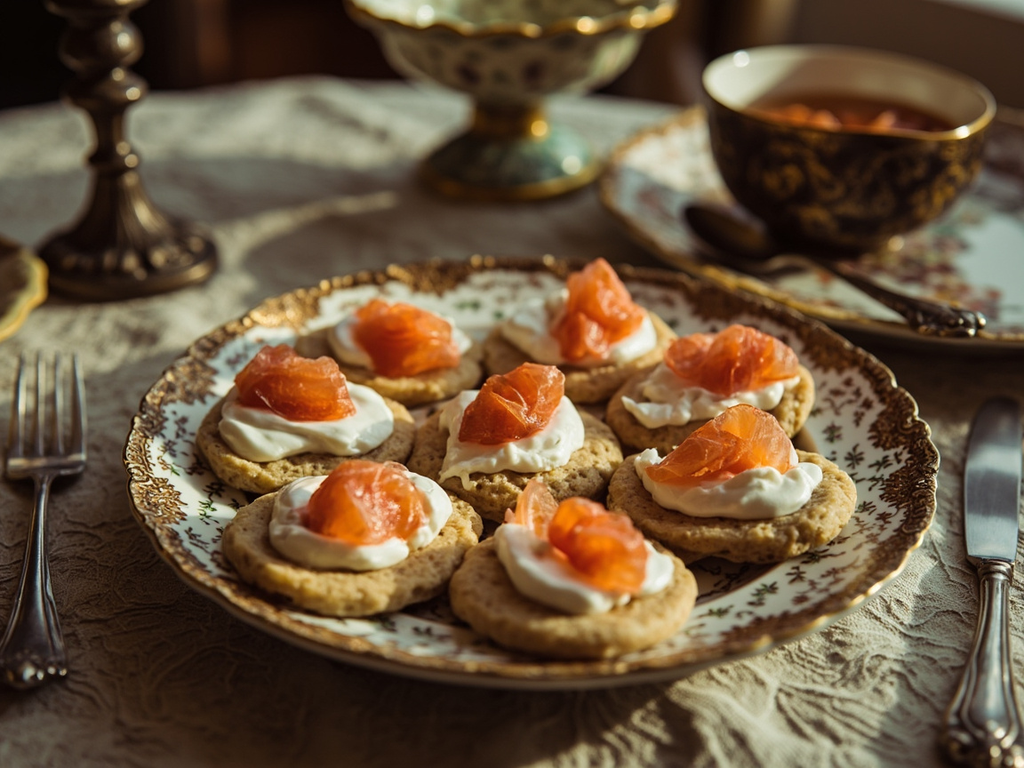 Festive
Blini with caviar and smetana
Festive zakuski (opening bites of a celebratory meal)
🧂 🍄 🫙· 2 h (including rising)
View the recipe
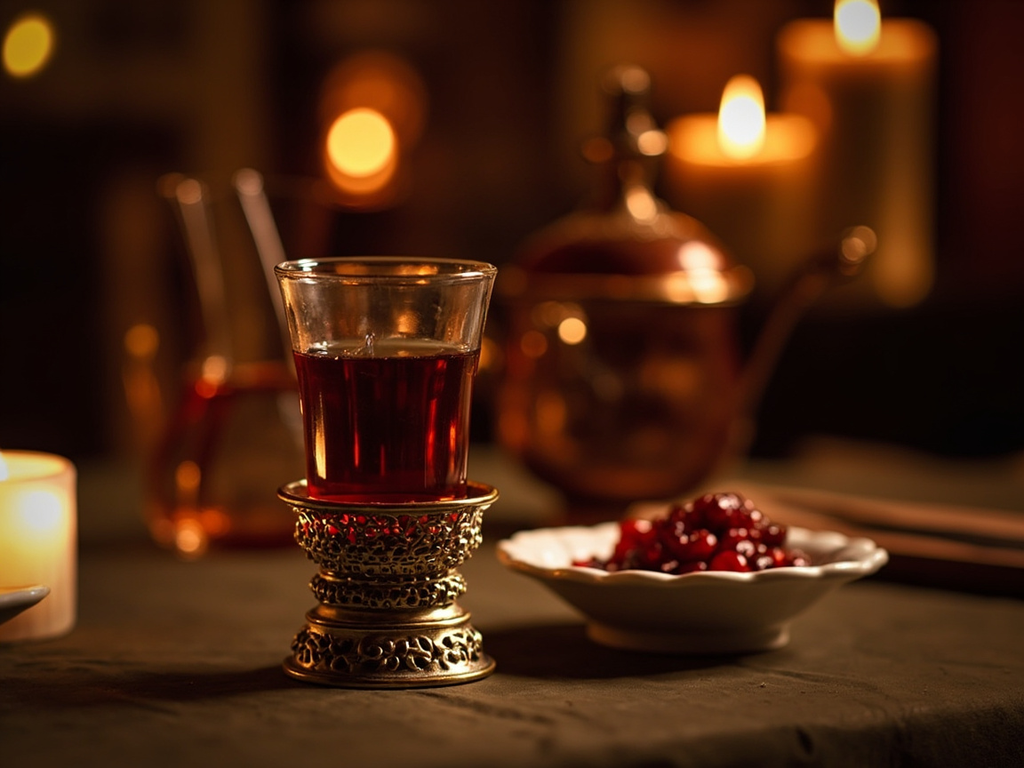 Drink
DrinkSamovar tea with varenye
Chaepitie (tea ritual, closing and punctuation of the day)
☕ 🍯· 15 min
View the recipe
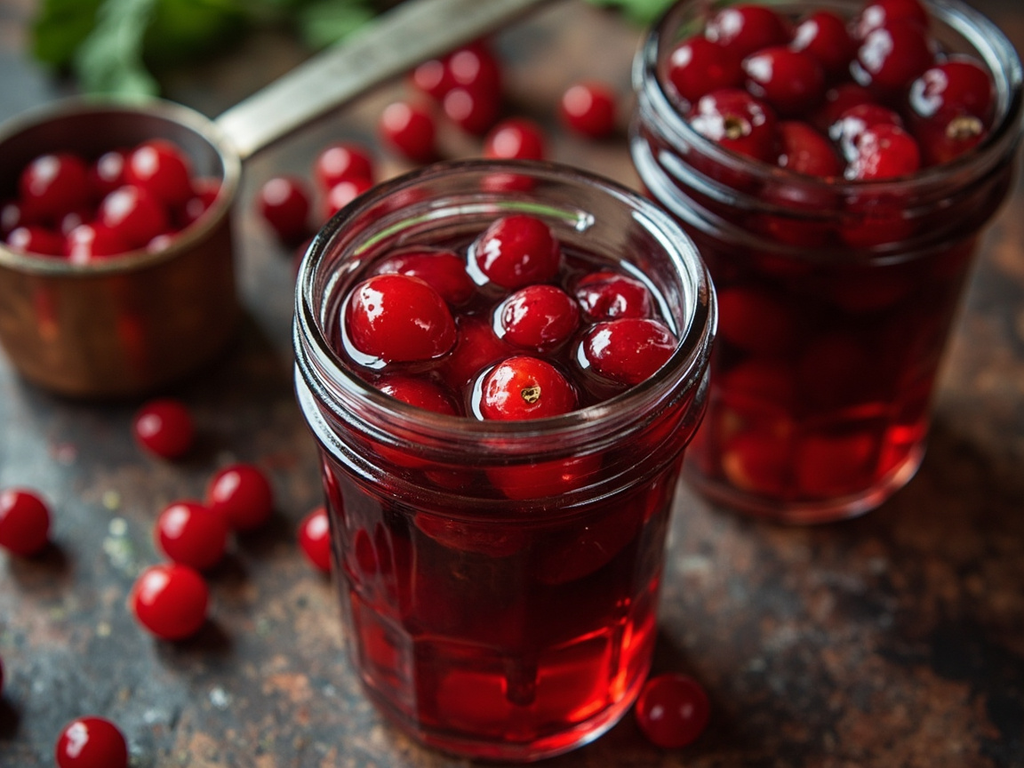 Preserving
Red currant varenye for winter preserving
Zagotovki (seasonal preserves jarred for winter)
🍯 🍋· 45 min
View the recipe
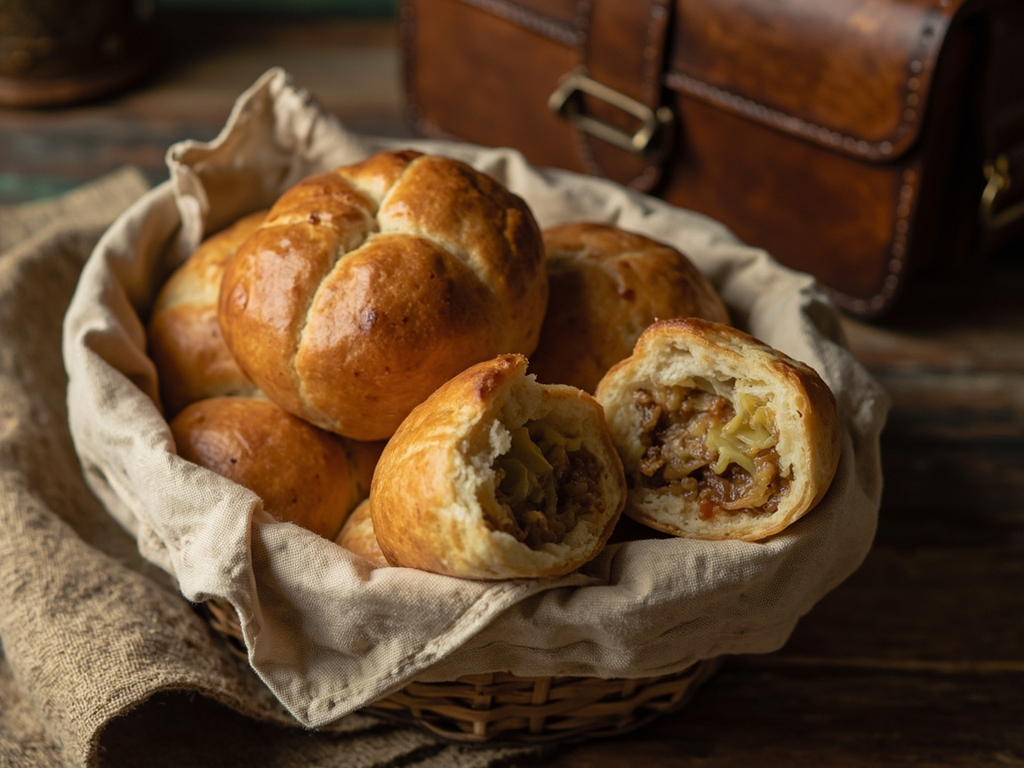 Travel
Cabbage pirozhki for travel
Pirozhki (small stuffed pastries, portable snack food)
🧂 🍄· 2 h (including rising)
View the recipe