 flip
Samovar tea with varenye
Samovar tea with varenye
Why this dish? Samovar tea is Sofia's attested daily drink, shared with her mentor Karl Weierstrass and her Swedish friends over long scholarly conversations. It is drunk strong, diluted with boiling water, and sweetened not by sugar in the cup but by taking a spoonful of jam (varenye) separately.
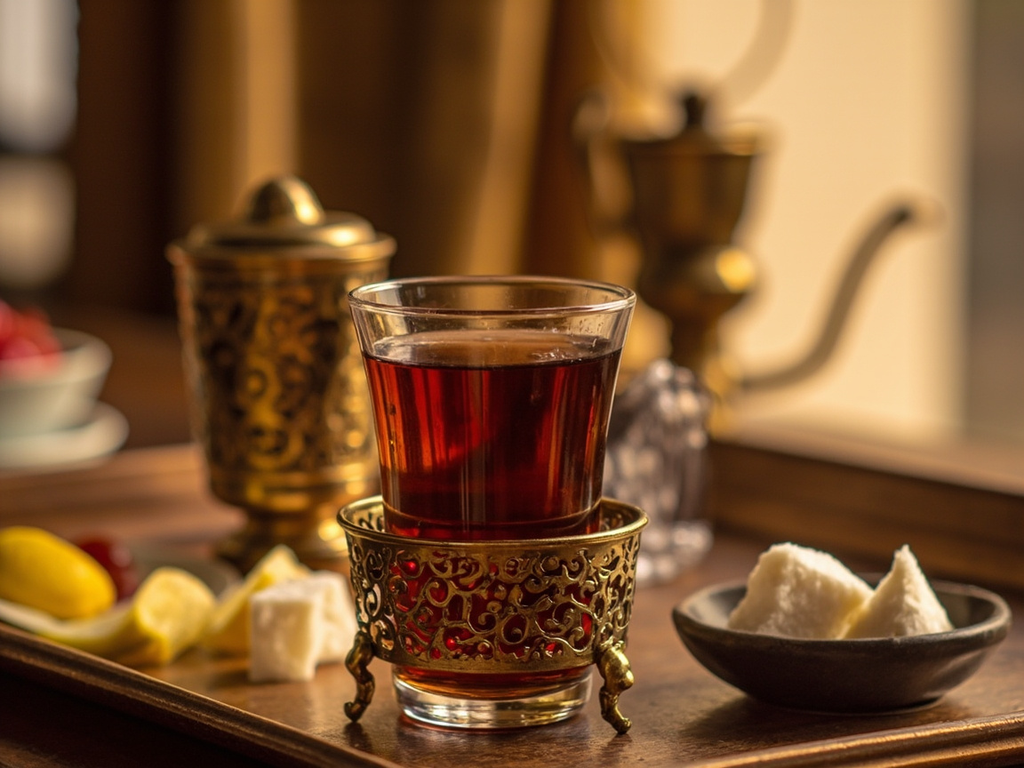
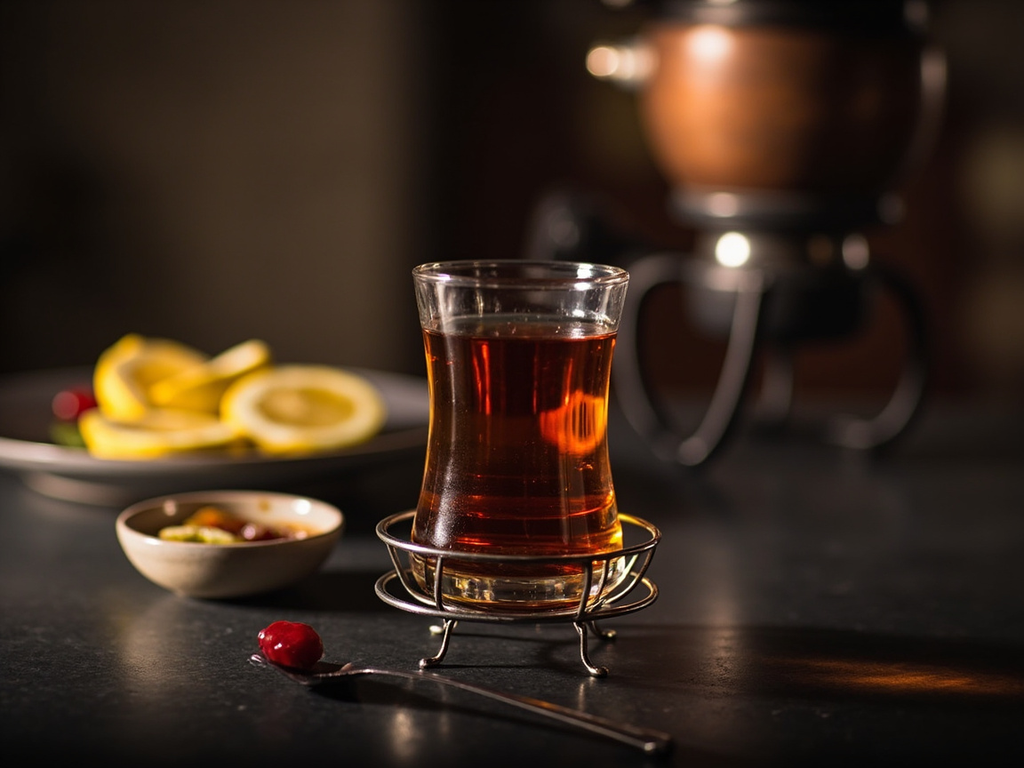
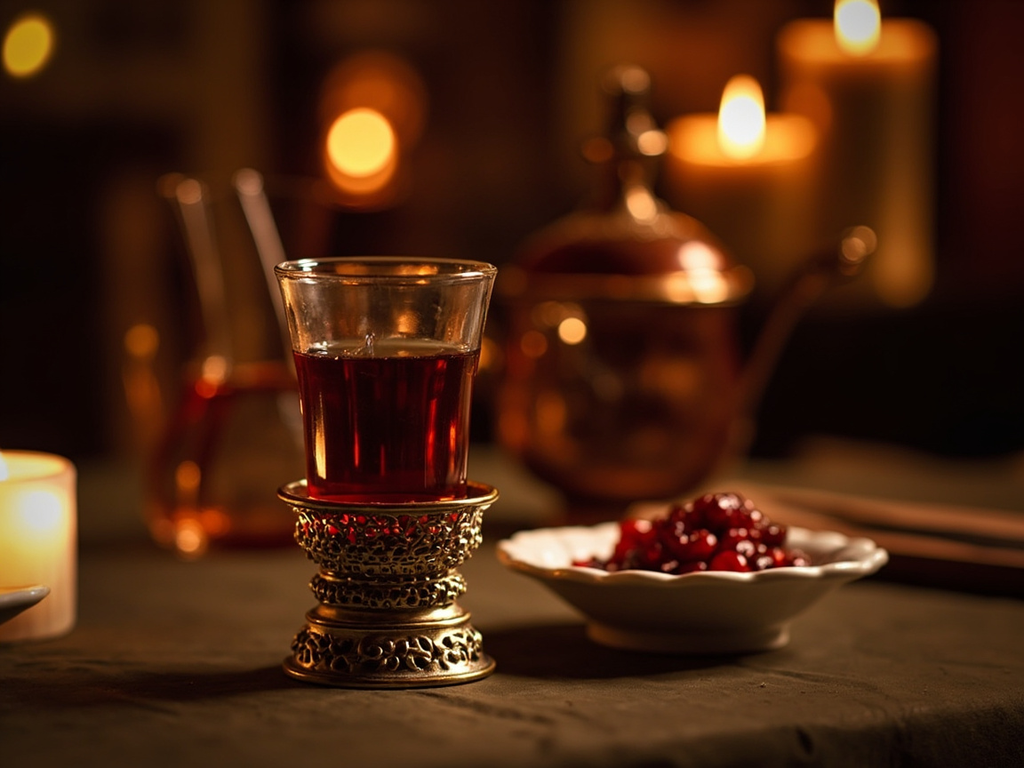
A concentrated black tea (zavarka) brewed in a small teapot sitting atop the samovar, diluted with simmering water in a glass held in a podstakannik. It is accompanied by a spoonful of berry jam taken separately, in the mouth.
The samovar at home never quite went out. When I worked late on a memoir, it kept me company with its copper song. I pour a finger of strong, dark zavarka into the bottom of the glass, then hot water on top. Above all, don't dissolve your sugar like an Englishman! Instead, take a good spoonful of currant varenye, hold it under your tongue, and drink the hot tea over it — that is all the sweetness of Russian evenings.
- •Black tea leaves — for a strong zavarka (concentrated infusion)
- •Samovar water — boiling, as needed (dilution)
- •Varenye (berry jam) — one spoonful per person (sweetness, taken separately)
Samovar tea with varenye
A concentrated black tea (zavarka) brewed in a small teapot sitting atop the samovar, diluted with simmering water in a glass held in a podstakannik. It is accompanied by a spoonful of berry jam taken separately, in the mouth.
Why this dish? Samovar tea is Sofia's attested daily drink, shared with her mentor Karl Weierstrass and her Swedish friends over long scholarly conversations. It is drunk strong, diluted with boiling water, and sweetened not by sugar in the cup but by taking a spoonful of jam (varenye) separately.
The samovar at home never quite went out. When I worked late on a memoir, it kept me company with its copper song. I pour a finger of strong, dark zavarka into the bottom of the glass, then hot water on top. Above all, don't dissolve your sugar like an Englishman! Instead, take a good spoonful of currant varenye, hold it under your tongue, and drink the hot tea over it — that is all the sweetness of Russian evenings.
Ingredients (period version)
- Black tea leaves — for a strong zavarka (concentrated infusion)
- Samovar water — boiling, as needed (dilution)
- Varenye (berry jam) — one spoonful per person (sweetness, taken separately)
Ingredients
- Black tea leaves (Russian or Ceylon type) — 3 tsp (concentrated infusion)
- Simmering water — 1 liter (dilution)
- Red currant or blueberry jam — 1 tbsp per cup (sweetness, taken separately)
Method
- Prepare the zavarka: steep the tea leaves in a small teapot with 250 ml of simmering water for 5 minutes, until very dark and concentrated.
- Pour a base of zavarka into each glass (about 1/4 full), then fill with simmering water.
- Serve with a spoonful of jam on a separate saucer.
- Sip the tea, taking a bit of jam in your mouth before each sip.
How it was made : The copper samovar, imported in the 18th century, became the heart of every Russian home in the 19th. The podstakannik (metal glass holder) allowed one to hold the hot glass. Rare sugar was often taken 'in a nibble' (vprikusku), a lump held between the teeth.
The contemporary twist : Without a samovar, a simple teapot and kettle suffice — keep the gesture of taking varenye separately; that is what makes the Russian experience.
Sofia Kovalevskaya · Charactorium