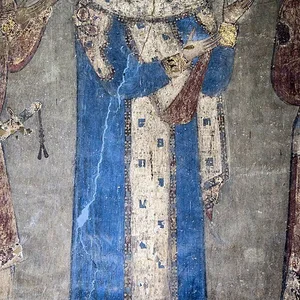
Founder of the Mali Empire in the 13th century, Soundiata Keïta united the Mandinka peoples and defeated King Soumaoro Kanté at the Battle of Kirina (c. 1235). His epic, passed down by griots, is one of the great works of African oral literature.
Soundiata Keïta(1190 — 1255)
Soundiata Keïta
Mali
8 min read
Frequently asked questions
Key Facts
- Born around 1217, son of King Naré Maghann Konaté, reportedly paralyzed as a child and later healed according to oral tradition
- Decisive victory at the Battle of Kirina (c. 1235) against Soumaoro Kanté, king of the Sosso Empire
- Founding of the Mali Empire, which would become one of the greatest empires in West Africa
- His reign ushered in a period of prosperity built on control of the gold and salt trade routes
- Died around 1255; his epic (Sundiata, or The Glory of Mali) is preserved through the tradition of djélis (griots)
Works & Achievements
Following the victory at Kirina, Sundiata unified the Mandinka peoples under a central authority, creating one of the largest and wealthiest empires in medieval Africa, which would endure until the 15th century.
Proclaimed at the assembly of Kouroukan Fouga, this charter organized Mandinka society, abolished the enslavement of free men, and established rules for the protection of people and nature. It was inscribed on UNESCO's Intangible Cultural Heritage list in 2009.
By subduing the territories of the former Ghana Empire, Sundiata brought under Malian control the trade routes connecting sub-Saharan Africa to Mediterranean and Arab markets, securing the prosperity of his empire.
Sundiata reformed and unified the military forces of the Mandinka clans, combining cavalry, infantry, and hunters' brotherhoods into an army capable of defeating the formidable Sosso warriors.
Sundiata is the hero of one of the great epics of world literature, transmitted by Mandinka griots for eight centuries and recognized as a masterpiece of African oral literature.
Anecdotes
As a child, Sundiata suffered from a disability that prevented him from walking. His half-brothers mocked him and humiliated his mother, Sogolon Kondé. One day, according to the Mande epic, he seized a heavy iron rod and stood up for the first time, bending the sacred baobab tree and astonishing the entire royal court. This episode symbolizes the awakening of an extraordinary destiny.
Driven from the kingdom of Kangaba by his stepmother's jealousy, Sundiata endured long years of exile, finding refuge at the courts of several kingdoms — including Mema, whose king offered him sanctuary and military training. This exile forged his character as a leader and allowed him to build valuable alliances before his triumphant return.
At the Battle of Kirina, around 1235, Sundiata faced Soumaoro Kanté, the powerful Sosso king said to be invincible thanks to his magical powers. According to oral tradition, it was an arrow tipped with a white rooster's spur — capable of breaking Soumaoro's tana (protective taboo) — that secured the decisive victory. This battle ended Sosso domination and ushered in the era of the Mali Empire.
After his victory, Sundiata summoned the chiefs of the Mande peoples at Kouroukan Fouga. There, the Mande Charter was proclaimed — considered one of the earliest declarations of human rights in history: it abolished the enslavement of free people, organized society, and established rules of coexistence. UNESCO inscribed it in 2009 on the Representative List of the Intangible Cultural Heritage of Humanity.
The Epic of Sundiata is one of the greatest works of African oral literature, passed down from generation to generation by griots — known as djéli in the Mande language. The griot Balla Fasséké, advisor, musician, and living memory of the court, is the central figure in this narrative. It is thanks to these guardians of the spoken word that Sundiata's story has reached us across eight centuries.
Primary Sources
"Kings of the bush, lion beneath the tree, there is no king without a griot. I am the griot of Naré Maghan Sundiata... My testimony is the voice of those who are no more."
"The first king of Mali was Mari Djata... He seized power and ruled firmly over the peoples of the western Sahel, extending his empire from the banks of the Niger to the edges of the Sahara."
"Mali is a vast empire whose ruler is the most powerful of the black kings. His authority extends over many kingdoms and his army is considerable."
"Sundiata, son of Naré Maghan, was the founder of the greatness of Manden. He defeated Sumanguru at Kirina and united the clans of hunters and warriors under a single banner."
Key Places
Sundiata's birthplace and political capital of the Mali Empire, Niani was a major commercial and cultural center. Its ruins are found today in Guinea, near the Malian border.
It was near Kirina, in present-day Mali, that Sundiata defeated Sumanguru Kante around 1235, sealing the end of the Sosso Empire and the founding of the Mali Empire.
The ancestral home of the Keita clan, considered the birthplace of Mandinka civilization. The Kamabolon, a sacred hut in Kangaba, remains a living site of collective memory to this day.
The kingdom that sheltered Sundiata and his mother during their years of exile. The king of Mema offered him refuge and command of an army, allowing him to prepare his reconquest.
The former capital of the Ghana Empire, conquered by Sundiata around 1240. Its integration into the Mali Empire gave control over the great trans-Saharan gold trade routes.
Typical Objects
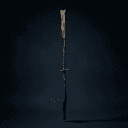
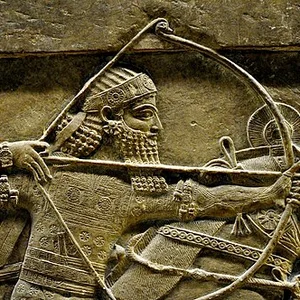
A central symbol of Mandinka identity, the bow is the weapon of the donsos, the hunters' brotherhood to which Sundiata belonged. According to tradition, it was an arrow tipped with a white rooster's spur that broke the power of Soumaoro Kanté.
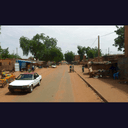
A wooden-keyed musical instrument and ancestor of the xylophone, the balafon was the sacred instrument of Mandinka royal courts. Soumaoro Kanté possessed a legendary one, which the griot Balla Fasséké stole and brought to Sundiata.
📷 CC BY-SA 4.0 · Wikimedia Commons ↗
In the epic, it is by lifting a heavy iron rod that the young Sundiata performs his first great feat and reveals his extraordinary power. It symbolizes his resilience and his destiny as a leader.
📷 Domaine public · Wikimedia Commons ↗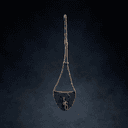
A 21-string instrument emblematic of Mandinka culture, used by griots to accompany the recitation of royal epics. The kora was inseparable from the memory of power and the passing down of history.

A common currency in medieval West Africa, cowries were used in commercial transactions throughout the Mali Empire, whose wealth rested on the trans-Saharan trade in gold and salt.

A loose-fitting garment, often embroidered and dyed with indigo or ochre, the boubou was the ceremonial dress of Mandinka rulers during official ceremonies and royal audiences.
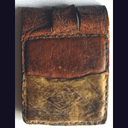
A leather-sewn amulet containing protective formulas, worn by Mandinka warriors in battle. Sundiata and his men carried them, blending animist practices with the early influence of Islam.
📷 CC BY-SA 3.0 · Wikimedia Commons ↗School Curriculum
Vocabulary & Tags
Key Vocabulary
Daily Life
Morning
Sundiata begins his day before dawn with an invocation to the ancestors and the forces of nature, in keeping with the animist practices of his people. He then receives reports from his generals and provincial governors during a morning audience in the mud-brick throne room, settling disputes and planning military operations.
Afternoon
The afternoon is devoted to military training and hunting, activities central to Mandinka culture and symbols of royal vigor. Sundiata also oversees the merchant caravans passing through Niani, the empire's main source of wealth through the trade of gold, salt, and enslaved people.
Evening
In the evening, the court gathers around the Mansa for a communal meal — a moment of fellowship and shared power. The griots then take the floor to recite royal genealogies and the deeds of the ancestors, accompanied by the kora and the balafon, preserving collective memory and reinforcing the ruler's legitimacy.
Food
The court's diet is built around millet, sorghum, and fonio, prepared as porridges or flatbreads. Game from the royal hunts — antelopes, warthogs — provides meat, served with sauces made from baobab leaves, okra, and shea butter. Meals are accompanied by dolo (fermented millet beer) or cow's milk.
Clothing
Sundiata wears a long boubou of hand-woven cotton, dyed with indigo or decorated with bogolan patterns (fabric dyed with fermented mud). A royal cap and leather sandals complete his everyday dress. For ceremonies, he dons gold adornments — bracelets and pectorals — along with protective amulets sewn into leather pouches.
Housing
The palace of Niani is a vast compound of mud-brick (banco) buildings arranged around tree-lined interior courtyards. The king's dwelling, larger and raised above the others, is decorated with geometric motifs and supported by carved wooden columns. Separate quarters house the wives, the elite guard, the griots, and the court's craftspeople.
Historical Timeline
Period Vocabulary
Visual Style
Style visuel ancré dans l'esthétique de l'Afrique de l'Ouest médiévale : architecture en banco, motifs bogolan, lumière dorée de la savane sahélienne et palette de terres chaudes rehaussées d'indigo et d'or.
Sound Ambience
Ambiance sonore de la savane ouest-africaine médiévale : percussions rituelles djembe et dundun, voix des griots récitant l'épopée, kora et balafon, bruits du marché et du travail artisanal dans la capitale impériale.
Liens externes & ressources
Références
Œuvres
Fondation de l'Empire du Mali
vers 1235
Charte du Mandé (Kouroukan Fouga)
vers 1235-1236
Conquête de l'empire du Ghana
vers 1240
Organisation de l'armée mandingue
vers 1230-1235
L'épopée de Soundiata (Sundiata Fasa)
XIIIe siècle (transmission orale continue)