 Flip the card
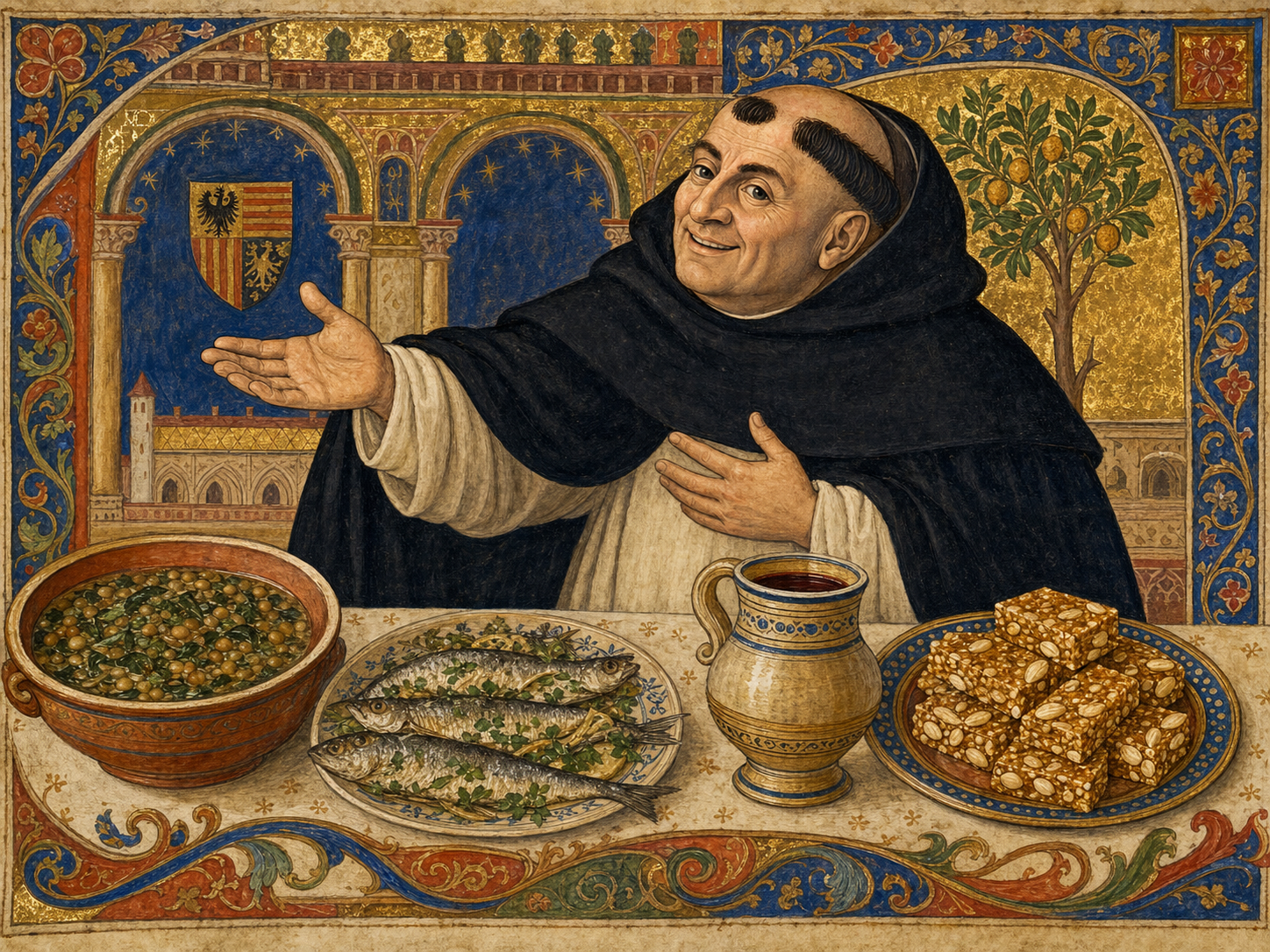
Thomas Aquinas at the table
1225 — 1274
On the menu
The Dominican Refectory (Conventual Refectory)
Among the Friars Preachers in the 13th century, meals did not follow the starter-main-dessert pattern but the Rule. First came the "general" (the common portion for all: bread and vegetable pottage), then the "pittance" (the cooked dish that accompanied the bread, often vegetables or, on meat days, fish), and finally wine mixed with water. Everything was eaten in silence during the holy reading. Meat was banned from the ordinary diet and reserved for the sick. Feast days relaxed this sobriety somewhat, while the Arab-Sicilian cuisine of Thomas's native region introduced sugar, almonds, and sesame into sweets and remedies.
Signature : Almond Milk (lac amygdalarum)
Pounded and pressed with water, almonds yield a white "milk" that replaced animal milk on abstinence days and thickened pottages, sweets, and drinks. In the Kingdom of Sicily where Thomas was born, heir to Arab-Norman gardens, the almond reigned supreme: it bridged the austere refectory and the refined confectionery of his childhood.
click to flip back
Thomas Aquinas at the table
1225 — 1274
4 period recipes
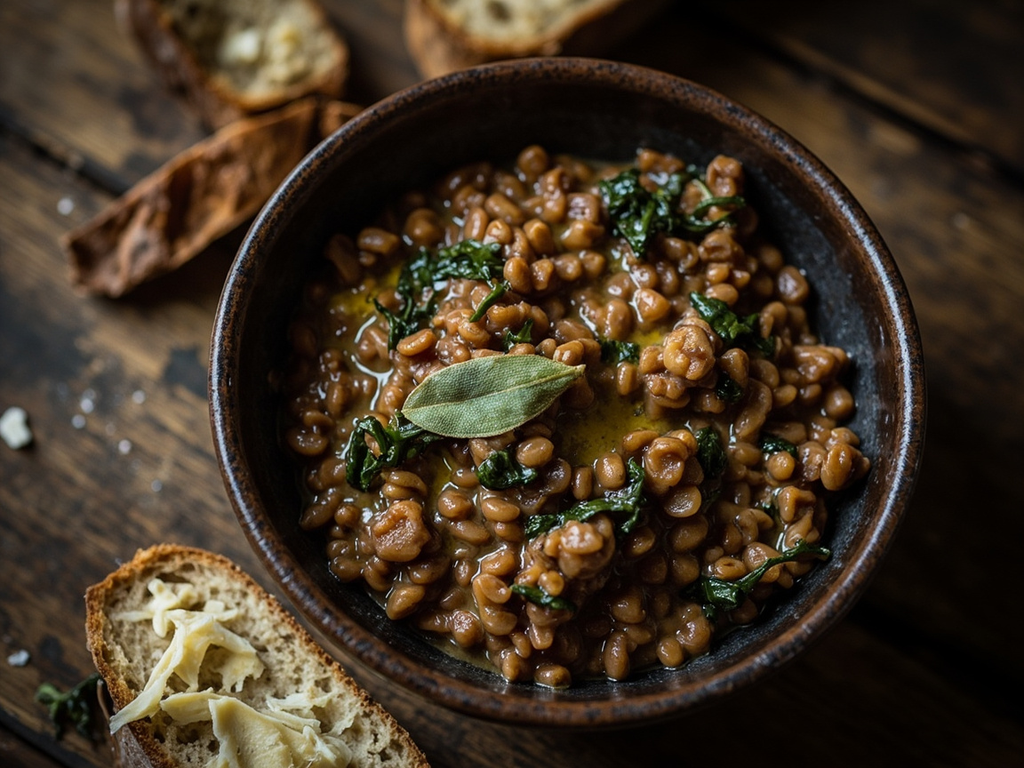 Everyday
Lentil and Chard Pottage from the Refectory
General (Common Pottage of the Community)
🧂 🍄· 45 min
View the recipe
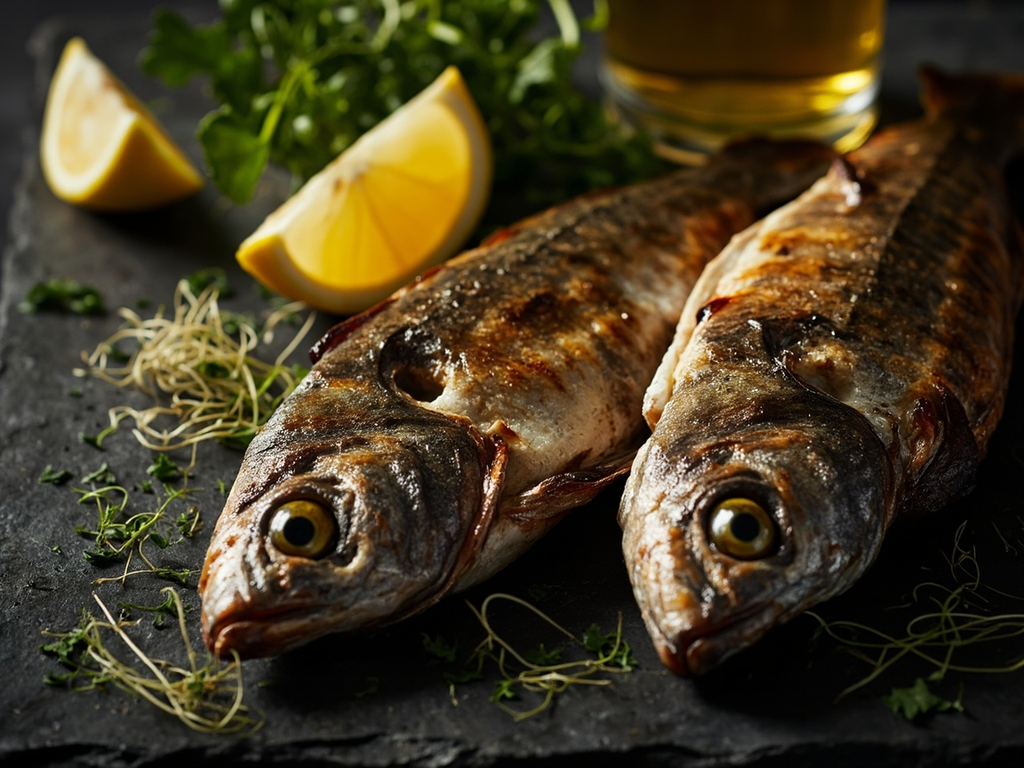 Festive
Fresh Grilled Herrings with Herbs and Verjuice
Pittance for Feast Days (Fish Dish)
🧂 🍄 🍋· 25 min
View the recipe
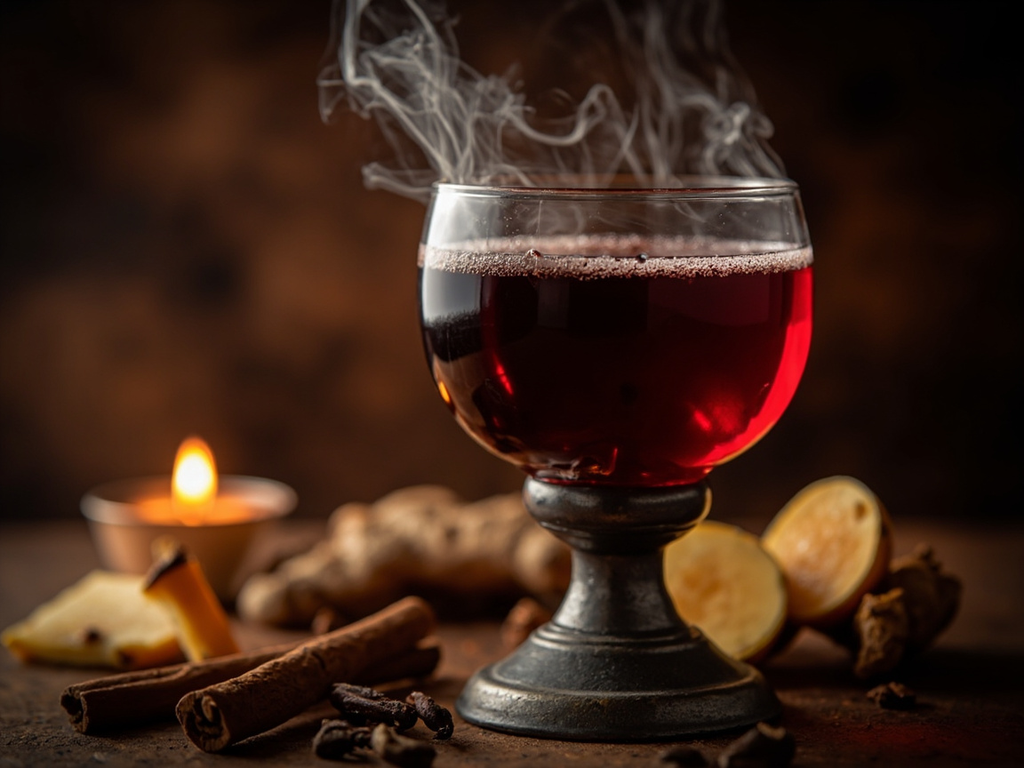 Drink
DrinkSpiced Wine with Honey (Claré / Medieval Piment)
The Evening Cup (Community Flavored Drink)
🍯 🌶️· 30 min
View the recipe
 Preserving
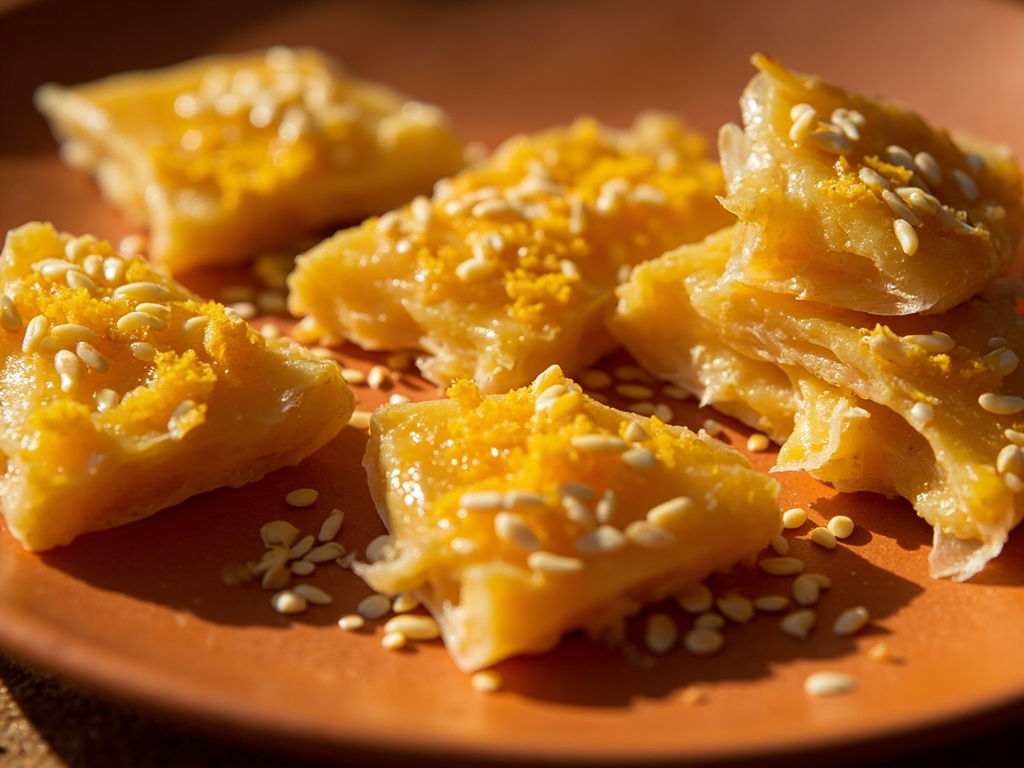
Cubbaita — Sesame, Almond and Honey Brittle
Arab-Sicilian Keep-Sweet (Preserved Confectionery)
🍯· 40 min
View the recipe