 flip
flipSpiced Wine with Honey (Claré / Medieval Piment)
Spiced Wine with Honey (Claré / Medieval Piment)
Why this dish? The Rule allows wine in moderation, especially on major religious feast days. Spiced and honey-sweetened wine, very popular in 13th-century Europe (notably in Paris where Thomas taught), warmed the body and was also thought to aid digestion after communal meals.
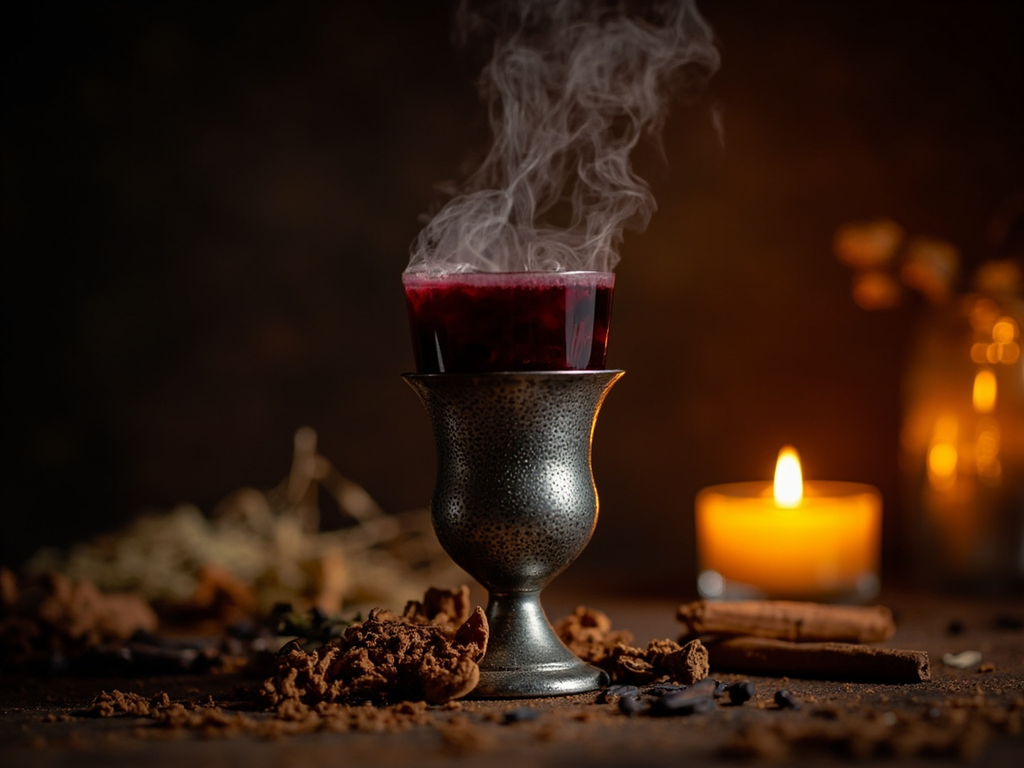
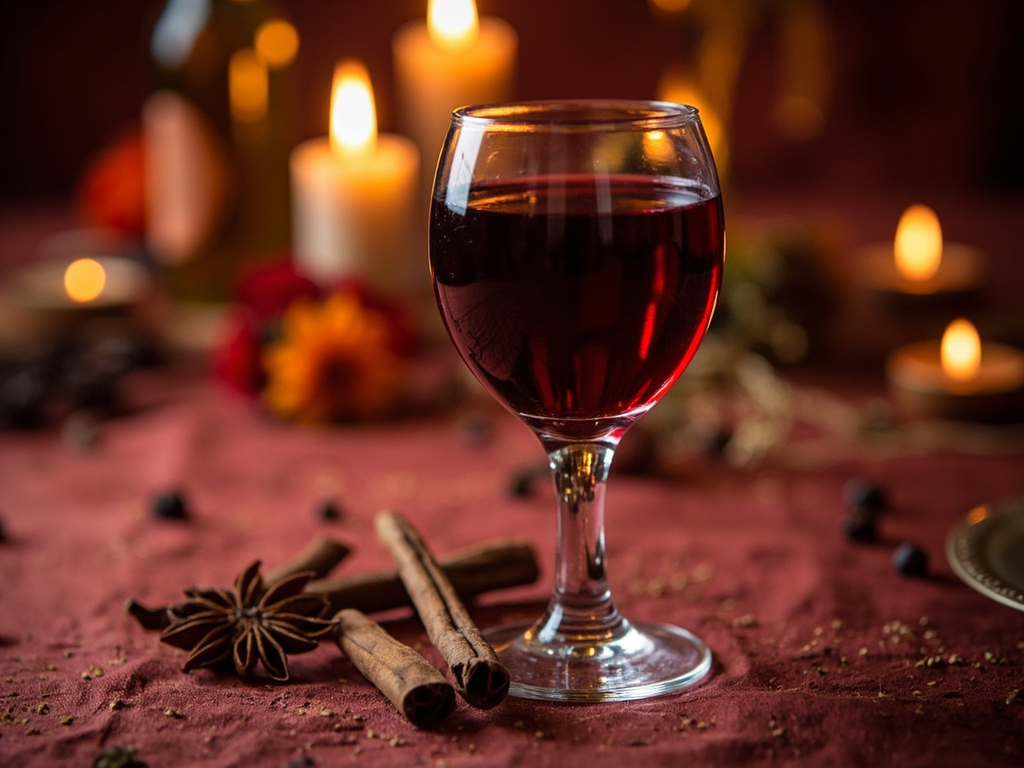
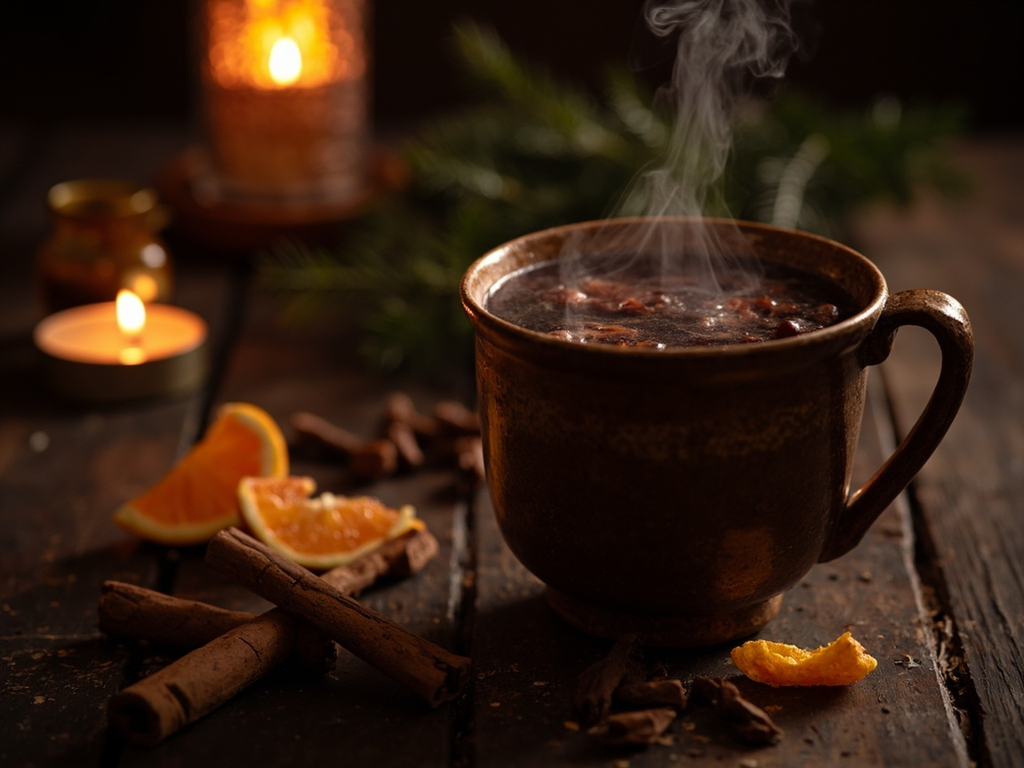
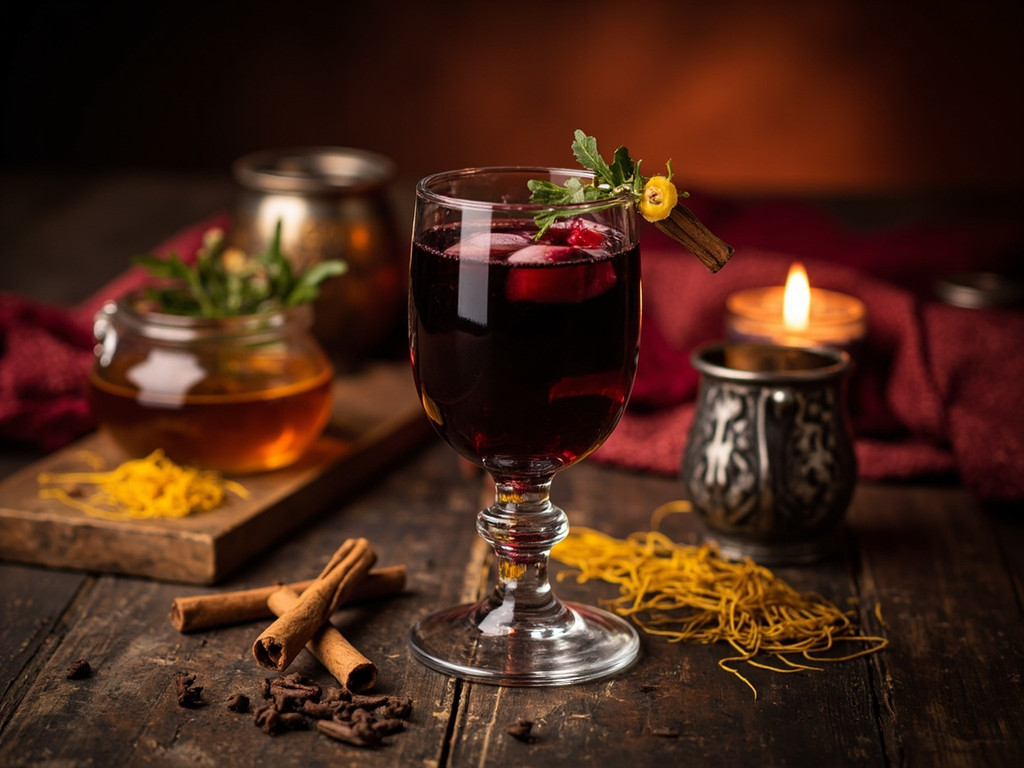
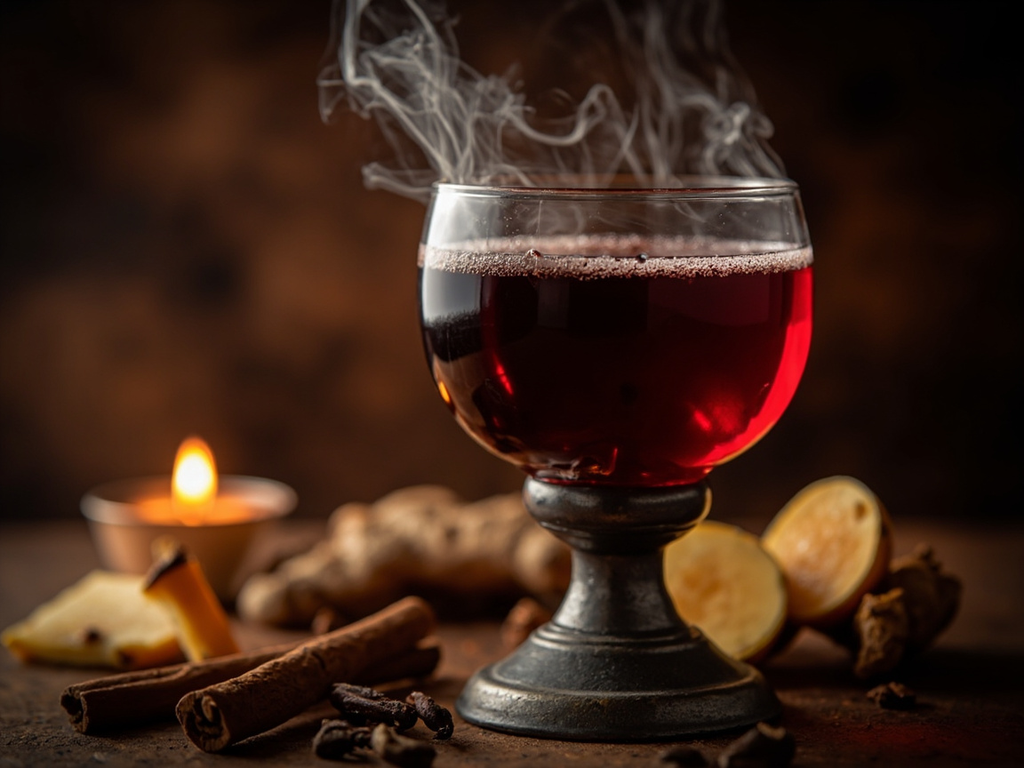
Red wine gently heated with honey, cinnamon, ginger, and cloves, then strained until clear and fragrant. A warm, sweet, and spicy drink served in small quantities, to be savored slowly.
Wine, taken with measure, gladdens the heart of man without troubling reason — it is excess, not the beverage, that I hold as vice. On these great feast days, warm the wine with a little honey and these spices from the East, clove, cinnamon, and ginger, then strain it through a cloth until clear. Drink a modest cup, cut with water if your temperament is hot, and let it gently warm the belly after the meal. Temperance, you see, does not forbid joy: it gives it its proper measure.
- •Red wine — a pitcher (base)
- •Honey — to taste (sweetness)
- •Cinnamon, ginger, cloves — a few pounded spices (warm flavoring)
- •Grains of paradise or long pepper — a pinch (noble spice)
Spiced Wine with Honey (Claré / Medieval Piment)
Red wine gently heated with honey, cinnamon, ginger, and cloves, then strained until clear and fragrant. A warm, sweet, and spicy drink served in small quantities, to be savored slowly.
Why this dish? The Rule allows wine in moderation, especially on major religious feast days. Spiced and honey-sweetened wine, very popular in 13th-century Europe (notably in Paris where Thomas taught), warmed the body and was also thought to aid digestion after communal meals.
Wine, taken with measure, gladdens the heart of man without troubling reason — it is excess, not the beverage, that I hold as vice. On these great feast days, warm the wine with a little honey and these spices from the East, clove, cinnamon, and ginger, then strain it through a cloth until clear. Drink a modest cup, cut with water if your temperament is hot, and let it gently warm the belly after the meal. Temperance, you see, does not forbid joy: it gives it its proper measure.
Ingredients (period version)
- Red wine — a pitcher (base)
- Honey — to taste (sweetness)
- Cinnamon, ginger, cloves — a few pounded spices (warm flavoring)
- Grains of paradise or long pepper — a pinch (noble spice)
Ingredients
- Full-bodied red wine — 75 cl (base)
- Honey — 4 tbsp (sweetness)
- Cinnamon stick — 1 (spice)
- Fresh ginger, sliced — 3 slices (spice)
- Cloves — 4 (spice)
- Long pepper or black peppercorns — 4 grains (spice)
- Water — to dilute when serving (optional) (temperance)
Method
- Pour the wine into a saucepan, add honey and spices.
- Heat very gently without ever boiling, 15-20 min, to infuse without burning off alcohol or bitterness.
- Taste and adjust honey.
- Strain through a fine cloth or sieve to obtain a clear liquid.
- Serve warm in small cups, diluted with a little hot water if preferred.
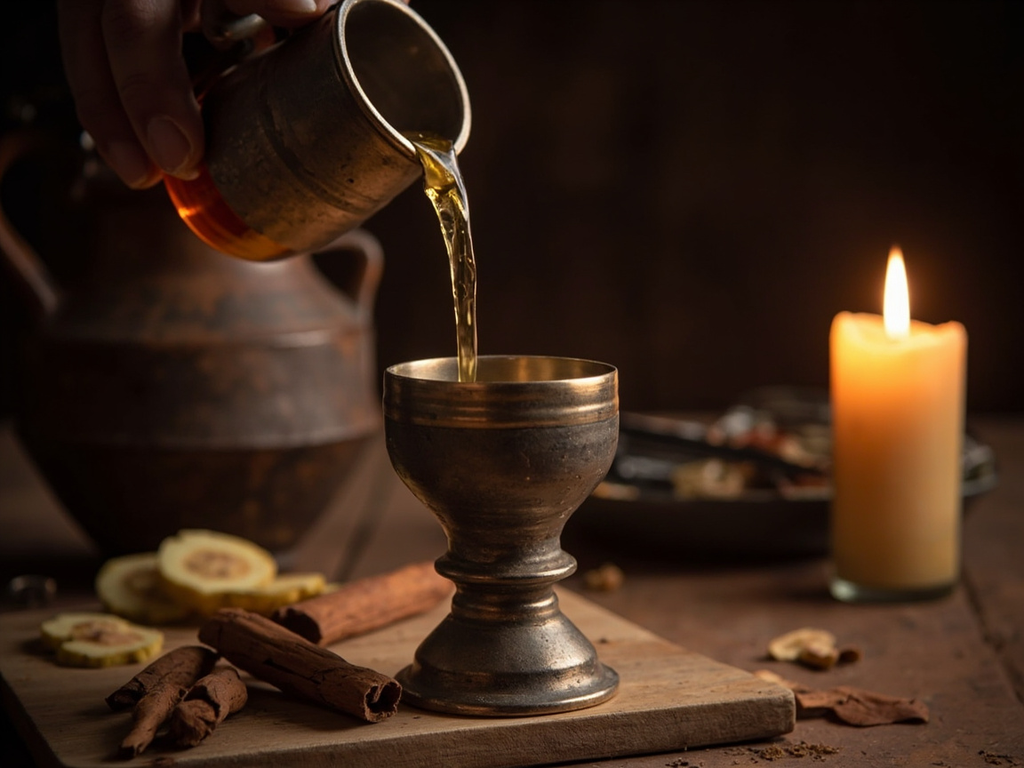
How it was made : Medieval "piment" or "claré" was a wine sweetened with honey and infused with costly spices (cinnamon, ginger, cloves, long pepper), strained through a cloth bag called "Hippocrates's sleeve" — hence the later name hypocras. It was drunk at the end of meals and at feasts; the spices, imported at great expense from the East, made it a prestigious drink as well as a digestive "remedy".
The contemporary twist : Served in a small liqueur glass with a cinnamon stick stirrer; non-alcoholic version by replacing wine with infused red grape juice prepared the same way.
Thomas Aquinas · Charactorium