 flip
flipLentil and Chard Pottage from the Refectory
Lentil and Chard Pottage from the Refectory
Why this dish? This was the exact daily fare at Thomas's table: the Dominican Rule forbade meat on ordinary days, and legumes, garden herbs, and bread formed the basis of every dinner eaten in silence, at the convent of Santa Sabina as well as at the studia of Naples and Paris.
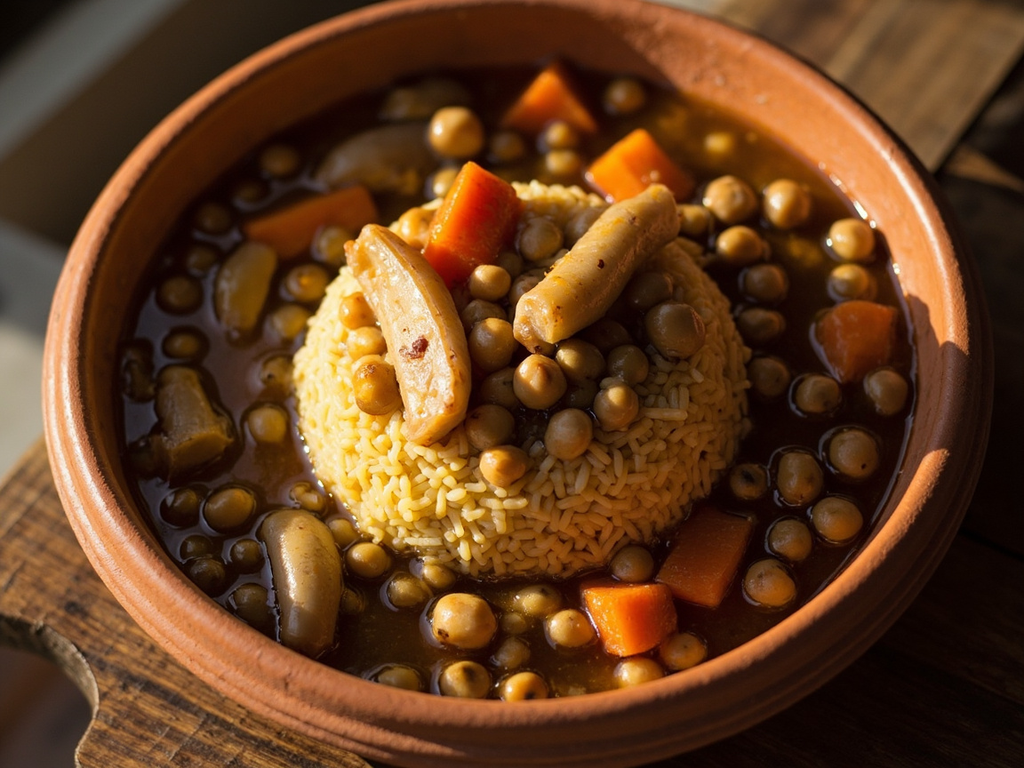
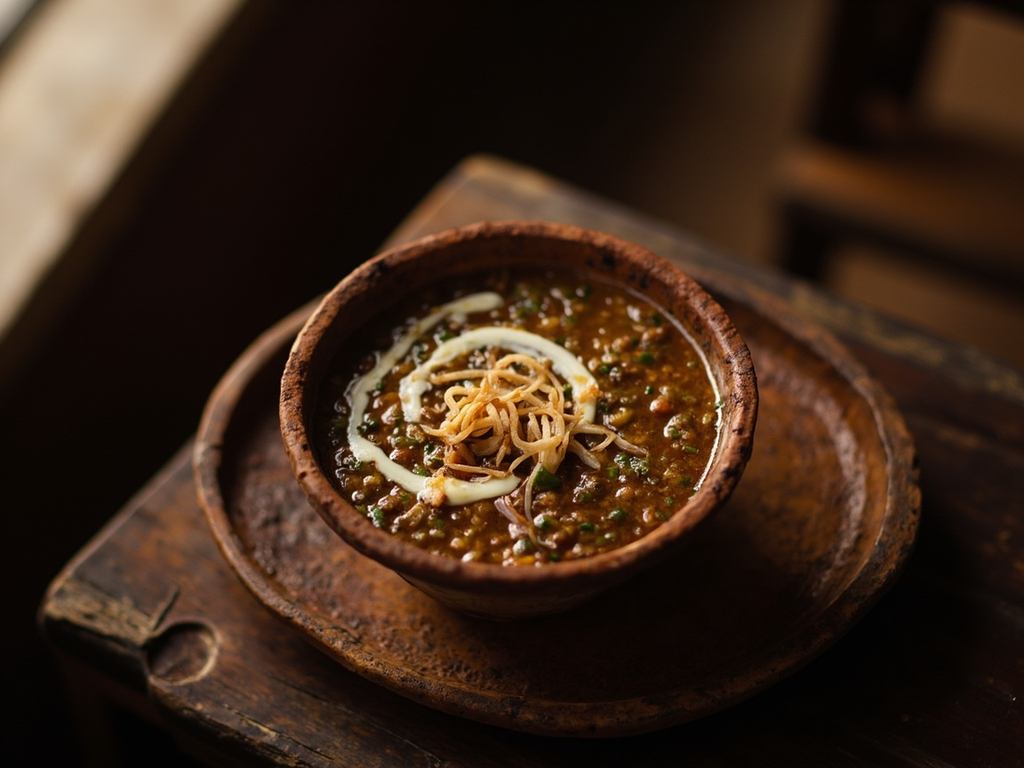
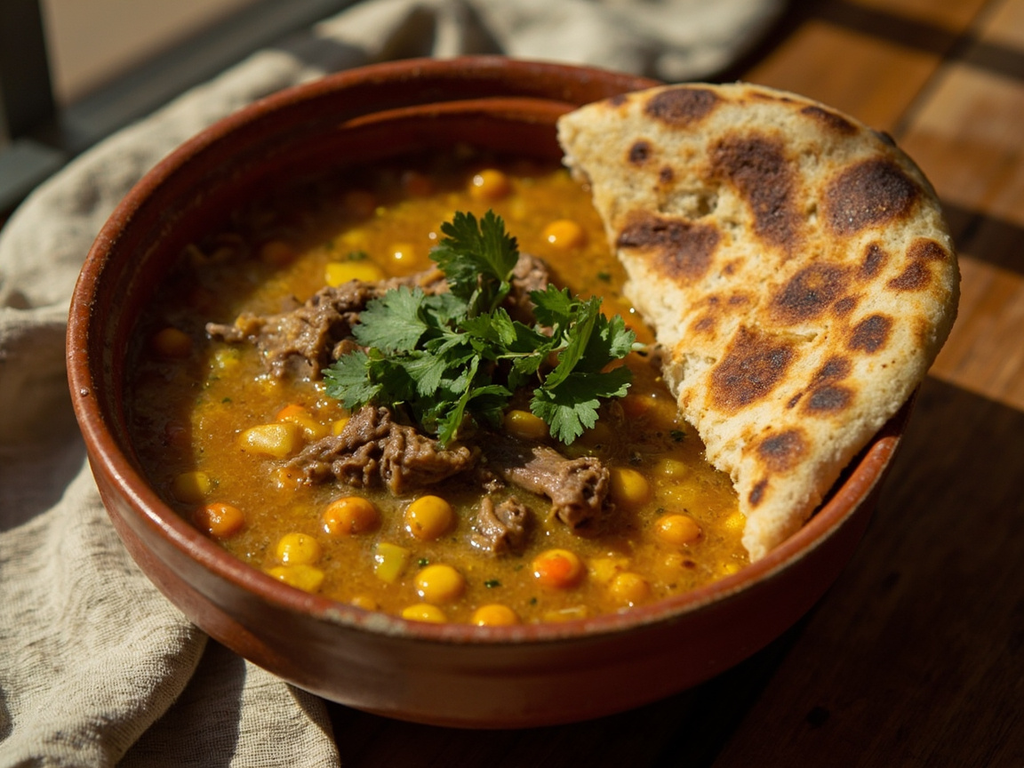
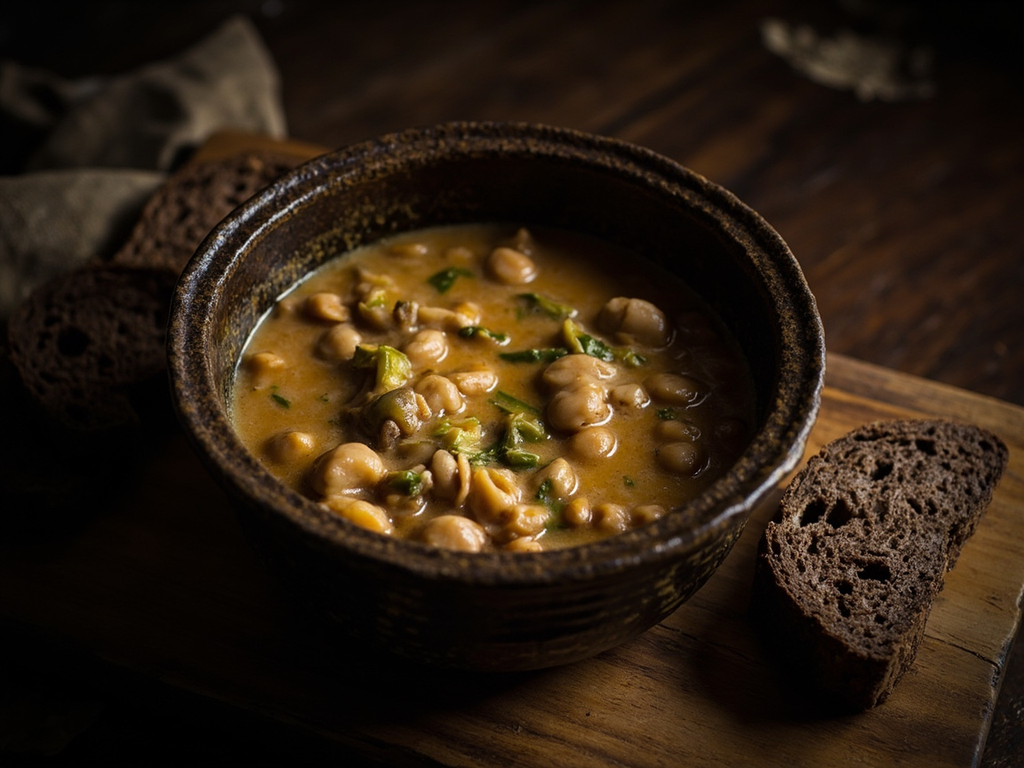
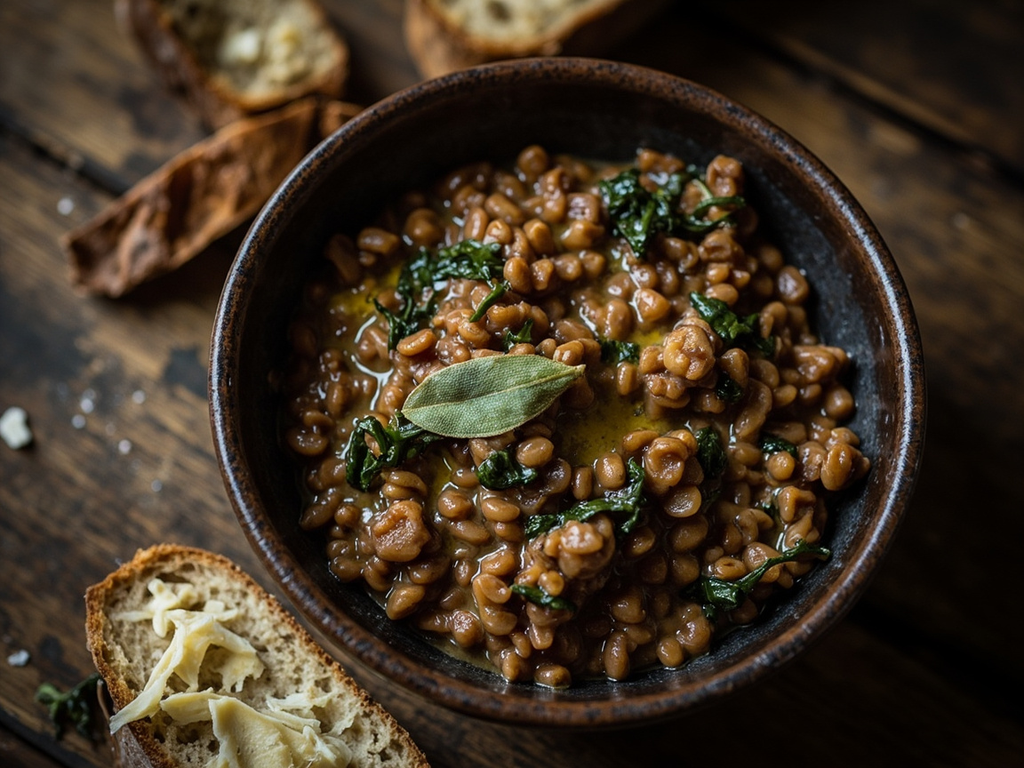
A thick pottage of brown lentils simmered with leek, chard, and a drizzle of oil, flavored with sage and sharpened with a little grated cheese. It is poured over slices of stale bread that soak it up: nourishing, humble, perfect for sustaining a long day of reading and disputation.
My brother, take your place and be silent, for here we feed the soul through reading and the body with the barest necessities. Our pottage has only lentils, garden herbs, and oil: Aristotle teaches that the temperate man is content with what suffices, and sobriety clears the mind for divine things. Pour it over yesterday's bread, that no crumb be lost, and give thanks: the little, received with measure, is worth more than abundance that weighs down. Eat, and let your silence be your prayer.
- •Brown lentils — a good bowlful (nourishing base)
- •Chard (or spinach) — one bunch (green vegetable)
- •Leek and onion — as the garden provides (base aromatics)
- •Olive oil — a drizzle (lean fat)
- •Sage and parsley — a few leaves (flavoring)
- •Grated dry sheep's cheese — a pinch (umami, allowed outside fasting)
- •Stale bread — 2 slices per person (base, soaked soup)
Lentil and Chard Pottage from the Refectory
A thick pottage of brown lentils simmered with leek, chard, and a drizzle of oil, flavored with sage and sharpened with a little grated cheese. It is poured over slices of stale bread that soak it up: nourishing, humble, perfect for sustaining a long day of reading and disputation.
Why this dish? This was the exact daily fare at Thomas's table: the Dominican Rule forbade meat on ordinary days, and legumes, garden herbs, and bread formed the basis of every dinner eaten in silence, at the convent of Santa Sabina as well as at the studia of Naples and Paris.
My brother, take your place and be silent, for here we feed the soul through reading and the body with the barest necessities. Our pottage has only lentils, garden herbs, and oil: Aristotle teaches that the temperate man is content with what suffices, and sobriety clears the mind for divine things. Pour it over yesterday's bread, that no crumb be lost, and give thanks: the little, received with measure, is worth more than abundance that weighs down. Eat, and let your silence be your prayer.
Ingredients (period version)
- Brown lentils — a good bowlful (nourishing base)
- Chard (or spinach) — one bunch (green vegetable)
- Leek and onion — as the garden provides (base aromatics)
- Olive oil — a drizzle (lean fat)
- Sage and parsley — a few leaves (flavoring)
- Grated dry sheep's cheese — a pinch (umami, allowed outside fasting)
- Stale bread — 2 slices per person (base, soaked soup)
Ingredients
- Green or brown lentils — 250 g (base)
- Chard (leaves + stalks) — 200 g (green vegetable)
- Leek — 1 (aromatic)
- Onion — 1 (aromatic)
- Olive oil — 3 tbsp (fat)
- Fresh sage — 4 leaves (flavoring)
- Grated pecorino — 30 g (umami)
- Stale country bread — 4 slices (base)
- Water or vegetable broth — 1.2 L (liquid)
- Salt — to taste (seasoning)
Method
- Sweat the sliced leek and onion in olive oil without browning.
- Add the rinsed lentils, cover with water or broth, bring to a simmer with the sage.
- Cook for 25-30 min, then add diced chard stalks (10 min) then shredded leaves (5 min).
- Season with salt at the end, roughly mash a ladleful of lentils to thicken.
- Place the stale bread at the bottom of bowls, pour the boiling pottage over, let soak for 2 min.
- Grate pecorino, add a drizzle of raw oil, and serve.
How it was made : In medieval convents, legume pottage was the mainstay of the meal: economical, rich in plant protein, and compliant with meat abstinence. It was cooked in a cauldron over the communal fire, seasoned with oil and herbs from the cloister garden, and the soaked bread ("soup" in the original sense) avoided any waste.
The contemporary twist : Served in a dark bowl, lentils left whole, large pecorino shavings and a fried sage leaf placed like a seal — a nod to Thomas's ecclesiastical seal.
Thomas Aquinas · Charactorium