Imaginary interview with Abhishek Bachchan
by Charactorium · Abhishek Bachchan (1976 — ?) · Performing Arts · 6 min read

Juhu, Mumbai, late evening. The light is fading over the gardens of the Bachchan family home as Abhishek receives us, still a little marked by a long shooting session. He speaks softly, with that gentle irony of those who grew up too close to the spotlight to be fooled by it.
—What did it mean for the child you were to bear the name Bachchan?
Growing up Bachchan means being born with a spotlight already on you. My father Amitabh is a legend of Hindi cinema, my mother Jaya Bhaduri a respected actress — imagine a shadow so vast it both protects and crushes you. As a child, I thought all fathers came home chased by crowds. I was called a star kid, that term for celebrity children everyone is waiting to trip up, convinced we received everything without earning it. The truth is, such a legacy gives you the door but never the role: the door is opened for you; the role you must take alone, under a thousand eyes that secretly hope for your fall.
Such a legacy gives you the door but never the role.
—How do you remember your very first steps in front of the camera?
In 2000, I debuted in Refugee, directed by J. P. Dutta, alongside Kareena Kapoor who was also starting out. You dream of an explosion, a triumph that consecrates you at once. The film had only modest success, and that evening I understood that Bollywood doesn't reward names, it rewards patience. Then came lean years, roles that didn't take off, that doubt that sets in when you read your script at night wondering if you chose the wrong life. I learned something in Boston, at university, that the city reminded me: no one owes you anything. I had to wait, take it, start over.
Bollywood doesn't reward names, it rewards patience.
—Do you remember the moment you shared the screen with your father?
Sarkar, 2005, under Ram Gopal Varma's camera. Acting opposite Amitabh is not acting opposite your father: it's acting opposite all of Indian cinema condensed into a gaze. I was afraid, I admit, of disappearing in his aura. And then something happened on set: instead of diminishing me, his presence pulled me up, like a scene partner who forces you to be better. That role earned me a Filmfare for Best Supporting Actor, the second in a row after Yuva. Receiving that black statuette for a film where my father was my co-star — it closed a circle without ceasing to be myself.
Acting opposite my father is acting opposite all of Indian cinema condensed into a gaze.
—Three Bachchans together on screen in Sarkar Raj: how does one experience such a moment?
In 2008, Sarkar Raj did what none of us had dared imagine: bringing together Amitabh, me, and Aishwarya in one story. On set, boundaries blurred — I no longer always knew if I was speaking to my father or the film's patriarch, to my wife or the character. There was a strange intimacy, almost intimidating, in carrying our real family tensions into a fiction of power and dynasty. The audience came as much for the story as for this rare spectacle of a family staging its own legend. That shoot taught us that the name Bachchan had become a genre of cinema in itself.
The name Bachchan had become a genre of cinema in itself.
—Your wedding was followed by the whole world. How did you get through such an onslaught?
On April 20, 2007, I married Aishwarya Rai, former Miss World, according to Hindu traditions, here in Mumbai. We wanted a family ceremony; the world made it a global event, followed by millions of fans, covered by the international press as one of the most publicized weddings in Bollywood history. There's something dizzying about seeing your private happiness become a public spectacle: every gesture photographed, every outfit commented on. I learned to protect what matters behind the walls of home — because a union celebrated by the whole world is worth nothing if it doesn't hold in the silence of a living room. Prestige fades; home remains.
A union celebrated by the whole world is worth nothing if it doesn't hold in the silence of a living room.
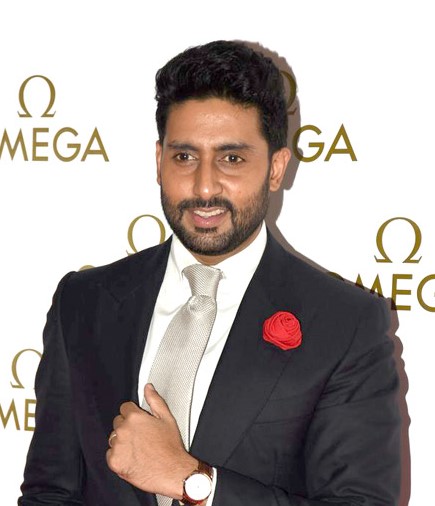
—What would you say about the relationship between your family life and the culture around you?
In the Bachchan family, family is not a backdrop; it's the center of gravity. After premieres, interviews, the lights that heat your skin all day, there is the return to the home in Juhu, surrounded by gardens, where you simply become son, husband, father again. The birth of my daughter Aaradhya in 2011 shifted something in me: suddenly, a film's success mattered less than how I came home in the evening. In our culture, you never truly leave your family; you live under the same roof, several generations together. Perhaps that is my real role, the one no Filmfare rewards.
A film's success mattered less than how I came home in the evening.
—How does a film actor come to own a sports team?
In 2014, I became owner of the Jaipur Pink Panthers, at the launch of the Pro Kabaddi League. Kabaddi, a traditional South Asian contact sport, had always been played in village courtyards, looked down upon by big cities. The idea struck me: what if we gave this popular game the same spotlight as our films? Moving from the set to the stands of Jaipur, swapping the script for a team jersey, reminded me that telling a story isn't limited to the screen. A match, with its heroes and reversals, is cinema written live. Restoring pride to a forgotten sport was a way to repay my country.
A match, with its heroes and reversals, is cinema written live.
—Why do you insist on popularizing disciplines that have long remained in the shadows?
Because fame only makes sense if you lend it to something greater than yourself. In 2016, I helped found a football team in the Indian Super League; as with kabaddi, it was about turning the same fervor reserved for the box office onto these fields. A child in Rajasthan who sees his local team cheered on television begins to dream differently. I've spent my life understanding the power of images; using it so that a kabaddi player becomes an idol is the same craft, really — giving people figures to identify with. The jersey and the costume serve the same purpose: to make a crowd rise.
Fame only makes sense if you lend it to something greater than yourself.

—What does a day of shooting actually look like?
It starts early, before the sun, with physical training and a light breakfast — you can't hold up in front of the camera without discipline. Then comes the drive to the studios of Film City in Goregaon, where makeup artists and costume designers await. The afternoon is the heart of the craft: rehearsing dialogues, going through action scenes or choreography for dance numbers, those item numbers you have to redo under the scorching lights. People often forget that behind three minutes of joyful dance lie hours of retakes and touch-ups. A masala film blends action, romance, comedy, and songs; shooting it means inhabiting ten genres in a single day, exhausted and happy at once.
Behind three minutes of joyful dance lie hours of retakes.
—What does the public most often not know about your profession?
That my voice in songs is almost never mine. Playback singing entrusts the recording to professional singers, and we actors mime their words with our lips and bodies. You have to inhabit an emotion with a voice that isn't yours — a strange doubling. People also don't know about the sherwani, that long embroidered coat worn for wedding scenes: under the embroidery and the heat of the lights, you sweat and smile for hours. The glamour of Hindi cinema is a craft of patience. Every shot you think is spontaneous has been rehearsed, lit, redone twenty times. The magic, believe me, is the fruit of hard work.
The glamour of Hindi cinema is a craft of patience.
—After all these years, how do you view the journey you've taken?
In 2022, Dasvi, that comedy-drama about education, earned me a critical comeback I no longer quite expected. At that moment, I measured the distance from Refugee and its modest beginnings: more than twenty years proving, film after film, that a Bachchan could exist on his own. I am no longer the star kid everyone was waiting to trip up, nor just Amitabh's son or Aishwarya's husband. I am a man who learned that patience is a talent, perhaps the only one that truly matters in this profession. A Filmfare trophy pleases for one evening; knowing you have endured without betraying your own — that is the real reward.
Patience is a talent, perhaps the only one that truly matters.


This imaginary interview was generated by artificial intelligence from sources documented in Abhishek Bachchan's profile. It dramatises what the figure might have said based on what we know about them, but does not constitute attested historical testimony. For primary sources and factual documentation, refer to the full profile.