Imaginary dialogue between Amitabh Bachchan and Abhishek Bachchan
by Charactorium · Abhishek Bachchan (1976 — ?) · Performing Arts · 5 min read
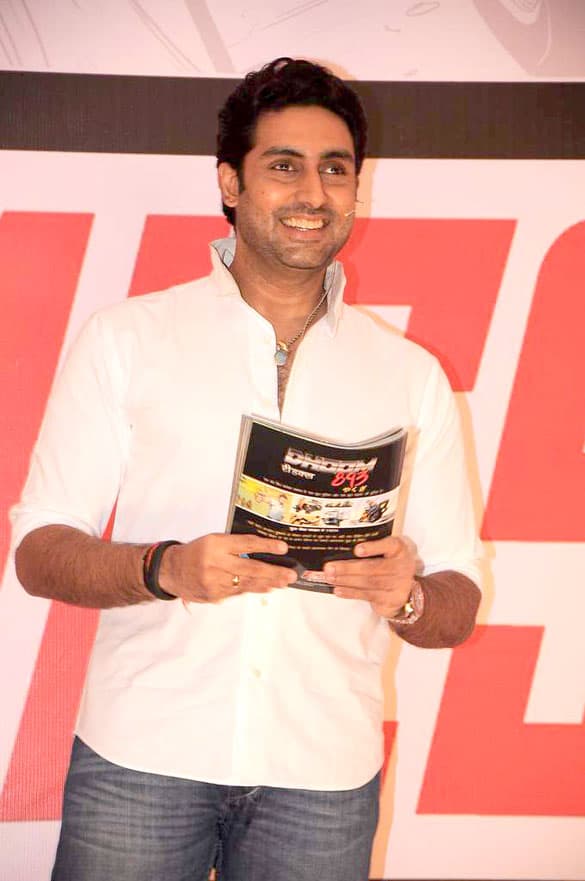
It is in the cozy living room of the family home in Juhu, Mumbai, on a monsoon evening in 2022, that father and son sit facing each other. Rain beats against the large bay windows, and an old Filmfare trophy catches the lamplight. Amitabh watched Abhishek grow up under the weight of a huge name; tonight, he questions him not as a Bollywood legend, but as a father wanting to understand the man behind the actor. Between them, forty-six years of shared life and two films shot side by side.
—Beta, when you arrived on Refugee in 2000, you already carried my name and your mother Jaya's. How did you experience that weight?
You who carried it before me, Papa, you know that such a name opens all doors and closes all excuses. On Refugee, every spectator came to compare the son of Amitabh Bachchan to his father, and the film had only modest success. I was called star kid, as if I had been born arrived, while I was starting out alongside Kareena Kapoor, as novice as I was. I had to wait years before people looked at me, not the shadow behind me. What your legend gave on one side, it took away on the other. I had to accept that without bitterness — and learn that the Bachchan dynasty was a starting point, never a guarantee.
Such a name opens all doors and closes all excuses.
—On the set of Sarkar in 2005, we faced each other as actors, not father and son. What did you feel meeting my gaze?
It was dizzying, Papa. All my childhood I watched you act from the wings, and now I had to stand up to you in the frame, hold your silence, not lower my eyes. On Sarkar, I understood that I could not worship you and play opposite you at the same time — I had to forget you were my father. The critics praised that confrontation, and the following year I received the Filmfare for Best Supporting Actor. Three years later, Sarkar Raj brought the three of us together, with Aishwarya. Acting opposite you was the only school that could teach me restraint. You never gave me any favors in front of the camera, and that is what I am most grateful for.
I could not worship you and play opposite you at the same time.
—That Filmfare for Best Supporting Actor, two years in a row in 2004 and then 2006, did it finally give you the feeling of existing on your own?
Partly, yes. The first, for Yuva by Mani Ratnam, proved to me that a great director could bet on me alone. The second, for Sarkar, had a special taste because I owed it to a role shared with you. I had been told so often that I would not make it that those black statuettes felt like an answer. But I would be dishonest to say they erased the doubt — an actor lives with that doubt until the end. What those awards brought me most of all was permission to continue, to make mistakes again, to dare riskier roles. Recognition does not heal; it authorizes.
Recognition does not heal; it authorizes.
—In April 2007, your wedding to Aishwarya was watched by millions. You, who are private, how did you cope with that frenzy?
It was both the most beautiful and the strangest of days, Papa. We wanted an intimate Hindu ceremony, celebrated here in Mumbai surrounded by family, and half the world was looking over our shoulder. The family press release had barely been issued when the international press camped outside the house. I married the woman I loved, and all people remembered was the former Miss World 1994 and the son of Amitabh Bachchan. We had to protect our relationship from that echo chamber, learn to distinguish the media event from our real life. The real marriage, the one that counts, did not play out in front of the cameras. It continues every morning, far from the limelight.
The real marriage, the one that counts, did not play out in front of the cameras.
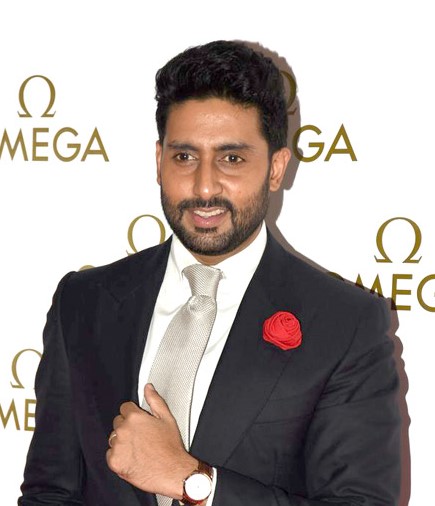
—Your mother and I opened this Juhu home to Aishwarya as a daughter. What does such a family change for an exposed couple?
It changes everything. In a family like ours, you don't just marry two people; you join a history, a home, habits. Aishwarya did not marry an isolated man; she came under this roof where your presence and Maa's set the rhythm of the evenings. This very close-knit family life, you know better than anyone, served as a shield when fame became too heavy. When our daughter Aaradhya was born in 2011, she grew up surrounded by her grandparents, something few star children experience. The price of our name is exposure; the privilege is this clan that closes its arms. One only survives Bollywood together.
You don't just marry two people; you join a history.
—When you took over the Jaipur Pink Panthers in 2014, I was surprised. Why would an actor seek his place on a kabaddi field?
Because cinema gave me everything, Papa, and I wanted to give something back to another part of our country. Kabaddi is an ancient, popular sport, long neglected for lack of money and visibility. By becoming co-owner of the Jaipur Pink Panthers at the launch of the Pro Kabaddi League, I saw village kids train with the same passion as actors before their first role. Two years later, I co-founded a football team in the Super League. It was not a career change — I still make films — but an extension. My fame as an actor, if it can fill stands for a forgotten sport, then it finally serves something other than selling movie tickets.
If my fame can fill stands for a forgotten sport, then it finally serves something else.
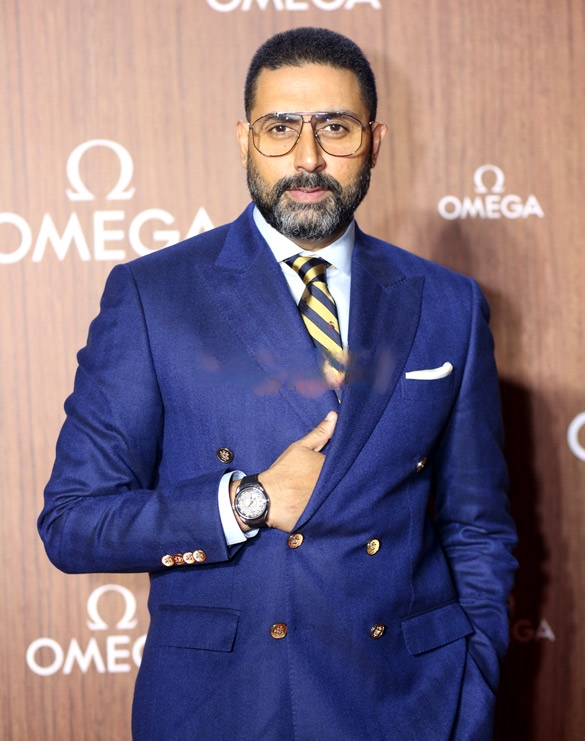
—You who experienced commercial success with Dhoom 2 in 2006, do you find the same adrenaline in the stands as under the spotlight?
It is a cousin adrenaline but more honest. On Dhoom 2, one of my biggest hits, the result depended on editing, stunts, a whole carefully crafted artifice. In a kabaddi hall, nothing is faked: a player crosses the line or fails, in a second, before my eyes. I live every raid with clenched fists like a fan, not a producer. Cinema rewards control; sport rewards the unexpected. I discovered late that I need both. And I confess that after twenty years of controlling every take, watching a match whose end I don't know rests me infinitely.
Cinema rewards control; sport rewards the unexpected.
—This year, with Dasvi, critics rediscovered you after a quieter period. What were you seeking in that role, my son?
I was seeking to become invisible again behind a character, Papa — the exact opposite of that too-visible name. In Dasvi, in 2022, I play a man caught up by the education he had neglected, a comedy-drama about second chances. And a second chance is precisely what I needed after quieter years. Transforming myself, adopting the accent, making myself a little uglier — that freed me from the weight of being a photogenic Bachchan. Critics praised this return, and I rediscovered the simple pleasure of serving a story rather than an image. At nearly fifty, I have finally understood that my career was not a race against your shadow, but a long lesson in patience.
My career is not a race against your shadow, but a long lesson in patience.
—If Aaradhya, one day, wanted this profession too, what fatherly advice — that I may never have given you — would you pass on to her?
I would tell her what I wish I had heard earlier: the name Bachchan is not a crown, it is a debt. One repays it only by working twice as hard, without ever demanding to be loved for the legacy. You showed me the example through your silence and rigor on set, more than through sermons — and that is perhaps the best way. Above all, I would wish her the right to fail without the whole country commenting on her fall. That right, neither you nor I have had. If I can give it to her, then the dynasty will have finally served to protect, not just to expose.
The name Bachchan is not a crown, it is a debt.

This imaginary interview was generated by artificial intelligence from sources documented in Abhishek Bachchan's profile. It dramatises what the figure might have said based on what we know about them, but does not constitute attested historical testimony. For primary sources and factual documentation, refer to the full profile.