Kids interview Dihya
by Charactorium · Dihya (668 — 703) · Politics · Military · 5 min read
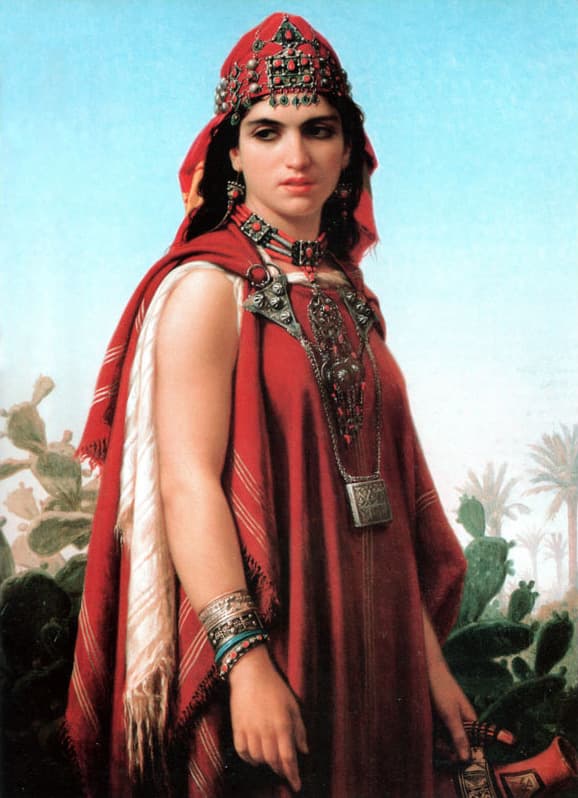
That morning, two young visitors leave their bus under the sun of the Aurès Mountains. A woman in an indigo wool dress, fastened with large silver fibulae, waits for them near an old well. They call her the Kahina. She smiles: she has many things to tell them.
—Why were you called the Kahina? Is that your real name?
No, my child, my name is Dihya. Kahina is an Arabic word my enemies gave me. It means 'the soothsayer,' she who reads the future. You see, they said I could foresee battles before they happened. Imagine a queen that even enemy soldiers are afraid to attack, because they believe she can see into their minds! That was in the late 690s, here in these Aurès Mountains. A nickname can become bigger than you. Even today, hardly anyone says Dihya anymore. They say the Kahina. The name you are given sometimes ends up telling your legend.
The name you are given sometimes ends up telling your legend.
—What were your mornings like? What did you do when you got up?
At sunrise, I didn't drink my milk right away! I looked at the sky. I watched the flight of birds, I listened to the dreams people came to tell me. It was my way of sensing what was to come. Imagine: no engine noise, just the wind in the gorges and the footsteps of horses. On me, I wore a small leather amulet, a tirz, to ward off evil. Then messengers arrived. I settled disputes between families, I received allied chiefs. A queen, you know, starts her day by listening. Listening to men, listening to the sky. Both counted equally.
A queen starts her day by listening.
—Were you queen of everyone? Even people who didn't pray like you?
Yes, and that is my greatest pride! My own tribe was the Djerawa, from the Aurès. But around me, there were Christian Berbers, Jewish Berbers, others who prayed to old mountain gods. Each with their own faith. Imagine uniting neighbors who agree on almost nothing, and getting them to raise their spears together. That was my job. We call ourselves Imazighen, the 'free people.' An old Arabic text says I reigned for thirty-five years over the Maghreb. Maybe a bit exaggerated! But uniting such different people, even for a single day, is already a victory.
Uniting such different people, even for a single day, is already a victory.
—Where was your home? Did you live in a castle?
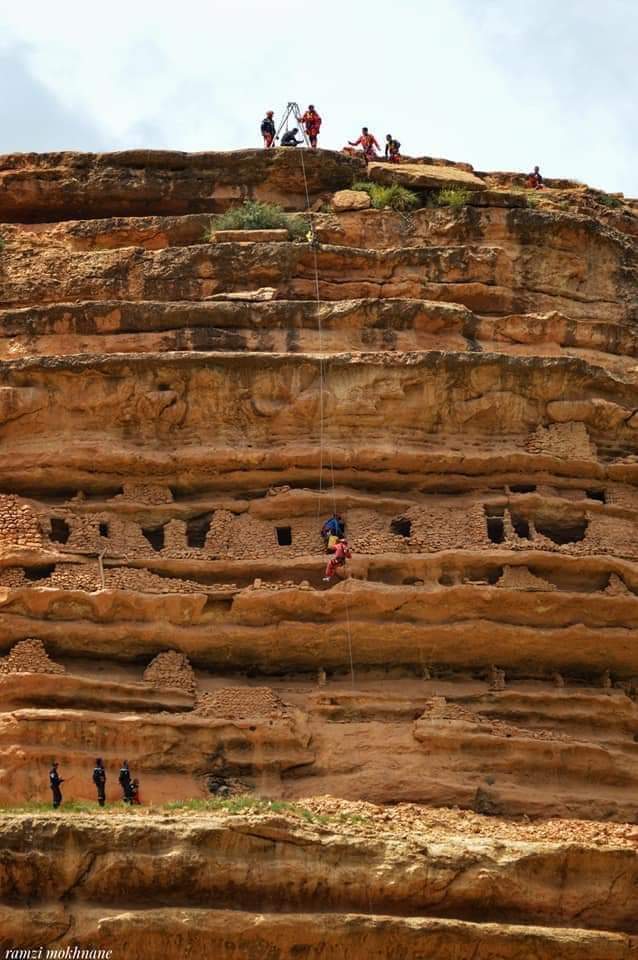
A castle? Oh no, my child. My home was these mountains, the Aurès Mountains. Sometimes a large tent of skin and wool, pitched in the heart of the camp. Sometimes a house carved into the cliff, in dry stone. Imagine a dwelling so well hidden in the rock that an enemy passes by without seeing it! These steep gorges were my best ally. We set ambushes there, we took refuge there. The Arab city of Kairouan, further east, was advancing towards us. But in my mountains, every path, every cave, I knew them by heart. A strong king is not the one with the highest walls. It's the one who knows his land by heart.
A strong king knows his land by heart.
—Is it true you defeated an entire Arab army? Really defeated?
Really! Around 698, a great general came, Hassan ibn al-Nu'man. He thought he could swallow the Maghreb in one bite. He was wrong. We faced him on the plain, at the mouth of our mountains, and we routed him. An old Arabic text says it bluntly: 'Hassan was defeated and retreated.' Imagine the most powerful warrior of the region forced to flee all the way to Tripolitania, far to the east, and wait for reinforcements for years! It's rare, you know, to stop such a great conquest for so long. That day, my mountains held. And an entire empire had to halt before them.
An entire empire had to halt before my mountains.
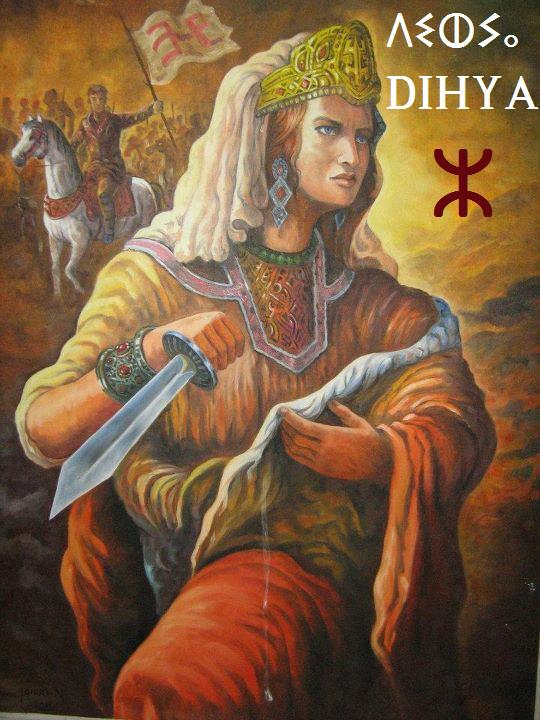
—Did you have many soldiers? Were there girls fighting too?
Many, yes! Arab accounts say I commanded tens of thousands of warriors. And listen: men and women, side by side. Among us, a woman could ride a horse and wield a spear. Me first! We threw the azagaye, a light javelin, and our archers shot from the heights of the gorges. Imagine a rain of arrows falling from the rocks onto an army trapped below in a ravine. Our enemies feared us. Not just for my reputation as a soothsayer. Also because among us, no one stayed away from the fight. A tribe that fights as one is very hard to defeat.
A tribe that fights as one is very hard to defeat.
—They say you burned your own villages. Why did you do that?
Ah, you touch on my hardest decision. Around 700, Hassan was returning, stronger than before. So I ordered 'scorched earth.' Do you know what that is? You destroy everything before the enemy: you burn the crops, you raze the gardens, you fill the wells. My idea: if they find nothing to eat, they will leave. Imagine fields of wheat in flames as far as the eye can see, lit by your own people. It broke my heart. But I thought a hungry invader no longer wants to stay. It was a terrible gamble: damaging your own land, so as not to give it to the enemy.
Damaging your own land, so as not to give it to the enemy.
—And did the people agree? Did your idea work?
No, my child, and that is my great sorrow. The mountain tribes, nomads, could leave everything and go further away. But the families of the plains lived from their orchards, their olive trees. To burn all that was to take away their entire life. Many resented me. Some preferred to surrender to the Arabs rather than lose everything because of me. Imagine having to choose between saving your people and hurting them to save them. A leader does not always make decisions that people like. Sometimes, what seems right to you is precisely what makes you lose your own. I learned that too late.
What seems right to you is sometimes what makes you lose your own.
—Did you know you were going to die? What does it feel like to know that?
Yes. Around 703, I felt my last battle approaching, near Tobna, at the foot of the Aurès. Tradition says I foretold it. Can you imagine looking at your sons and knowing that tomorrow you will no longer be there? So I did a strange thing for a queen who had fought so much: I told my sons to join the Arab ranks. To live. So that our people could continue, even under other masters. Losing is not always disappearing. Even today, a well near Tobna bears my name: 'the well of the Kahina.' I died with weapons in hand. But my people survived.
Losing is not always disappearing.
—How does it feel that people still talk about you, so long after?
It touches me deeply, you see. I left no book, no statue in my lifetime. Nothing written by my hand. And yet I am here, before you. How? Through songs. In the Aurès, poets and storytellers have passed down my story by word of mouth, around evening fires, for over thirteen centuries. Imagine a song traveling from grandparent to grandchild, never stopping, for thirteen hundred years! That is my true army. Not spears. Voices. As long as someone tells your story, you are never truly defeated. And you, today, will carry it a little further.
As long as someone tells your story, you are never truly defeated.

This imaginary interview was generated by artificial intelligence from sources documented in Dihya's profile. It dramatises what the figure might have said based on what we know about them, but does not constitute attested historical testimony. For primary sources and factual documentation, refer to the full profile.