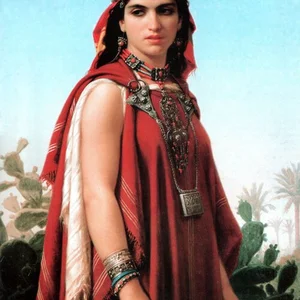

A Berber queen and prophetess of the Djerawa people, Dihya led the resistance against the Arab conquest of North Africa in the late 7th century. Known as the Kahina ("the seeress"), she is a central figure in Amazigh memory, preserved chiefly through oral tradition.
Frequently asked questions
Famous Quotes
« "Scorched earth cannot be enslaved." (words attributed by Berber oral tradition, unverified)»
Key Facts
- Leader of the Djerawa Berber confederation in the Aurès Mountains (present-day Algeria), in the late 7th century
- Inflicted a major defeat on Umayyad forces commanded by Hassan ibn al-Nu'man, around 688–690 (according to medieval Arab sources)
- Pursued a scorched-earth policy to slow the Arab advance — a strategy recorded by Arab chroniclers
- Died in battle around 703, according to historians' estimates; the site known as "Bir al-Kahina" (Well of the Kahina) is placed in either Morocco or Algeria depending on the tradition
- Her story is known primarily through medieval Arabic written sources (Ibn Khaldun, 14th century) and Amazigh oral tradition
Works & Achievements
Dihya defeats the Arab army in a major battle and forces Hassan to withdraw from the Maghreb for several years. This is one of the rare moments when the Arab conquest was halted so durably.
Dihya succeeds in uniting numerous Berber tribes under her command — whether Christian, Jewish, or polytheist. This unification, even if temporary, was a remarkable political achievement given the context of the era.
By ordering the destruction of agricultural resources and infrastructure across the eastern Maghreb, Dihya devises an attrition strategy to deny the enemy its logistical bases. This controversial decision reflects a sophisticated military mind.
Amazigh griots and poets of the Aurès have kept Dihya's memory alive through epic songs, tales, and proverbs. This living memory, passed down orally across more than thirteen centuries, is itself a collective work of cultural resistance.
Anecdotes
Around 698, Dihya dealt a crushing defeat to Hassan ibn al-Nu'man, the Umayyad general tasked with subduing the Maghreb. According to medieval Arab accounts, survivors reported that she commanded an army of several tens of thousands of Berber warriors, men and women alike. Hassan was forced to retreat all the way to Tripolitania and wait for reinforcements for several years.
Faced with the return of the Arab army, Dihya ordered a scorched-earth policy: villages were burned, gardens razed, wells filled in. She hoped to deprive the invaders of resources and discourage them from settling. This radical and painful decision cost her the loyalty of some of the Maghreb's sedentary tribes, who chose to submit to the enemy rather than lose everything.
Amazigh oral tradition holds that Dihya possessed a gift of prophecy that allowed her to foresee battles before they took place. It was this reputation as a 'seer' that earned her the nickname Kahina, an Arabic word meaning prophetess or oracle. Even her enemies feared her powers and hesitated to confront her directly.
The historian Ibn Khaldun recounts that Dihya adopted as her son an Arab prisoner named Khaled ibn Yazid. According to this account, she placed her trust in him and he became a messenger between her and Hassan ibn al-Nu'man. Some see this as a symbol of Berber adoption culture; others believe the story illustrates the complexity and ambiguity of resistance in the face of conquest.
Dihya died in battle during her final stand, around 703, in the Aurès region or near the settlement of Tobna. According to tradition, she had herself predicted her imminent end and encouraged her sons to join the Arab ranks to ensure the survival of the Berber people. This conscious self-sacrifice made her a legendary figure in Amazigh memory, celebrated through the centuries in poetry and song.
Primary Sources
The Kahina ruled all of North Africa. She was their queen and the greatest among them. Hassan ibn al-Nu'man confronted her and was routed. He withdrew to Barqa and waited there.
Hassan marched against the Kahina. She gathered her troops and gave battle. Hassan was defeated and retreated. The Berbers called this woman the Kahina, meaning the prophetess.
It is said that she ruled over the Berbers for thirty-five years, and that no king before her had reigned so long over the whole of the Maghreb.
Tafruyt n Tmazight (the flower of Amazighity): epic songs passed down from generation to generation in the communities of the Aurès, evoking the resistance of Dihya, her bravery, and her death in battle.
Key Places
A rugged mountain range in what is now northeastern Algeria, homeland of the Djerawa people over whom Dihya ruled as queen. These steep mountains provided her with ideal guerrilla terrain against the Arab armies.
An ancient town on the plain at the foot of the Aurès, the likely site of Dihya's final battle and death around 703. A well in the area is still known locally as the 'Well of the Kahina' in local tradition.
An ancient town in the Aurès region, one of the presumed strongholds of Berber resistance under Dihya. Its citadel offered a natural refuge for the tribes fighting against the conquest.
A city founded by the Arabs in 670, it symbolizes the advance of the Arab conquest and the front Dihya sought to push back. Every Arab advance westward from Kairouan posed a direct threat to the Berbers of the Aurès.
A wide plain at the gateway to the Aurès, the probable setting of clashes between Dihya's forces and the Umayyad armies during the great battle of 698.
Typical Objects

A lightweight spear used by Berber warriors on horseback or on foot. Dihya and her troops were equipped with them during battles in the Aurès Mountains.

A decorative silver or bronze brooch worn by Berber women to fasten their clothing. A symbol of high social status, it reflects the queen's wealth and rank.
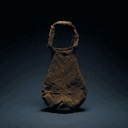
A large hooded wool cloak worn by the Berbers of the Aurès to protect against the cold of the mountains. A practical garment suited equally to military campaigns and everyday life.

A percussion instrument used in rituals, celebrations, and to communicate between Berber tribes. The songs and rhythms that accompanied Dihya during ceremonies were played on these drums.

A small ritual object worn on the body, made of leather or metal, believed to shield its wearer from misfortune and enemies. For a prophetess like Dihya, these objects held deep spiritual significance.

Essential ranged weapons in the cavalry skirmishes of late antique North Africa. Berber warriors, renowned as skilled archers, made heavy use of them during ambushes in the gorges of the Aurès Mountains.
School Curriculum
Vocabulary & Tags
Key Vocabulary
Daily Life
Morning
At sunrise, Dihya begins her day with divination rites: interpreting dreams, observing birds, and consulting the elders. As tribal chief, she settles disputes, receives messengers from allied clans, and plans troop movements with her lieutenants.
Afternoon
The afternoon is devoted to combat training on horseback across the slopes of the Aurès mountains. Dihya inspects village defenses, oversees the supply of food and weapons, and meets with allied tribal leaders to maintain the coalition. She may also lead reconnaissance missions through the mountain gorges with a small group of riders.
Evening
In the evening, the camp gathers around the fires. Griots sing of the deeds of ancestors and recent battles, keeping the warriors' spirits high. Dihya presides over the communal meal and delivers her oracles for the night ahead. The women spin wool or repair harnesses by the light of the flames.
Food
Food is simple and suited to the nomadic or semi-sedentary life of the Berbers of the Aurès: barley and rye flatbreads baked on stone, goat's milk and dried cheese, dates and dried figs, roasted mutton at large gatherings. Water is scarce on the plains but plentiful in the mountain gorges.
Clothing
Dihya wears woolen robes dyed in indigo, ochre, and saffron, fastened at the shoulders with large silver fibulae engraved with Amazigh geometric patterns. A heavy raw wool burnous protects her from the cold of high-altitude nights. Her hair is braided and adorned with amber and coral bracelets and pendants, marks of her royal status.
Housing
Dihya lives sometimes in a large hide-and-wool tent pitched at the heart of her tribe's encampment, and sometimes in cave dwellings or dry-stone homes carved into the cliffs of the Aurès. These dwellings, perfectly integrated into the landscape, provide natural protection and are difficult for an outside enemy to spot.
Historical Timeline
Period Vocabulary
Visual Style
Style inspiré des fresques romano-berbères et des enluminures du Maghreb médiéval : tons ocre, indigo et argent, motifs géométriques amazighes, lumière chaude et dorée des montagnes de l'Aurès.
Sound Ambience
Ambiance sonore des monts de l'Aurès à la fin du VIIe siècle : vents, chants berbères, percussions rituelles et bruits de la guerre dans les gorges rocheuses.
Liens externes & ressources
Références
Œuvres
Victoire contre Hassan ibn al-Nu'man
vers 698
Coalition des tribus berbères du Maghreb
vers 690-700
Stratégie de la terre brûlée
vers 700-702
Transmission de la mémoire par la poésie orale
VIIe siècle — XXIe siècle