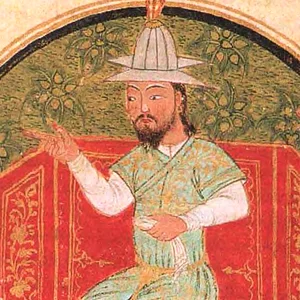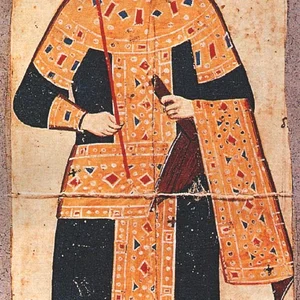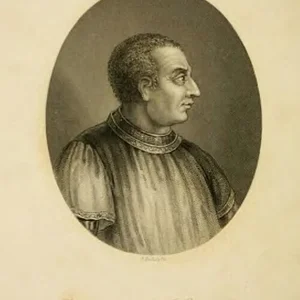

Arab general and administrator of the 7th century, foster brother of Caliph Uthman. As governor of Egypt, he led the conquest of Ifriqiya and commanded the first Muslim fleet to defeat the Byzantines.
Abdallah ibn Saad
Abdallah ibn Saad ibn Abi Sarh
6 min read
Frequently asked questions
Key Facts
- Foster brother and close associate of Caliph Uthman, who appointed him governor of Egypt around 645
- Led the Muslim expansion into Ifriqiya (North Africa) around 647
- Commanded the Muslim fleet at the Battle of the Masts (Dhat al-Sawari) against the Byzantines around 655
- Pushed aside from power during the unrest preceding the assassination of Uthman in 656
- Died around 656-658, probably in Ascalon or Ramla
Works & Achievements
Administration of the wealthy province of Egypt on behalf of Caliph Uthman, reorganizing taxation and the distribution of revenue.
The first major Arab expedition deep into North Africa, which defeated the exarch Gregory and imposed a heavy tribute on the Byzantines.
The building of an Arab navy in Egypt, a major step that allowed the Muslims to challenge the Byzantines for control of the Mediterranean.
The crushing of Constans II's Byzantine fleet, the first great naval victory of Islam and a turning point in the war at sea.
An expedition against the Christian kingdom of Nubia that led to the Baqt, a treaty of peace and exchange whose lasting nature was rare in the history of the conquests.
Before his military career, he was one of the secretaries tasked with writing down the revelations of the Quran in Medina.
Anecdotes
Before becoming a great general, Abdallah ibn Saad was one of the scribes tasked with recording the revelations of the Quran in Medina. According to several accounts, he abandoned this role and fell out with the new religion, which placed him on a list of outlaws during the capture of Mecca in 630.
Sentenced to death, Abdallah owed his survival to his foster brother, the future caliph Uthman, who brought him before the Prophet Muhammad and pleaded at length to obtain his pardon. Mercy was finally granted, and the man once outlawed later became one of the most powerful governors of the Empire.
In 647, during his campaign in Ifriqiya (present-day Tunisia), his army faced that of the Byzantine exarch Gregory near Sufetula (Sbeitla). Tradition holds that Gregory promised an enormous reward to whoever killed the Arab leader; Abdallah is said to have then promised the same sum and Gregory's daughter to whoever struck down the exarch.
In 655, Abdallah commanded the first great Muslim fleet at the Battle of the Masts (Dhat al-Sawari), facing an immense Byzantine fleet led, according to the sources, by the Emperor Constans II himself. The ships were lashed together to turn the naval engagement into a boarding melee, for which the Arabs, not seafarers by tradition, were better prepared in hand-to-hand combat.
When the great discord (fitna) broke out and his protector Uthman was assassinated in 656, Abdallah lost his position and chose to withdraw from political life. According to one tradition, he prayed to God that his last morning prayer might be the final act of his life: he is said to have died while prostrating himself, at Ramla or Ascalon.
Primary Sources
Abdallah ibn Saad ibn Abi Sarh marched against Ifriqiya with an army, and God granted him victory there; he brought back considerable booty, which the Muslims divided among themselves.
Uthman took Egypt away from Amr ibn al-As and entrusted it to Abdallah ibn Saad ibn Abi Sarh, his foster brother.
The Muslims met the Byzantines at sea; the ships were brought close together and lashed to one another, and the fighting was waged with the sword until the Greeks were routed.
A great fleet of the Arabs engaged the Romans off the coast of Lycia; after a terrible slaughter, the emperor Constans narrowly escaped the disaster.
Key Places
Military and administrative capital of Muslim Egypt, founded by Amr ibn al-As. Abdallah ibn Saad resided there as governor of the province.
Ancient city of Ifriqiya near which the decisive battle against the Byzantine exarch Gregory took place in 647; he was killed in the clash.
Coast of Asia Minor off which the Battle of the Masts took place in 655, the first major Muslim naval victory over the Byzantines.
Capital of the Rashidun Caliphate and seat of Uthman's power, where he appointed Abdallah governor of Egypt. The political heart of the young Muslim Empire.
Coastal town of Palestine where, according to tradition, Abdallah ibn Saad withdrew from political life and died after the assassination of Uthman.
Typical Objects

A sword with a straight or slightly curved blade, the main weapon of seventh-century Arab warriors. It proved decisive during the boarding actions at the Battle of the Masts.

A war galley inspired by Byzantine models, driven by both oars and sail. Abdallah had them built to assemble the first great Muslim fleet.

A bow made of wood, horn and sinew, a formidable ranged weapon used by Arab cavalry and infantry. It allowed them to harass the enemy before closing in for hand-to-hand fighting.

A cloth banner carried at the head of Muslim armies to signal the commander's presence and rally the fighters. The governor would entrust it to a trusted standard-bearer.

Armour made of interlinked iron rings, worn by wealthy warriors and commanders. It protected against sword blows and arrows during battle.

An administrative document recording the taxes, pay and tributes of the conquered provinces. As governor of Egypt, Abdallah managed these registers on behalf of the caliph.
School Curriculum
Vocabulary & Tags
Key Vocabulary
Tags
Daily Life
Morning
As governor, Abdallah began his day with the dawn prayer, then received his secretaries and officers. He reviewed reports from the provinces, fiscal accounts, and petitions from the inhabitants of Fustat.
Afternoon
The afternoon was devoted to administration and military affairs: training the troops, inspecting the naval shipyards, and holding audiences with Coptic notables and Arab chiefs. On campaign, he directed the marches and the preparation of battles.
Evening
In the evening, after prayer, he shared a meal with his close companions and advisers, where they discussed strategy, poetry, and news from Medina. These gatherings also served to dispense justice or to hear grievances.
Food
His diet was based on barley or wheat bread, dates, milk, cheese, and mutton on special occasions. In Egypt, vegetables, broad beans, and fish from the Nile rounded out a table richer than that of the Arabian desert.
Clothing
He wore the long tunic (qamis), a coat or cloak, and the turban wound around his head, a mark of dignity. In battle, he donned a coat of mail and a helmet over his garments.
Housing
In Fustat, he lived in a vast mud-brick residence near the mosque and the seat of government. On campaign, he lived under a tent, in the midst of the military camp organized by tribes.
Historical Timeline
Period Vocabulary
Liens externes & ressources
Références
Œuvres
Gouvernement de l'Égypte
646-656
Conquête de l'Ifriqiya et victoire de Sufetula
647
Création de la première flotte de guerre musulmane
vers 649-655
Victoire de la bataille des Mâts (Dhat al-Sawari)
655
Campagne de Nubie et pacte du baqt
651-652
Travail de scribe des révélations coraniques
vers 625-630