Imaginary interview with Elsie MacGill
by Charactorium · Elsie MacGill (1905 — 1980) · Technology · Society · 6 min read
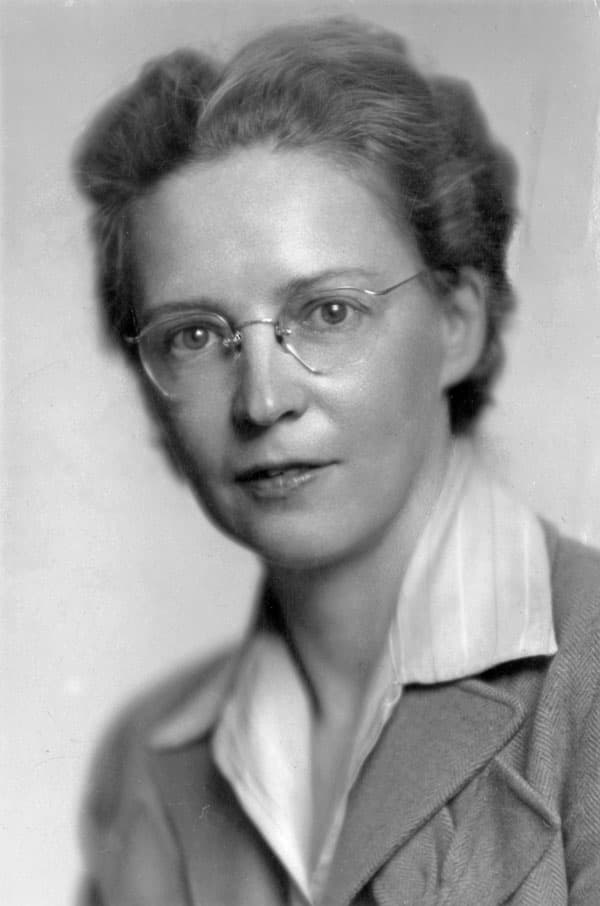
Toronto, late afternoon in the late 1970s. In the small consulting office where Elsie MacGill receives visitors, yellowed aircraft plans sit alongside freshly bound commission reports. She sets her canes against the drawing board and invites you to sit, her eyes sharp, her speech as precise as a stress calculation.
—How does one become, in 1929, the first woman in the world to earn a degree in aeronautical engineering?
You don't wake up one morning and decide you'll be the first. I had already earned my electrical engineering degree at Toronto in 1927, the only woman in my class, so the idea of sitting in a lecture hall full of men no longer frightened me. At the University of Michigan, aeronautics was so young a discipline that it hadn't yet had time to close its doors to women. I saw an opportunity: to enter through a window still open. In my family, these firsts were passed down like an inheritance — my mother, Helen Gregory MacGill, had been the first female judge in British Columbia. Growing up under that roof taught me that 'it's impossible for a girl' was never a conclusion, only a poorly phrased question.
‘It's impossible for a girl’ was never a conclusion, only a poorly phrased question.
—The year you graduated, polio struck you. What happened then?
The illness came like an engine stalling mid-flight: without warning. I had to relearn how to walk, and I kept my canes, which never left me. The doctors already saw me confined to a desk, immobile. That was my way of answering them: I continued to board the aircraft I designed, for test flights. They would give me a hand to climb into the cockpit, and once strapped in, I was no longer a woman with fragile legs — I was the engineer who wanted to feel, with her own body, how the plane behaved in the air. No written report can replace that truth, felt in the vibrations of the fuselage.
Once strapped into the cockpit, I was no longer a woman with fragile legs — I was the engineer.
—What did the first aircraft to come from your own plans, the Maple Leaf Trainer, represent for you?
The Maple Leaf Trainer II first flew in 1939, and I think that day my heart took off with it. A diploma proves you can calculate; an aircraft that leaves the ground proves that the calculations were correct. It was a small training biplane, nothing heroic, but it made me the first woman in the world to have designed an aircraft from start to finish that went into production. Every rib, every airfoil, had passed through my slide rule and my drawing board. Watching what you have traced in ink lift off the runway, whole, obedient — that is a joy no medal has ever given me since.
A diploma proves you can calculate; an aircraft that leaves the ground proves that the calculations were correct.
—At Fort William, you managed thousands of workers. What were your days like?
They started early, in the din of the Canadian Car and Foundry workshops in Fort William. I walked through the assembly lines leaning on my canes, stopping at each station where a problem had been reported the day before. We were building Hawker Hurricane fighters by the hundreds — over a thousand in total. Managing was not about commanding from afar: it was knowing the names of the difficulties, a weld that resisted the cold poorly, a poorly fitted rivet. Afternoons brought me back to the design office, bent over the blueprints. Thousands of men and women worked under my technical responsibility, and many discovered that a chief engineer could be a woman. The factory, in its noise, taught that lesson far better than any speech.
Managing was not about commanding from afar: it was knowing the name of every difficulty.
—How did the Canadian climate transform a British fighter like the Hurricane?
An aircraft designed for the temperate skies of England does not survive an Ontario winter as is. It had to be able to go into combat from a runway buried in snow, in a cold that freezes oil and makes brittle metal crack. So my teams developed landing skis to replace wheels, and de-icing systems to prevent ice from paralyzing the surfaces. That is applied aeronautical engineering: not inventing an abstract marvel, but adapting a machine to the harsh reality of a frozen runway. Every Hurricane that took off from the snow carried a bit of that Northern stubbornness to not let winter decide the war.
Engineering is not inventing an abstract marvel, but adapting a machine to a frozen runway.
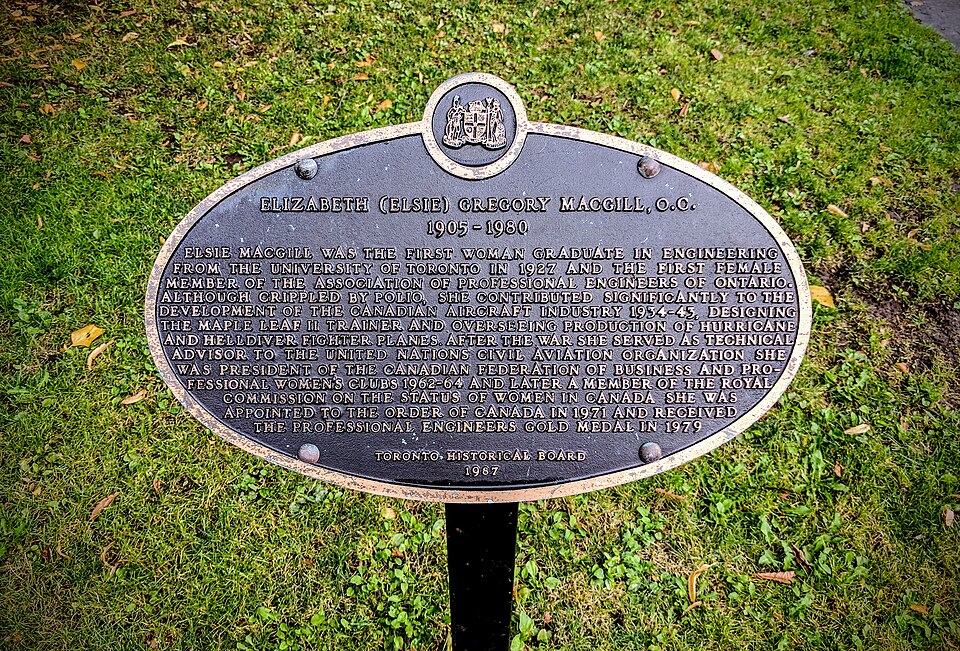
—In 1942, you became the heroine of a comic book. How did you find out?
Someone put a copy of True Comics, that American youth magazine, in front of me, and there I was, drawn in color, under the title 'Queen of the Hurricanes'. I admit I smiled, then felt a bit strange. Seeing a real engineer, with her canes and her calculations, turned into a paper figure for children during wartime was unexpected. But I understood the value of it: a little girl reading those pages learned, without being told, that a woman could oversee the production of fighter planes. The nickname followed me all my life. I never chose it, but it opened imaginations, and that is something a technical drawing cannot do.
A little girl learned, without being told, that a woman could oversee the production of fighter planes.
—Did that nickname, 'Queen of the Hurricanes', help you, or sometimes box you in?
A nickname is a wing: it carries you, but it can also take you where you hadn't planned to go. The Queen of the Hurricanes made my work visible at a time when a woman was not expected to sign off on combat aircraft. But a queen sounds like an exception, a curiosity you show to say 'see, it's possible... once.' Yet I never wanted to be the charming exception. I wanted aeronautical engineering to stop being a field where you could count the women on one hand. The nickname served as a megaphone; it never exempted me from fighting so that others could come through the same door as I did.
A nickname is a wing: it carries you, but it can also take you where you hadn't planned to go.
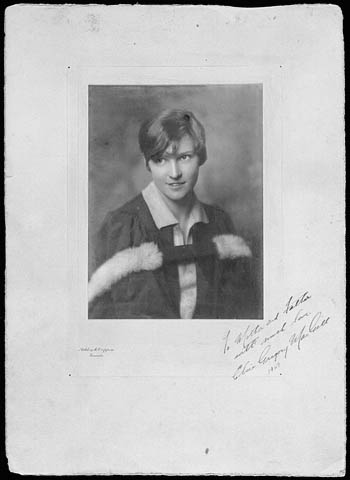
—After the war, you devoted a book to your mother. Why that detour through her life?
In 1955, I published My Mother, the Judge, the biography of Helen Gregory MacGill. People often think that writing a mother's life is an intimate gesture; for me it was also an act of collective memory. My mother had wrested rights for women and children from the courts at a time when the law magnificently ignored them. Telling her story was refusing to let these pioneers fade away, as women's stories too often fade from grand narratives. I had spent my life among metals and engines; this book reminded me that machines are not enough to change a society. You also need judges, laws, and hands to hold the pen that writes the names people would like to forget.
Machines are not enough to change a society: you also need laws, and hands to hold the pen.
—From 1967 to 1970, you served on the Royal Commission on the Status of Women. What battles mattered to you?
Serving on that Royal Commission of Inquiry was, in my own way, a final workshop — no longer of rivets, but of rights. I knew from the inside what it means for a woman to enter a man's profession: the doors held shut, the lower wages for equal work. So I argued tirelessly for equal pay, for real maternity leave, for girls to have access to the technical trades that I, myself, had been allowed to conquer almost by breaking in. The 1970 report put in black and white what too many people preferred to keep quiet. I knew I might not see it all come true, but you don't build a runway only for today's plane: you lay it for those who will take off after us.
You don't build a runway only for today's plane: you lay it for those who will take off after us.
—Do you remember a moment when the engineer's profession and your damaged body were reconciled?
Every test flight was that reconciliation. Down on the tarmac, my canes made me a figure that people helped along; up there, in the aircraft I had designed myself, the illness no longer mattered. The plane doesn't ask if your legs are strong; it asks if your calculations are. I felt the fuselage respond to the slightest correction, the lift of the wings I had traced at the drawing board, and I verified with my whole being what the numbers had promised me. Polio had taken a part of my body, but it had taken nothing of my judgment. That, I believe, is the only revenge that counts: turning an imposed weakness into another reason to want to understand everything for oneself.
The plane doesn't ask if your legs are strong; it asks if your calculations are.
This imaginary interview was generated by artificial intelligence from sources documented in Elsie MacGill's profile. It dramatises what the figure might have said based on what we know about them, but does not constitute attested historical testimony. For primary sources and factual documentation, refer to the full profile.