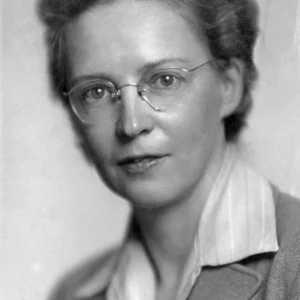

Elsie MacGill (1905-1980) was a Canadian aeronautical engineer, the first woman in the world to earn a degree in that discipline. Nicknamed the “Queen of the Hurricanes,” she led the production of fighter aircraft during the Second World War and was a feminist activist.
Elsie MacGill(1905 — 1980)
Elsie MacGill
Canada
6 min read
Frequently asked questions
Key Facts
- 1927: first woman to graduate in electrical engineering from the University of Toronto
- 1929: first woman in the world to earn a degree in aeronautical engineering (University of Michigan)
- 1938-1943: as chief engineer at Canadian Car and Foundry, she oversaw the production of the Hawker Hurricane fighter, which earned her the nickname “Queen of the Hurricanes”
- 1967-1970: member of the Royal Commission on the Status of Women in Canada
- 1971: made an Officer of the Order of Canada
Works & Achievements
The first woman to earn this degree at the University of Toronto, paving the way for Canadian women in engineering.
The first woman in the world to graduate in aeronautical engineering, a field then entirely dominated by men.
A training aircraft she designed entirely on her own, making her the first woman to design an aircraft that went into production.
Technical direction of the manufacture of more than a thousand Hurricanes at Fort William, with adaptations for the winter climate.
A biography of her mother, Judge Helen Gregory MacGill, reflecting her commitment to preserving the memory of women pioneers.
Her contribution as a commissioner to a landmark report on gender equality in Canada.
Anecdotes
In 1929, at the University of Michigan, Elsie MacGill became the first woman in the world to earn a degree in aeronautical engineering. Her mother, Helen Gregory MacGill, had been the first woman judge in British Columbia: in this family, female “firsts” were handed down like an inheritance.
That same year, she was struck by polio and had to learn to walk again with canes. Far from stopping her, she kept climbing aboard the aircraft she designed for flight tests, because she wanted to see for herself how each plane behaved.
In 1942, the American magazine True Comics devoted a comic strip to her titled “Queen of the Hurricanes.” It was rare for a real-life engineer to become the heroine of a comic aimed at young readers in the middle of a war.
At the Fort William plant, she led a team of several thousand workers who built Hawker Hurricane fighter planes. To adapt them to the Canadian climate, her teams developed modifications such as landing skis and de-icing systems that allowed the planes to take off from snow.
From 1967 to 1970, she served on the Royal Commission on the Status of Women in Canada. Her stances in favor of equal pay, maternity leave, and women's access to technical professions marked her final years of activism.
Primary Sources
The comic presents Elsie MacGill as the chief engineer leading the production of Hurricane fighter aircraft in Canada, nicknamed the “Queen of the Hurricanes.”
In it, Elsie MacGill traces the life of her mother, the first woman appointed as a judge in British Columbia, and her fight for the legal rights of women and children.
The report, to which MacGill contributed as a commissioner, sets out recommendations on equal pay and women's access to employment and education.
Key Places
Birthplace of Elsie MacGill, where she grew up in a family committed to women's rights.
Institution where she earned her degree in aeronautical engineering in 1929, the first woman in the world to do so.
Site of the Canadian Car and Foundry plant where she led the design and mass production of Hurricane fighter planes.
Location of the Fairchild Aircraft plant where she began her career as an aeronautical engineer in the mid-1930s.
Capital city where the Royal Commission on the Status of Women sat, on which she served.
City where Elsie MacGill died in 1980.
Typical Objects
British fighter aircraft whose mass production in Canada MacGill oversaw during the war. More than a thousand units rolled out of her factory.

Biplane training aircraft designed by Elsie MacGill. It made her the first woman in the world to design an aircraft that was put into production.
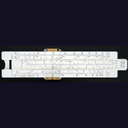
Mechanical calculating instrument used by engineers before the arrival of calculators. MacGill used it for her strength and aerodynamics calculations.
📷 CC BY-SA 3.0 · Wikimedia Commons ↗
Inclined surface fitted with rulers and set squares on which engineers drew up the plans for aircraft. It was the central workstation of the design office.

After her polio, Elsie MacGill moved about with the help of canes. They became inseparable from her image as an engineer at work in the workshops.
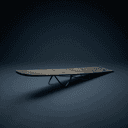
Skids replacing the wheels to allow fighters to take off and land on snow. They were part of the winter modifications developed by her team.
School Curriculum
Vocabulary & Tags
Key Vocabulary
Tags
Daily Life
Morning
During the war, her day began early at the Fort William factory, where she made her way through the workshops with the help of her canes. She would review the Hurricane assembly lines and check on technical problems reported the day before.
Afternoon
Her afternoons were often spent in the design office, bent over the drawing board, checking plans and aerodynamic calculations. She would also sometimes board an aircraft for a test flight.
Evening
In the evening, she wrote technical reports and, later in life, articles and statements on women's rights. She kept up an active correspondence with women's associations.
Food
Her diet was that of an urban Canadian professional in the mid-twentieth century: simple meals of bread, meat, and vegetables, with tea or coffee, often eaten quickly between meetings.
Clothing
At work, she wore plain, practical outfits suited to the industrial setting: suits, skirts, and blouses, sometimes a smock in the workshop. Her canes were part of her familiar silhouette.
Housing
She lived in the city, close to her successive workplaces in Quebec and then Ontario, in modern urban housing. After the war, she settled in Toronto, where she opened her own consulting practice.
Historical Timeline
Period Vocabulary
Liens externes & ressources
Références
Œuvres
Diplôme de génie électrique (université de Toronto)
1927
Diplôme de génie aéronautique (université du Michigan)
1929
Maple Leaf Trainer II
1939
Production des chasseurs Hawker Hurricane
1939-1943
My Mother, the Judge (biographie)
1955
Travaux de la Commission royale sur la situation de la femme
1967-1970