Imaginary dialogue between Billie Holiday and Hazel Scott
by Charactorium · Hazel Scott (1920 — 1981) · Music · Performing Arts · Politics · 5 min read
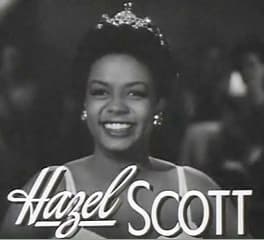
It is in a small club on the Left Bank, an autumn evening in 1957, that Billie Holiday, passing through Paris on tour, meets Hazel Scott newly settled in the city. A score still lies on the upright piano at the back, and two glasses gently steam in the amber lamplight. The two women have known each other since the nights of the Café Society, that club where one launched Strange Fruit while the other made Chopin swing. Billie comes to find, behind the star, the woman who paid for her refusals.
—Hazel, do you remember the Café Society? I sang my sorrows, and you started with Bach before turning everything upside down. How did you come up with that idea?
You who stepped onto that same stage, Billie, know better than anyone the electricity of those nights. I would attack a perfectly serious prelude, the audience held its breath, thinking it was a conservatory concert — and suddenly I'd roll my left hand, and the boogie-woogie would sweep everything away. It wasn't a prank: it was my way of saying that so-called classical music and ours came from the same blood. At Juilliard, as a child, I had been taught Chopin. In the clubs, I learned swing. I simply refused to choose between them. The audience understood before the critics.
I simply refused to choose between classical music and ours: they came from the same blood.
—They say you played on two grand pianos at once. Tell me, wasn't that just a music-hall trick to impress the crowd?
A trick, yes, I'll grant you — but a trick that said something. Two grand pianos facing each other, a melody on one, its answer on the other, my two hands carrying on two conversations at once. The audience laughed with delight, and I savored that a woman, a Black woman, held that stage entirely, without being accompanied, without being diminished. Swing was my accomplice: it allowed virtuosity while keeping bodies in motion. I believe glamour and seriousness are not mutually exclusive. You can make a hall dance and, in the same gesture, command respect.
—When Hollywood called you, I was wary of those studios. You went. What did you find behind the spotlights?
I went with my eyes open, Billie. I knew what they offered women like us: the apron, the tray, the maid rolling her eyes in the background. I had it written into my contracts that I would appear only as myself, at the piano, in a gown, never as a servant. On the set of The Heat's On, in 1943, they wanted to dress Black extras in dirty aprons. I blocked production. I held out until they were given proper costumes. They called me difficult. But an image remains; it educates millions of eyes. I was not about to lend my piano to the humiliation of my people.
An image remains; it educates millions of eyes: I was not about to lend my piano to the humiliation of my people.
—That elegance you display, the long gowns, the jewels — some see it as coquetry. For you, it was something else, wasn't it?
It was a weapon, plain and simple. When a Black woman stepped onto the stage draped in silk, head held high, hair carefully done, she contradicted everything segregation said about us. They wanted to see us in aprons or rags? I presented myself as a queen. Each gown was a sentence addressed to the audience: look, stand tall, the one playing before you will not lower her eyes. You, who wear your flower in your hair, know that a detail can become a signature, almost a manifesto. Refinement was not vanity. It was dignity made visible, at a time when it was denied to us everywhere else.
—In 1950, you had your own television show, the first for a woman like us. That must have felt surreal?
Surreal, yes, and fragile — I could already feel it. The Hazel Scott Show, my name, my piano, in homes across the country, the first time an African American woman hosted her own national program. I saw it as a door opening, not just for me but for all those who would come after. I chose my pieces, I spoke, I existed in my own name. It was even better than the stage: television entered people's homes without asking the color of their skin or mine. For a few weeks, I believed the country was finally changing. I didn't imagine how quickly everything could be shut down.
Television entered people's homes without asking the color of their skin or mine.

—Then your name appeared in that pamphlet, Red Channels. You went to explain yourself before the HUAC. Where did you find that courage?
Courage, Billie? Anger, rather. Red Channels had listed me, without a shred of evidence, among a hundred and fifty artists suspected of I don't know what sympathies. A pamphlet, a few lines, and a career shattered. I was not going to stay silent. I asked to testify, of my own accord, before that committee, in September 1950. I told them that the artists of this country dreamed only of serving, and that they should not be blacklisted by the calumnies of small and petty men. A few days later, DuMont canceled my show. I had spoken out, and I paid the price. But I would rather have spoken and lost than kept silent to endure.
I would rather have spoken and lost than kept silent to endure.
—You always refused venues where they separated our people from whites. I often had to play wherever they told me. How did you hold firm?
I put it in black and white in my contracts, Billie: no segregated hall, or no Hazel Scott. That was my only way to sleep at night. What's the point of playing music of freedom before an audience penned like cattle by color? I know full well that not everyone had the power to refuse — I had a name, a reputation, they gave me leverage. So I used it. Every time a manager gave in and let people sit wherever they wanted, it was a small victory won without a sign or a speech, just at the bottom of a contract.
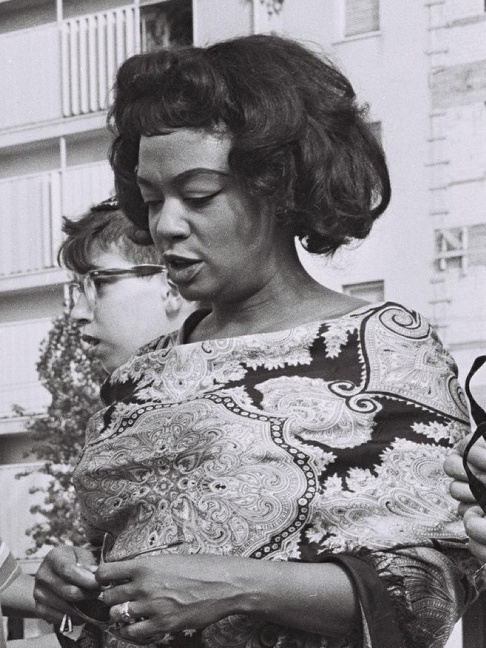
—I heard that one day, out West, you were refused a meal because of your skin. What did you do, that day?
It was in Pasco, Washington State, in 1949. I walk into a restaurant, they refuse to serve me — my face, my color, nothing else. A humiliation you know as well as I do, we've all swallowed it a hundred times. But that day, I decided not to swallow it. I filed a lawsuit. I wanted a court, official words, to acknowledge that this was not normal, that it had a name and should one day be wrong. You don't always win those battles. But a filed complaint is a trace; it says out loud: I do not consent. Silence, on the other hand, ratifies the insult.
Silence ratifies the insult: a filed complaint says out loud that I do not consent.
—And here you are in Paris, like me tonight. Tell me truthfully, Hazel: did you come to sing in Europe, or did you come to flee America?
Both, Billie, and I don't hide it. After HUAC, after losing the show, the air in my country had become unbreathable. Here, they listen without looking at the color of the room. I step on stage and no one in the audience has been assigned to a row by skin. You can't know what a relief it is to finally play without that thorn in my back. Paris hasn't cured me of America — I carry it everywhere, my fights are there. But here, for a few years, I can be just a musician. Nothing but a musician. That's a luxury I hadn't known in a long time.
—You who fought so hard back home, doesn't it gnaw at you a little to have left, to play far from your people who remain there?
It gnaws at me, yes, I won't lie to you. Some mornings I feel like a fugitive, a deserter while my people still take the blows. Then I reason with myself. I spent years defending myself instead of creating; here I can finally work on my piano in peace, record, exist. An artist drained of their music serves no one, neither their people nor themselves. So I regain strength on these European stages, before these free audiences. And the day America is ready to hear us differently, rest assured, Billie: I will know how to find my way home.

This imaginary interview was generated by artificial intelligence from sources documented in Hazel Scott's profile. It dramatises what the figure might have said based on what we know about them, but does not constitute attested historical testimony. For primary sources and factual documentation, refer to the full profile.