Imaginary interview with Maitreyi
by Charactorium · Maitreyi (1000 av. J.-C. — 1000 av. J.-C.) · Spirituality · Philosophy · 5 min read
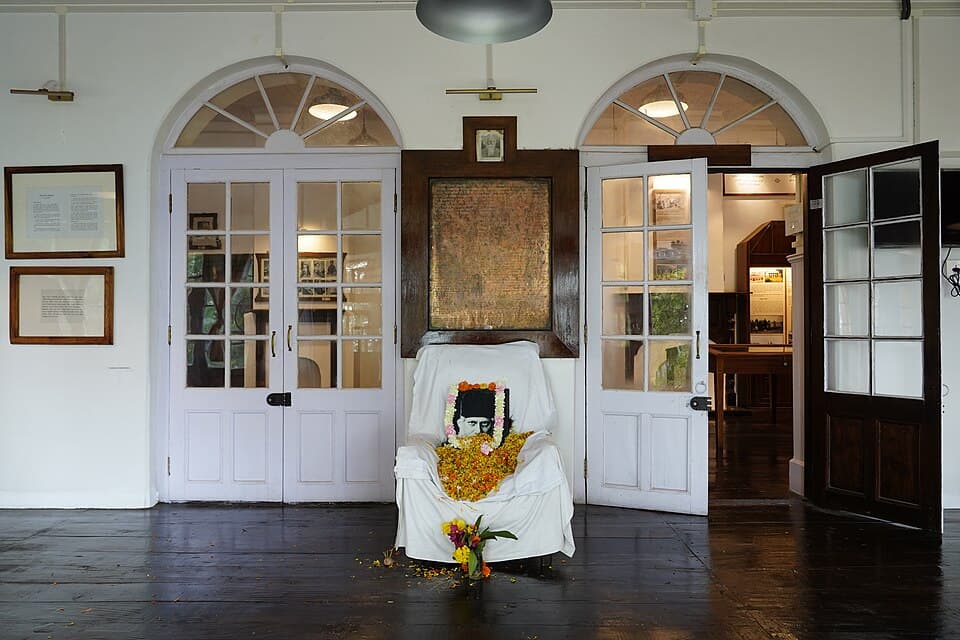
At the edge of the kingdom of Videha, where thatched huts give way to the great trees of the Aranya, a woman sits on a mat of kusha grass, her gaze turned toward the domestic fire. She refused the inheritance of a husband who became a renunciant, keeping only one wealth: the question of immortality. This is Maitreyi, whom tradition calls brahmavadini.
—How did that moment come when your husband Yajnavalkya announced his departure for the forest?
He came to me one evening, when the sandhya fire was still glowing. He told me he was leaving the life of a householder to enter the path of sannyasa, and that he wanted to divide his goods between me and Katyayani, his other wife. Then something rose in me, stronger than the desire for cows and fields. I asked him: “If the whole earth, filled with riches, were mine, would I thereby be immortal?” He replied no, that my life would be that of the rich, but there is no hope of immortality in wealth. I let my share of inheritance fall like an ember that no longer warms, and I asked him instead to teach me what does not die.
I let my share of inheritance fall like an ember that no longer warms.
—Why refuse goods that most women of your time would have welcomed as a blessing?
Because I had seen, at the edges of the markets of the Indo-Gangetic plain, rich men grow old and die like the poor. Wealth nourishes the body, it does not loosen the grip of death. What good is it to own a thousand head of cattle if, at the last breath, one carries nothing away? Yajnavalkya told me plainly: what makes me immortal cannot be counted in coins. I preferred to sit on a simple mat of kusha and receive the knowledge of the Atman rather than keep lands in Videha. Renouncing, for me, was never losing: it was choosing the only portion that death cannot reclaim.
Wealth nourishes the body, it does not loosen the grip of death.
—You hold a strange idea about love: that it is never truly the beloved one loves. What do you mean by that?
Listen carefully, for this is the heart of what Yajnavalkya made me understand in the forest. It is not for the husband that the husband is dear, nor for the child that the child is dear, nor for wealth that wealth is dear. All these things are dear to us because of the Atman, the Self that resides in them and in us. When you love a face, it is the divine looking at you through that face. For a long time I thought I loved my husband for himself; I learned that I was seeking Brahman in him without knowing it. That is why the path of love and the path of knowledge are but one road.
When you love a face, it is the divine looking at you through that face.
—What would you say to someone who finds this thought cold, as if you were draining human love of its warmth?
Cold? Quite the opposite, it is the only fire that never goes out. If I love a being only for their body or for what they bring me, my love will die with them, like a hearth that is no longer tended. But if I recognize the Atman in them, then I love in them what is eternal, and my love no longer knows the fear of loss. That is what I pursued in the teachings of the Upanishads, those words received sitting near the teacher. Not to love less, but to love what in the beloved cannot be snatched away by death. There is no gentler embrace than one that has ceased to tremble.
There is no gentler embrace than one that has ceased to tremble.
—You are called brahmavadini. What does it mean to bear such a title for a woman of your time?
The word means “she who speaks of Brahman.” Few women bear it, and I say this not out of pride but gratitude, for sacred speech has not always wanted our voices. In the Brahmanical schools, I was allowed to sit among the students, listen, question, and even answer. Tradition also counts me among the rishika, those women whom inspiration made capable of composing hymns. When I recite at sunrise, facing east, I feel that my mouth prolongs a chain of voices stretching back beyond my birth. That the word of Brahman chose to pass through a woman — that is what keeps me awake before dawn.
Sacred speech has not always wanted our voices.
—Tradition attributes hymns of the Rigveda to you. How is such a song born within you?
A hymn is not made; it is received. In the morning, when I invoke Agni in the domestic fire or Ushas, the dawn, the words come with the breath, carried by a rhythm older than me. These songs of the tenth mandala that are attributed to me do not belong to me: they pass through the one who utters them. We write nothing, or almost nothing — everything is kept in memory, transmitted from mouth to ear like a fire passed from one lamp to another, before palm leaves fix them much later. To compose a hymn is to offer one's tongue to something vaster, and to step back so that the word may pass.
A hymn is not made; it is received.
—You chose a simple way of life. What does a day look like in your forest retreat?
I rise before dawn for ablutions in the nearby river, then recite the hymns facing the rising sun. During the day, I sit on my mat of kusha to listen and debate, a kamandalu of water within reach. My garment is simple undyed white cotton, draped in the ancient manner; my only ornaments, if any, are the rudraksha beads that slide between my fingers during meditation. I eat little — rice, barley, a little milk and ghee, never before offering to the fire. In the evening, in our hut of bamboo and thatch at the edge of the Aranya, I tend the hearth and repeat the hymns before sleep. Nothing I possess weighs me down.
Nothing I possess weighs me down.

—This kusha grass you sit on, this water pot you carry — why do such humble objects matter so much?
Because they speak aloud what renunciation whispers. The mat of kusha, woven and placed directly on the ground, reminds me that a sage's seat needs no gold. The kamandalu, that earthen pot, holds water for ablutions and nothing more: it is the exact measure of my needs. My dhoti, white and undyed, seeks to please no one. These objects are not poor; they are just. When I refused my husband's riches for the path of sannyasa, it was not to suffer lack, but to discover how little one needs who seeks the Atman. The forest taught me that the essential fits in the hollow of a hand.
These objects are not poor; they are just.
—Tell us about the kingdom of Videha and the school where Yajnavalkya taught. What kind of world was it?
Videha was a hub of lively intelligence, ruled by King Janaka, who loved to gather sages and hear them debate the nature of reality. My husband Yajnavalkya was the most feared of teachers there; people came from afar to question him, and few left without being overturned by his words. It was in this region, between the court and the forest retreats, that I received the teachings. The Brahmanical texts preserve the memory of his school, his debates on ritual and the Atman. I had this rare privilege: to live not at the margins of this ferment, but seated in its midst, where thought was forged aloud.
—Why did the forest, rather than the king's court, become the place of your highest reflections?
Because what one seeks at court and what one finds in the Aranya are not of the same nature. At Janaka's court, one discusses brilliantly, one wants to be right, one wins cows and fame. In the forest retreats, there is no audience to convince, only the fire, the silence, and the question that remains. Yajnavalkya took me there when he left the world, and it was there, far from the plains' markets, that his teaching on immortality gained its full weight. Great words need shade and calm to ripen, like certain fruits. The forest does not answer; it lets the answer rise from within.
The forest does not answer; it lets the answer rise from within.

This imaginary interview was generated by artificial intelligence from sources documented in Maitreyi's profile. It dramatises what the figure might have said based on what we know about them, but does not constitute attested historical testimony. For primary sources and factual documentation, refer to the full profile.