Imaginary interview with Margherita Hack
by Charactorium · Margherita Hack (1922 — 2013) · Sciences · 6 min read
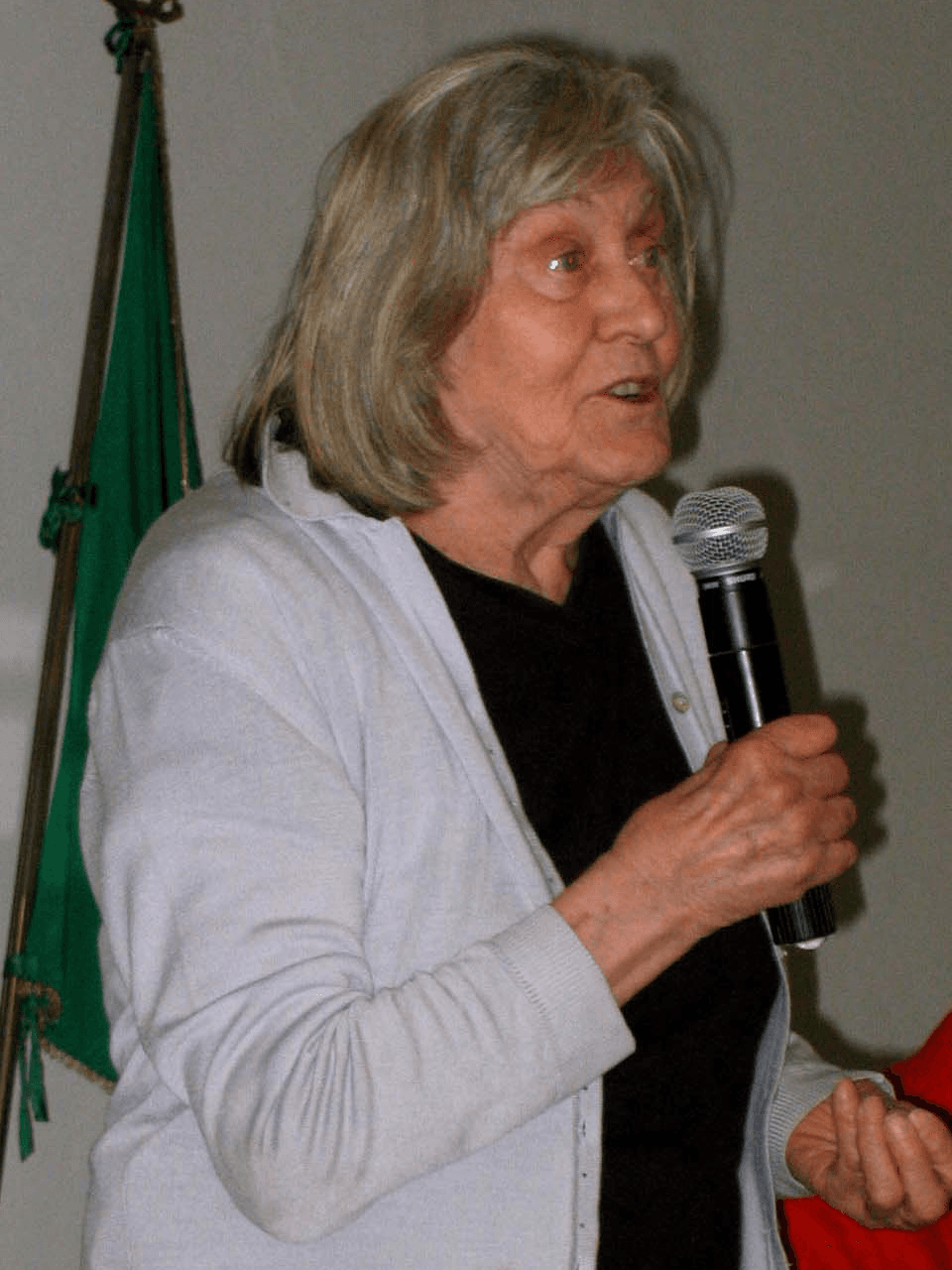
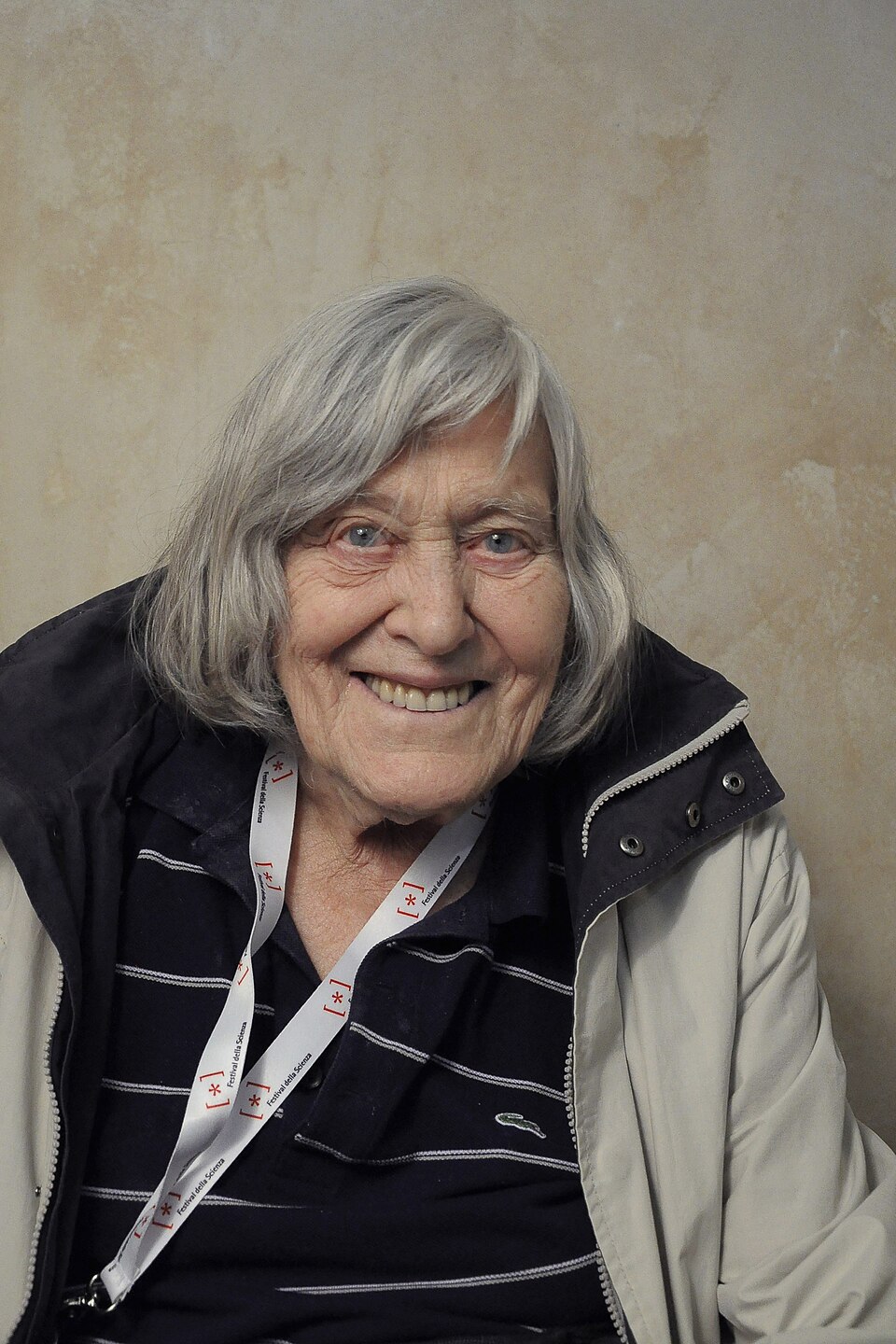
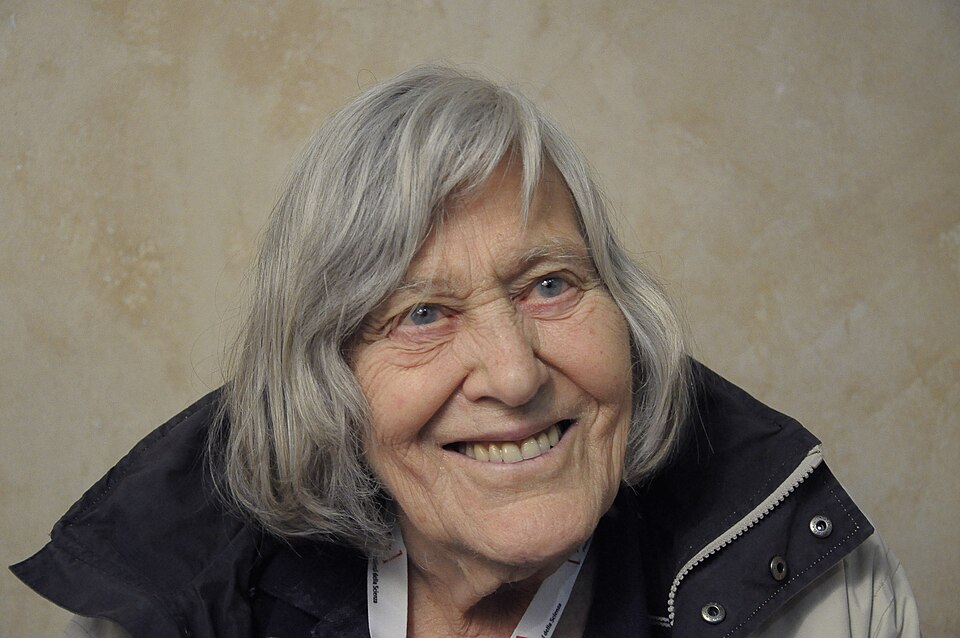
Trieste, a spring afternoon. In an apartment cluttered with books and journals where three cats doze on windowsills, an old lady with white hair welcomes us in slippers, a bicycle leaning against the hallway wall. From the hill, the dome of the observatory she directed for so long can be glimpsed in the distance. Margherita Hack settles in, turns on a lamp, and begins to talk about the stars as if they were old acquaintances.
—How does one present oneself, in 1964, to take charge of an observatory when one is a woman in Italy at that time?
One doesn't present oneself; one imposes oneself through work. When I took over the Astronomical Observatory of Trieste in 1964, they made me feel in a thousand ways that a woman had nothing to lead — especially not a research institute. I found aging telescopes, tight budgets, and a reputation to build from scratch. So I brought in foreign colleagues, opened our doors to international collaborations, fought to modernize the instruments. I never flaunted being the first woman at the helm of a major Italian institute: that would have seemed a distraction. What mattered was that the observatory finally counted on the world map. Twenty-three years later, when I left it, people came from Hamburg and California to work there.
One doesn't present oneself; one imposes oneself through work.
—What do you remember most about those twenty-three years at the helm of Trieste?
What I'm most proud of are not the walls or the domes, but the faces. At the University of Trieste, I trained generations of astrophysicists who now hold chairs all over the world. Leading is not commanding: it's protecting the time of those who seek, securing funding, defending a young person's freedom to make mistakes. In 1987, the year I stepped down, the sky gave us the supernova SN 1987A in the Large Magellanic Cloud — a farewell gift, as if the universe were saluting the end of a chapter. I've always thought that an institute is judged not by the prizes it wins, but by the minds it liberates.
—You devoted your life to reading the light of stars. How would you describe this work to someone who knows nothing about it?
Imagine a star sends you a letter, but written in an unknown language. Stellar spectroscopy is the art of deciphering it. You pass its light through a spectrograph, it breaks down like a rainbow, and in that rainbow appear dark lines, absorption lines. Each chemical element — hydrogen, helium, iron — leaves its signature, as personal as a fingerprint. I spent years bent over glass photographic plates, measuring those lines with a magnifying glass, comparing them to catalogs. As I often wrote, « la spettroscopia ci ha permesso di decifrare la composizione chimica delle stelle a milioni di anni luce di distanza » — a revolution as great as the invention of the telescope. You touch the matter of a star you will never reach.
Imagine a star sends you a letter, written in an unknown language.
—Why did those particular stars called Be stars capture your attention so much?
Because they cheat. A Be star is a hot, bluish star that should only show well-behaved absorption lines — and yet emission lines appear, that little 'e' signaling rebellion. It surrounds itself with a disk of ionized gas spinning around it at breakneck speed, a circumstellar envelope that encircles it like an invisible ring. In the 1960s and 1970s, I was among the first to systematically document these objects, to compile catalogs. These stars lose their matter, they live fast and intensely. You think you're observing a fixed point, and you discover a world in motion, a stellar wind that constantly reshapes the star. That's what kept me awake so many nights: the life hidden in what seemed static.
—You could have stayed in your scholarly journals. Why did you insist so much on talking about astronomy to the general public?
Because the sky belongs to no one, so it belongs to everyone. When I published L'universo di Margherita Hack in 1988, I never imagined millions of Italians would read it — workers, high school students, grandmothers. I received thousands of letters, and I made a point of answering each one myself, in the evenings, between two cats asleep on my desk. Popularization is not second-rate science: it's translating without betraying, lighting a spark. I like to say that « siamo polvere di stelle che si è organizzata in forme sempre più complesse » — we are made of the same stuff as the stars. When a child understands that, they never look at the night sky the same way again. That is my most beautiful experiment.
The sky belongs to no one, so it belongs to everyone.
—When you write a book like Dove nascono le stelle, who do you think of as you hold your pen?
I think of the person who hasn't studied, but who looks up in the evening and wonders where it all comes from. In Dove nascono le stelle, published in 2004, I wanted to tell the birth of stars, black holes, the origin of the universe, without ever taking the reader for an ignoramus or a scholar. Italian high schools adopted it, and for me that's the most beautiful reward — far more than the asteroid 8558 Hack named after me, even though I often joked that I finally had a foot in the stars. Writing for everyone means refusing that knowledge be the privilege of a caste. Science is a collective conquest, or it is nothing.
—One imagines you with your eye glued to the telescope. Yet your youth was first that of an athlete. Tell us about it.
Before the stars, there were the stadiums! In 1941, I won the Italian university championships in high jump and long jump in Florence. I've always thought you train the mind like you train the body — through discipline, repetition, the desire to clear the bar one centimeter higher. I transferred that physical rigor to research: get up early, apply yourself, never settle for approximations. Later, the bicycle took over from sprinting. It was my daily companion on the streets of Trieste, to the point that I devoted an entire book to it, La mia vita in bicicletta. As I wrote there, « ho pedalato tutta la vita, sia in senso letterale che figurato ». Pedaling, searching: it's the same stubborn movement forward.
You train the mind like you train the body — through the desire to clear the bar one centimeter higher.
—Your cats, your vegetarianism, your commitment to animals: where does this steadfast attachment to the living world come from?
From a simple conviction: we are not the only sentient inhabitants of this planet. I became vegetarian in my youth, out of ethics, long before it became a fad at Italian dinners. Refusing to eat a being that suffers seemed as obvious as breathing. My apartment in Trieste has always overflowed with rescued cats, sleeping on my astronomy journals and drafts. There's consistency in that, you see: one who contemplates the vastness of the universe, who knows we are stardust just like the smallest sparrow, cannot despise any form of life. The telescope teaches humility. You understand our smallness, and therefore our kinship with all that lives.
—You were born in 1922, the very year of the March on Rome. What weight did this shadow of fascism leave on your life as a scientist?
I was born the same year as fascism, in 1922, and grew up in its grip. I was sixteen when the racial laws were enacted in 1938 — I saw professors expelled from the university, brilliant minds silenced because they were Jewish. You don't forget that. I earned my degree in physics at Florence in 1945, right after the Liberation, and I understood very early that a science subject to an ideology is no longer science. That conviction never left me. Research needs free air like lungs need oxygen. Stifle freedom of thought, and you stifle truth itself. My childhood under the dictatorship was my first lesson in astronomy: it taught me never to confuse dogma and reality.
—In your essay Libera scienza in libero stato, you fought for research free from dogmas. What exactly were you defending?
I defended an idea I believe vital: science can only advance in full freedom of thought. In Libera scienza in libero stato, published in 2010, I wrote in black and white that « ogni ingerenza ideologica o religiosa nel lavoro scientifico è una minaccia alla verità ». Whether one tries to impose on the researcher what they must find, in the name of religion, a party, or morality, one kills research in its infancy. I have always been an atheist, frankly, serenely, and I have always thought that the role of the scientist is not to please the powerful but to say what is. A free state must guarantee free science — the two stand together, or fall together. That is the fight of my entire life, as tenacious as my passion for the stars.
This imaginary interview was generated by artificial intelligence from sources documented in Margherita Hack's profile. It dramatises what the figure might have said based on what we know about them, but does not constitute attested historical testimony. For primary sources and factual documentation, refer to the full profile.