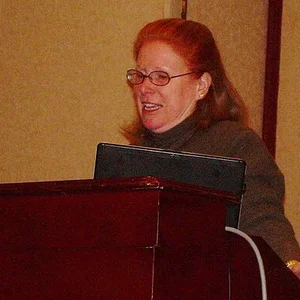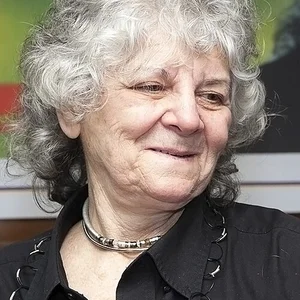

Israeli crystallographer and molecular biologist, Ada Yonath elucidated the three-dimensional structure of the ribosome, the cellular machinery responsible for protein synthesis. She received the Nobel Prize in Chemistry in 2009, the first woman to do so in 45 years.
Frequently asked questions
Key Facts
- Born in 1939 in Jerusalem into a poor family, she developed an intense scientific curiosity from an early age
- From the 1970s and 1980s, she pioneered cryogenic crystallography to study ribosomes
- She determined the complete atomic structure of ribosomal subunits, published between 2000 and 2001
- Nobel Prize in Chemistry in 2009, shared with Venkatraman Ramakrishnan and Thomas Steitz
- Her work paved the way for the design of new antibiotics targeting bacterial ribosomes
Works & Achievements
The world's first demonstration that the ribosome could be crystallized, opening the way to determining its atomic structure despite near-universal skepticism from the scientific community at the time.
Publication of the first images revealing the internal organization of the ribosome, showing that a detailed structure was within reach and reigniting international interest in a structural challenge widely considered insurmountable.
Yonath's team publishes one of the first high-resolution structures of the ribosome, revealing the decoding center and making it possible to understand the mechanism of action of many essential antibiotics.
A landmark structure detailing the antibiotic binding sites on the large ribosomal subunit, with major implications for the design of new drugs against resistant bacteria.
A body of publications showing how bacteria modify their ribosome to resist antibiotics and how to design new therapeutic molecules capable of overcoming these resistance mechanisms.
A masterful synthesis of thirty years of research presented in Stockholm, tracing the journey from the earliest crystallization attempts to an atomic-level understanding of the protein synthesis mechanism.
Anecdotes
As a child, Ada Yonath grew up in poverty in Jerusalem, in an apartment so small that she used the furniture as scaffolding to reach books on the high shelves. It was during one of these climbs that she broke her arm — but the accident did nothing to dampen her voracious curiosity about the natural phenomena she was always trying to understand.
For nearly twenty-five years, Ada Yonath was regularly mocked by her peers, who dismissed her attempts to crystallize ribosomes as “science fiction” or “the village madwoman’s project.” Some colleagues called her the “Don Quixote of crystallography,” convinced that what she was trying to achieve was simply impossible.
One of Yonath’s major technical breakthroughs was inspired by polar bears. While reading an article about how these animals survive hibernation, she hit upon the idea of freezing her ribosome crystals at extremely low temperatures (down to -196 °C in liquid nitrogen), a method known as cryocrystallography. This innovation proved decisive in obtaining sharp images through X-ray diffraction.
For her crystallization experiments, Yonath chose bacteria capable of surviving in extreme environments, such as hot springs or highly salty seas. These extremophile microorganisms produce particularly stable ribosomes, far easier to crystallize than those of ordinary organisms — a trick that was as much a biologist’s as a chemist’s.
When the 2009 Nobel Prize in Chemistry was announced to her, Ada Yonath was still asleep: it was 5:30 in the morning in Israel. The first woman to receive this prize since Dorothy Hodgkin in 1964 — 45 years earlier — she simply said that the real reward had been the discovery itself, and that the Nobel was merely “the cherry on top.”
Primary Sources
Ribosomal particles from Bacillus stearothermophilus yielded three-dimensional crystals diffracting to beyond 3.5 Å resolution, opening the way for structural studies of the ribosome at atomic resolution.
The main obstacles encountered in ribosome crystallography are described: the extreme sensitivity of the crystals to radiation damage, the lack of internal symmetry, and the severe nonisomorphism between crystals — all requiring novel methodological approaches.
The crystal structure of the small ribosomal subunit of Thermus thermophilus has been solved, revealing the decoding center and providing a structural basis for the mechanism of action of several clinically important antibiotics.
The determination of ribosome structures at atomic resolution is the culmination of a long journey that began with a seemingly impossible task: the crystallization of these highly complex and dynamic macromolecular assemblies.
Key Places
Ada Yonath's primary workplace since the 1970s, where she established her crystallography laboratory and conducted virtually all of her research on the ribosome — from her early work through the Nobel Prize and beyond.
Ada Yonath's birthplace, where she grew up in a modest working-class neighborhood and developed a remarkable scientific curiosity from an early age, despite difficult material circumstances.
Starting in the 1980s, Yonath set up an outpost laboratory here, using the DORIS synchrotron to obtain the first high-quality diffraction images from her ribosome crystals.
One of the world's most powerful synchrotrons, whose beamlines enabled Yonath and other teams to collect the diffraction data needed for the high-resolution ribosome structures published in 2000.
Ada Yonath completed a postdoctoral fellowship at the Massachusetts Institute of Technology in the 1970s, deepening her expertise in X-ray crystallography before returning permanently to Israel.
Typical Objects

The central instrument in Yonath's laboratory: it directs a beam of X-rays at a ribosome crystal and records the diffraction patterns, allowing the three-dimensional structure of the molecule to be mathematically reconstructed.

Yonath uses liquid nitrogen at -196 °C to flash-freeze and preserve her ribosome crystals — a cryo-crystallography technique she pioneered that would become the global standard in structural biology.

Tiny crystals obtained after years of painstaking refinement, as precious as gold in the laboratory: a single high-quality crystal can yield all the data needed to determine a complete structure.

A large particle accelerator producing X-rays of exceptional intensity, used by Yonath in Hamburg (DESY) and Grenoble (ESRF) to obtain diffraction data precise enough to resolve the atomic structure of the ribosome.

A thermophilic bacterium chosen by Yonath as early as 1980 for its ribosomes, which are exceptionally stable at high temperatures — an essential condition for any hope of obtaining usable crystals.

Specialised computers used to calculate electron density maps and fit atomic models of the ribosome — thousands of atoms to be positioned within a complex three-dimensional space.
School Curriculum
Vocabulary & Tags
Key Vocabulary
Tags
Daily Life
Morning
Ada Yonath arrives early at the Weizmann Institute, often by 7:30 a.m., after a short commute from her home in Rehovot. She starts by examining the ribosome crystals grown the previous day, assessing their quality under a polarizing microscope with a practiced eye before deciding which ones will be mounted on the diffractometer.
Afternoon
The afternoon is devoted to analyzing diffraction data — long hours at the computer calculating and refining atomic models, supervising her doctoral students, and preparing the next experimental sessions. During synchrotron campaigns, she may spend several weeks at a stretch in Hamburg or Grenoble, working continuously at the beamlines.
Evening
In the evening, Yonath returns home for dinner with her family but frequently brings scientific papers to read. She is known for her ability to think about her crystals at all times — a new idea can strike at any moment, so she always keeps a notebook close at hand to jot down her insights.
Food
Typical Israeli fare: fresh vegetables, hummus, fish, seasonal fruit from the market. During long synchrotron sessions, the diet becomes more spartan — sandwiches and coffee in the control room, as experiments do not stop for mealtimes.
Clothing
Functional lab attire: a white coat or researcher's jacket, safety goggles during hands-on work, comfortable shoes suited to long days on her feet. Outside the laboratory, Yonath opts for casual, practical clothing with no particular flair for ostentation.
Housing
An apartment in Rehovot, a university town 20 km south of Tel Aviv, within close reach of the Weizmann Institute. A comfortable but modest home, reflecting a woman whose primary investment remains intellectual and scientific rather than material.
Historical Timeline
Period Vocabulary
Visual Style
Esthétique documentaire scientifique mêlant la froideur des laboratoires de cristallographie (lumière fluorescente, écrans de données moléculaires en bleu-vert) à la chaleur et la lumière vive du campus de l'Institut Weizmann en Israël.
Sound Ambience
Ambiance d'un laboratoire de biologie structurale des années 1980-2000 : bourdonnement des diffractomètres, sifflements de l'azote liquide, et vibration sourde des synchrotrons européens où les expériences clés furent conduites.
Liens externes & ressources
Références
Œuvres
Premiers cristaux tridimensionnels de sous-unités ribosomales (Biochemistry International)
1980
Premières cartes de densité électronique du ribosome (série de publications)
1984-1987
Structure à 3,3 Å de la petite sous-unité ribosomale (Cell, Schlünzen et al.)
2000
Structure de la grande sous-unité ribosomale de Deinococcus radiodurans (Cell, Harms et al.)
2001
Travaux sur la résistance aux antibiotiques ciblant le ribosome (série de publications)
2001-2009
Conférence Nobel de chimie — From the evolution of ribosome crystallography to the elucidation of the ribosome function
8 décembre 2009