Imaginary interview with Mary Engle Pennington
by Charactorium · Mary Engle Pennington (1872 — 1952) · Sciences · Technology · 5 min read
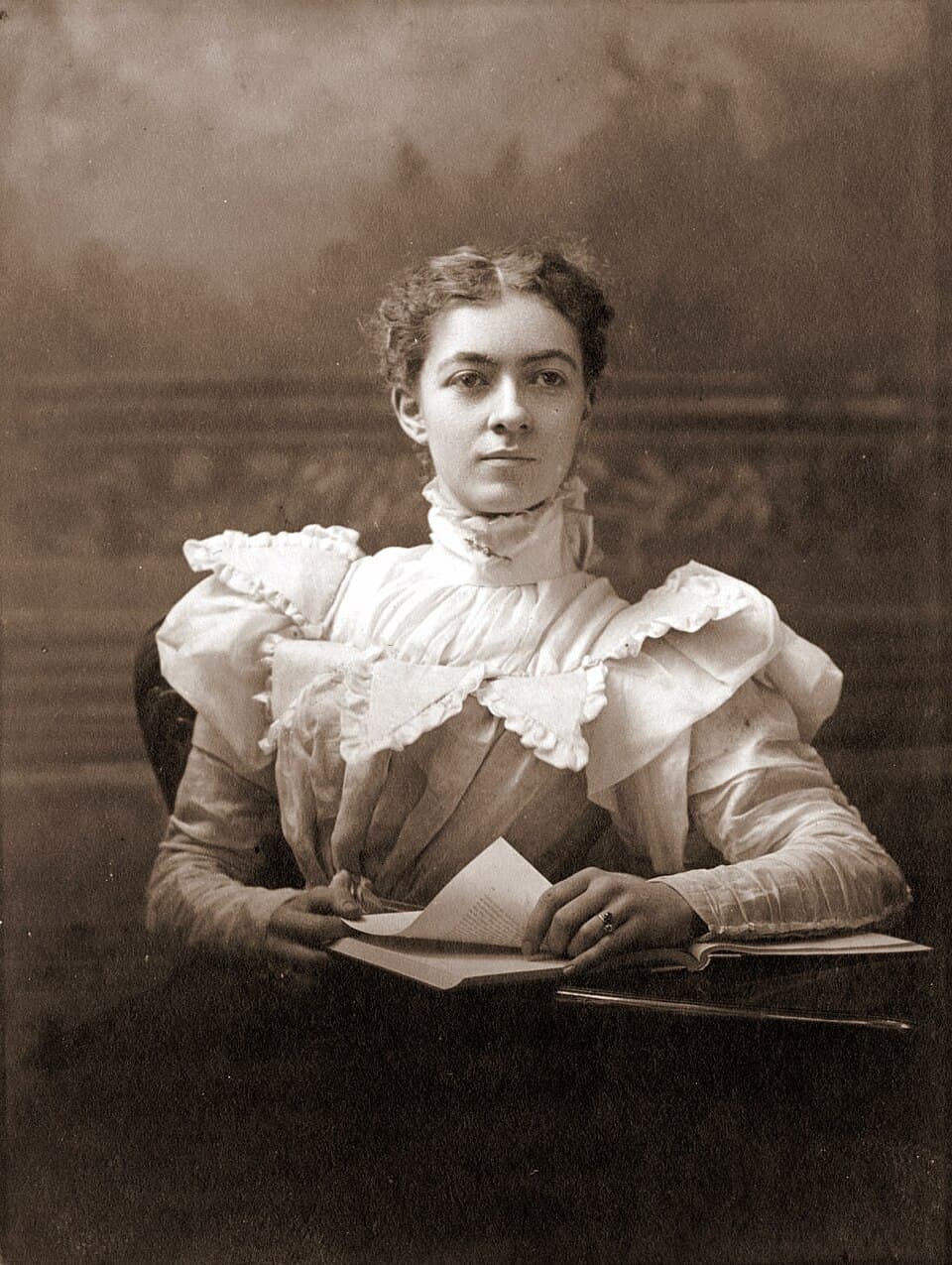
Philadelphia, a winter morning, sometime between 1919 and 1920. In a study cluttered with observation notebooks and thermometers lined up like soldiers, a woman in her fifties receives us, her lab coat still on her shoulders. She has just left the USDA to strike out on her own; her speech is clear, measured, that of a chemist who trusts only numbers.
—How does one become a chemist when the university closes its doors?
In 1892, the University of Pennsylvania judged that my work deserved everything except a bachelor's degree — because I was a woman. They handed me, as a consolation, a certificate of proficiency, a piece of paper that recognized my competence without daring to name it. I could have been offended for years; I preferred to stay in the labs. Three years later, in 1895, the same university granted me a doctorate in chemistry — I was twenty-two. The cold later taught me a lesson I already knew: it's not the closed door that matters, but knowing which window to enter through. Chemistry, for its part, never asked my sex.
It's not the closed door that matters, but knowing which window to enter through.
—It's said that you took a federal exam under an ambiguous signature. What really happened?
I signed my application M. E. Pennington, without spelling out my first name. It wasn't an adventurer's trick, just the simplest calculation: an examiner who reads “Mary” stops reading my results. So the graders evaluated a candidate they thought was a man, and that candidate passed. When they discovered the truth, the embarrassment was on their side, not mine. I entered the Department of Agriculture through that small door in 1907, recruited into the orbit of chemist Harvey Wiley. Two initials sufficed to bypass an entire prejudice — proof, if any were needed, that prejudice held on to so little.
Two initials sufficed to bypass an entire prejudice.
—Before the cold, there was milk. Why tackle that liquid?
Because a glass of milk killed more children in my time than many epidemics we feared more. In my Philadelphia laboratory, founded in 1901, I spent my mornings bent over the microscope, counting the bacteria swarming in samples taken from dairies. Milk wasn't a food; it was a culture broth served warm. Around 1904, I established bacteriological inspection standards for the city: how many germs to tolerate, at what temperature to keep the cans, how to seal a sterilizable glass milk bottle. Other cities adopted them. You couldn't see the enemy with the naked eye; it took a glass lens to make it visible and, finally, punishable.
Milk wasn't a food; it was a culture broth served warm.
—In 1906, America enacted the Pure Food and Drug Act. What did this law change for your work?
It gave a law to what I had been repeating for years in polite indifference. The Pure Food and Drug Act of 1906 finally banned the sale of adulterated or spoiled food — but a law is only an intention as long as no one knows how to measure spoilage. That's where I come in: in 1908, I took over the Food Research Laboratory at the USDA, the first woman in that post. My task was not to judge, but to provide the numbers without which the judge is blind: at what temperature an egg remains healthy, how many hours a chicken can travel. Salubrity had just ceased to be a matter of smell and become a matter of the thermometer.
A law is only an intention as long as no one knows how to measure spoilage.
—You often speak of the “cold chain.” What exactly did you mean by that expression?
A chain is only as strong as its weakest link — and cold is the most fragile of chains. Between the farm and the plate, a food item passes through a warehouse, a loading dock, a railcar, a domestic icebox; if just one of those links warms up, the rest is useless. My work, between 1908 and 1919, consisted of setting, link by link, temperature and hygiene thresholds for eggs, poultry, and milk. People thought it was enough to “put it in the cold.” No: you must never break it. I spent my life tracking the exact spot where the temperature rose, because that's always where, and nowhere else, that rot sets in.
A chain is only as strong as its weakest link — and cold is the most fragile of chains.
—Is it true that you climbed into freight cars yourself?
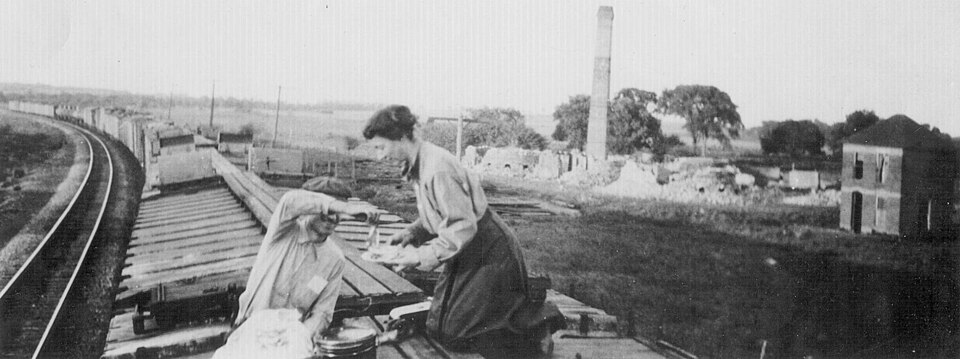
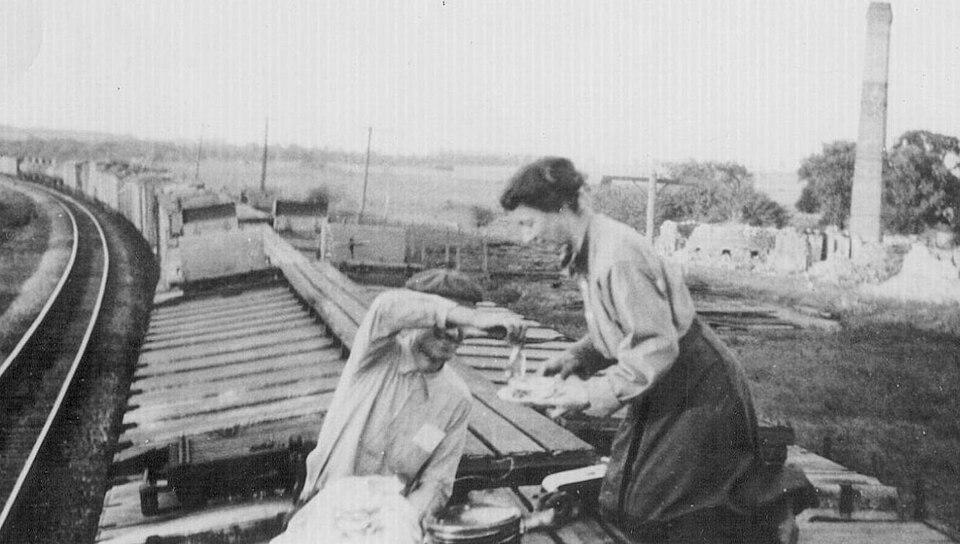
Absolutely, and I don't see how I could have done otherwise. You don't understand why a shipment of eggs arrives spoiled by reading reports from a desk in Washington. So I climbed into refrigerated railcars, thermometer in hand, between the ice blocks and the crates, to record the temperature where it really mattered — near the floor, near the ceiling, in the center of the load. I discovered differences no one had suspected, pockets of warm air where the goods slowly cooked. A lady in a long dress crouching in a freight car probably made the railroad workers smile. But my notebooks, they didn't smile: they dictated how to better insulate and ventilate those cars.
You don't understand why a shipment of eggs arrives spoiled from a desk.
—What exactly did you correct on those refrigerated railcars?
Two things that were neglected because no one had measured them: insulation and cold air circulation. Around 1913, my readings showed that a poorly designed car kept the ice at the bottom and let the top of the load warm up — we thought we were transporting cold, but we were transporting an illusion of cold. I argued for better insulating walls and for ventilation that would bring the freezing air down the entire height of the crates. That seems modest, almost like carpentry. But between an egg that arrives fresh a thousand kilometers away and an egg that arrives lost, there is sometimes only a few degrees and a well-placed draft. Progress, here, was measured in fractions of temperature.
We thought we were transporting cold; we were transporting an illusion of cold.
—The egg seems to have been your obsession. How do you judge whether an egg is still good?
You light it. In front of an egg candler, a simple lamp placed behind the shell, the egg ceases to be opaque and reveals all its secrets: the size of its air cell, the firmness of its yolk, the slightest suspicious spot. I codified this examination — candling — so that it no longer depended on a merchant's nose but on a gesture that any inspector could repeat identically. An egg does not lie in front of the light; it ages legibly, provided you know how to read. I came to believe that nothing in the entire grocery was more eloquent than an egg held against a flame. It's a small thing, an egg. It's also a very honest clock.
An egg does not lie in front of the light; it ages legibly.
—You gathered all that knowledge into a book. Why devote an entire work to the egg?
Because treatises had been written on subjects a hundred times less nourishing. In 1933, I published Eggs, where I assembled decades of observations, from the henhouse to the housewife's table: how the egg forms, is preserved, transported, sold. It wasn't a cookbook, but the natural and commercial history of a food that everyone thinks they know and almost no one understands. I put into it what I had learned at the egg candler and in cold storage rooms: that an egg is a living organism that breathes through its shell, and you either respect it or waste it. Devoting an entire book to so small a thing was to assert that no food is too humble for science.
No food is too humble for science.
—At the end of it all, how do you view a career that began with a refusal?
Without bitterness, and without naivety either. I was denied a bachelor's degree, then they made me the first woman director of a federal laboratory; between the two, there was only stubborn work and many recorded temperatures. I have just left the USDA, in 1919, to open my own consulting firm: at my age, after building a country's cold chain, I still prefer the freedom of a door with my name on it. If my work survives, it will not be in honors, but in an invisible gesture: a housewife calmly placing eggs in her icebox, without suspecting that a woman once climbed into an icy railcar so they would arrive sound. That would be enough for me.
Between the two, there was only stubborn work and many recorded temperatures.
This imaginary interview was generated by artificial intelligence from sources documented in Mary Engle Pennington's profile. It dramatises what the figure might have said based on what we know about them, but does not constitute attested historical testimony. For primary sources and factual documentation, refer to the full profile.