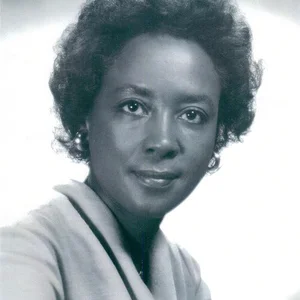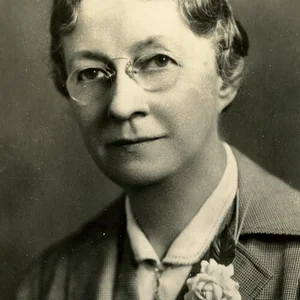

Mary Engle Pennington (1872-1952) was an American chemist, bacteriologist, and engineer, a pioneer of food preservation through refrigeration. She established the scientific standards of the cold chain for milk, eggs, and poultry in the United States.
Mary Engle Pennington(1872 — 1952)
Mary Engle Pennington
États-Unis
6 min read
Frequently asked questions
Key Facts
- 1895: earned a doctorate in chemistry from the University of Pennsylvania at a time when women rarely graduated from the institution
- 1907: became the first woman to head a laboratory within the U.S. Department of Agriculture (the food laboratory of the Food Research Laboratory)
- Established the scientific standards for cold preservation of milk, eggs, and poultry
- 1919: received the Notable Service Medal from President Herbert Hoover for her work during the First World War
- 1940: first woman inducted into the American Society of Refrigerating Engineers
Works & Achievements
A rare degree for a woman at the time, which launched her scientific career.
An institution she founded and directed, where she developed methods for analyzing food safety.
A framework adopted by Philadelphia and then other cities, helping to reduce illnesses linked to contaminated milk.
The first woman to head this federal laboratory, where she founded the science of cold preservation.
A set of temperature and hygiene standards that permanently transformed the American food industry.
Design of better insulation and improved cold ventilation for transporting perishable goods.
An authoritative reference work on the freshness and preservation of eggs.
Posthumous recognition of her role as a pioneer of food refrigeration.
Anecdotes
In 1892, the University of Pennsylvania refused to grant Mary Engle Pennington a bachelor's degree because she was a woman: instead, she was handed a mere “certificate of proficiency.” Far from discouraged, she continued her studies and earned a doctorate in chemistry by 1895, at just 22 years old.
To sit the federal civil service examination, Mary signed her application “M. E. Pennington,” without revealing her first name. The examiners, convinced they were dealing with a man, hired her: only afterward did they discover that their brilliant candidate was a woman.
To understand why food spoiled during transport, Pennington thought nothing of climbing into the refrigerated cars of freight trains herself to measure the temperatures inside. Her observations made it possible to design better-insulated, better-iced cars, the ancestors of our modern cold chain.
A recognized authority on the egg, she perfected “candling”: by holding an egg up to a lamp, one can see through it whether it is fresh or spoiled. Her recommendations on the handling of eggs and poultry became standard references throughout the American food industry.
Her pioneering work was recognized long after her death: in 2018, Mary Engle Pennington was inducted into the United States National Inventors Hall of Fame, alongside the greatest inventors, for having built the scientific foundations of food preservation by refrigeration.
Primary Sources
A reference work in which Pennington synthesizes decades of research on the freshness, preservation, and marketing of eggs, from producer to consumer.
Official documents written under Pennington's direction, establishing the temperature and hygiene conditions for the collection, storage, and refrigerated transport of perishable goods.
Bacteriological standards developed by Pennington to assess the safety of milk, later adopted as a model by other American cities.
Pennington's doctoral work in chemistry, which opened the way to a scientific career then largely closed to women.
Key Places
Birthplace of Mary Engle Pennington in 1872.
The city where she grew up, studied, and began her career; here she founded her laboratory and developed the standards for milk inspection.
The institution where she earned her doctorate in chemistry in 1895, despite being denied a bachelor's degree.
Headquarters of the Department of Agriculture, where she led the Food Research Laboratory from 1908 onward.
The city where she worked as a refrigeration consultant and where she died in 1952.
Typical Objects

An insulated railroad car cooled by blocks of ice, used to transport eggs, poultry and milk over long distances. Pennington improved its insulation and the circulation of cold air.
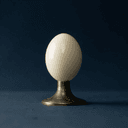
A small lit device in front of which an egg is placed to see its freshness and defects by transparency. Pennington codified its use for quality control.

A precise instrument for measuring temperature, essential for studying and setting the cold-storage thresholds for food preservation.
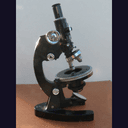
An instrument for observing the bacteria present in milk or food. An everyday tool for the bacteriologist that Pennington was.
📷 CC BY 2.0 · Wikimedia Commons ↗
An insulated piece of furniture holding a block of ice, used in homes before the electric refrigerator. Pennington advised the public on its proper use.
📷 CC BY-SA 2.0 · Wikimedia Commons ↗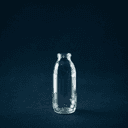
A sealed, sterilizable container that became the standard for distributing safer milk thanks to the hygiene standards Pennington helped establish.
School Curriculum
Vocabulary & Tags
Key Vocabulary
Tags
Daily Life
Morning
At the laboratory from early morning, Mary puts on her lab coat and prepares her samples: milk, eggs, poultry. She takes specimens, cultures bacteria, and meticulously records temperatures in her observation notebooks.
Afternoon
The afternoon is devoted to measurements and tests: microscope observation, checking the freshness of eggs with a candling lamp, and sometimes field inspections in cold-storage warehouses or railway cars.
Evening
In the evening, she writes reports and bulletins for the USDA or the industry, prepares lectures, and corresponds with engineers and merchants to spread good preservation practices.
Food
As an urban middle-class woman of the early 20th century, she benefits precisely from advances in preservation: pasteurized milk, eggs and meats kept better in the cold, fruits and vegetables transported by rail.
Clothing
She wears the plain, strict outfits of the professional women of the time — long dresses, high-collared blouses — covered at work by a white laboratory coat.
Housing
She lives in an urban setting, in Philadelphia and then New York, in homes equipped with a domestic icebox before the spread of electric refrigerators.
Historical Timeline
Period Vocabulary
Liens externes & ressources
Références
Œuvres
Doctorat de chimie (University of Pennsylvania)
1895
Laboratoire d'analyses cliniques et bactériologiques de Philadelphie
1901
Normes bactériologiques d'inspection du lait
vers 1904
Direction du Food Research Laboratory de l'USDA
1908
Normes de la chaîne du froid pour œufs, volailles et lait
1908-1919
Amélioration des wagons frigorifiques
vers 1913
Eggs (livre)
1933