Imaginary interview with Mary Kenneth Keller
by Charactorium · Mary Kenneth Keller (1913 — 1985) · Technology · Sciences · 5 min read
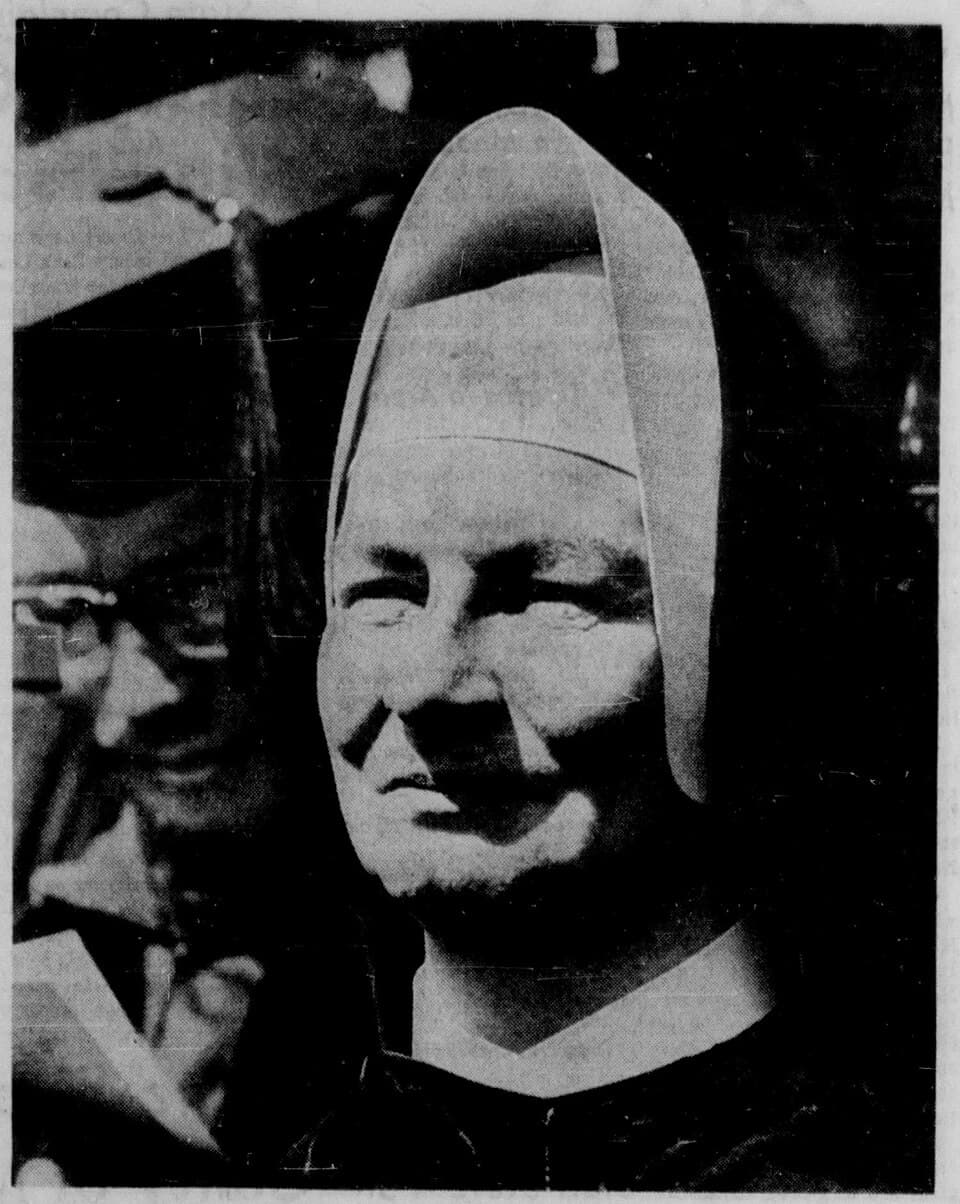
Dubuque, Iowa, an afternoon in the late 1970s. In a small office at Clarke College adjoining the computer lab, Sister Mary Kenneth Keller receives us between classes. On her desk: a programming manual, a few punched cards, and, placed near the window, a rosary.
—How did you come to mathematics, and then to this young science barely called 'computer science'?
I followed a slow path, that of a woman born in Cleveland in 1913, who entered the Sisters of Charity of the Blessed Virgin Mary before knowing what a calculating machine was. Numbers first held me: a bachelor's from DePaul in Chicago, then a master's in mathematics and physics. When I discovered that one could make a machine reason, I felt arithmetic was scaling up. Mathematics had taught me rigor; the computer taught me that this rigor could be embodied in metal and pulses. I never felt a break between the blackboard and the calculator: only an extension, the same quest for order carried out with new tools.
The computer taught me that rigor could be embodied in metal and pulses.
—Do you remember the day you were allowed into the Dartmouth computer center, a place then forbidden to women?
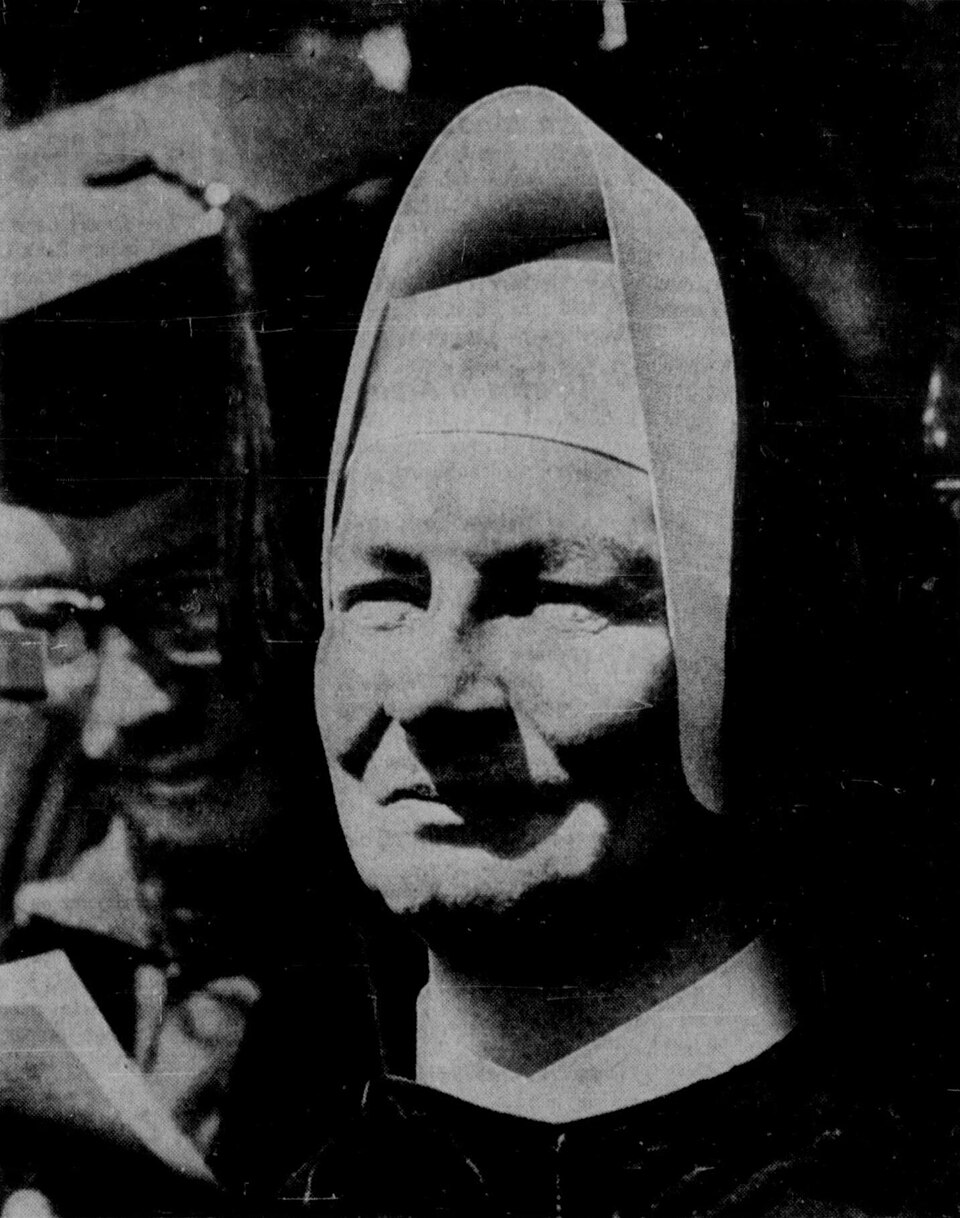
I was granted that favor, and the word is exact: an exception. At Dartmouth, in New Hampshire, women had no business in the machine room. They bent the rule for me in 1964, because they needed hands and minds for the language they were developing. I entered in my religious habit, which surprised many. I did not feel like a pioneer that day — I felt tolerated, which is not the same thing. But you sit down, you program, and the work eventually asserts its own authority. A punched card does not ask whether the one who coded it is a woman or a sister.
A punched card does not ask whether the one who coded it is a woman or a sister.
—That language you worked on, BASIC, what exactly were you trying to achieve?
John Kemeny and Thomas Kurtz wanted something simple, almost scandalous at the time: that a student who had never seen a machine could, in a few hours, give it an order and see it obey. We sought clarity, not expert performance. Other languages were like grimoires reserved for engineers; BASIC was to fit in a slim manual a beginner could read without fear. I contributed with this conviction ingrained in me: a tool that excludes most people has not fulfilled its function. Making programming accessible was not weakening it; it was opening it up. And a machine you can learn to command ceases to be an oracle and becomes an instrument.
A tool that excludes most people has not fulfilled its function.
—In 1965, you earned one of the very first doctorates in computer science in the United States. What remains of that moment?
My thesis, at the University of Wisconsin-Madison, was on inductive inference applied to computer-generated patterns — how a machine can guess a rule from examples. I am sometimes presented as 'the first' female Ph.D. in computer science in the country. I am wary of that superlative: a certain Irving Tang defended around the same time, and historians will long argue over the exact order of minutes. That matters little to me. What mattered was that the subject itself now deserved a doctorate, that this discipline was recognized as a science in its own right. I have always thought that being 'first' only makes sense if you open a door for those who follow.
Being 'first' only makes sense if you open a door for those who follow.
—The same year, you founded a computer science department at Clarke College. Why was this teaching so important to you?
Because I saw a time coming when no one could ignore these machines. At Clarke College in Dubuque, I created in 1965 one of the first undergraduate computer science curricula, and I wanted it open to all disciplines. People found me eccentric: what good was teaching programming to a literature student, a future historian? I answered that the computer did not belong to engineers any more than to anyone else. It is a tool for making information accessible, and information has no disciplinary boundaries. A poet who understands what a machine can sort, compare, retrieve, does not think his craft less well — he thinks it with one more instrument.
The computer did not belong to engineers any more than to anyone else.
—Twenty years at the head of that department: what did you hope to pass on to your students?
Less a technique than a way of seeing. Languages will change, machines will shrink — I saw the microprocessor arrive, then those small computers people were beginning to talk about for schools. What remains is the ability to break down a problem into clear steps a machine can follow. I spent my afternoons in the lab, leaning over terminals, correcting programs line by line with young people who initially thought the thing impossible. Seeing that confidence born in them was worth all the theorems. I also participated in the movement encouraging small computers in education, convinced it was not a fad of academics but the very future of transmitting knowledge.
—Concretely, what was it like working on those machines in the 1960s?
It required almost monastic patience, which did not displease me. You wrote your program, then translated it into punched cards — cardboard with holes that you stacked carefully, because a card inserted backwards and everything collapsed. The mainframe occupied an entire room, a machine shared by several people through time-sharing: each at their terminal, we grabbed a few seconds of the common computer. The teleprinter replied by hammering its lines onto paper, and that clicking had something of a dialogue. You did not see the machine think; you read its printed answer, like a letter. That slowness forced you to think before acting — a virtue that speed might one day make us forget.
The clicking of the teleprinter had something of a dialogue.
—You spoke of the machine as an interlocutor. Did you go so far as to attribute a form of thought to it?
I reflected on it, yes, and I even wrote it in my own way: 'For the first time, we can now mechanically simulate the cognitive process. We can conduct studies in artificial intelligence.' I did not say the machine thought like us — I said it offered us a mirror to study thought itself. My thesis already sought how a machine guesses a rule from patterns. That did not trouble my faith at all: understanding how reasoning works is still admiring the work of creation. The machine does not replace the mind; it holds out to us a sketch, imperfect and fruitful, to meditate upon.
It offered us a mirror to study thought itself.
—How did the nun who took vows in 1940 and the cutting-edge scientist coexist within you?
Without conflict, despite what one might imagine. My days began with prayer and Mass, as consecrated life requires; they continued in the lab among the terminals, and ended with my community for prayers and the communal meal. In the morning I told my rosary, in the afternoon I corrected programs: the same attention, turned toward two different objects. I took my vows in 1940 knowing I was dedicating my life; I did not imagine it would involve calculating machines, but I saw no betrayal. Serving knowledge and making it accessible to all has always seemed to me a very concrete form of charity.
In the morning I told my rosary, in the afternoon I corrected programs: the same attention.
—Your religious habit in a computer lab: wasn't that a disconcerting image, even for you?
It amused visitors, I admit. A Sister of Charity in habit, leaning over a mainframe, fit no expectations. That habit was also simplified over the course of Church reforms in the 1960s, so it stood out a bit less. But I never tried to hide it to blend in with the engineers. It said who I was, and reminded that these machines belong to no caste. If a nun from Iowa could program, then anyone could — a history student, a young girl thought meant for something else. My incongruous presence was, in its own way, an argument.
My incongruous presence was, in its own way, an argument.
This imaginary interview was generated by artificial intelligence from sources documented in Mary Kenneth Keller's profile. It dramatises what the figure might have said based on what we know about them, but does not constitute attested historical testimony. For primary sources and factual documentation, refer to the full profile.