Imaginary interview with Matilda of Tuscany
by Charactorium · Matilda of Tuscany (1040 — 1115) · Politics · Military · Spirituality · 6 min read
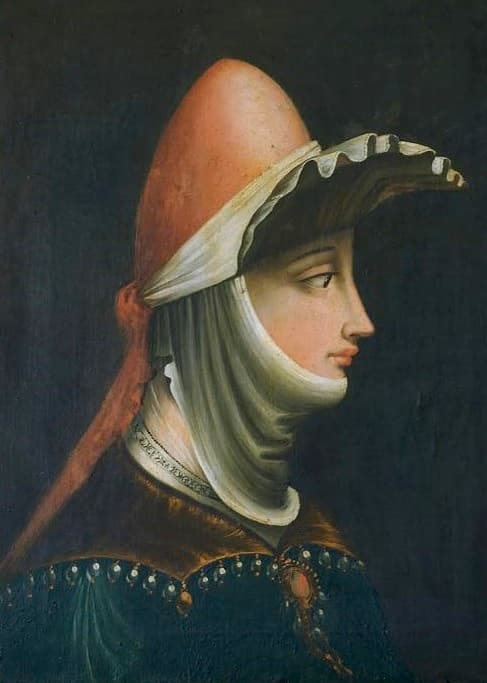
January, somewhere on the rocky spur of the Apennines. The wind whistles against the walls of Canossa Castle, and in a low room heated by a meager fire, a woman in her sixties receives us, upright under her veil, a silver cross around her neck. Countess, warrior, ally of the popes: Matilda of Tuscany speaks softly, but every word weighs like a sealed charter.
—Take us back to the winter of 1077. What happens when you are told that the emperor is at the foot of your walls?
I am told that a man waits at the gate, barefoot in the snow, dressed in the coarse wool of penitents. That man is Henry IV, King of the Romans, the most powerful prince of Christendom. I am then hosting Pope Gregory VII, and it is at my table, between these two iron wills, that everything plays out. For three days, the emperor stays outside, fasting and praying, before they open to him. I have never witnessed a more terrible nor more just spectacle: seeing the power of the century bend the knee before the power of Saint Peter. That day, my castle was no longer a stone fortress, but the very threshold where the temporal world came to ask forgiveness.
Seeing the power of the century bend the knee before the power of Saint Peter.
—It is said that you served as an intermediary between the pope and the emperor. How did you manage that role?
I did not just open my doors, I pleaded. Henry is my relative, and Gregory my father in faith; I had to go from one to the other, carry words, calm anger, obtain absolution before blood was shed. Hugh of Cluny supported me in this intercession. People think a countess does nothing but embroider by the fire; in truth, this mediation of January 1077 cost me more sleepless nights and cunning than any battle. Canossa has been engraved in men's memory as a humiliation; I lived it as a negotiation where I had, on one hand, to save the pride of a king and, on the other, to yield nothing of the Church's cause.
—You commanded armies. How does a woman come to ride at the head of her troops?
Because my lands did not defend themselves, and I was not about to entrust them to men who would hesitate to die for them. At Sorbara, in 1084, my people scattered the imperial forces when everyone told me the battle was lost. I then donned the chainmail, greaves, sword at my side, and rode like a knight. It astonished the chroniclers, who had never seen a lady lead battles. But war in northern Italy was not a courtly game: it was defending the road to Rome and the patrimony of Saint Peter against those who wanted to impose a false pope. A countess who owns castles must know how to hold a wall as well as a seal.
A countess who owns castles must know how to hold a wall as well as a seal.
—What did you say to those who found it scandalous to see a woman in armor?
I let them talk. Slander does not defend a fortress. I lost battles and castles, especially when Henry entered Rome and installed his antipope Clement there; I also won victories that no man expected of me. My armor was not a disguise of pride, but the garb of my duty: God had given me these lands, and with them the charge to protect them. When my father Boniface was murdered and I found myself the sole heir of Tuscany and Lombardy, there was no man's hand left to carry the sword in my place. So I carried it. People admire builder kings; let them judge me by what I managed to keep.
—Your name is linked to that of Gregory VII. What united you with this pope?
A common cause, and a friendship such as few are born. We wrote to each other tirelessly; his letters to me fill his Registrum. He fought simony, that shameful trade of bishoprics, and the marriage of priests; he wanted the Church to be free, chosen by God and not bought by the powerful. I placed at his service what a great lady possesses: my money, my soldiers, my fortresses. I have been called the armed arm of the Gregorian Reform, and I bear that name without blushing. To defend Saint Peter at the cost of one's goods and one's life, that is what he expected of the faithful; I wanted to be among those who did not content themselves with praying, but who paid.
I wanted to be among those who did not content themselves with praying, but who paid.
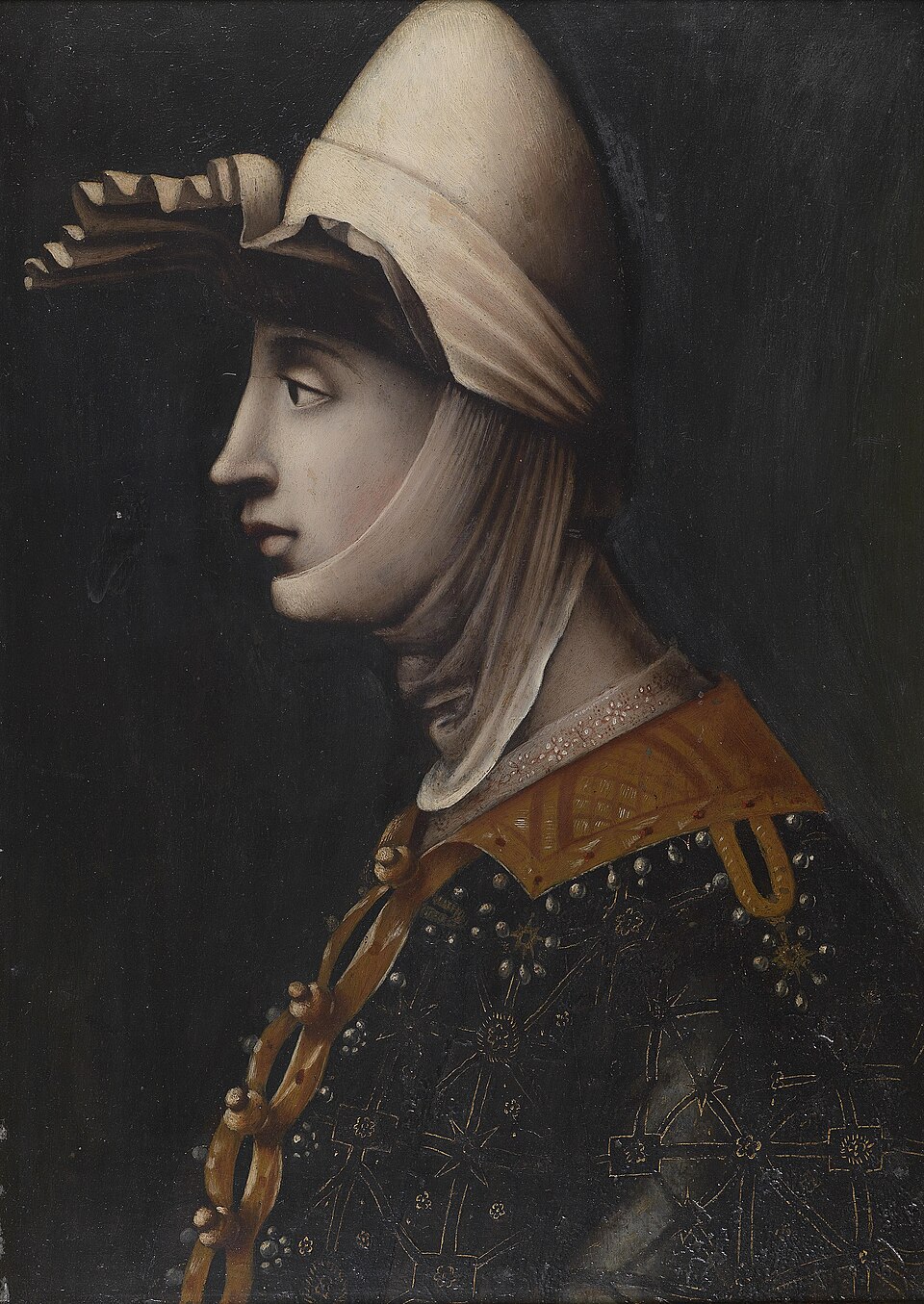
—Beyond war, you supported many monasteries. Why give so much to the Church?
Because a kingdom does not stand by its walls alone, but by its prayers. I restored ruined abbeys, protected the clergy who embraced reform, lavished goods on the Abbey of Polirone, near Mantua, which my family cherished. That is where I wished to rest when my time came. To found a monastery, restore a church, have a holy book copied: these are battles too, quieter ones, but they last long after swords have rusted. The reforming bishops found refuge and bread with me when the emperor persecuted them. I believe one does not defend the faith only by the sword; one nourishes it, shelters it, builds it stone roofs so that it may cross the centuries.
—You made one of the largest land donations to the papacy of your time. What drove you to do that?
I gave everything I owned: Tuscany, Emilia, my lands in Lombardy, thousands of square leagues bequeathed to the Roman Church, in 1102 and then at my death. A notary drafted the charter in Latin, on parchment, and I affixed my comital seal. Without an heir of my blood, I was not going to let these lands return to the Empire that had so fought the cause of Saint Peter. Better that they serve God than the pride of princes. I knew men would dispute this donation; I did not know they would quarrel over it for centuries. But a lady does not give for the peace of future jurists: she gives according to her conscience, and leaves the rest to God.
Better that they serve God than the pride of princes.
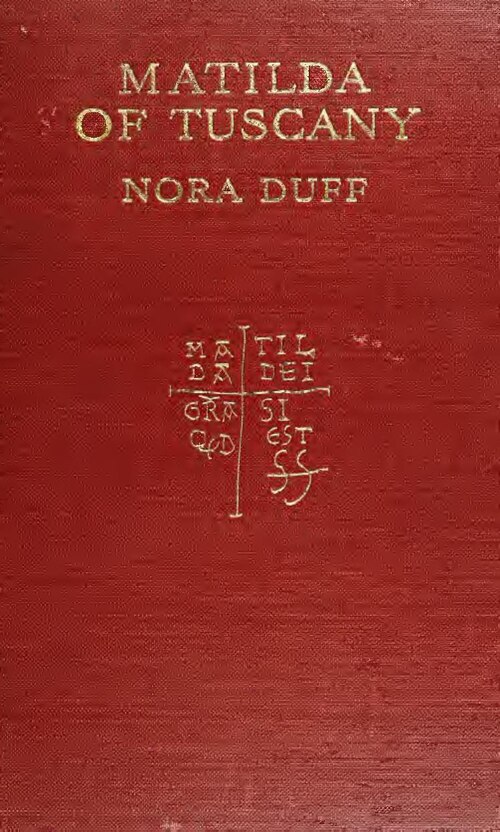
—So you knew this act would be contested. Did that not hold you back?
Nothing a great person does remains uncontested. The Matildine Donation touched too many interests to be accepted without noise: the Empire claimed those lands belonged to it, the Church that they were mine to give. I was, it is true, both vassal of the Emperor for certain fiefs and suzerain of many Italian lords; this double allegiance made any bequest thorny. But I did not govern for forty years to shrink from a legal difficulty. I signed what my faith commanded, and sealed the parchment. Let clerics and emperors tear each other apart over the words afterward: I will have placed my inheritance in the hands where I wanted it. The judgment of the living matters less to me than that of above.
—Widowed very young, you long refused to remarry. Why hold so tightly to your freedom?
I was widowed at twenty-three, with no living child, sole mistress of vast lands. Taking a husband meant risking handing over my authority, my armies, my decisions. I preferred to remain free in my word and my sword. Much later, at nearly fifty, I consented to marry Welf V of Bavaria, a boy of seventeen — not out of tenderness, but to bind my cause to that of the Empire's enemies. This loveless, childless union soon dissolved, like a pact that had fulfilled its purpose. I was judged harshly for not seeking the comfort of a home; but a woman who rules learns quickly that her freedom is worth more than the comfort of a husband.
A woman who rules learns quickly that her freedom is worth more than the comfort of a husband.
—You are said to have had a rare education for a laywoman. What place did learning hold in your life?
A place that few ladies of my rank granted it. I read Latin fluently, which allowed me to write to Gregory VII myself and understand texts that others had translated for them. I kept sacred manuscripts that I had copied for my chapels, and in the evenings, with my clerics, we read the Scriptures and letters from Rome. Without this knowledge, how could I have held my own against the scholars of the imperial court, or weighed every word of a charter? Learning was my other armor. A woman without letters always depends on another's mouth; I wanted to read with my own eyes what God and the pope wrote to me, and to reply with my own hand.
Learning was my other armor.

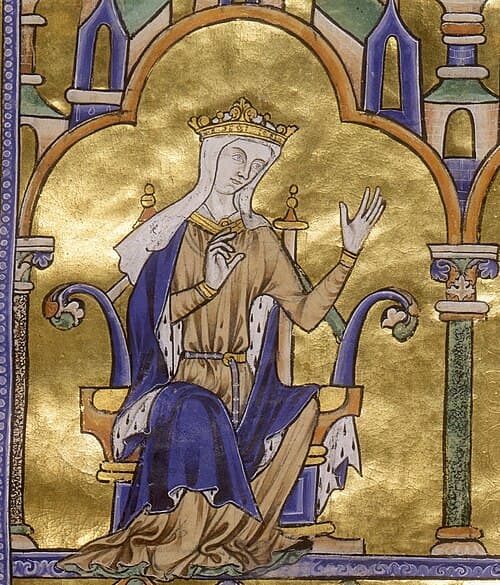
This imaginary interview was generated by artificial intelligence from sources documented in Matilda of Tuscany's profile. It dramatises what the figure might have said based on what we know about them, but does not constitute attested historical testimony. For primary sources and factual documentation, refer to the full profile.