Imaginary interview with Mistinguett
by Charactorium · Mistinguett (1875 — 1956) · Performing Arts · Music · 6 min read
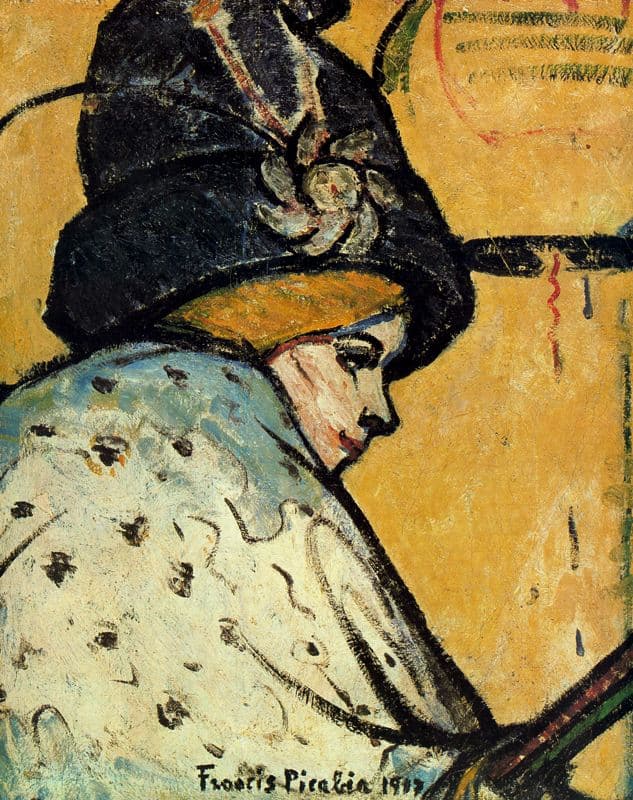
Dressing room at the Casino de Paris, one evening in 1951, a few weeks after the Légion d'honneur. Amid hanging feather headdresses and jars of cream, Mistinguett agrees to tell her story, cigarette extinguished at her fingertips. She speaks quickly, a mischievous glint in her eye, as if the curtain were about to rise.
—How was the character of Mistinguett born from little Jeanne d'Enghien?
I was christened Jeanne Florentine Bourgeois, in Enghien-les-Bains, in a family where we counted every penny. As a kid, I sold flowers near the Gare Saint-Lazare, and that's where a theater director spotted my nerve more than my voice. The name, I took it from an old tune, La Mistingue — I twisted it until it sounded like a pirouette. When I first went onstage in a café-concert, around 1895, I understood one thing: the audience in the provinces or in Montmartre, it's the same beating heart, and you had to speak to them as equals. I never played the grand lady. I played the girl of the people, because I was one, and that's what saved me.
I never played the grand lady. I played the girl of the people, because I was one.
—Do you remember meeting Maurice Chevalier?
1909, at the Moulin Rouge. They introduced me to a lanky young man, his hat askew, with a suburban accent he never quite lost — Maurice. Onstage, it clicked right away: a spark, a shared insolence, that quick-wittedness that electrified the Montmartre crowd. We were partners on the boards and in private, and the audience loved guessing what was real and what was an act. When we split, a few years later, the gossip columns feasted on it for months — they attributed all sorts of things to me, tears, tantrums. I never denied much: in this business, a little mystery is better than a confession. Maurice, he headed off to America. I stayed faithful to Paris.
In this business, a little mystery is better than a confession.
—Why did you have your legs insured for such a sum?
Because they were worth a show all by themselves! I signed a policy for five hundred thousand francs with a company in London — enough to buy an entire building. You should have seen the journalists' faces: the story went around the world in a week. People laughed, yet they came to watch. Onstage, I pampered my legs like others pamper their voice: silk stockings made specially for me, raking light, a step that made them look even longer. In the morning, I massaged them myself with expensive creams before even touching my mail. A music-hall woman, you see, turns what she has into capital. My legs weren't an ornament: they were my business, and my legend.
My legs weren't an ornament: they were my business, and my legend.
—What did the revue star costume mean to you?
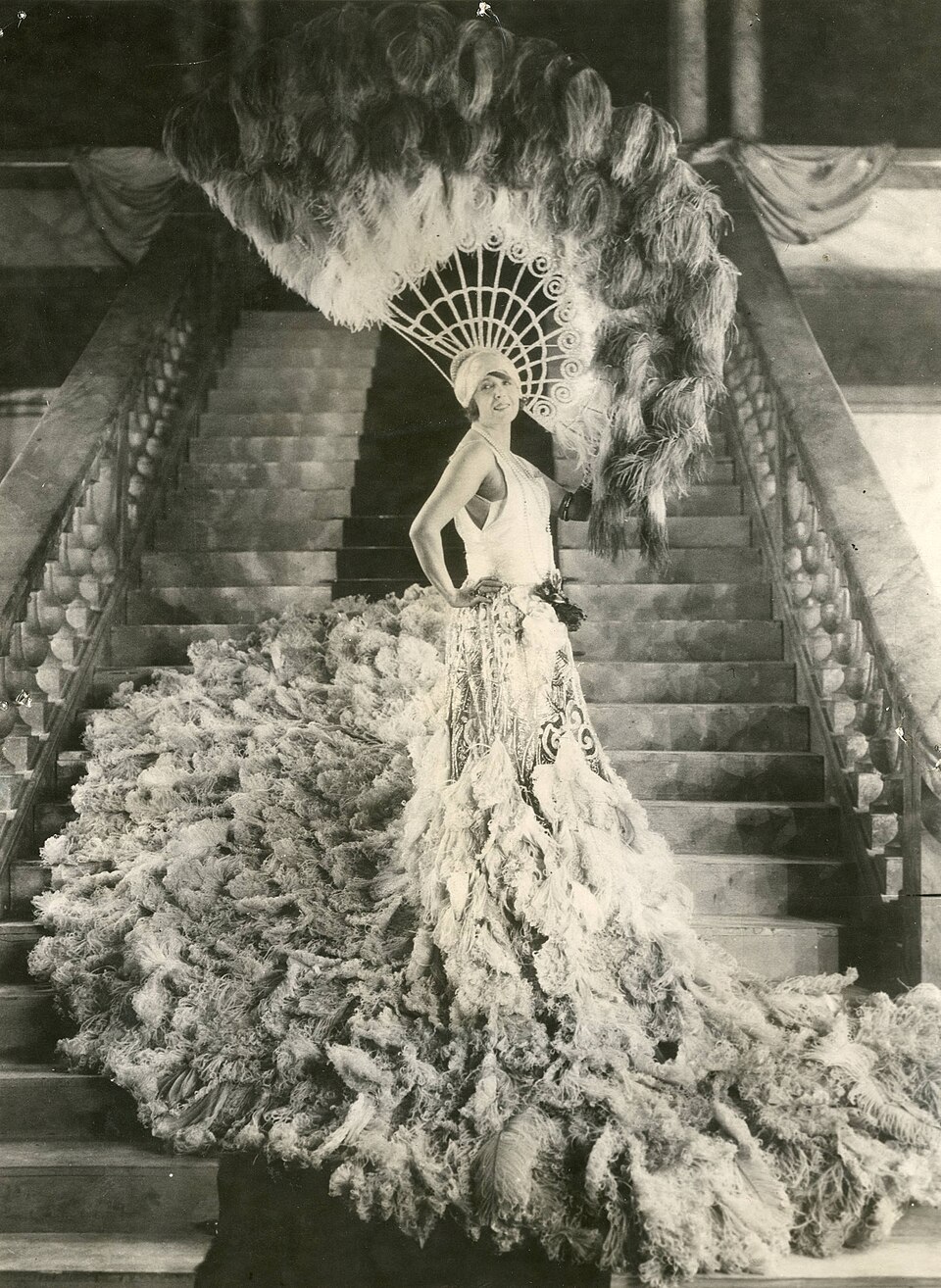
Both armor and madness. A single revue star costume combined sequins, rhinestones, furs, fabrics that cost a fortune, and you needed dozens for just one revue. The heaviest part was the ostrich feather headdress — sometimes a meter tall, several kilos on your head. Believe me, walking down a staircase under that without trembling isn't something you improvise: you learn to carry the weight like a queen wears her crown, chin steady, smile free. The audience saw lightness; I felt every feather in my neck. That's the job: giving the illusion that everything is easy while you work like a beast of burden under the spotlights.
You learn to carry the weight like a queen wears her crown.
—What were rehearsals like for a grand spectacle revue?
We rehearsed in the afternoon, four, five, six hours sometimes, in the dust of the Folies Bergère. I was feared, I admit. For a revue like Paris en fleurs, in 1925, we had to coordinate hundreds of costumes, lavish sets, girls who had to fall at the right quarter-second in a tableau vivant. I would redo a movement twenty times, a vocal effect thirty times. Backstage, they called me the boss, and not always fondly — but on opening night, when everything held together, they understood why. A revue star doesn't just lead the show, she leads the women around her. I demanded perfection because the audience paid full price and couldn't care less about our fatigue.
A revue star doesn't just lead the show, she leads the women around her.
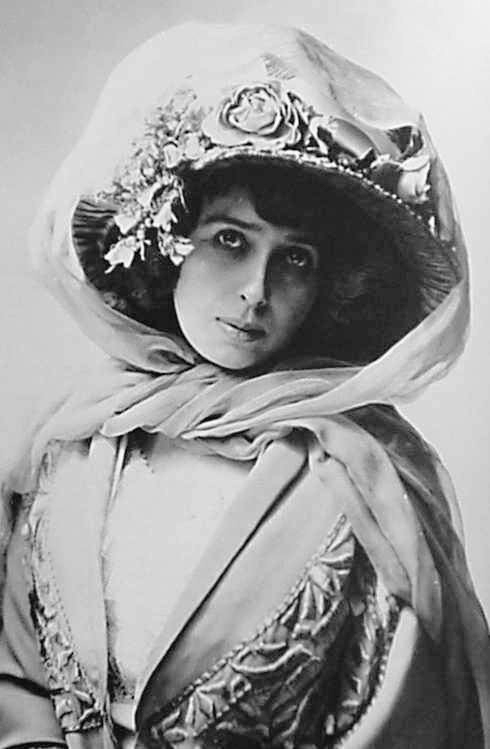
—What role did posters play in your legend?
Huge. Before you even entered the hall, you'd already met me on a Morris column. Gesmar, that brilliant young designer who died too soon, invented my silhouette on the lithographed posters: the fine line, the upright feather, the leg forward, all of Paris plastered on its walls. A poster is a show before the show — what we called a curtain-raiser for the passerby's eye. It promises, it entices, it fixes an image in people's minds for ten years. I looked at those walls and told myself that the little flower seller from Saint-Lazare had become a drawing plastered all over the city. There are more discreet glories; mine could be read from across the boulevard.
A poster is a show before the show.
—How did the microphone change the way you sang?
You can't imagine what it was like before, projecting a song to the back of a thousand-seat hall with nothing but your lungs. From the 1920s, the amplified microphone arrived in big venues, and everything changed. Suddenly, I could whisper a phrase and have it heard in the last row of the gods. I was among those who learned to tame it early: don't shout into it, brush it, play with intimacy like a new costume. Mon Homme wouldn't have had the same rawness without that wire carrying the tremor of my voice to people's tears. People think music-hall is all noise. Sometimes, it's a breath that a machine carries straight to the heart.
Suddenly, I could whisper a phrase and have it heard in the last row of the gods.
—Tell us about the night you created 'Mon Homme'.
1920, at the Casino de Paris, in the revue Paris qui jazz. Music by Maurice Yvain, lyrics by Willemetz and Charles — a song of passionate and resigned love, the story of all women who love badly and love anyway. I sang it simply, leaning against a cardboard streetlamp, without the feathers this time. And something rare happened: the audience held its breath, then I saw handkerchiefs. The next day, Le Figaro wrote that I had sung with 'heartbreaking sincerity' — I kept the clipping. That song crossed the Atlantic, they covered it over there as My Man. But the real Mon Homme, the one that makes you cry, was born that night, on that stage in the 9th arrondissement.
The story of all women who love badly and love anyway.
—In your opinion, what distinguished a real music-hall star?
The connection, nothing else. You can have the most beautiful voice, the most beautiful fees, and leave the audience cold. A star is someone the public needs, not just someone they admire. I gave them a joyful Paris: Ça c'est Paris in 1926 became their anthem, the one they hummed on the métro. I told a reporter from Paris-Soir one evening that music-hall was my religion and the stage my altar — I still believe it. Every night, I gave everything, and those simple people gave it back a hundredfold. That's why on the night of the Légion d'honneur, I dedicated my medal to the little people of France: without them, I'm just an empty costume.
A star is someone the public needs, not just someone they admire.
—At over seventy-five, why do you still refuse to retire?
Because you don't leave the stage: it's the stage that leaves you. I say it to anyone who'll listen, especially the young who think I'm stubborn. I went on tours past eighty, from town to town, with my suitcases and tired feathers, and at every curtain rise the stage fright came back like I was twenty. Doctors lecture me, impresarios worry — I know that the day I truly stop, it won't be out of wisdom, it will be because my body has decided for me. As long as my legs carry me and the audience reaches out, I'll walk down the staircase. To retire voluntarily, for a revue star, would be to die twice.
You don't leave the stage: it's the stage that leaves you.
—How do you imagine you'll be remembered?
Oh, I don't fool myself about a statue! If I indulge in dreaming that someone might read about me in a century, I'd want them to remember not my feathers, but my stubbornness. I wrote my memoirs, Toute ma vie, two years before you asked me these questions — not for posterity, but to say where I came from: the Gare Saint-Lazare, the flowers, the nerve. Maybe they'll remember my legs insured in London, or Ça c'est Paris. So much the better, they're nice calling cards. But deep down, what I did best was to prove that a girl from nothing, through hard work and love for the public, could hold the biggest stages from the Belle Époque to the Liberation. The rest is rhinestones.
I'd want them to remember not my feathers, but my stubbornness.
This imaginary interview was generated by artificial intelligence from sources documented in Mistinguett's profile. It dramatises what the figure might have said based on what we know about them, but does not constitute attested historical testimony. For primary sources and factual documentation, refer to the full profile.