Imaginary interview with Ngô Quyền
by Charactorium · Ngô Quyền (897 — 944) · Military · Politics · 6 min read

We are at the beginning of the year 939, within the earthen ramparts of Cổ Loa, where the ancient spiral walls of the kingdom of Âu Lạc still hold the memory of the kings of old. Ngô Quyền has just established his court here; he receives us under a bamboo awning, the river still close in his words. The man speaks low, like someone who has long listened to the rising tides.
—Before your victory, under what yoke had your country lived for so long?
For generations, our ancestors bowed under what we call the Bắc thuộc, the Northern subjection. Magistrates from China held our districts, our granaries, our roads; they called our land An Nam, as if we had no name other than the one they lent us. Then came the Nam Hán, that kingdom born near Canton, greedy to reclaim what the house of Đường had let slip. My grandfather, my father, were among those hào trưởng, district notables, who kept the ways of the country under foreign law. One grows up thus, knowing that Heaven has placed above us an authority that one does not overturn with a word, but with long patience. I waited until patience ripened.
They called our land An Nam, as if we had no name other than the one they lent us.
—Who, before you, had dared to loosen this Northern grip?
I am not the first to have raised his head, and I say this without false modesty. Around the year 905, a man of our people, Khúc Thừa Dụ, took advantage of the Đường disorder to drive out their officials and proclaim himself governor, Tiết độ sứ. His son, then his grandson, held the office as best they could, until the Southern Han returned to take it all back. Then rose my father-in-law, Dương Đình Nghệ, who gathered three thousand adopted sons and drove the enemy out of the country. My victory on the river is not a beginning born of nothing: it is the last link in a chain of stubborn people. Heaven long prepares those it intends to bring to fruition.
—How did you enter the service of Dương Đình Nghệ?
I was born at Dương Lâm, in a house of district chiefs; those lands shape men who know how to command a hundred arms. When Dương Đình Nghệ had driven out the Southern Han and made himself governor, he gave me his daughter and entrusted me with the country of Ái Châu, toward the south, what you would call Thanh Hóa. That was no small thing: to govern a march, raise men, guard the frontier, learn the weight of an order given that costs lives. I was his son-in-law and his lieutenant, bound to him by the blood of my marriage as much as by duty. One does not betray such a man. That, a traitor of Phong Châu would soon forget to his cost.
—Do you remember the day you learned of your father-in-law's death?
Kiều Công Tiễn, a notable of Phong Châu whom Dương Đình Nghệ regarded as his own, assassinated him to take his place. A man who kills the one whose rice he ate cuts himself off from the whole country: no one followed him anymore, and in his fear he did what no son of our land should have done—he called the Nam Hán to his aid. In that autumn of 938, I gathered my forces from Ái Châu and marched north. I struck him down before his overseas masters arrived. Avenging my father-in-law and unifying command were but one and the same task; one does not fight the great army of the South while leaving a mad dog biting at one's rear.
A man who kills the one whose rice he ate cuts himself off from the whole country.
—On the eve of the clash, what did you say to your generals about the approaching enemy?
The sovereign Lưu Cung was sending his own son, Lưu Hoằng Tháo, at the head of his fleet. I gathered my captains and spoke to them without pretense: this prince, I said, is but a young man without experience, leading crews worn out by a long sea crossing, and Kiều Công Tiễn's death has deprived him of any helping hand on our shores. A leader who comes from afar, without an ally to welcome him, enters already half-defeated into waters he does not know. I did not despise the enemy—despising the enemy loses armies—but I wanted my men to see clearly where Heaven had already tilted. A leader's confidence, when it rests on true reasons, spreads through the ranks like the tide in the estuary.

—How did you prepare the riverbed to receive that fleet?
I had chosen the estuary of the Bạch Đằng, where the sea rises and falls with a force that few outsiders know how to read. There, I had wooden stakes sharpened and their heads tipped with iron, then planted in a hidden forest in the riverbed. At high tide, the water covers them completely: a pilot from Canton sees only a peaceful sheet where to steer his great ships. All the secret lies in the patience of the water. We worked for days, legs in the mud, setting this trap that no one should guess. It is not the most numerous arms that prevail on the river, but he who knows the hour when the sea betrays those who ignore it.
At high tide, the water covers them completely: the pilot sees only a peaceful sheet.
—How did you lure the enemy ships over this trap?
It is not enough to set the snare; you must also lead the beast into it. At high tide, I launched my light war ships, fast and lightly laden, to provoke the Nam Hán fleet and harass it. Then we feigned a rout, rowing upstream like men seized with fear. Lưu Hoằng Tháo, young and eager for glory, threw himself in pursuit over the forest of submerged stakes. Then the sea began to retreat—it alone decided the hour—and the iron heads slowly rose to the water's surface. The great Southern hulls were gutted, caught, capsized. That day I understood that a well-played retreat is worth a thousand charges, provided you have Heaven and the tide on the same side.
—What became of the prince who commanded that fleet?
Lưu Hoằng Tháo, the son of Lưu Cung, perished in the disaster he had rushed to meet. Carried by his haste over my stakes, he was caught in the rout of his own ships and did not return; his attempt at reconquest sank with him. It was later said that the father, Lưu Cung, lost through excessive ambition what a little moderation would have preserved for him. I take no cruel vanity from it: a prince whom his sovereign father sends to the sea without an ally on the shore marches already to his doom. The river Bạch Đằng rendered its verdict, and that verdict was final. Thus ended, in a single tide, the last great effort of the North to put us back under the yoke.
—Why did you take the title of king rather than remain governor, like your predecessors?
My forerunners, from Khúc Thừa Dụ to my father-in-law, had contented themselves with the seal of Tiết độ sứ, military governor—a charge held in the name of a distant master. That is a borrowed authority. In the spring of 939, I wanted something else: I proclaimed myself Ngô Vương, king of the house of Ngô, and made my wife my queen. Taking that title was not a man's pride; it was cutting the thread that still tied us to the Northern court. A country that has only a governor admits it obeys elsewhere; a country that has its king affirms that Heaven has endowed it with its own mandate. I wanted that no one, after me, should have to ask the North for permission to exist.
A country that has only a governor admits it obeys elsewhere; a country that has its king has its own mandate.
—Why did you choose Cổ Loa as your capital, rather than the old seat of Đại La?
Đại La, on the Tô Lịch River, was long the seat where the Northern magistrates kept our accounts and our men; its walls still smell of foreign administration. I did not want to reign in the house of our former masters. I chose Cổ Loa, whose spiral ramparts were raised, it is said, by the kings of Âu Lạc, long before the North came. By placing my court there, I renewed the thread broken by a thousand years of subjection: I placed myself in the line of our sovereigns of old, not in that of the governors. A capital is not just a place to sleep; it is a silent word that the country hears. Cổ Loa said to all: we take back our history where it was torn from us.
—How did you give shape to this new, still fragile court?
A newly born kingdom must give itself forms, otherwise it falls back into the disorder of rival lords. I instituted a hierarchy of one hundred dignitaries, regulated the triều nghi, the court rites, and fixed the attire and insignia according to each one's rank. Do not let this seem vain ornament: when a man sees by the dress who commands and to whom he must show reverence, order sustains itself. In the morning, I received reports from the borders; in the afternoon, I held council with my captains; in the evening, the court followed the new rites within the enclosure of Cổ Loa. Building these customs was my second battle, less noisy than that of the river, but no less necessary—for stakes stop a fleet, never the anarchy of a country without rule.

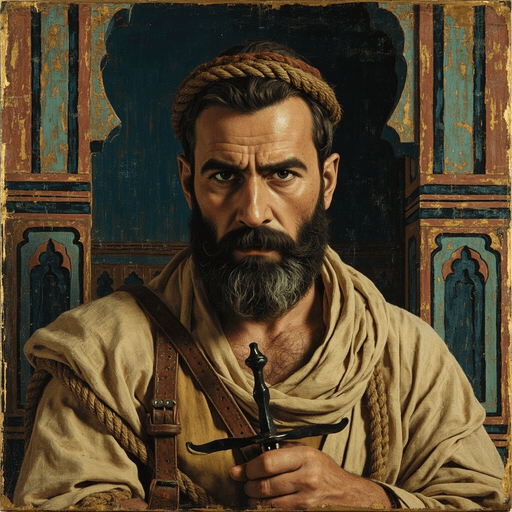
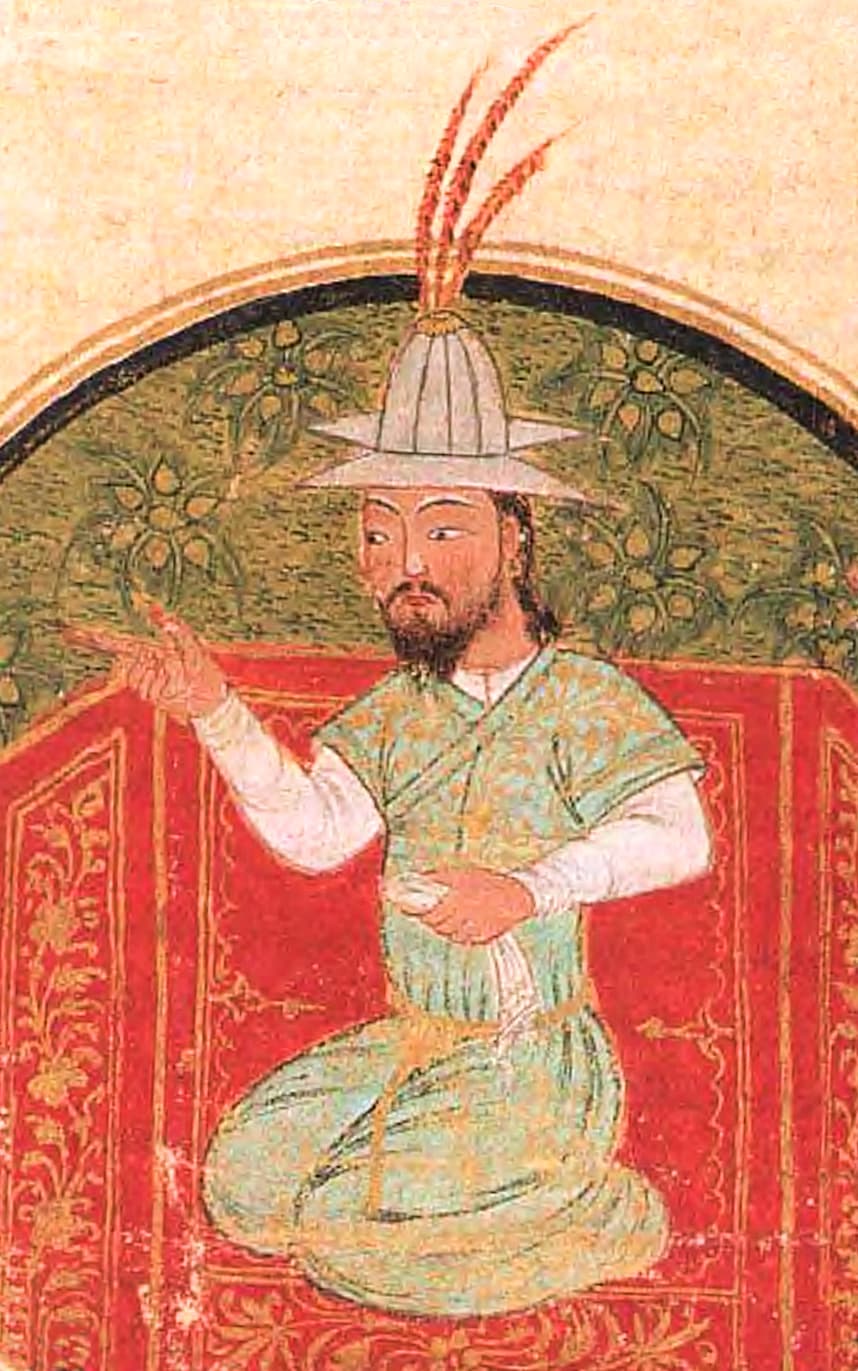
This imaginary interview was generated by artificial intelligence from sources documented in Ngô Quyền's profile. It dramatises what the figure might have said based on what we know about them, but does not constitute attested historical testimony. For primary sources and factual documentation, refer to the full profile.