Imaginary interview with Patsy Cline
by Charactorium · Patsy Cline (1932 — 1963) · Music · 6 min read
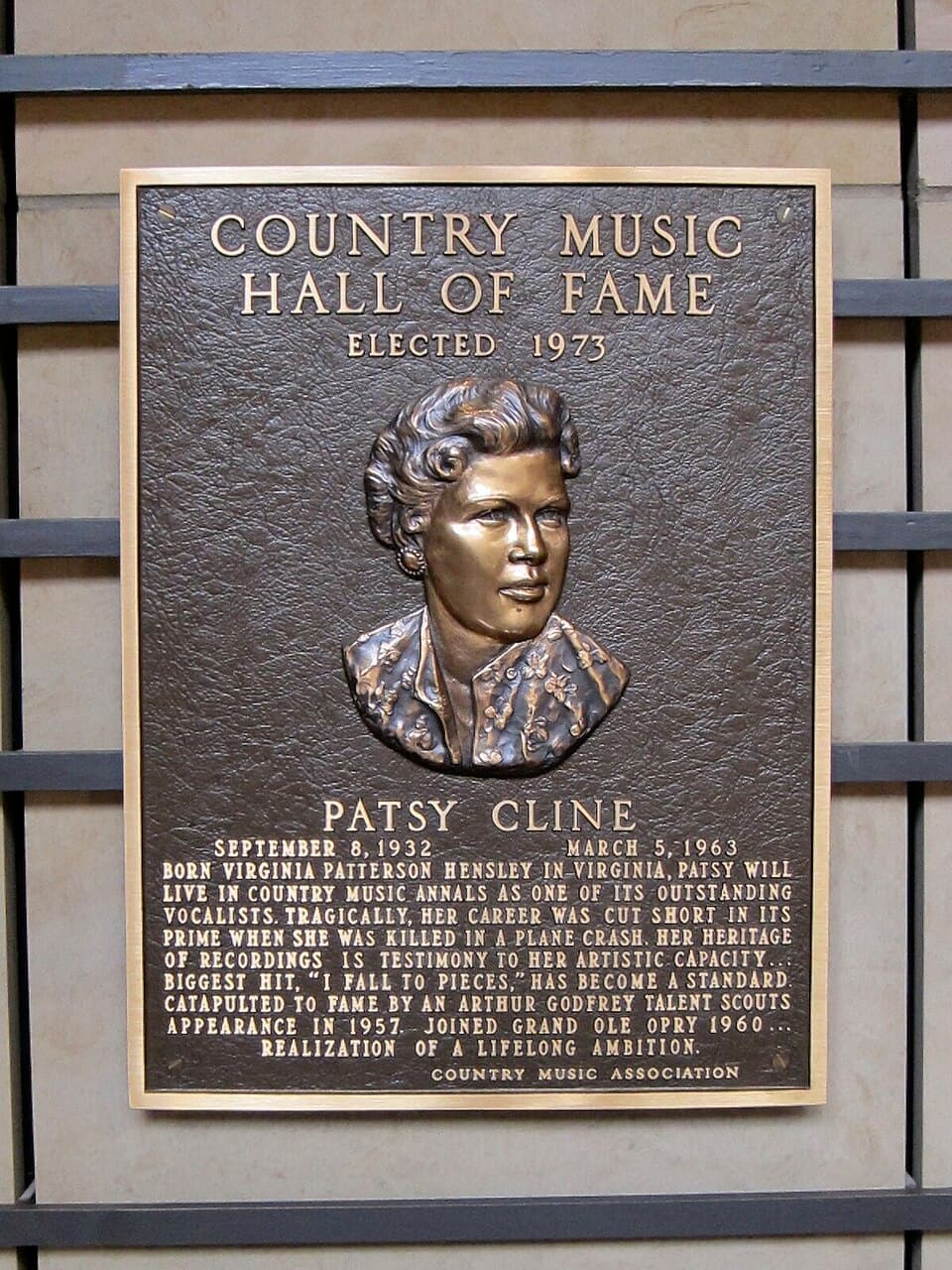
Nashville, an evening in the fall of 1962. In a dressing room at the Ryman Auditorium, smelling of warm dust and velvet, Patsy Cline removes her long gloves and sits near a mirror surrounded by bulbs. She speaks softly, with that Virginia accent that no cocktail dress has ever quite erased.
—How would you describe the night when all of America discovered your name?
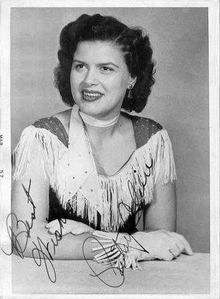
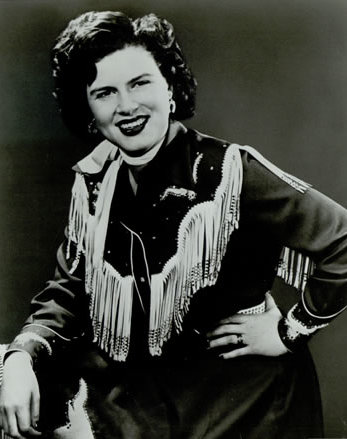
It was in January 1957, on the set of Arthur Godfrey's show, that famous talent contest the whole country watched on Monday nights. I had put on my fringed western dress, the one my mother had sewn for me, boots and all, because I still believed a country girl had to look like a cowgirl. I sang Walkin' After Midnight in front of that panel, and when the applause meter went wild, I knew something had shifted. The day before, I was singing in smoky honky-tonks for a few dollars; the next day, my face was known from Virginia to California. One song, just one, had pulled me out of the anonymity of small rural stages.
The day before I was singing for a few dollars; the next day, my face was known from Virginia to California.
—What did that song really mean to you at that moment?
Walkin' After Midnight, I sang it without believing in it at first, believe it or not. They handed it to me, and I thought it was too pop for a hardcore country girl. And then it did what no one expected: it climbed both the country charts and the pop charts, as if it refused to pick sides. That song taught me something I would never forget: the public doesn't care about the labels you put on a record. They want you to speak straight to their hearts. In Winchester, they always told me to stay in my place; that night, I understood that my place was everywhere a radio could hear me.
The public doesn't care about the labels you put on a record.
—Where does the name Patsy Cline come from, which isn't exactly your birth name?
I was born Virginia Patterson Hensley, into a working-class family in Winchester, Virginia, where we counted pennies at the end of the month. 'Patsy,' I carved it from my middle name, Patterson, because it sounded shorter, sharper under the spotlight. And 'Cline' was Gerald's last name, my first husband—I kept it even after our divorce, because it made a nice stage name and I wasn't going to give it back out of sentimentality. You forge an identity like you forge a song: you take what's lying around you and make something that stands up under the lights. A nobody girl who wanted to become somebody had to start by choosing a name.
You forge an identity like a song: you take what's lying around you and make something that stands up.
—What do you say to those who thought a woman was too stubborn in a man's profession?
Stubborn? I'd say mule-headed, and I'm proud of it. This business—labels, producers, radio directors—was run by men who decided which girl could sing what and when to shut up. Me, I swore, I smoked, I demanded what I was owed when they tried to cheat me on a contract—early on at the small Texas label Four Star Records, where they had tied me to shameful conditions. I once told a journalist, and I still believe it: 'I've always had to fight for everything. I was never handed anything. But I knew one day I'd make it, because I wouldn't stop until I did.' I was never given anything. I grabbed it all.
I was never given anything. I grabbed it all.
—How was that unique sound born that made you famous far beyond country?
It all happened at the Quonset Hut, Owen Bradley's studio in Nashville, a tin shack where you'd think they stored tractors. Owen was the architect of what they called the Nashville Sound: he stripped my songs of screechy fiddles and hick clichés, laying my voice over smooth orchestrations, strings, soft backing vocals. Around us, the session musicians of the Nashville A-Team, the best in the country, would finish a take in one night. On the album Patsy Cline Showcase, we found the formula: a big voice, spare accompaniment, and an elegance that belonged neither entirely to country nor entirely to pop. Owen taught me not to shout my pain, but to let it breathe.
Owen taught me not to shout my pain, but to let it breathe.
—How did you feel watching your songs cross the border between two musical worlds?
They called it the crossover, that word that scared country purists. With I Fall to Pieces, in 1961, I hit number one on the country charts and entered the pop Top 20 at the same time—a rare double for a woman of my kind. To some, I was betraying roots country; to me, I was simply opening a door. I always thought a sad song sung well could touch a housewife in Detroit as much as a farmer in Tennessee. Heartache knows no genre boundaries. I wasn't trying to deny where I came from; I just wanted my voice to get through the door of every home, on the airwaves and in the jukeboxes of drugstores.
Heartache knows no genre boundaries.
—Do you remember the circumstances under which you recorded Crazy?
How could I forget. In June 1961, a car accident left me with a lacerated forehead, broken ribs and a broken hip; for a while they thought I'd never get back on stage. A few weeks later, still crippled and full of painkillers, I went back to Owen Bradley's studio to record a ballad a young guy named Willie Nelson had just written. I couldn't stand, so I sang sitting down. Owen bent the whole session around my fractures, patient as a father. Crazy came out of that night, out of that pain I had to contain so I wouldn't break my voice. They say today it's one of the most beautiful songs ever recorded. Me, I mostly remember a broken woman who refused to go home without her take.
I couldn't stand, so I sang sitting down.
—Why insist on recording like that, with your body still in pieces, rather than waiting to heal?
Because a song doesn't wait for you. Crazy was there, ready, and I had learned in Winchester that you never put off till tomorrow what tomorrow might take away. Owen wrote in his studio logs that I was still on medication, but nothing would make me give up finishing the song in one night. There was pride in it, I admit, but mostly fear: fear that they'd think I was done, that they'd give my songs to someone else. In front of that microphone at the Quonset Hut, my broken ribs didn't matter anymore. I think you never sing as true as when you hurt somewhere and you decide to turn that pain into something people can keep.
You never sing as true as when you hurt somewhere and you decide to turn that pain into music.
—They say you've had strange premonitions lately. Is that true?
I'm not a woman to be ruled by superstition, but these past few weeks, something has been pressing on my chest, and it's not just my old ribs. I wrote to my friend Kathy Hughes in February, words I wouldn't have trusted to anyone else: 'I don't know what's wrong with me… I feel like something's getting ready to happen. I keep having these dreams.' Dreams that come back, always the same, where the road stops short. Maybe it's just the fatigue of touring, those chartered planes tossing us from city to city three times a week. Maybe. But when you've brushed death once on a night road, you don't quite listen to your dreams the same way.
When you've brushed death once, you don't quite listen to your dreams the same way.
—If people were still listening to you a century from now, how would you like to be remembered?
I never chased statues or gold plaques—leave that to those who come looking for me later. What I'd want is that they don't forget what happened when I stepped up to the mic. I once said it on WSM radio in Nashville, and maybe it's the only epitaph I ask for: 'I want to be remembered as a singer who gave it everything she had, every time she stepped in front of a microphone.' That the modest girl from Winchester gave everything, every night, without ever cheating. If in a hundred years a kid puts Sweet Dreams on a turntable and feels her heart tighten, then I'll still be alive, somewhere between two notes.
If in a hundred years a kid feels her heart tighten on one of my songs, then I'll still be alive between two notes.
This imaginary interview was generated by artificial intelligence from sources documented in Patsy Cline's profile. It dramatises what the figure might have said based on what we know about them, but does not constitute attested historical testimony. For primary sources and factual documentation, refer to the full profile.