Imaginary interview with Shiva
by Charactorium · Shiva · Politics · Spirituality · Mythology · 7 min read
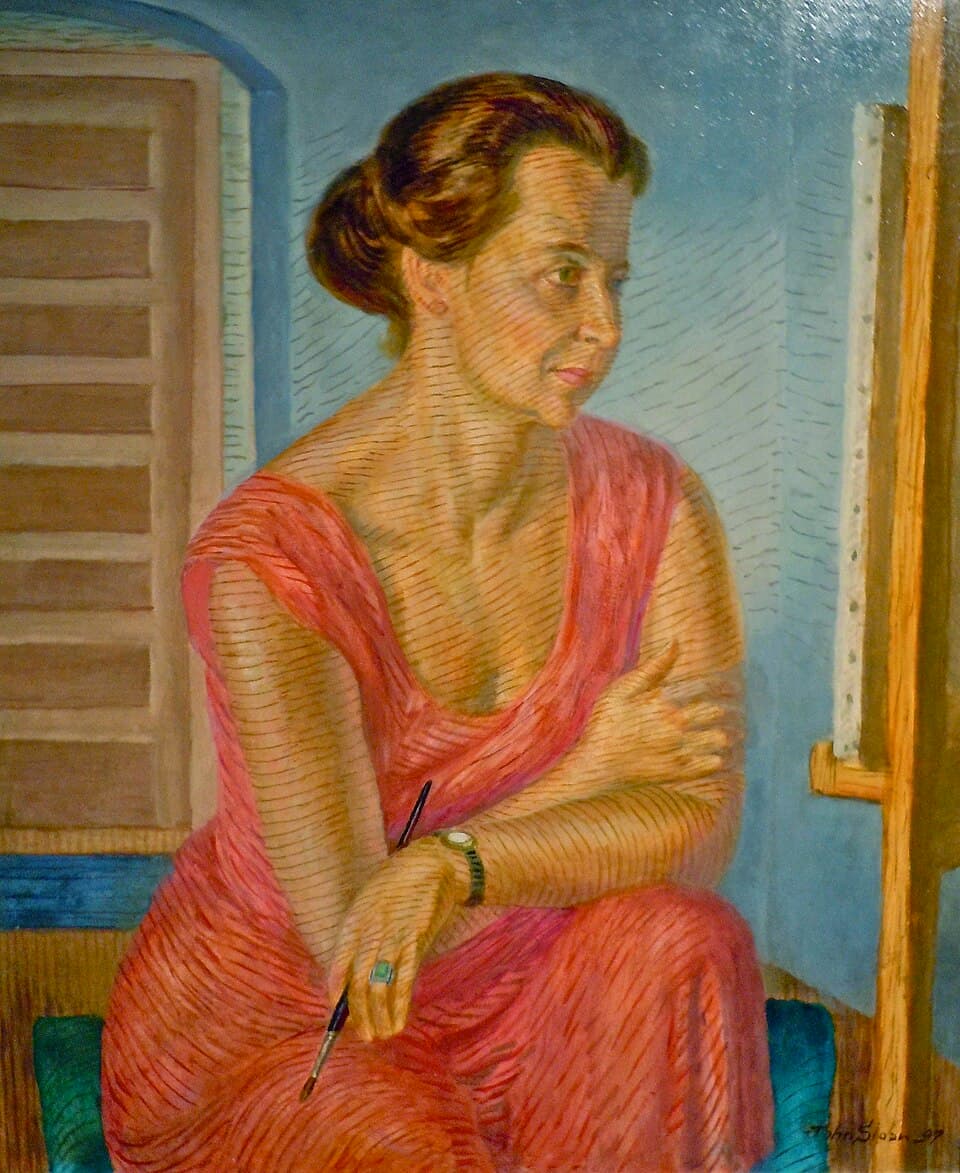
On the icy heights of Mount Kailāśa, where snow never melts and silence weighs like an offering, an ascetic covered in ashes slowly opens his eyes after centuries of stillness. A serpent glides around his neck, the Ganges murmurs in his locks. He consents, for once, to speak.
—Before being the god worshipped today, you were known under other guises. Where do you truly come from?
I was first feared under the name Rudra, the howler, the one who shoots arrows of fever through forests and herds. The men of the Vedic period implored me to ward off the ills that my own hand sent them, for I hold both the remedy and the wound. Long before their hymns, already, in the cities of baked brick along the great river, my posture was engraved on a seal: seated, horned, surrounded by wild beasts that obey me. That is where one of my oldest names comes from, Pashupati, the lord of creatures. The people change, languages die, but the one who rules over the animal as over the breath remains. I am that dark thread crossing the ages.
I hold both the remedy and the wound; that is why I was first feared.
—It is said that your throat is blue. What happened when the gods and demons churned the ocean?
They all coveted the nectar of immortality, so they took the king of serpents as a rope and a mountain as a churning rod, and they churned the ocean of milk until wonders emerged. But before the nectar came up the Halahala, a poison so black it could dissolve the three worlds. Gods and demons recoiled, equally cowardly. Then I gathered the venom in the hollow of my palm and drank it. Pārvatī pressed my throat with her hands to stop it from going further, and the poison crystallized there, dyeing my throat blue. I have been called Nīlakaṇṭha ever since. An ascetic can swallow what kills the living, for he has already renounced his own life. What others call sacrifice was for me only an obvious gesture.
I gathered the venom in the hollow of my palm and drank it.
—Living with poison at the bottom of your throat, does it change a god?
They think I am indifferent because I am still. That is to misunderstand me. What I absorb, others would not survive: the venom of the ocean, the ash of funeral pyres, the sacred hemp that deepens my meditation. My body has become the place where what threatens creation comes to die. That is why the renunciants who imitate me eat so little — a forest fruit, a sip of Ganges water — or fast entirely on the night of Śivarātri. They learn that a being who no longer fears death can carry within himself what poisons the world without being disturbed by it. The blue throat is not a wound. It is the visible proof that one can contain the worst and remain seated, peaceful, on the snow.
—At night, they say, you dance. How would you describe this dance called the Tāṇḍava?
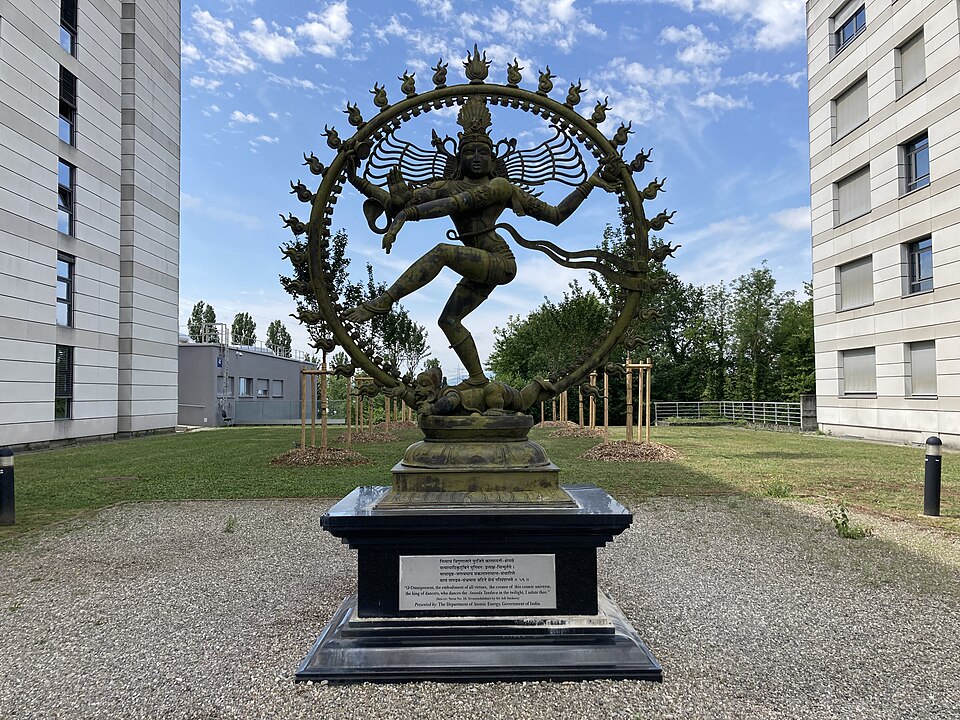
When the sun declines, I don the tiger skin and plunge among the pyres, escorted by the spirits that form my retinue. Then I strike the little drum, the ḍamaru, held at my fingertips, and from that beat arises the first sound, the Nāda, the vibration from which the universe emerges as light emerges from silence. Then begins the Tāṇḍava. My foot crushes the demon of oblivion, my hair lashes the air, and the old world dissolves while a new world rises in the same motion. What sculptors will one day freeze in the bronze of the Nataraja, a ring of flames around my body, is only the arrested instant of an eternal gesture. I do not destroy against creation: I destroy because nothing can be reborn without the old falling.
I destroy because nothing can be reborn without the old falling.
—Your wife, they say, dances quite differently. What does the contrast between your two dances reveal?
Pārvatī dances the Lāsya — grace, gentleness, the movement that caresses and soothes. I dance the Tāṇḍava — the fury that makes the three worlds tremble and that my drum beats. One would be wrong to see an opposition. A universe that knew only my violence would consume itself; a universe that knew only her tenderness would fall asleep without ever renewing itself. Our two dances are the two beats of the same cosmic heart. That is why tradition holds my dance as the source of all performing arts: every dancer's gesture, even in the temples of the south, unknowingly seeks to find this balance between the gentleness that builds and the ardor that loosens. The world stands because we dance together.
—You spend centuries motionless, covered in ashes. Why this choice of asceticism for the highest of deities?
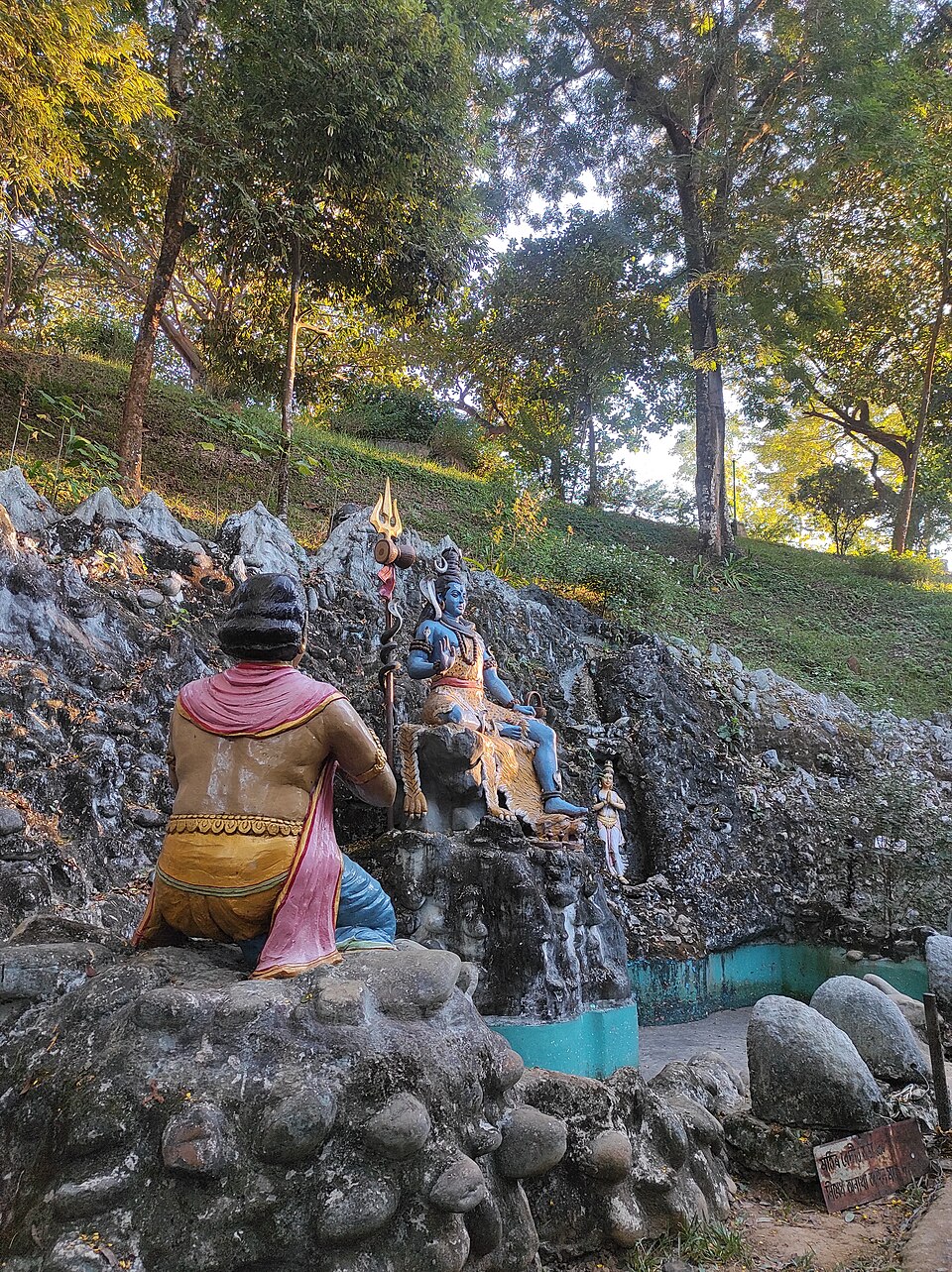
Look at these three lines of ash on my forehead. They are vibhūti, taken from funeral pyres. By covering my body with them, I say one thing: everything that burns will end in dust, palaces and kings, worlds and minor gods. I dwell on Kailāśa, that peak of snow that no pilgrim dares tread, and I remain there naked, seated, immersed in samādhi, that meditation in which I can stay for eons. That the most powerful should choose to live as a renunciant stripped of everything — that is what troubles and attracts devotees for millennia. True sovereignty is not to possess, but to need nothing more. My wealth consists of a tiger skin and a handful of ashes.
True sovereignty is not to possess, but to need nothing more.
—Yet it is said that a god of love dared to disturb your meditation. What happened to him?
Kāma was sent to tear me from my contemplation and push me toward Pārvatī. He strung his bow of flowers and shot his arrow at the moment when my mind rested deepest in samādhi. The arrow struck me — but the interruption itself awakened my wrath. I opened the third eye, the one on the forehead, and with a single glance I reduced him to ashes. He was later called Ananga, "the bodiless one," for only desire remained, without a form to inhabit it. Make no mistake: I did not punish love, I punished distraction. The concentration of a yogī is a fire so dense that it consumes whatever breaks it. Later, I did marry Pārvatī — but in my own time, by my consent, not by the trick of an arrow.
—The Ganges, they say, flows from your hair. How could an entire river fit there?
Gangā was to descend from heaven to earth, but her fall was so violent that it would have swallowed everything, crushed the plains, drowned the living. I was begged to intervene. I then offered my head and let the celestial river fall into the labyrinth of my matted locks, the jaṭā. The water lost itself there, calmed, before flowing in gentle streams toward the land of men. That is why the Ganges is considered purifying, and why Vārāṇasī, the city I cherish above all on its banks, is considered a threshold where dying liberates from all rebirth. A god does not always tame by force. Sometimes it is enough to offer one's own head for devastating power to become a blessing. The Ganges knows this, murmuring still in my hair this morning.
Sometimes it is enough to offer one's own head for fury to become a blessing.
—Why do so many devotees keep vigil all night in your name, on the banks you love?
On the night of Śivarātri, my devotees fast and keep vigil until dawn, often near the water, at Vārāṇasī or elsewhere. It is said that whoever crosses that night without sleeping, even without understanding its meaning, is washed of his faults and brought closer to my abode. Why the night? Because it is the hour when I dance, the hour of pyres and spirits, the hour when the old world dissolves. To keep vigil with me is to accept looking darkness and impermanence in the face, instead of fleeing them in sleep. They bring bel leaves, pour a little Ganges water on the stone pillar, and wait. It is not a rite of fear. It is a way to keep me company while I maintain, alone, the balance of the cosmos.
—You carry a trident, a serpent, a crescent moon. What do these objects you never set aside say about you?
Every thing I carry is a silent lesson. The trishūla, that three-pronged trident, speaks of the three times of the world: what is born, what lasts, what dissolves — and the three states in which consciousness travels: waking, dreaming, deep sleep. The king of serpents, Vāsuki, coiled around my neck, speaks of my mastery over venom and death, but also of the dormant energy that slumbers at the base of every spine. And this crescent moon, the Chandrakalā, caught in my locks, says that even in the deepest darkness a light remains, and that time always turns in cycles. I do not adorn myself with gold like other gods. My jewels are alive; they bite, they shine, they teach. One understands a god only by reading what he chooses to wear.
—You speak of a first sound, the Nāda. What should be heard in the beat of your drum?
Listen to the ḍamaru, that little hourglass-shaped drum I hold in the dance. Two skins, a knotted string, and from its sharp clap springs the Nāda, the primordial sound. Before it, there was only silence; after it, the universe vibrates and begins to exist. Each beat marks the rhythm of worlds that are born and collapse — I never stop striking it, for if it fell silent, everything would fall back into nothingness. The sages say that this sound is the origin of speech, mantras, music itself. Where other traditions speak of a command uttered into the darkness, I dance and strike, and it is from this rhythm, not a decree, that creation emerges. The world is not a thing made: it is a pulse.
The world is not a thing made: it is a pulse.
Read further

This imaginary interview was generated by artificial intelligence from sources documented in Shiva's profile. It dramatises what the figure might have said based on what we know about them, but does not constitute attested historical testimony. For primary sources and factual documentation, refer to the full profile.