 Flip the card
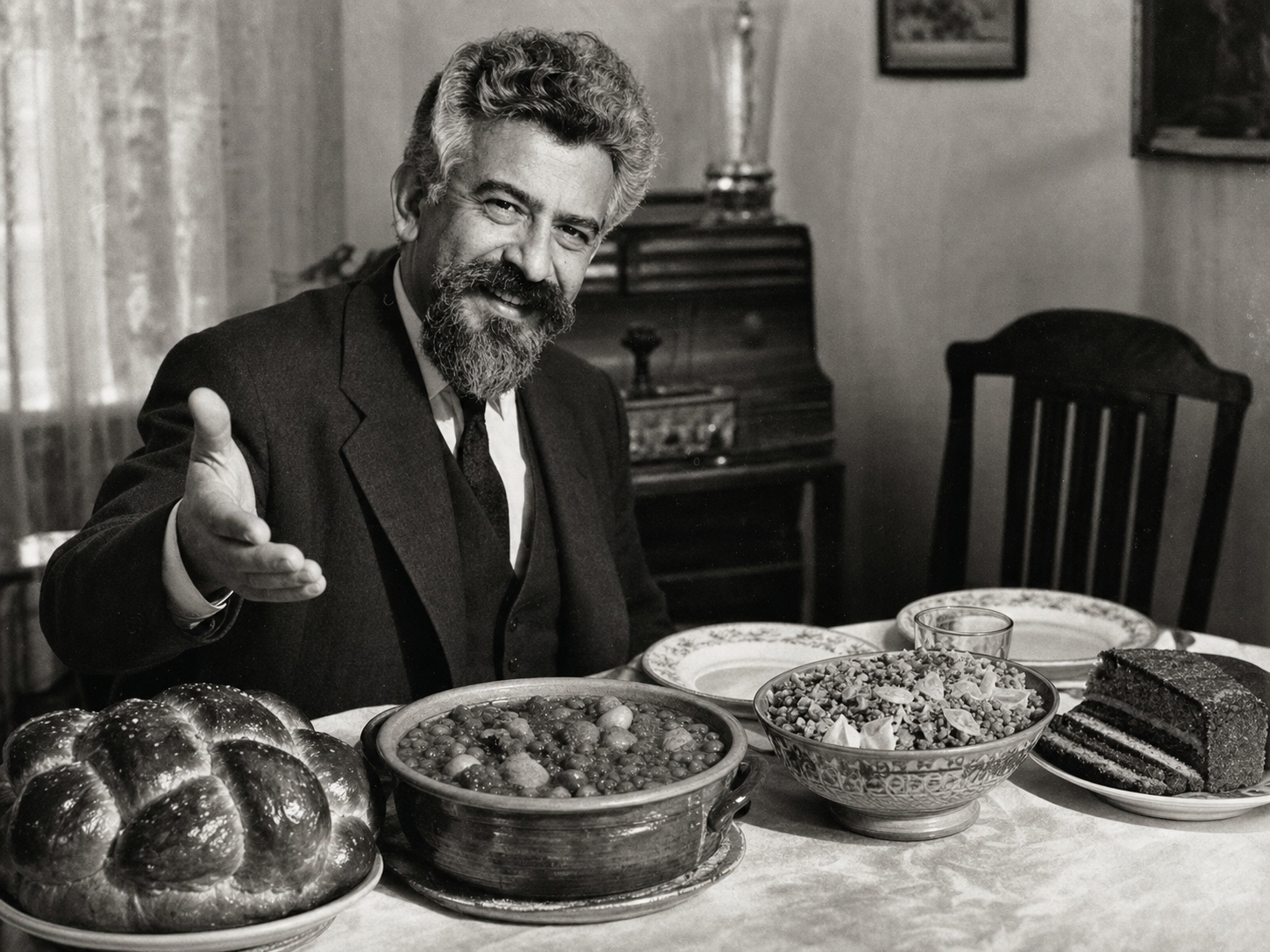
Abraham Joshua Heschel at the table
1907 — 1972
On the menu
Ashkenazi Shabbat Seudah
Among the Jews of Poland and Central Europe, from whom Heschel came, the meal is not divided into starter-main-dessert but into sacred moments marked by blessings: Kiddush over wine, Hamotzi over the braided bread (challah), then fish, soup, a slow-cooked stew kept warm, and a final sweet. Three meals (Friday evening, Saturday lunch, Saturday afternoon) punctuate the holy day, while the weekday cuisine, more humble, revolves around groats and fats that sustain the body.
Signature : Schmaltz (rendered poultry fat)
For lack of butter, which is forbidden with meat by kashrut, Ashkenazi cuisine turned rendered goose or chicken fat, schmaltz, into its golden gold. It flavors buckwheat, greases bread pans, and yields gribenes (cracklings). It is the very taste of the Polish shtetl kitchen.
click to flip back
Abraham Joshua Heschel at the table
1907 — 1972
5 period recipes
 Festive
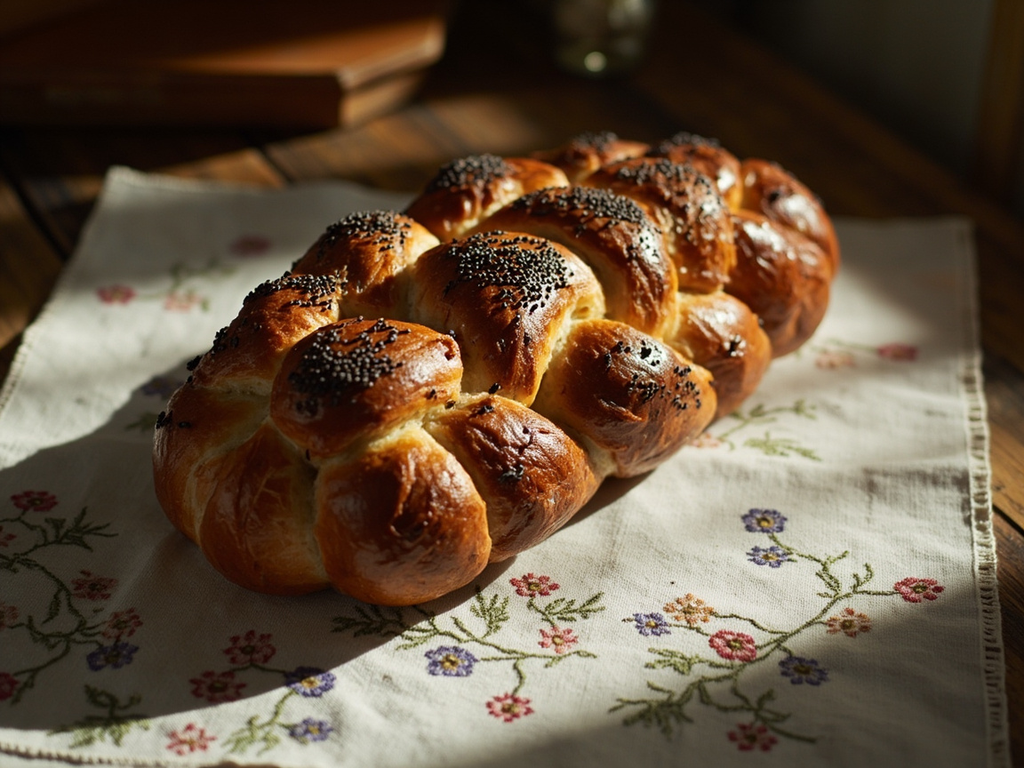
Challah, the Braided Shabbat Bread
Bread for the Hamotzi (blessing over bread)
🍯 🧂· 3 h (including 2 h rising)
View the recipe
 Preserving
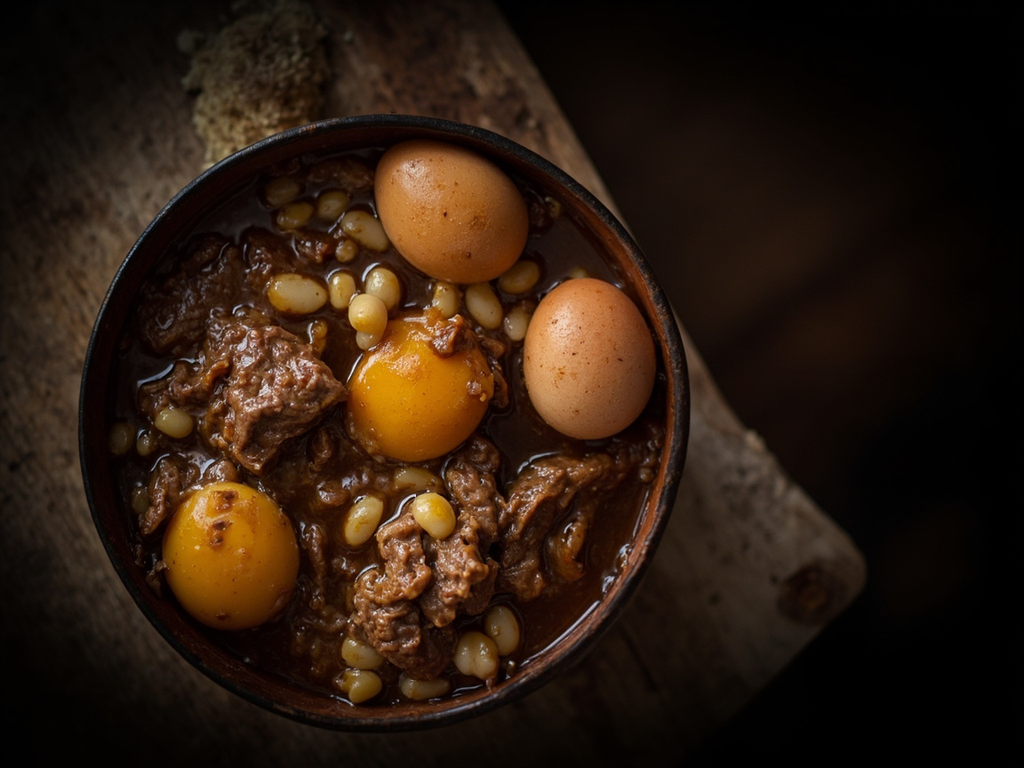
Tcholent, the Overnight Stew
Shabbat lunch dish kept warm (Ashkenazi chamin)
🧂 🍄· 12 h (slow cooking, unattended)
View the recipe
 Everyday
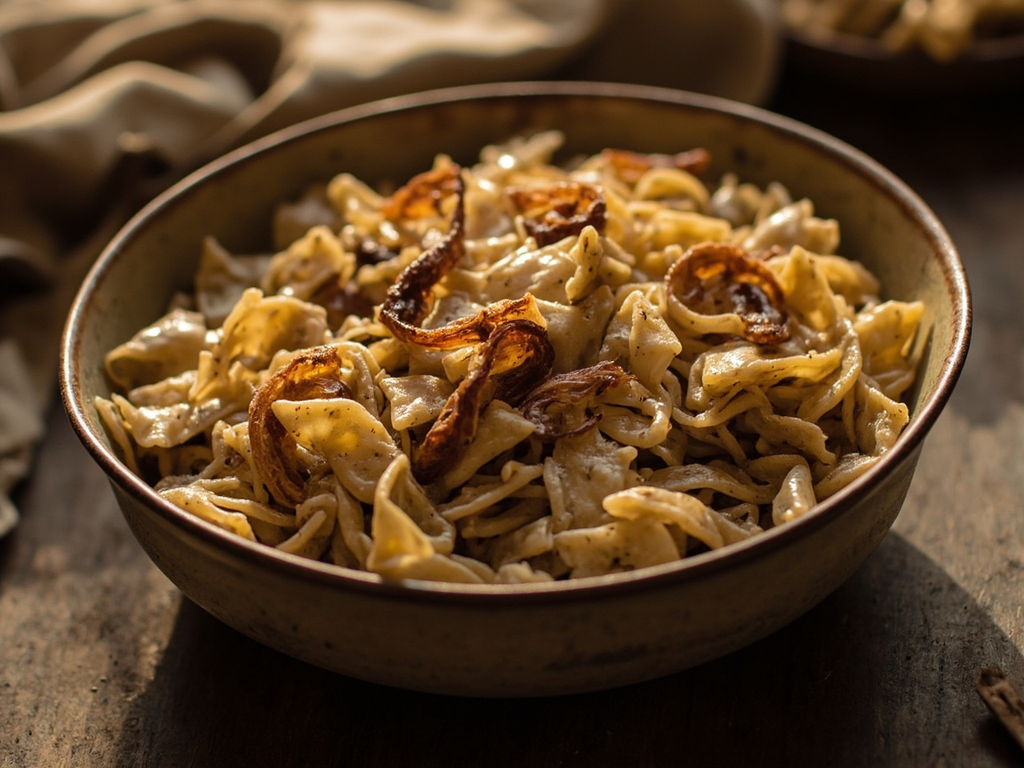
Kasha Varnishkes, Buckwheat and Bowties
Weekday dish of the shtetl (daily porridge)
🧂 🍄· 35 min
View the recipe
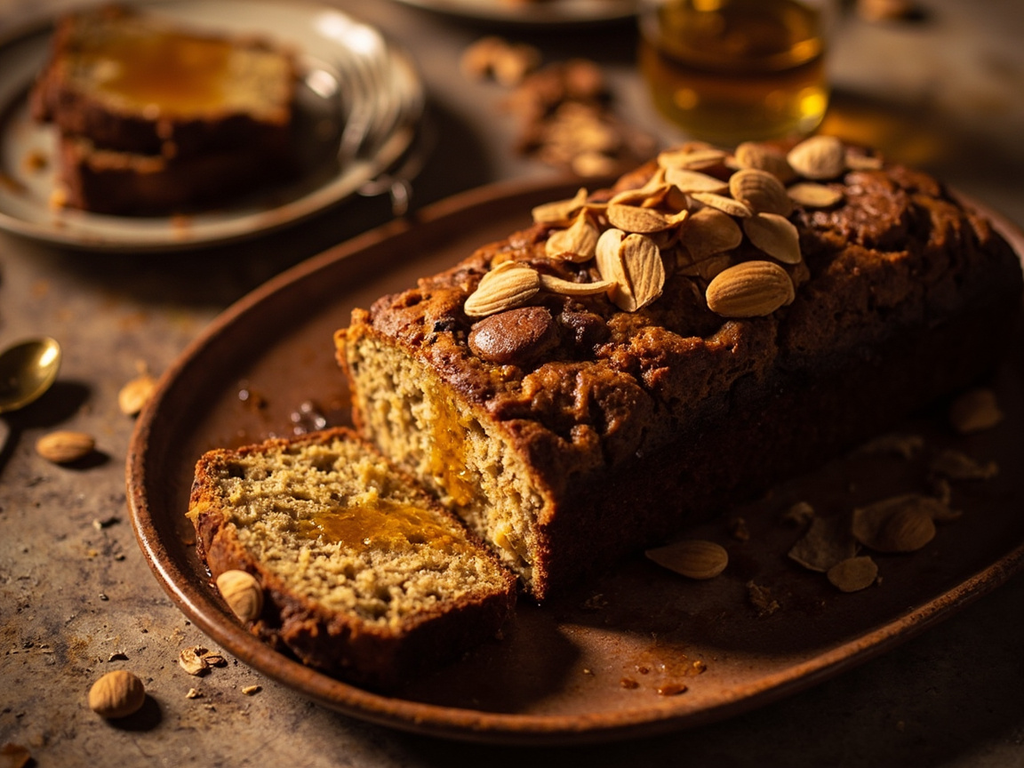 Offering
Lekach, Honey Cake for Sweet Days
Holiday sweet (sugar offering for the new year)
🍯 ☕· 1 h 15
View the recipe
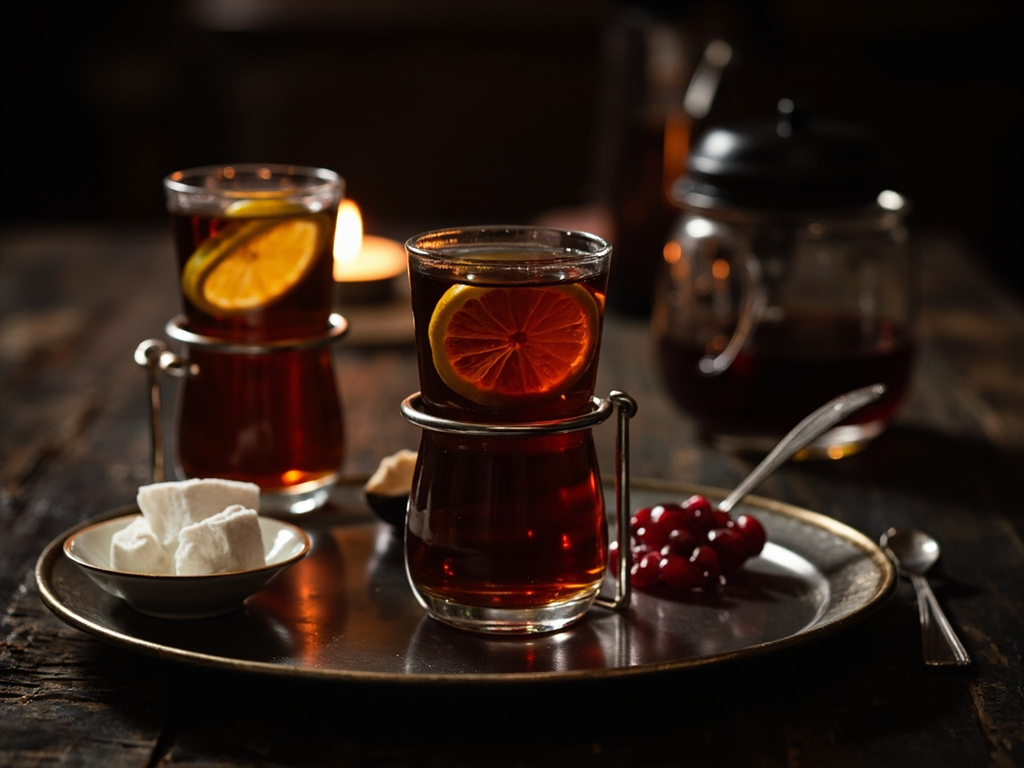 Drink
DrinkGlezele Tey, a Glass of Tea with Lemon
Drink for study and conversation
🍋 ☕· 10 min
View the recipe