 flip
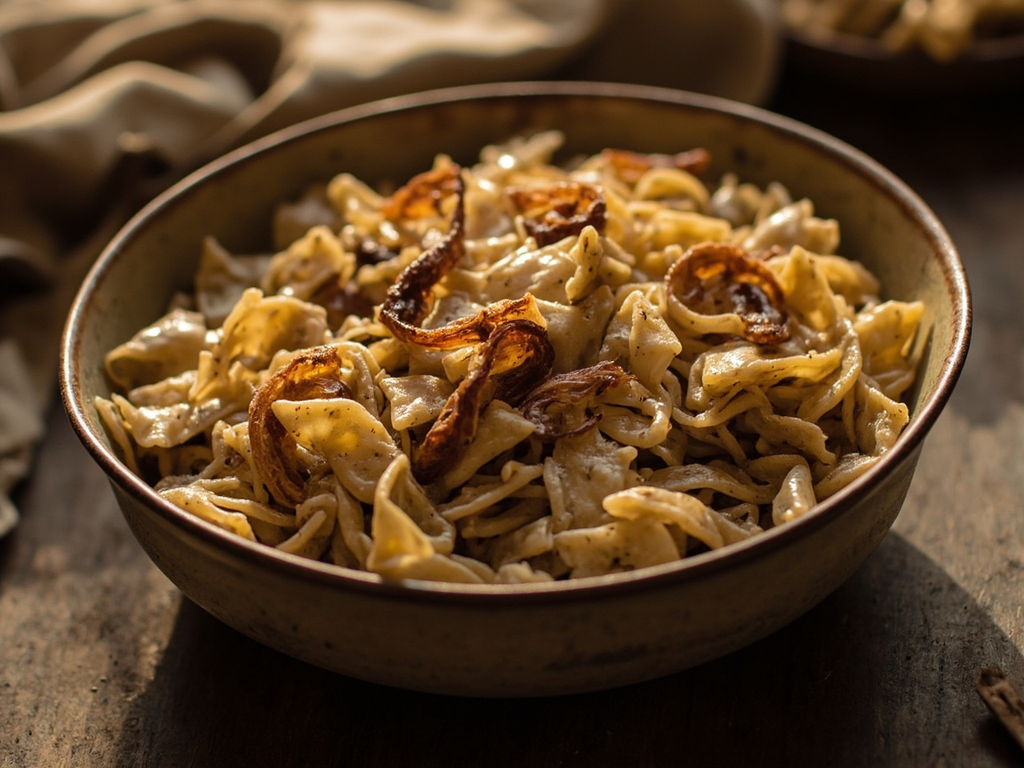
flipKasha Varnishkes, Buckwheat and Bowties
Kasha Varnishkes, Buckwheat and Bowties
Why this dish? Far from the splendor of Shabbat, this is the kind of humble, nourishing dish that warmed the long winters of Jewish Poland where Heschel grew up. Buckwheat, which grows on the poor soils of Eastern Europe, was the grain of both the poor and the wise.
Toasted buckwheat groats, plumped in broth, mixed with bowtie-shaped pasta and plenty of onions melted in fat.
Do you think you need to be rich to eat well? Give me buckwheat, an onion, and a bit of goose fat, and I'll make you a dish that keeps a man upright in the bitter cold. First you coat the grain with a beaten egg so it stays separate, then you let it swell gently. With the little bowtie pasta, it was the everyday meal — and believe me, we never tired of it.
- •Toasted buckwheat (kasha) — a bowl (base grain)
- •Egg — one (coats and separates the grains)
- •Onions — a lot (melted sweetness)
- •Goose fat (schmaltz) — generously (signature aroma)
- •Bowtie pasta — as much as the kasha (texture)
- •Poultry broth — enough to cover (cooking the grain)
Kasha Varnishkes, Buckwheat and Bowties
Toasted buckwheat groats, plumped in broth, mixed with bowtie-shaped pasta and plenty of onions melted in fat.
Why this dish? Far from the splendor of Shabbat, this is the kind of humble, nourishing dish that warmed the long winters of Jewish Poland where Heschel grew up. Buckwheat, which grows on the poor soils of Eastern Europe, was the grain of both the poor and the wise.
Do you think you need to be rich to eat well? Give me buckwheat, an onion, and a bit of goose fat, and I'll make you a dish that keeps a man upright in the bitter cold. First you coat the grain with a beaten egg so it stays separate, then you let it swell gently. With the little bowtie pasta, it was the everyday meal — and believe me, we never tired of it.
Ingredients (period version)
- Toasted buckwheat (kasha) — a bowl (base grain)
- Egg — one (coats and separates the grains)
- Onions — a lot (melted sweetness)
- Goose fat (schmaltz) — generously (signature aroma)
- Bowtie pasta — as much as the kasha (texture)
- Poultry broth — enough to cover (cooking the grain)
Ingredients
- Toasted buckwheat (kasha) — 200 g (base grain)
- Egg — 1 (coats and separates the grains)
- Onions — 2 large, sliced (melted sweetness)
- Poultry fat or oil — 3 tbsp (signature aroma)
- Farfalle pasta — 200 g (texture)
- Poultry broth — 400 ml (cooking the grain)
- Salt and pepper — to taste (seasoning)
Method
- Slowly melt the onions in the fat until golden: this is the heart of the dish.
- Beat the egg, mix it with the raw buckwheat, pour into a hot pan and stir until the grains separate.
- Add boiling broth, cover, and let swell for 10 to 12 minutes over low heat.
- Meanwhile, cook the farfalle in salted water, drain.
- Combine buckwheat, pasta, and melted onions; adjust salt and pepper; serve hot.
How it was made : Buckwheat is not a cereal but a hardy plant that thrives on poor soils: it was long a staple for peasants and Jews of Eastern Europe. Toasting the grain and coating it with egg before cooking is an old technique to avoid a mushy texture.
The contemporary twist : A handful of sautéed wild mushrooms transforms this weekday dish into a festive side, without betraying its rustic soul.
Sources : Gil Marks, Encyclopedia of Jewish Food (2010) · Joan Nathan, Jewish Cooking in America (1994)
Abraham Joshua Heschel · Charactorium