The Abbasid ṣufra — the shared platter
In the 10th–11th centuries, in the world of the caliphates, dishes were not served one after another as in France. Instead, a large cloth or leather tray (the ṣufra) was spread on the floor, around which guests sat cross-legged. Wheat bread reigned as the base food: it was broken with the right hand and used as a spoon. Around it, stews (marqa), sweet-and-sour dishes, legumes, and raw vegetables were arranged together. Meals often began with something tart to 'open the stomach,' everything was shared at once, and the meal ended with honey sweets, dates, and fragrant cold drinks. Everything was eaten communally, with moderation and in the name of God.
Signature : Murrī — the fermented brine of the medieval Orient
This was the secret flavor of Abbasid kitchens: a powerful brown sauce obtained by fermenting barley (sometimes with flour and salt) for weeks. Salty, deep, almost 'umami,' it played in Baghdad and Cairo the role that garum held among the Romans. A drop of murrī transforms a broth into a feast. Today, its taste can be approximated with a dash of light soy sauce or a strong broth.
Alhazen (Ibn al-Haytham) at the table
4 period recipes
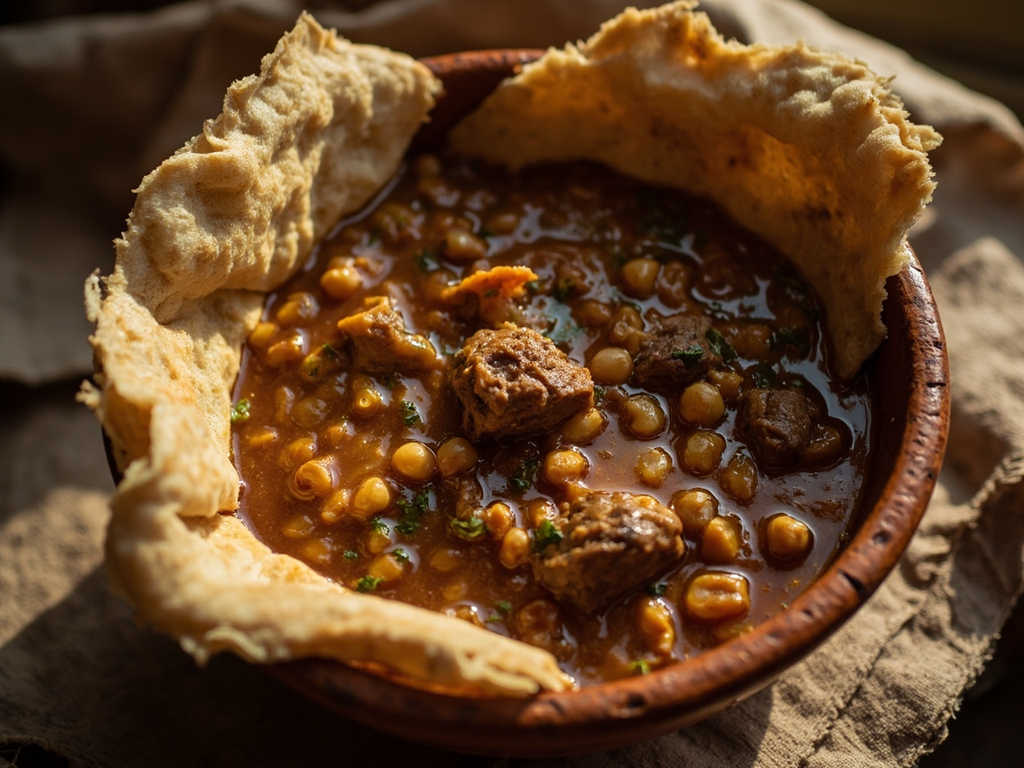 Everyday
Tharīd of lamb with lentils
Tharīd — the soaked bread base dish
🧂 🍄· 1 h 30
View the recipe
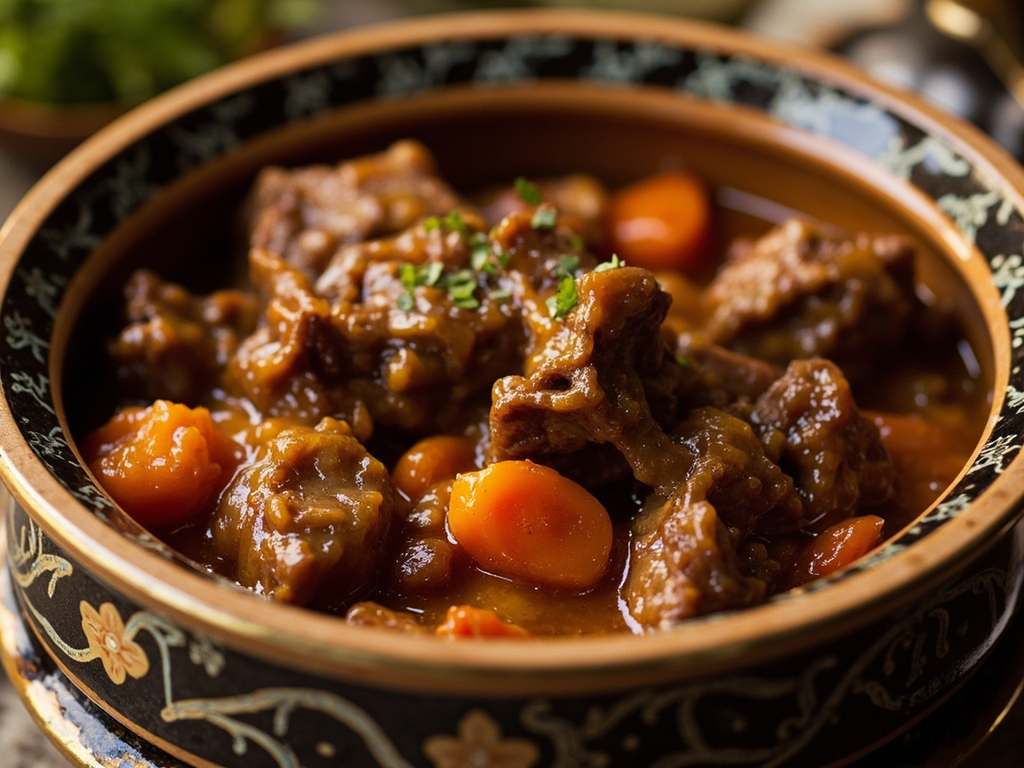 Festive
Sikbāj sweet-and-sour lamb
Marqa — the festive platter stew
🍋 🍯 🧂· 1 h 45
View the recipe
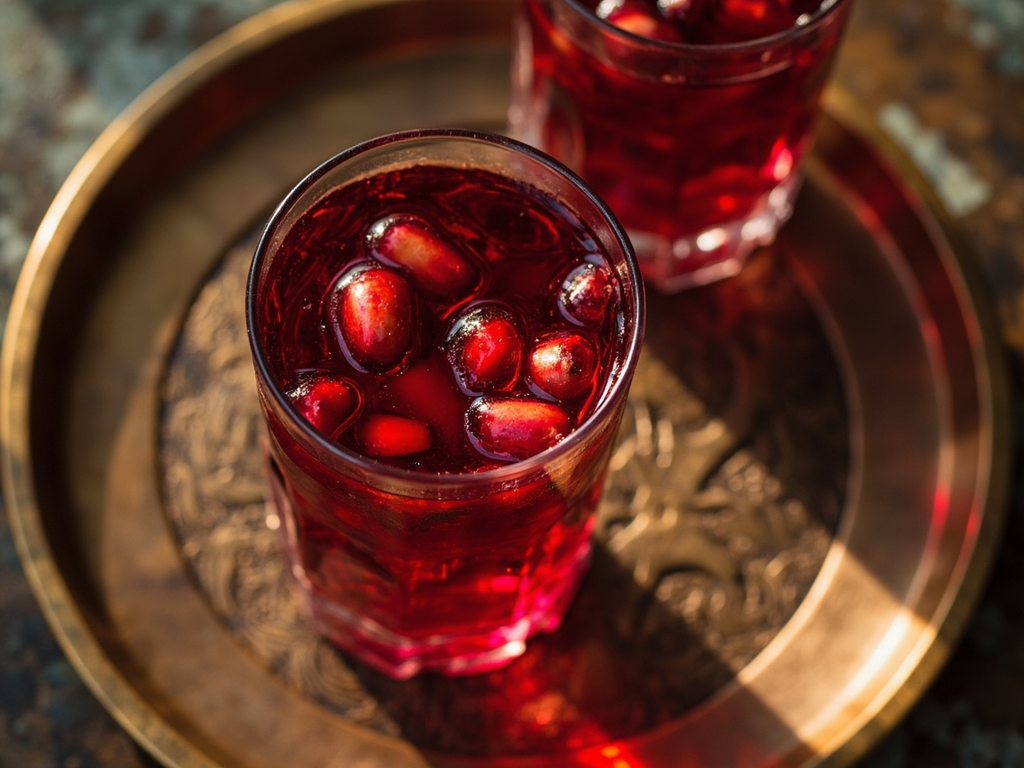 Drink
DrinkSharāb al-rummān — chilled pomegranate syrup
Sharāb — the perfumed drink of the platter
🍋 🍯· 20 min
View the recipe
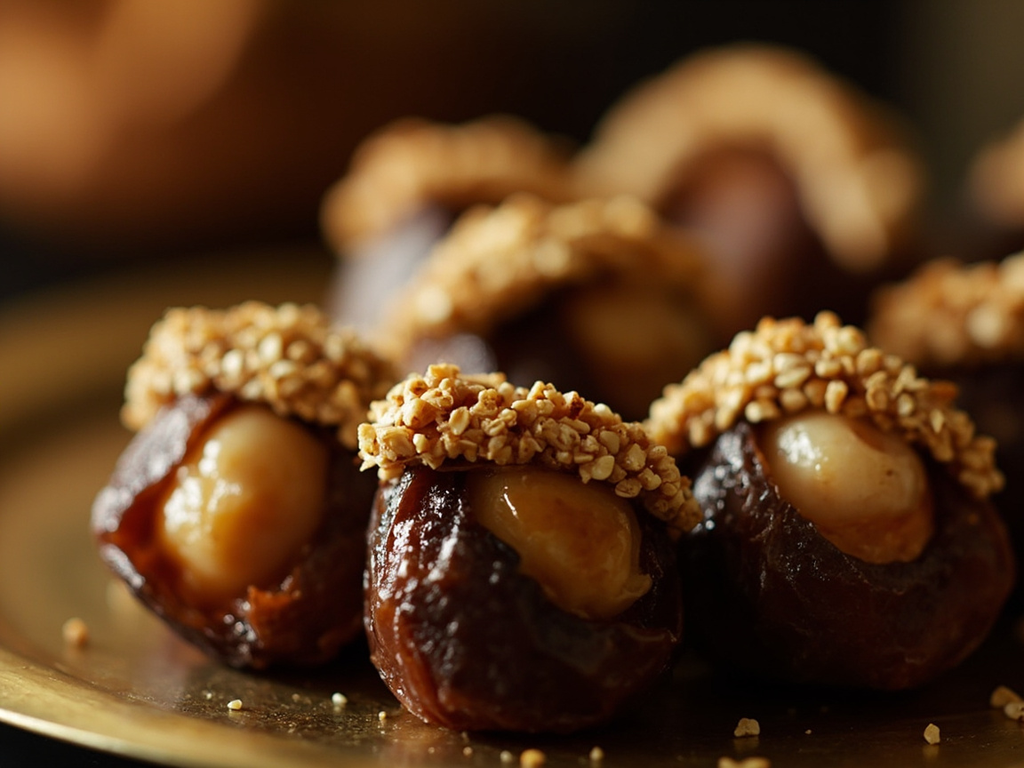 Travel
Dates stuffed with almonds and sesame
Naql — sweets and snacks of the platter
🍯 🌶️· 25 min
View the recipe