 flip
flipSharāb al-rummān — chilled pomegranate syrup
Sharāb al-rummān — chilled pomegranate syrup
Why this dish? Ibn al-Haytham's file mentions pomegranate juice among his daily beverages, alcohol being forbidden. In Fatimid Egypt where he ended his life, sharāb were appreciated: fruit syrups cut with fresh water. A cup of tart pomegranate was the ideal drink for a mind bent for hours over his mirrors and camera obscura.
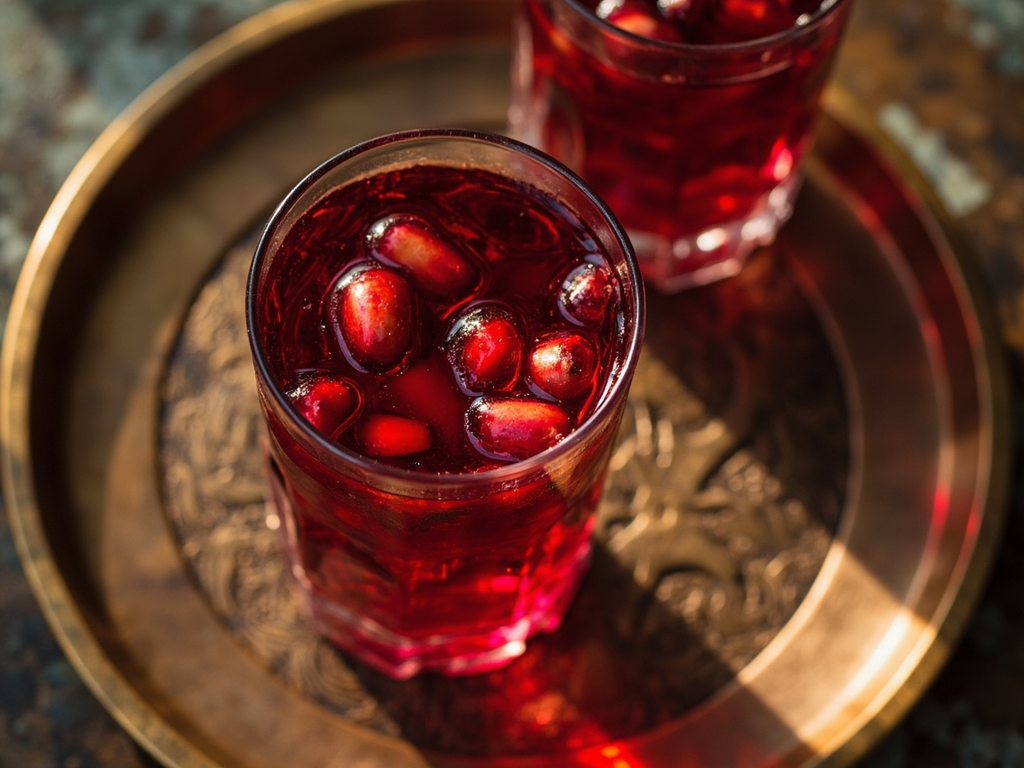
A syrup of pomegranate juice reduced with a little honey and perfumed with rose water, diluted with fresh water when drinking. Tart, refreshing, and lightly floral: the lemonade of medieval scholars.
Alcohol is forbidden to us, and it is well, for the mind that wishes to follow the path of light must remain clear. So I press the pomegranate, that fruit whose seeds shine like rubies, and I cook its juice with a little honey until it coats the spoon. A drop of rose water, then dilute with cold well water. Drink it, O reader, during the hot nights of Cairo: nothing quenches better the one who stays awake.
- •Fresh pomegranate juice — a good amount (tart base)
- •Honey — to taste depending on acidity (sweetness)
- •Rose water — a few drops (floral perfume)
- •Fresh water — to dilute (refreshment)
Sharāb al-rummān — chilled pomegranate syrup
A syrup of pomegranate juice reduced with a little honey and perfumed with rose water, diluted with fresh water when drinking. Tart, refreshing, and lightly floral: the lemonade of medieval scholars.
Why this dish? Ibn al-Haytham's file mentions pomegranate juice among his daily beverages, alcohol being forbidden. In Fatimid Egypt where he ended his life, sharāb were appreciated: fruit syrups cut with fresh water. A cup of tart pomegranate was the ideal drink for a mind bent for hours over his mirrors and camera obscura.
Alcohol is forbidden to us, and it is well, for the mind that wishes to follow the path of light must remain clear. So I press the pomegranate, that fruit whose seeds shine like rubies, and I cook its juice with a little honey until it coats the spoon. A drop of rose water, then dilute with cold well water. Drink it, O reader, during the hot nights of Cairo: nothing quenches better the one who stays awake.
Ingredients (period version)
- Fresh pomegranate juice — a good amount (tart base)
- Honey — to taste depending on acidity (sweetness)
- Rose water — a few drops (floral perfume)
- Fresh water — to dilute (refreshment)
Ingredients
- Pure pomegranate juice (or 4 squeezed pomegranates) — 500 ml (base)
- Honey — 3 to 4 tbsp (sweetness)
- Rose water — ½ tsp (perfume)
- Cold or sparkling water — for serving (dilution)
- Ice cubes — to taste (coolness)
Method
- Gently heat the pomegranate juice with the honey without boiling, until slightly thickened into a syrup.
- Remove from heat, let cool slightly, then add the rose water.
- Store this syrup in a cool place in a bottle.
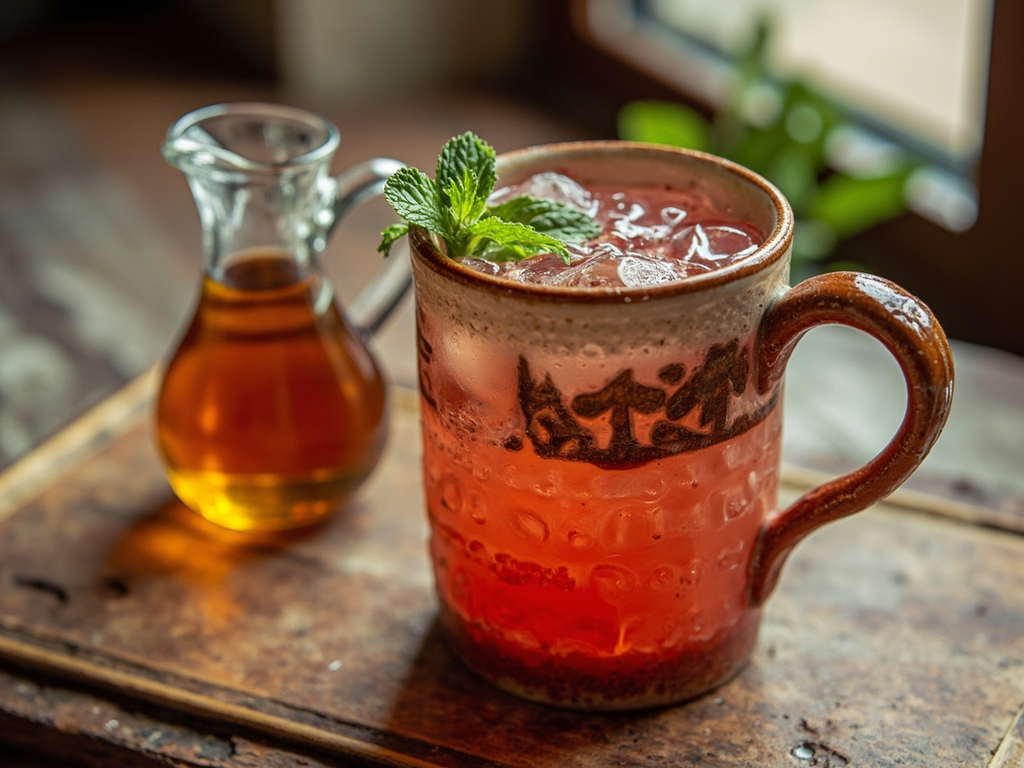
- When serving, pour a little syrup into a glass and dilute with fresh water (4 parts water to 1 part syrup).
- Add ice cubes and, if desired, a few pomegranate seeds as garnish.
How it was made : Sharāb (from which our word 'syrup' comes) were fruit concentrates that were stored and diluted on demand. Pomegranate, rose water, and honey formed a classic triad of non-alcoholic drinks in the medieval Islamic world.
The contemporary twist : Dilute with sparkling water for an alcohol-free pomegranate 'spritz,' with a thin slice of lemon and a mint leaf.
Sources : Treatises on beverages (ašriba) of medieval Arab medicine · Nawal Nasrallah, Annals of the Caliphs' Kitchens
Alhazen (Ibn al-Haytham) · Charactorium