 flip
flipSikbāj sweet-and-sour lamb
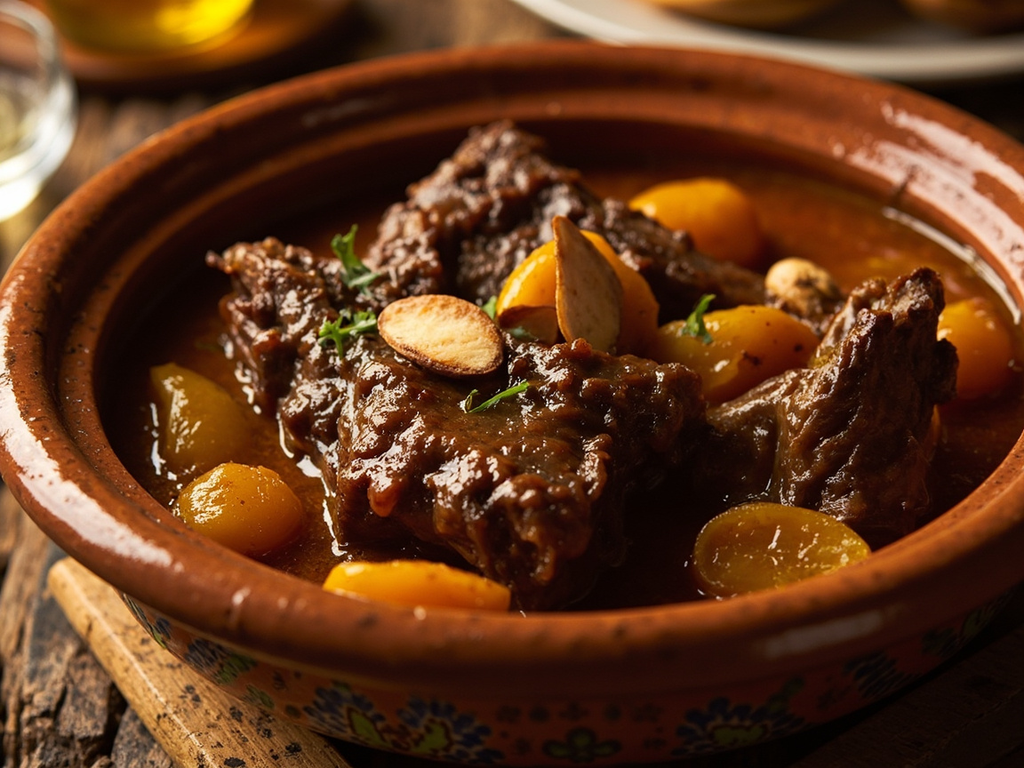
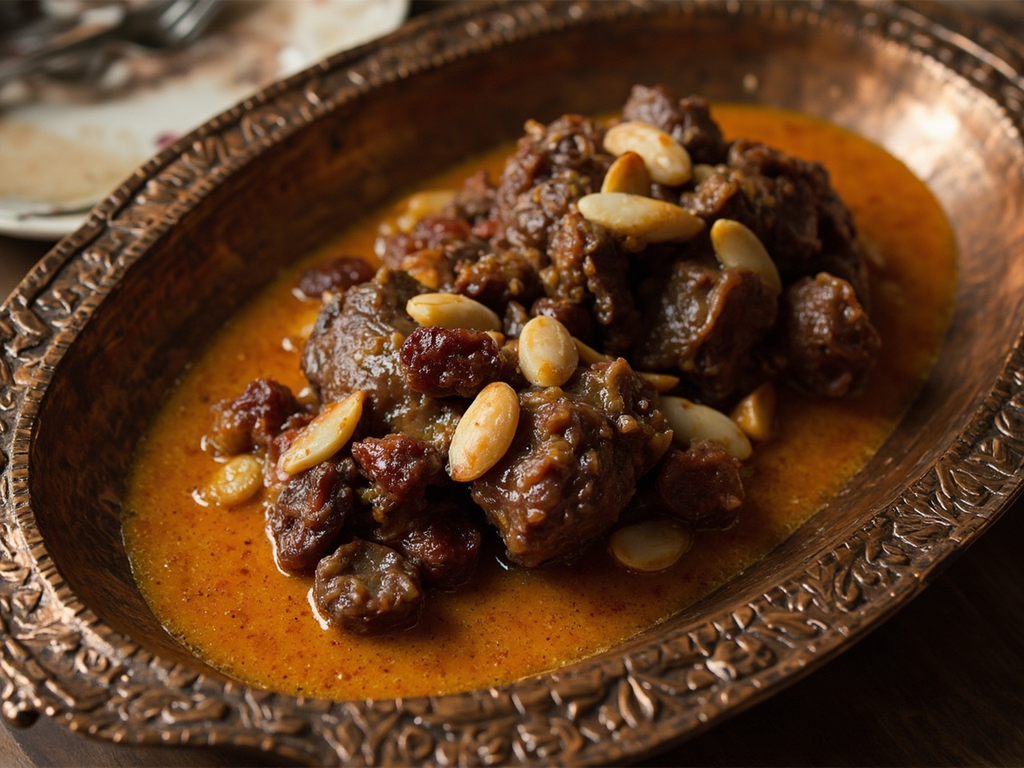
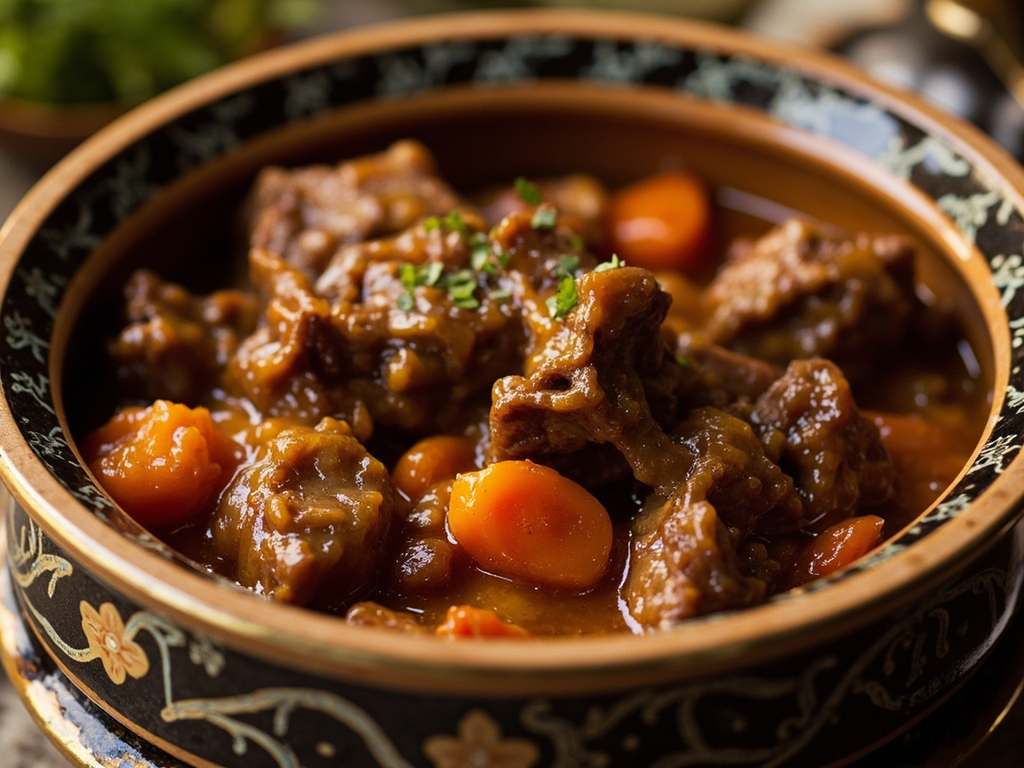
Sikbāj sweet-and-sour lamb
Why this dish? Sikbāj — a meat stew with vinegar sweetened with honey or dates — was considered a royal dish, reputedly invented for the Sassanid kings and adopted with pomp by the Abbasid caliphs. For a man who frequented the scholarly circles of Fatimid Cairo and the Dār al-ʿIlm (House of Knowledge), this reception dish, served on days of gatherings or visits from a patron, embodied the table of honors.
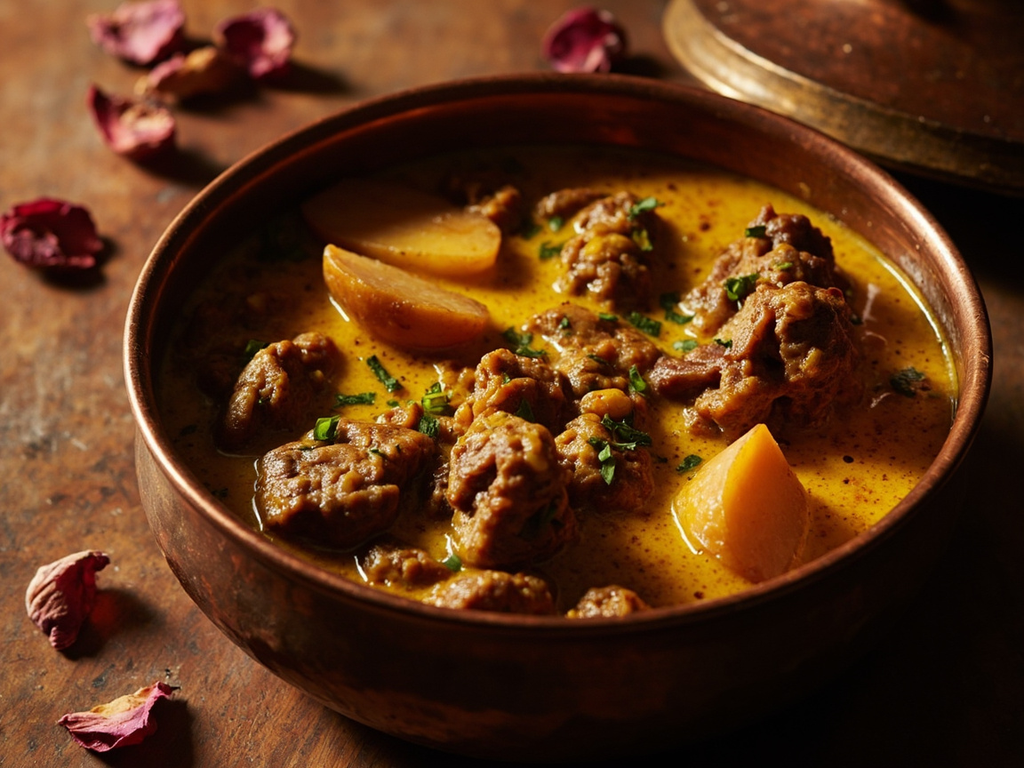
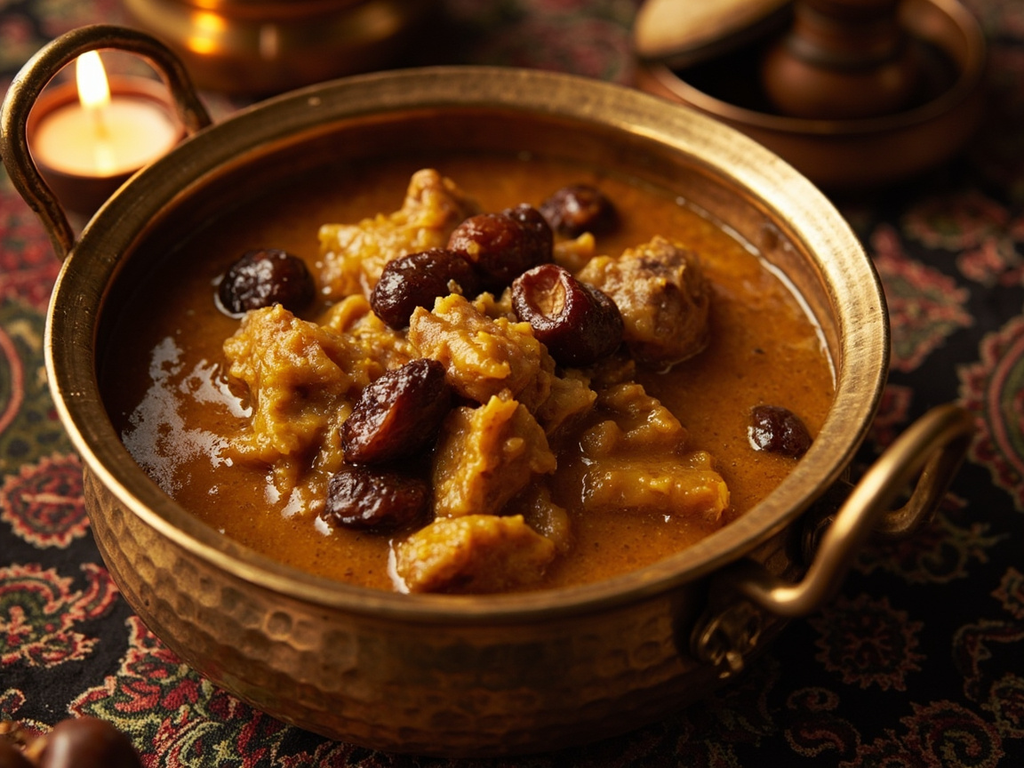
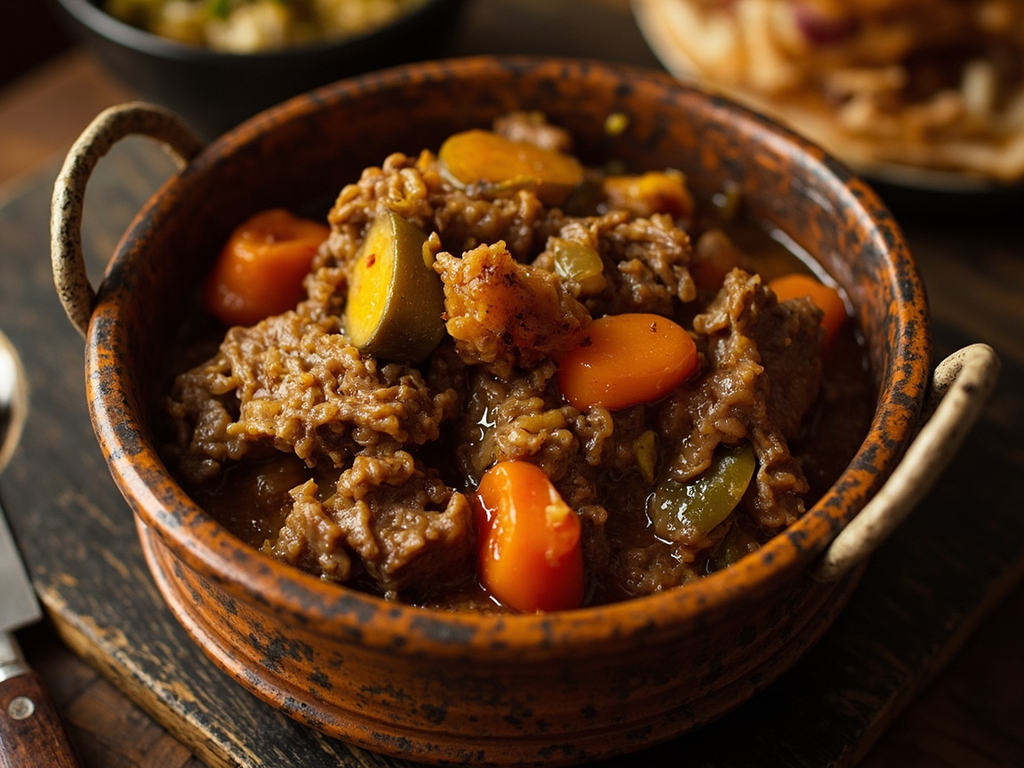
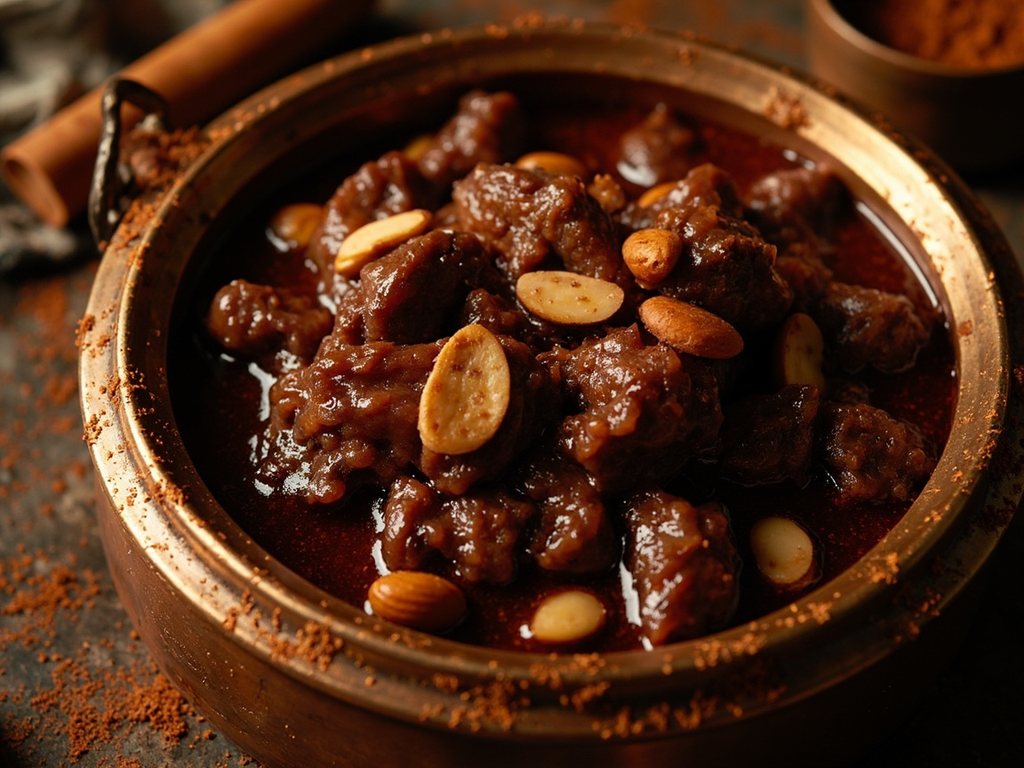
A lamb stew simmered in vinegar, balanced with honey and dates, perfumed with cinnamon, coriander, and saffron. The sour and sweet embrace around the tender meat: the great sweet-and-sour classic of medieval court cuisine.
When a patron honored my home with his visit, I had sikbāj prepared, for it is a dish of kings and men of merit. See how the sour of vinegar and the sweet of honey measure each other, exactly as the forces balance in nature that I study. The meat cooks long with cinnamon and saffron until it melts on the tongue. Add the dates toward the end, O my guest, and you will taste why the caliphs were so fond of it.
- •Lamb (neck or shoulder) — a generous piece (main meat)
- •Wine vinegar — a good splash (acidity)
- •Honey — to balance the vinegar (sweetness)
- •Dates — a handful (fruity sweetness)
- •Onions — two (base)
- •Cinnamon, coriander, saffron — to taste (noble spices)
- •Carrots — a few (accompanying vegetable)
Sikbāj sweet-and-sour lamb
A lamb stew simmered in vinegar, balanced with honey and dates, perfumed with cinnamon, coriander, and saffron. The sour and sweet embrace around the tender meat: the great sweet-and-sour classic of medieval court cuisine.
Why this dish? Sikbāj — a meat stew with vinegar sweetened with honey or dates — was considered a royal dish, reputedly invented for the Sassanid kings and adopted with pomp by the Abbasid caliphs. For a man who frequented the scholarly circles of Fatimid Cairo and the Dār al-ʿIlm (House of Knowledge), this reception dish, served on days of gatherings or visits from a patron, embodied the table of honors.
When a patron honored my home with his visit, I had sikbāj prepared, for it is a dish of kings and men of merit. See how the sour of vinegar and the sweet of honey measure each other, exactly as the forces balance in nature that I study. The meat cooks long with cinnamon and saffron until it melts on the tongue. Add the dates toward the end, O my guest, and you will taste why the caliphs were so fond of it.
Ingredients (period version)
- Lamb (neck or shoulder) — a generous piece (main meat)
- Wine vinegar — a good splash (acidity)
- Honey — to balance the vinegar (sweetness)
- Dates — a handful (fruity sweetness)
- Onions — two (base)
- Cinnamon, coriander, saffron — to taste (noble spices)
- Carrots — a few (accompanying vegetable)
Ingredients
- Lamb shoulder or neck — 700 g, cut into pieces (meat)
- Wine vinegar — 5 tbsp (acidity)
- Honey — 2 tbsp (sweetness)
- Pitted dates — 8 (fruity sweetness)
- Onions — 2 (base)
- Carrots — 3 (vegetable)
- Cinnamon stick — 1 (spice)
- Ground coriander — 1 tsp (spice)
- Saffron — 1 pinch (spice and color)
- Salt — to taste (seasoning)
Method
- Brown the lamb pieces in a little fat, then set aside.
- Sauté the sliced onions until soft, return the meat, cover with water, and add the cinnamon, coriander, and saffron.
- Simmer for 1 hour, then add the carrots cut into chunks.
- Pour in the vinegar and honey, taste, and adjust the sweet-and-sour balance to your liking.
- Add the dates 15 minutes before the end so they soften without falling apart, and serve hot.
How it was made : Sikbāj is one of the most documented dishes of Abbasid cuisine; legend attributes it to the Sassanid king Khosrau. The vinegar/honey balance was adjusted 'by eye' according to the host's taste, and saffron marked wealthy tables.
The contemporary twist : A grating of bitter orange zest and a few toasted slivered almonds at serving time recall the Andalusian versions of this traveling stew.
Sources : Kitāb al-Ṭabīkh (Baghdad, 13th c.) by al-Baghdādī · Maxime Rodinson, Studia Islamica — studies on medieval Arab cuisine
Alhazen (Ibn al-Haytham) · Charactorium