 flip
flipTharīd of lamb with lentils
Tharīd of lamb with lentils
Why this dish? Tharīd — broken bread soaked in a broth of meat and vegetables — was the most beloved and everyday dish of the medieval Muslim world, celebrated from the hadiths as the food of the wise and modest. For a scholar like Ibn al-Haytham, who lived part of his life from copying and teaching, this nourishing, economical, and halal-compliant dish was the staple of a studious table, in Basra as in Cairo.
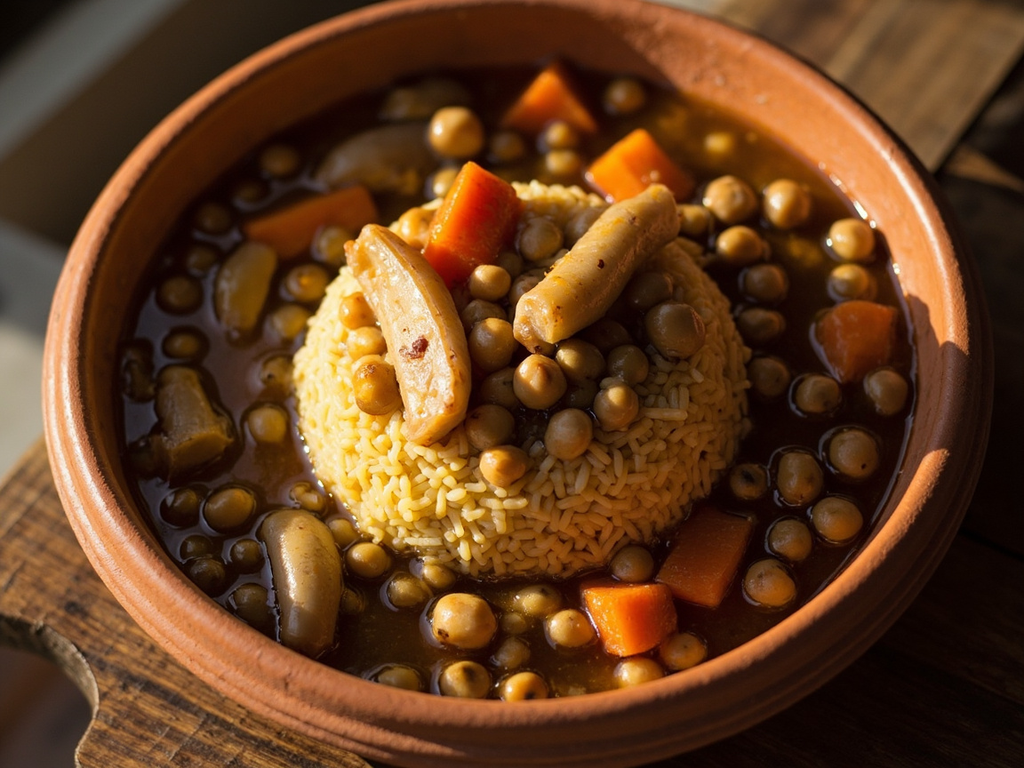
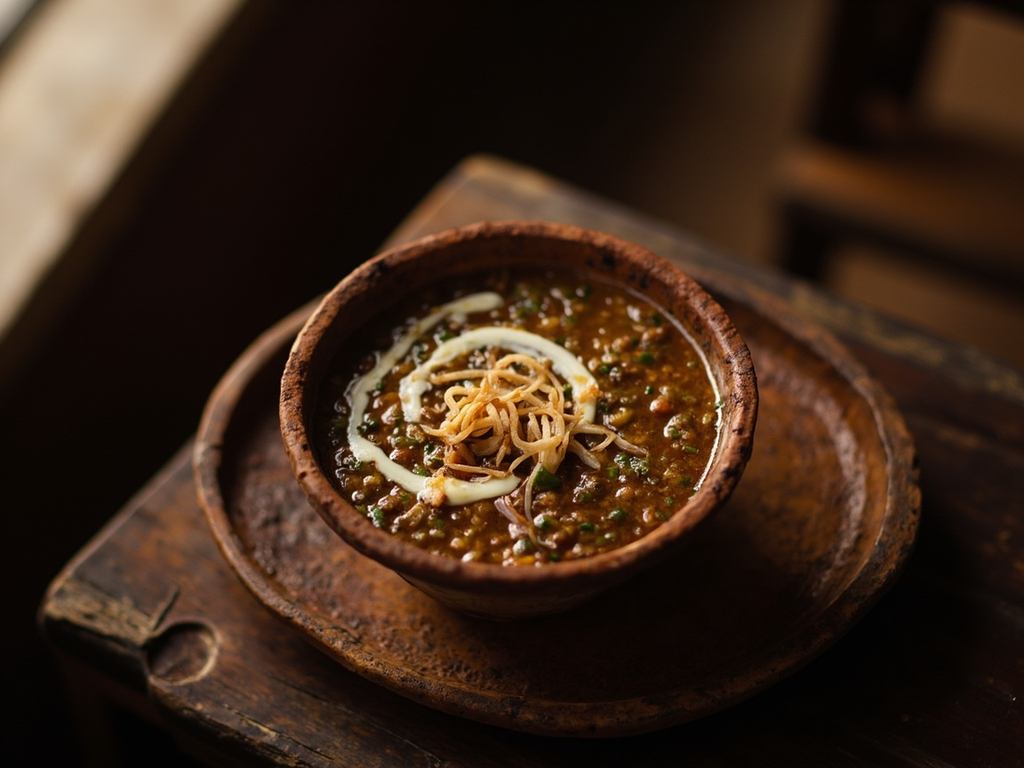
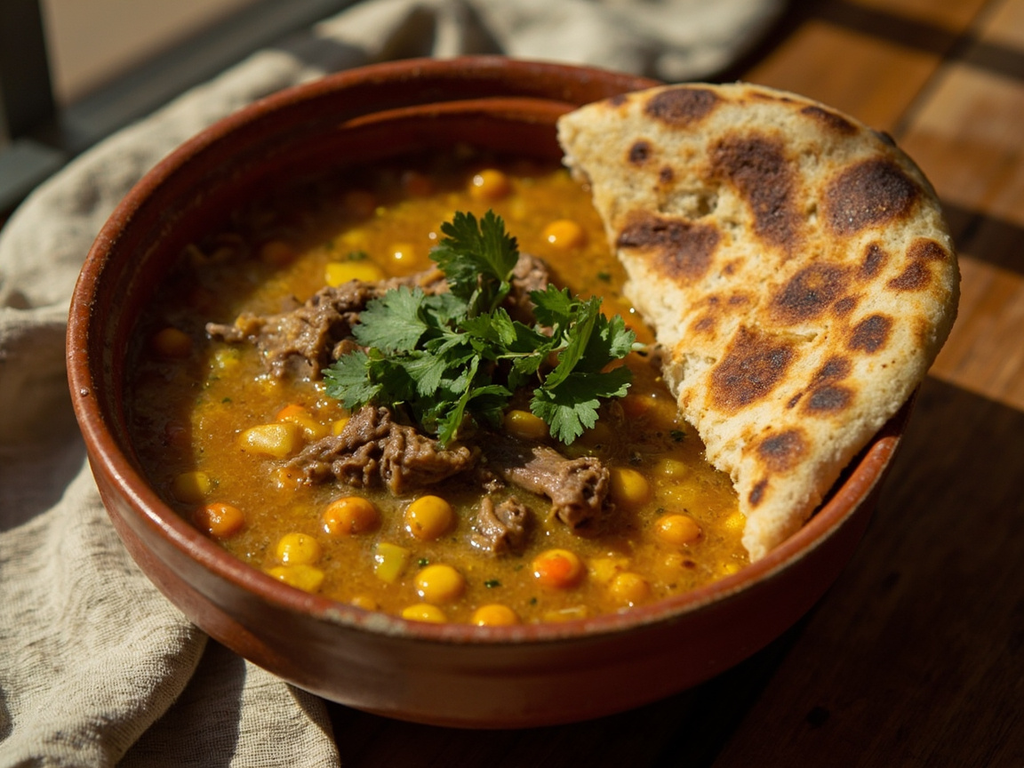
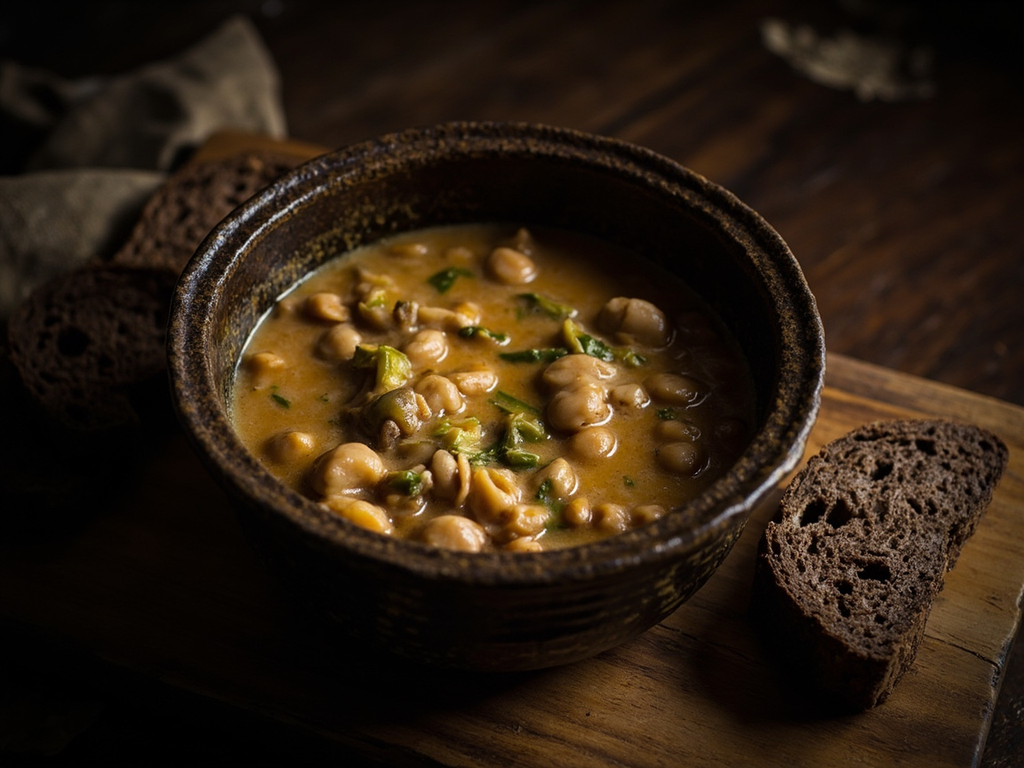
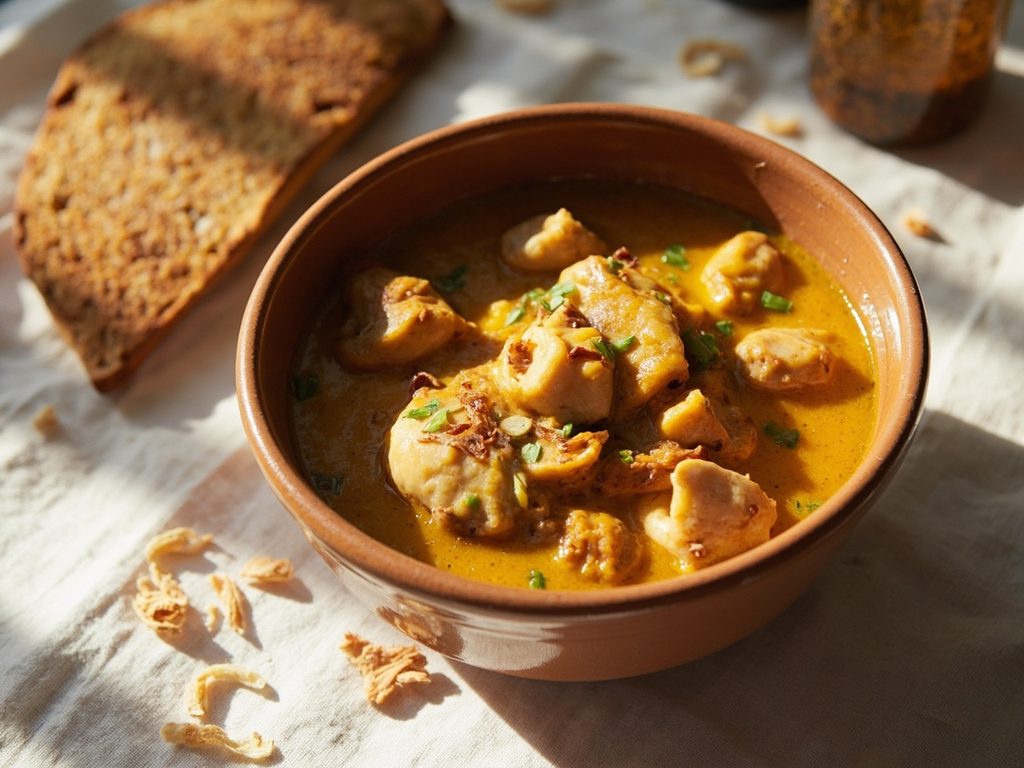
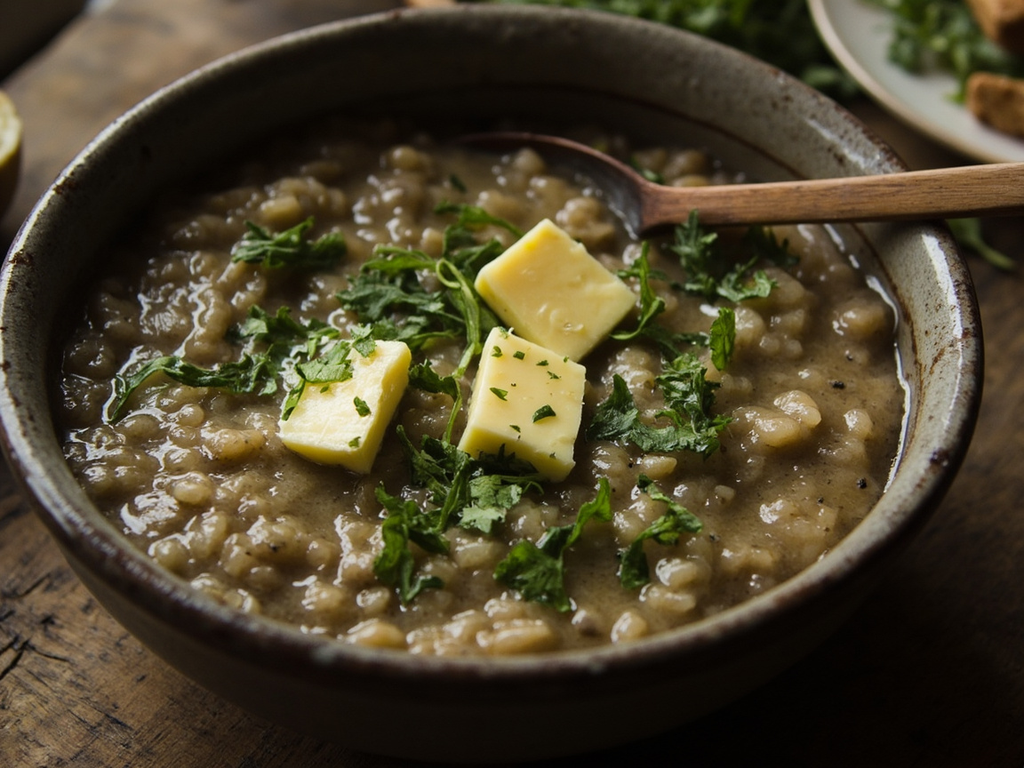
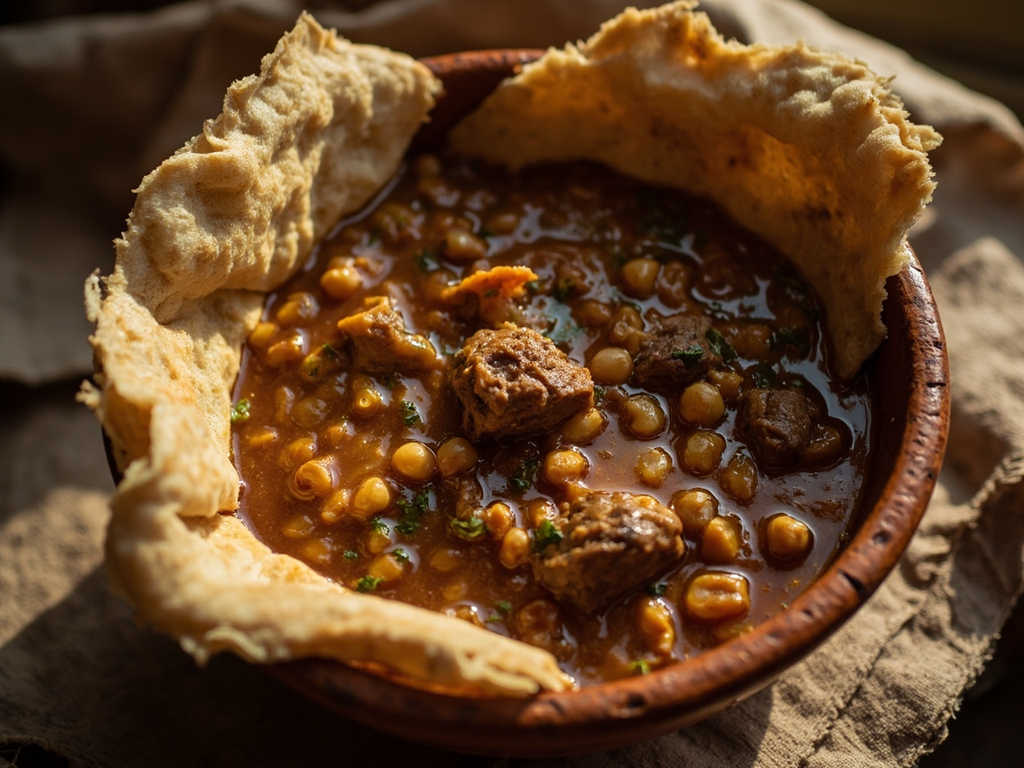
Wheat bread broken into pieces and soaked in a fragrant broth of lamb, lentils, and chickpeas, seasoned with onion, cumin, and a drop of murrī. The bread absorbs the juice and becomes tender: it is both the spoon and the heart of the dish.
Know, O reader, that before observing how light travels in a straight line to the eye, you must nourish the body that carries the eye. At my table, we break the wheat bread with the right hand, lay it at the bottom of the bowl, and pour over it the lamb broth in which lentils and chickpeas have long cooked. I add a drop of murrī, as the cooks of Baghdad teach, for it gives the broth a depth that nothing else equals. Eat it hot, praise God, and your mind will be clear for the night of study.
- •Stale wheat bread — a few flatbreads (base that absorbs the broth)
- •Lamb shoulder — a good piece (meat and fat for the broth)
- •Lentils — a generous handful (nourishing binder)
- •Soaked chickpeas — a handful (texture and body)
- •Onions — two (aromatic base)
- •Murrī (fermented barley brine) — a drop (salty depth, signature)
- •Ground cumin and coriander — to taste (warm spices)
Tharīd of lamb with lentils
Wheat bread broken into pieces and soaked in a fragrant broth of lamb, lentils, and chickpeas, seasoned with onion, cumin, and a drop of murrī. The bread absorbs the juice and becomes tender: it is both the spoon and the heart of the dish.
Why this dish? Tharīd — broken bread soaked in a broth of meat and vegetables — was the most beloved and everyday dish of the medieval Muslim world, celebrated from the hadiths as the food of the wise and modest. For a scholar like Ibn al-Haytham, who lived part of his life from copying and teaching, this nourishing, economical, and halal-compliant dish was the staple of a studious table, in Basra as in Cairo.
Know, O reader, that before observing how light travels in a straight line to the eye, you must nourish the body that carries the eye. At my table, we break the wheat bread with the right hand, lay it at the bottom of the bowl, and pour over it the lamb broth in which lentils and chickpeas have long cooked. I add a drop of murrī, as the cooks of Baghdad teach, for it gives the broth a depth that nothing else equals. Eat it hot, praise God, and your mind will be clear for the night of study.
Ingredients (period version)
- Stale wheat bread — a few flatbreads (base that absorbs the broth)
- Lamb shoulder — a good piece (meat and fat for the broth)
- Lentils — a generous handful (nourishing binder)
- Soaked chickpeas — a handful (texture and body)
- Onions — two (aromatic base)
- Murrī (fermented barley brine) — a drop (salty depth, signature)
- Ground cumin and coriander — to taste (warm spices)
Ingredients
- Stale country bread or pita bread — 4 thick slices (base)
- Lamb shoulder — 500 g, cut into pieces (meat for broth)
- Brown lentils — 150 g (binder)
- Cooked chickpeas — 200 g (texture)
- Onions — 2 (base)
- Light soy sauce (instead of murrī) — 1 tbsp (salty depth)
- Ground cumin — 1 tsp (spice)
- Ground coriander — 1 tsp (spice)
- Salt — to taste (seasoning)
Method
- Sauté the sliced onions in a little fat until golden, then add the lamb and brown it.
- Cover generously with water, add the lentils, cumin, coriander, and soy sauce, then simmer for 1 hour over low heat.
- Add the chickpeas at the end of cooking and adjust salt; the broth should remain generous.
- Break the stale bread into the bottom of wide bowls.
- Pour the meat, legumes, and hot broth over the bread and let it soak for a minute before serving.
How it was made : Tharīd appears in the great medieval Arabic cookbooks (such as al-Warrāq's *Kitāb al-Ṭabīkh*, 10th century). Day-old bread was used, which absorbs the broth better, and fermented murrī served as a universal flavor enhancer, like Roman garum.
The contemporary twist : Serve in a cast-iron pot with a drizzle of olive oil and a few fresh coriander leaves: 'the scholars' dish' on the day's blackboard.
Sources : Kitāb al-Ṭabīkh by Ibn Sayyār al-Warrāq (10th c.) · Nawal Nasrallah, Annals of the Caliphs' Kitchens
Alhazen (Ibn al-Haytham) · Charactorium